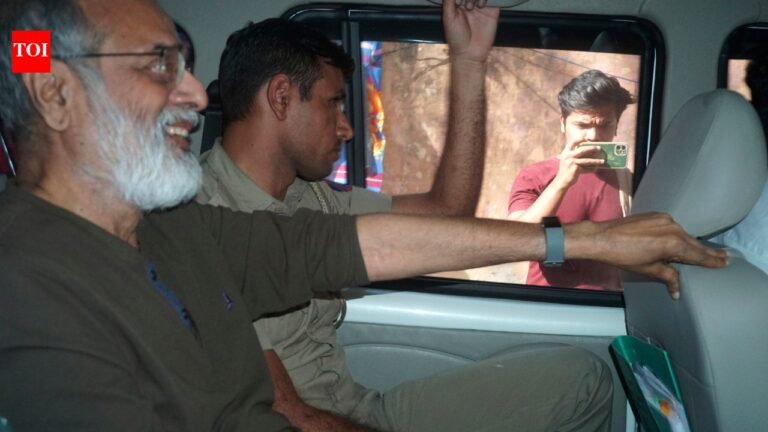
New Delhi: law enforcement bureau ED has imposed a fine of Rs 184 crore on news portal NewsClick and its editor-in-chief Prabir Purkayastha under the Foreign Exchange Management Act (FEMA), official sources told news agency ANI on Monday.The order imposed a fine of Rs 120 crore on PPK NewsClick Studio Private Limited, which owns the portal, while Purkayastha was fined Rs 64 crore for the alleged irregularities.The entities were found to have “violated” FEMA regulations on two primary counts. The first concerns misreporting of foreign direct investment (FDI) funds, and the second concerns misreporting of services and exports.Currently awaiting NewsClick’s response to the order.The education ministry had earlier raided the portal’s premises in Delhi’s Saidulajab area in September 2021 in connection with a money laundering probe. During the course of investigation, the agency recorded statements of more than 25 people, including Purkayastha.2023, ruling bjp Citing a report in The New York Times, the BJP accused the portal and its promoters of irregularities. The article claimed NewsClick was part of a global network that received funding from U.S. billionaire Neville Roy Singham, who allegedly worked closely with Chinese government media organizations.In the same year, the Delhi Police Special Cell conducted raids at 30 premises associated with the online portal NewsClick and the residences of its journalists. Teams from the Delhi Police Special Cell and Mumbai Police also conducted searches at the residence of activist Teesta Setalvad in Juhu.Police officials also brought NewsClick editor Prabir Purkayastha, writer Paranjoy Guha Thakurta and Urmilesh to the special cell office in the national capital.Founded in 2009, NewsClick describes itself on its website as an independent media organization focused on reporting news from India and around the world, with a special emphasis on progressive movements.
Anthropic’s AI assurance dispute: Pentagon may cut ties with company over dispute, report says
this Pentagon San Francisco-based artificial intelligence company Anthropic has been embroiled in controversy over the agency’s use of the company’s flagship artificial intelligence model, Claude. The dispute, which involves Anthropic’s refusal to let the agency use Crowder for “all lawful purposes” without security restrictions, escalated as Pentagon officials said the agency may sever ties with the company and declare it a “supply chain risk” over the dispute.

A Pentagon official who spoke anonymously to Axios said the agency may cut ties with the company and declare it a supply chain risk, which would effectively mean that any company that does business with the Pentagon would not be able to have any business ties with Anthropic.
“It will be very painful to disentangle, and we will make sure they pay a price for forcing themselves on us like this,” the official told Axios, adding that the Pentagon was “close” to severing ties.
However, there are logistical issues with this decision, as Claude is currently the only AI model used in the project. U.S. military classification system and is widely praised for its effectiveness. Replacing it with another would require the Pentagon to sign new contracts with companies that can be as efficient as Crowder.
In fact, effectiveness appears to be a bigger issue in this regard, as other competing AI models such as xAI, OpenAI, and Google have agreed to remove safety measures but are still not used in the military.
How the Pentagon’s Cutoff Affects Humanity
The potential severance package itself would only have a minor impact on Anthropic. Axios reported that the deal would bring in about $200 million in annual revenue, which is barely a fraction of its $14 billion in annual revenue. However, declaring it a “supply chain risk” could have an impact on the company, as it could lead to other companies canceling partnerships.
Most importantly, War Department officials showed no signs of backing down, although Anthropic said negotiations were moving in a “productive” direction.
“The War Department’s relationship with Anthropic is under review,” a War Department spokesman said. “Our nation demands that our partners be willing to help our warfighters win in any fight. Ultimately, this is about the safety of our troops and the American people.”
Also read: US uses Anthropic’s Cloud AI in Venezuela raid to capture Nicolás Maduro: Report
What the controversy is about: explained
The dispute, which concerns the terms of the military’s use of Cloud, remains unresolved despite months of meetings between humans and Pentagon officials. While the agency wants unrestricted use for “all lawful purposes,” Anthropic CEO Dario Amodei expressed concerns about surveillance and invasion of privacy.
According to Axios, Anthropic hopes the terms in the contract will prevent the agency and the military from conducting mass surveillance Or develop weapons that can be fired without human involvement.
Designating a company as a “supply chain risk” is an important step typically reserved for foreign business counterparties. It seems that at some point, concessions have to be made, as officials admit that other AI models are “just lagging behind” when it comes to handling specialized military operations.
Jasontheween breaks silence on Shizuku Moment, explains why relationships fail in live streaming life
Twitch streamer Jason “Jasontheween” spoke out during his ongoing 7 Days Stranded stream after viewers asked about his past connection with fellow creator Shizuku. In the moment that quickly went viral, he explained a situation that made him uncomfortable and shared his honest thoughts on relationships in his public live-streaming life. His comments became a topic of concern among fans during the live broadcast.During the live broadcast, Jason answered multiple donation questions raised by viewers. One of the questions was whether Shizuku had ever done anything wrong to him. In his reply, he described what happened during their FaceTime call in London. The clip went viral because fans believed it revealed how public attention and online reaction can affect a streamer’s personal relationships.
Jason Swain Explained the Shizuku moment and said that at that time full time streaming
Responding to the audience, Jason explained that the conversation during the FaceTime call confused him. He remembered someone around Shizuku using inappropriate language, and he noticed that she didn’t react strongly at the time. He casually explained to the audience why this moment stuck with him and how it shaped his perspective. His tone was reflective rather than angry, and he quickly moved away from the topic during the live broadcast.Later in the same broadcast, Jason shared another honest thought that gained traction online. He told viewers that as long as he continued to stream full-time, he thought he might not have a girlfriend. According to him, having thousands of people watching and judging every interaction can make relationships tense and difficult. Constant editing, comparisons and online opinions can turn private moments into public discussions, which can add to stress, he said.Jason went on to say that his entire life has been tied to streaming, and viewers have watched him grow over time. He said the lifestyle can be overwhelming for anyone trying to date a streamer. During the live broadcast, he also responded to comments from other creators, including Sakura Shymko and Kyedae, and refuted rumors circulating online, showing frustration with what he said were negative social media narratives.The conversation reflects a broader issue many online creators talk about, namely how to balance personal life with life in front of the camera. Jason’s comments focus not on drama, but on how public attention changes normal relationships and decisions.
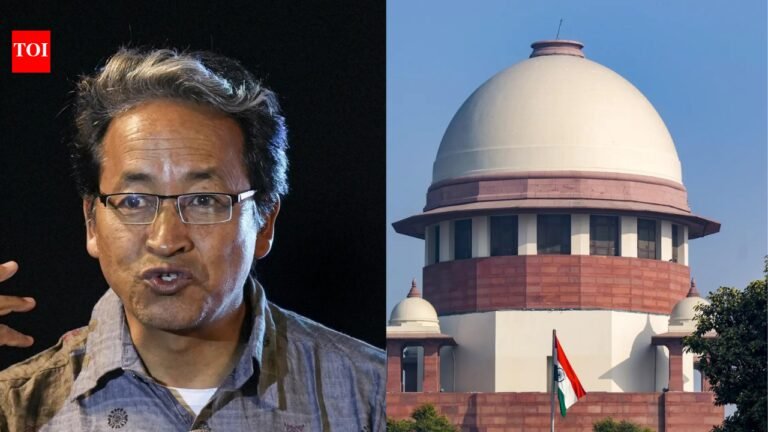
‘We are in the age of AI’: SC seeks accurate video record of Sonam Wangchuk’s detention from Center | India News
New Delhi: Supreme Court on Monday questioned the accuracy of video recordings submitted by the center against detained climate activists Golden Wangchuk And said translation must be accurate, especially “in the age of artificial intelligence.”Senior advocate Kapil Sibal, appearing for Wangchuk’s wife Geetanjali Ammo, argued that Wangchuk never made certain remarks, before Justices Aravind Kumar and PB Varalai asked the government to place the actual transcript of Wangchuk’s speeches on record.
The bench told Additional Solicitor General KM Nataraj: “Sir, counsel, we want an actual transcript of the speech. What he relies on is different from what you said. We will decide. There should be a true transcript of what he said. You may have your reasons. “The Supreme Court further stated, “At least, a true translation of whatever he says should exist. Your translation lasts 7 to 8 minutes, but the speech is only 3 minutes. We are now in the age of artificial intelligence, and the accuracy of translation is at least 98%.”Sibal questioned the authenticity of the translated material submitted to the court and said: “Wangchuk continues to strike and also continues to provoke young people by mentioning Nepal. Where did this sentence come from? This is a very unique detention order – you rely on something that does not exist and then you say it is based on subjective satisfaction.”In response, Nataraji told the judge that a separate department was responsible for preparing the transcripts and said: “We are not experts in this area.”The matter will be heard again on Thursday.The apex body is hearing a habeas corpus petition filed by Wangchuck’s wife seeking to have his detention under the National Security Act (NSA) of 1980 declared illegal. The NSA allows central and state governments to detain individuals to prevent them from committing acts “prejudicial to India’s defence”. The maximum period of detention under the law is 12 months, but it can be revoked earlier.Wangchuk, a climate activist known for his work in Ladakh, was detained on September 26 last year, two days after four people were killed and around 90 injured during violent protests in Leh demanding statehood and Sixth Schedule status. He is currently lodged in Jodhpur Central Jail.The earlier hearing saw heated exchanges between the Center and the court. The government defended the detention, claiming Wangchuck had made inflammatory remarks in an attempt to internationalize Ladakh’s problems and compare it to Chinese and Pakistani provinces. It also claimed he was trying to incite young people and referenced protests in Nepal and Bangladesh, including “Arab Spring-style riots.”Deputy Public Prosecutor Tushar Mehta told the judge that all procedural safeguards imposed by the National Security Agency were “strictly observed” and that Wangchuk was treated fairly in prison. “This court is dealing with a person who incited people in the border areas adjoining Pakistan and China, which involves regional sensitivities,” Mehta said.Regarding health issues, Mehta told the court that Wangchuck had undergone 24 medical examinations since his detention. “We have checked his health 24 times regularly. He is in good health and in good spirits. He has some digestive problems; he is receiving treatment. There is nothing to worry about, nothing to worry about. We cannot have such exceptions,” he said.He added: “The grounds for passing the detention order remain. It is not possible to release him on health grounds.” This may also be undesirable. We have given our utmost consideration. “However, Angmo argued that the violence in Leh on September 24 could not be attributed to Wangchuck’s actions or remarks. She told the court that Wangchuck himself had condemned the violence on social media and described it as the “saddest day” of his life, saying it would lead to the failure of the five-year peace “tapasha” in Ladakh.In an earlier proceeding, the apex court had asked the Center whether it was possible to reconsider the detention and directed the authorities to submit original files related to the detention to the Centre. The court also directed Wangchuk to undergo examination by a specialist and submit a medical report.
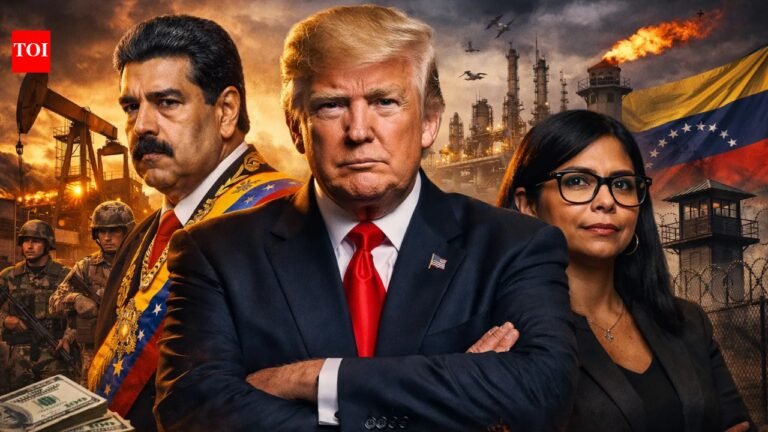
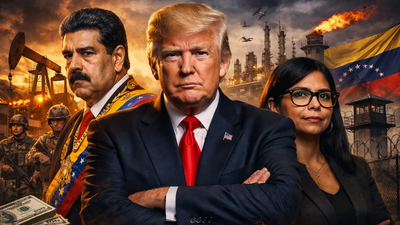
Maduro’s gone — But is Venezuela witnessing a new ‘Don’?
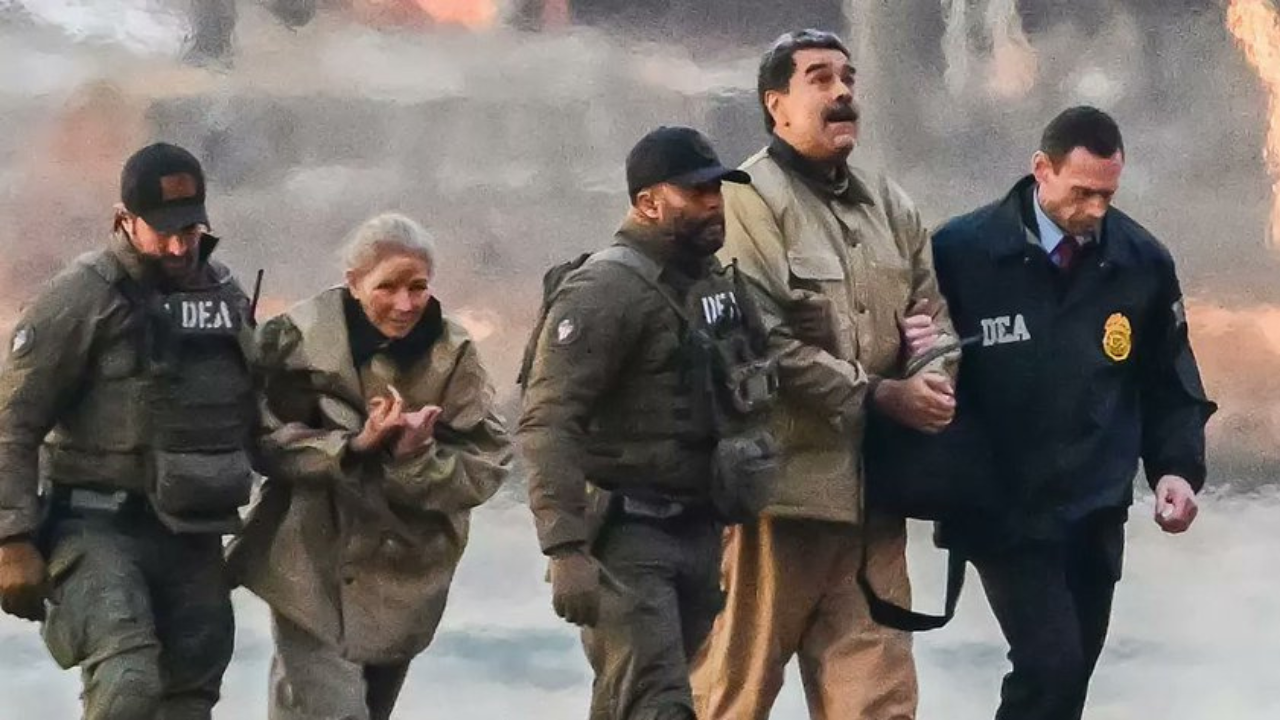
Over a month after US special forces lifted Venezuelan President Nicolas Maduro out of Caracas under cover of darkness, and flew him to New York to face federal drug trafficking charges, the South American country is navigating a new but uncertain political phase. suspended between rupture and continuity. The January 3 operation — which country’s interior minister Diosdado Cabello said left at least 100 people dead and 100 wounded — removed the country’s most polarising figure, and a president who had dominated the country’s politics for more than a decade, from office.
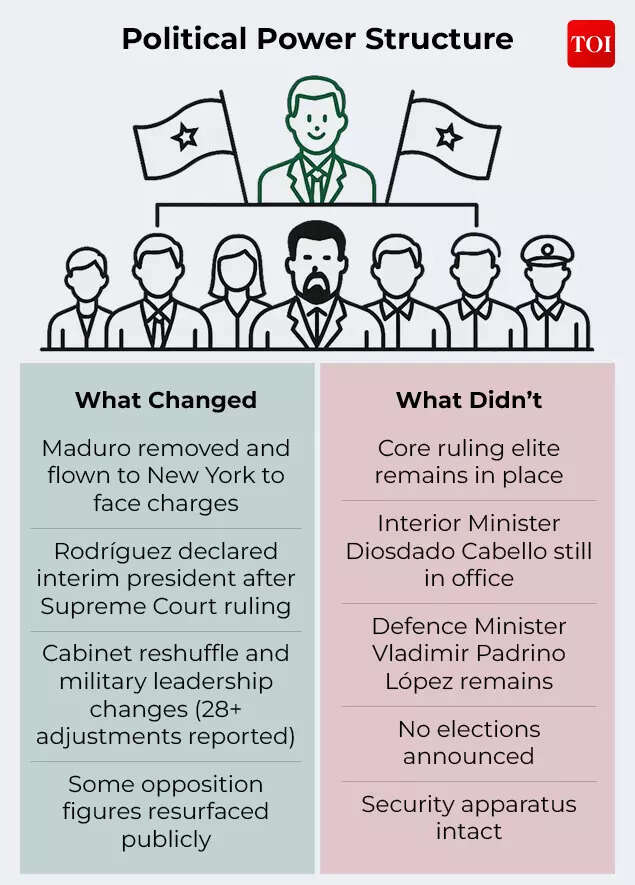
But it did not dismantle the political structure he built. His vice president Delcy Rodríguez assumed charge, as nation’s top boss, after the Supreme Court declared Maduro’s capture a “forced absence,” creating an unprecedented constitutional situation.In the weeks since, Caracas has seen rapid but uneven shifts. Diplomatic ties with Washington – severed in 2019 – are being restored. The oil sector, once the ideological centrepiece of Hugo Chavez’s socialist project, has been opened to private operators. Hundreds of detainees have been released under a proposed amnesty. Parts of the military leadership have been reshuffled. Opposition leaders have cautiously resurfaced.Yet the security apparatus remains in place. Elections have not been announced. Key figures of the old establishment continue in power. Public fear has receded in tone but not disappeared in practice.

Some see the removal of Nicolás Maduro as a possible opening for rebuilding Venezuela’s institutions and safeguarding citizens’ rights, while others remain sceptical about whether the period of “transition” described by the United States and acting President Delcy Rodríguez will actually lead to a democratic outcome or simply fall short of meaningful change.

For Venezuelans, the question is no longer whether Maduro is gone. It is whether what followed amounts to a political transition – or a tactical recalibration of the same system under new leadership.Here is what has changed – and what has not.
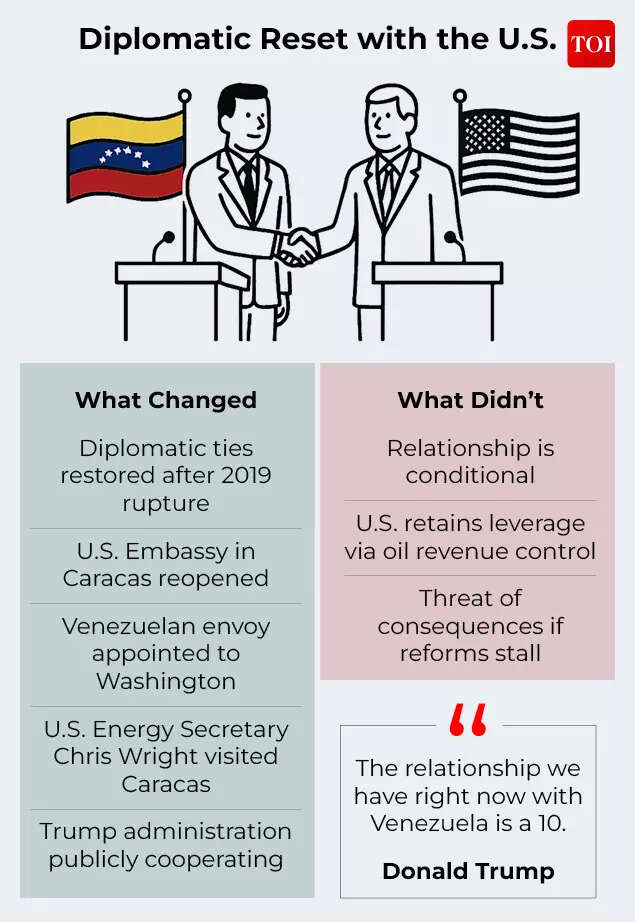
Diplomatic reset with Washington
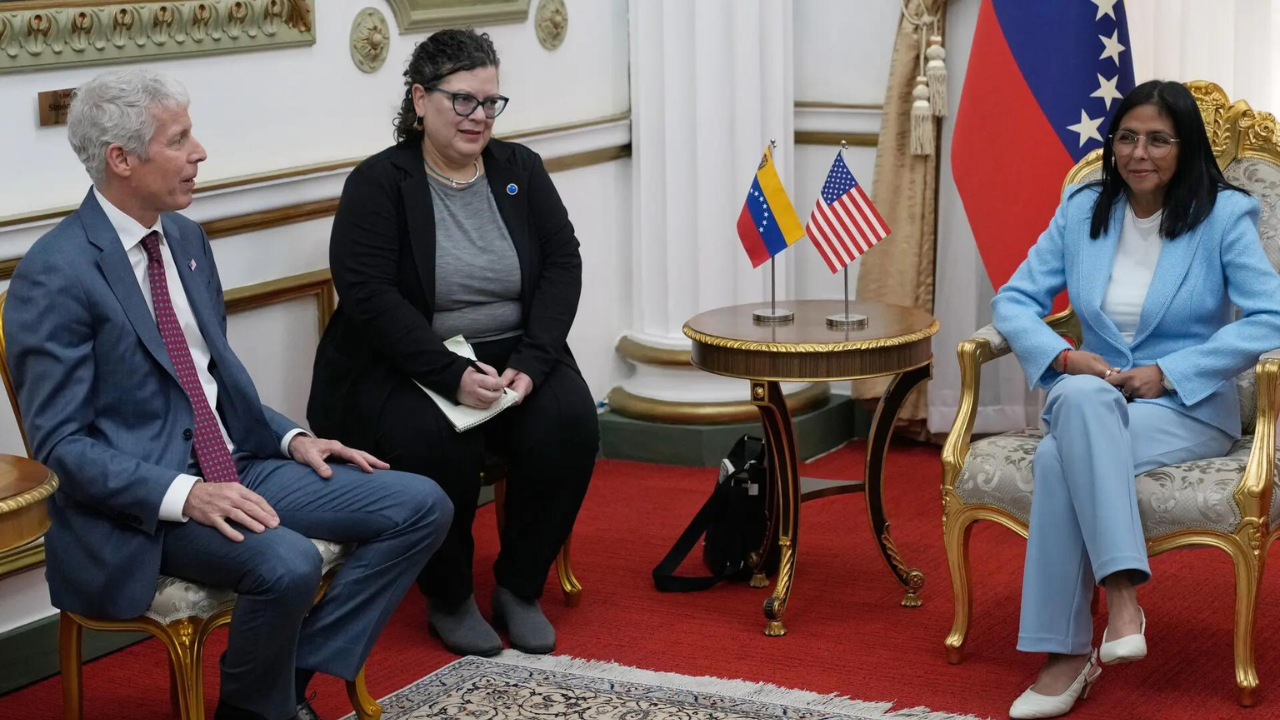
Unlike the 2003 invasion of Iraq, the United States did not dismantle Venezuela’s governing apparatus. It allowed continuity through Rodríguez, who now leads an interim administration.US President Donald Trump has said he has been working “really well” with Rodríguez. Diplomatic relations, severed in 2019 under Maduro, are being restored. The US embassy in Caracas has resumed operations under chargé d’affaires Laura Dogu, and Venezuela appointed Félix Plasencia as its envoy to Washington.

Dogu said her meeting with Rodríguez and national assembly president Jorge Rodríguez was aimed at reiterating three priorities outlined by secretary of state Marco Rubio:
- Stabilization,
- Economic recovery, and
- Reconciliation and transition.
Venezuelan foreign minister Yván Gil described the step as the start of a new era committed to international law.At the same time, Trump has warned Rodríguez she could face consequences similar to Maduro’s if she does not comply with US demands on reforms and oil access. Rubio told a Senate committee: “I can tell you right now with full certainty, we are not postured to nor do we intend or expect to have to take any military action in Venezuela at any time.”The relationship is cooperative but conditional.
Oil reforms mark a structural shift
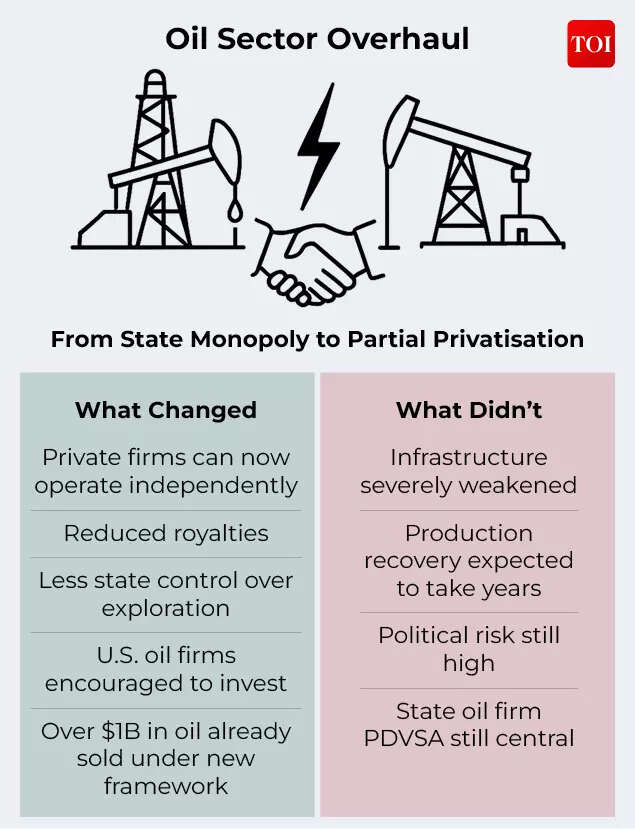
The most significant policy change has been in the oil sector, long a pillar of Hugo Chávez’s socialist project.Rodríguez introduced and signed into law reforms allowing private companies to operate independently in Venezuela’s energy sector rather than as minority partners of state oil company PDVSA. Royalty payments have been lowered and state control over exploration reduced. “This is the only way to obtain significant investments,” US-based Latin America energy analyst Francisco Monaldi told The Strait Times.

Trump has urged US oil companies to invest, though firms remain cautious given political uncertainty and the high costs of reviving production infrastructure weakened by corruption and sanctions. In the interim, the US government has directly seized and sold some Venezuelan oil.Rodríguez defended the overhaul, saying: “The people of Venezuela do not accept orders from any external factor. The people of Venezuela have a government, and this government obeys the people.”Analysts note that restoring production will take years and depends on stable governance and legal clarity. For India, which had previously been a major buyer of Venezuelan crude before US sanctions disrupted flows, the opening of the sector could alter supply calculations — though recovery in production is expected to take years, not months. As RAND experts note, Venezuela’s constraints are “less about geology than governance.”
Cabinet reshuffle, but continuity in power
Rodríguez has replaced several ministers and high-ranking military officials. According to experts cited by CNN, at least 28 significant changes have been made within the armed forces.Yet core figures remain. Interior minister Diosdado Cabello and defence minister Vladimir Padrino continue in office. Professor Guillermo Tell Aveledo described the situation as “a phase of readjustment.” RAND analyst Kelly Piazza said recent events show that “regime decapitation does not equal regime change.” The armed forces formally recognised Rodríguez as commander-in-chief. Legal scholar Juan Carlos Apitz questioned the move: “There cannot be two commanders,” he said, referring to Maduro’s prior role. The ruling party has also organised demonstrations demanding Maduro’s release, reflecting internal continuity even as policy shifts occur.
Amnesty announced, but debate over scope
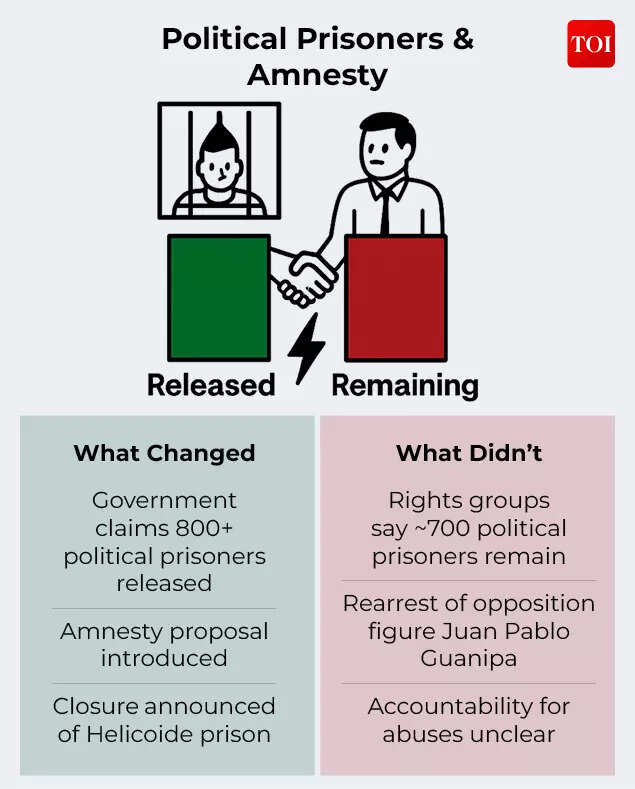
Rodríguez has announced a general amnesty expected to be adopted by the national assembly. The government claims more than 800 political prisoners have been released.However, rights organisation Foro Penal says about 700 political prisoners remain detained. Its director Alfredo Romero said: “The amnesty is more about forgetting than forgiving,” and called for accountability. The interim government has also announced the closure of Helicoide prison, widely criticised by rights groups for alleged torture of dissidents.Benigno Alarcón, a political expert, said “the transition has not truly begun.” He argued that credible democratic change requires institutional reform, decentralisation of security forces and new elections. “The system is recalibrating the cost of repression,” Aveledo said, describing what he termed “tactical liberalisation.”
Economic signals: Modest shifts amid structural distress
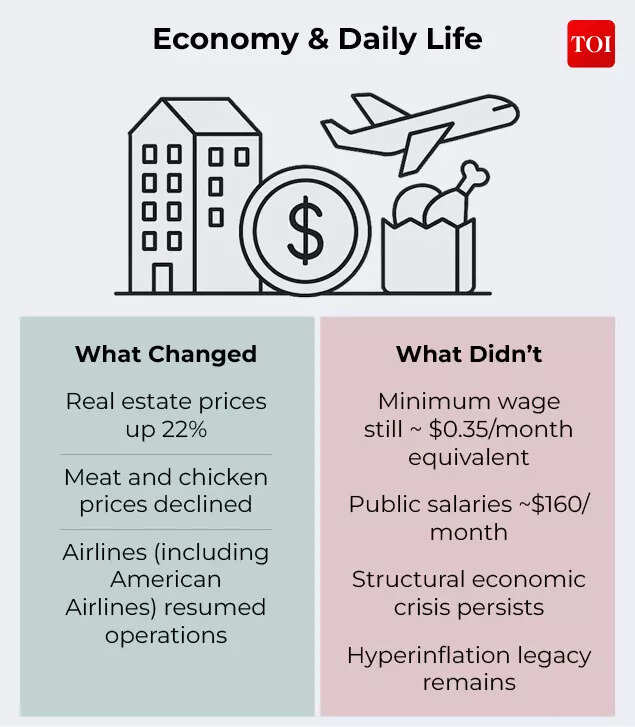
There are tentative economic changes. Economist Asdrúbal Oliveros reported a 22% rise in real estate prices. Prices of meat and chicken have declined. Airlines, including American Airlines, have resumed operations.But the broader economic crisis persists. Public sector workers survive on roughly $160 a month; private sector employees earn about $237 on average. The minimum wage — 130 bolivars, or around $0.35 — has not been raised since 2022.

Margaret García, a teacher in Caracas, said: “We see that a negative moment has brought us positive things.”At the same time, anxiety lingers. A Caracas resident told CNN she is waiting to see if fundamental change is possible. “A real one,” she said.Retiree Julio Castillo expressed skepticism: “It’s an important change, certainly, but everything is the same, everything.”
Opposition re-emerges cautiously
Some opposition figures, including Andrés Velásquez and Delsa Solórzano, have appeared publicly after months in hiding. A private television channel aired footage of opposition leader María Corina Machado addressing reporters in Washington.Velásquez said: “I believe that Venezuela’s destiny cannot be an oil agreement and a dictatorship headed by Delcy Rodríguez, because we could simply define that as a continuation of the dictatorship.”Yet large demonstrations demanding elections have not taken place. Many citizens continue to self-censor. One resident told CNN: “Even law-abiding citizens can be stopped in the street at any time for a search or to be questioned.”

Wanted posters of opposition candidate Edmundo González, who disputes the July 2024 election results, remain displayed in some official locations.
Regional implications and migration
According to RAND expert Tahina Montoya, Venezuela’s crisis extends beyond its borders, contributing to one of the largest displacement crises in modern Latin American history. Nearly 8 million Venezuelans have left the country.Marie Jones of RAND said Venezuela’s trajectory influences regional norms around governance and electoral integrity. Piazza noted that while a democratic transition is possible, the most plausible near-term scenario is continued authoritarian persistence.Regional responses vary. Argentina has supported Maduro’s removal, while Colombia has criticised it as a violation of sovereignty. Other governments remain cautious.On Cuba, Jones said that disruption of Venezuelan oil flows increases economic pressure but collapse is not inevitable.Migration trends will be a key indicator. Montoya said that a coherent transition could slow outward flows, while instability could sustain them.
Transition or managed continuity?
Alarcón said authorities may delay elections depending on political calculations. “It will depend on the polls. If they see a chance of winning, they’ll call for elections. If not, they’ll postpone them,” he said. “They intend to buy time and maintain power.”Apitz argued that “the first step towards democracy in Venezuela is the full and unconditional release of all political prisoners.”RAND experts say policymakers should watch institutional independence, military alignment, economic transparency and human rights conditions.
Track two diplomacy, but for whom?
In a recent interview with an American journalist since assuming office, Rodríguez defended both her predecessor and her own authority. Speaking to NBC News’ “Meet the Press” moderator Kristen Welker in Caracas, she said: “I can tell you President Nicolás Maduro is the legitimate president. I will tell you this as a lawyer, that I am. Both President Maduro and Cilia Flores, the first lady, are both innocent.” As Maduro sits in a federal detention in New York following his capture by US forces, Rodríguez has simultaneously been welcomed back into the diplomatic fold by President Trump.US energy secretary Chris Wright made a high-profile visit to Caracas as the two governments negotiated the distribution and sale of Venezuela’s vast oil reserves. Wright told Welker: “Ronald Reagan said ‘trust but verify.’ Trust but verify. We’ve been dealing with Delcy for five weeks now. It’s been an amazing cooperation.” “She’s delivered information. Everything we know so far has turned out to be true. She’s made enormous positive changes, including already changing the hydrocarbon law in the country in the first few weeks. So I would say that cooperation is off to a tremendous start.”

According to Wright, more than $1 billion in Venezuelan oil has already been sold, with an additional $5 billion in expected sales in the coming months. “So the Venezuelans are in charge here in Venezuela, but the United States has enormous leverage over the interim authorities in Venezuela — the largest revenue source that funds the government is now controlled by the United States,” Wright said. “If they’re driving positive change that benefits Americans and is improving the life opportunities of people in Venezuela, that money will flow. If they steer off that path, we have just simply tremendous leverage.”Emphasising her constitutional authority Rodríguez told NBC, “I can tell you I am in charge of the presidency of Venezuela, as it’s stated clearly in the constitution of Venezuela. And from the amount of work that I have, from how busy I am, I can tell you it’s very, very hard work and we’re doing it completely day by day.” The daughter of a revolutionary and herself sanctioned under the first Trump administration, Rodríguez initially sharply criticised the US military action that removed Maduro. In the weeks since, however, she has softened her tone and relented to US pressure and demands, even raising the possibility of visiting Washington after two phone calls with Trump.“I have been invited to the States,” Rodríguez told NBC News, adding that “we’re contemplating coming there once we establish this cooperation and we can move forward with everything.”
So has anything changed?
Still, the current government has not entirely shed the authoritarian structures built under Maduro and his predecessor, the late Hugo Chávez, who established much of Venezuela’s present security architecture.Recent events reflect that ambiguity. After being released from prison, prominent opposition figure Juan Pablo Guanipa was rearrested and placed under house arrest, according to his son Ramón Guanipa.At the same time, dozens of political prisoners have been freed in recent weeks, and political space appears to have opened modestly. A protest demanding the release of additional detainees was held outside the country’s highest court — an act that only months ago might have led to arrests.The fate of María Corina Machado remains a central question. Even after presenting her Nobel Peace Prize medal to Trump during a White House visit last month, Trump has not fully embraced her as a political contender inside Venezuela.“With regards to her life, we do not understand why there’s such a fuss about it,” Rodríguez said. “With regards to her coming back to the country, she will have to answer to Venezuela. Why she called upon a military intervention, why she called upon sanctions on Venezuela, and why she celebrated the actions that took place at the beginning of January.”Trump, for his part, has publicly endorsed Rodríguez’s government. Speaking at the White House, he described the bilateral relationship as “very good” and said the United States was “working together very closely” with her administration on oil.Asked whether he recognises Rodríguez as Venezuela’s official government, Trump responded: “Yeah, we have done that. We are dealing with them, and really right now they are doing a great job.”“The relationship we have right now with Venezuela I would say is a 10,” he added.
One month on
Venezuela today reflects a partial reset rather than a full transition. Diplomatic ties with Washington are reopening. Oil policy has shifted toward privatisation. Some prisoners have been freed. Opposition figures are cautiously visible.But the governing structure remains largely intact. Elections have not been scheduled. Fear has not disappeared.As the country moves beyond the immediate shock of Maduro’s capture, the question is no longer what happened on January 3, but whether the changes that followed amount to a democratic opening — or a recalibration of the same system under new leadership.(With inputs from Agencies, CNN, The Strait Times)

Ashley Banfield reveals why she still sees Tommaso Cione as ‘prime suspect’ in Nancy Guthrie case
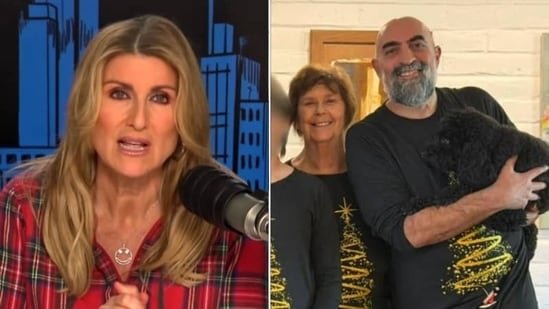
News Nation Anchor Ashley Banfield Still adamant that Nancy Guthrie’s son-in-law Tommaso Cioni is the “prime suspect” in the 84-year-old’s disappearance. However, officials did not name any suspects in the case and dismissed any potential connection between the alleged kidnappers or Sione.

banfield first made the explosive accusations on her Drop Dead Serious podcast, saying a source told her authorities had seized a vehicle belonging to Nancy’s daughter, Anne Guthrieshe is the sister of “Today” co-host Savannah Guthrie. Sources say there is a potential connection between the car and Anne’s husband, Sione, who may be considered by law enforcement as the “prime suspect” in the investigation.
At that time, before banfield “These are just reflections, not evidence,” Ancho said, stressing that it is common for families to be scrutinized in such cases.
Ashley Banfield defends her coverage of Tommaso Cioni
In a conversation with Mediaite founder Dan Abrams on Project SiriusXM on Thursday, February 12th, banfield She defended her reporting, although the Pima County Sheriff’s Department disputed her account.
“At this time, investigators have not identified a suspect or person of interest in this case,” the Sheriff’s Office said in a statement. “While we appreciate the public’s concern, sharing unsubstantiated accusations or false information is irresponsible and does not aid the investigation.”
After Abrams asked Banfield for an update on the Sioney report, the veteran reporter said: “I can tell you that my sources have backed up that report every day since. That’s what Mrs. Guthrie was thinking the day after she was reported missing.” media reports said.
Ashley Banfield compares her reporting to ongoing investigations
Banfield stressed that several aspects of her previous reports have now been verified, including the fact that Annie’s vehicle “was towed with evidence” and that “the camera was smashed.”
She cited a report from Fox News Digital’s Michael Ruiz, which stated that small shards of glass were found beneath the camera at the front entrance of Nancy’s Tucson home. Arizona.
Banfield said she believes the person captured on the doorbell camera wearing a ski mask and gloves broke the camera after unsuccessfully trying to remove it from its mount.
Banfield stressed that her sources still believe Savannah The brother-in-law may be the main suspect. “Nothing has changed. Nothing has changed. But I will say this: The day after I did this report, my source said, ‘Things have really gotten more tense,'” she added.
Karnataka court imposes death penalty: Three sentenced for gang rape of Israeli tourist, murder of youth in Kopal India News
New Delhi: A Karnataka civil court on Monday sentenced three men to death for sexually assaulting an Israeli tourist and murdering a youth in Koppal district last year.The Gangavathi Civil Court announced the sentence and awarded death penalty to the convicts: Mallesh alias Handi Malla, Sharanabasava and Chaitanya Sai. The court found them guilty on February 7 and reserved sentencing for February 16.Prosecutors said the crime, which occurred near Sanapur on March 6 last year, attracted international attention and cast a pall over the region’s tourism industry.Prosecutor Nagalakshmi said the incident occurred when a homestay owner took a group of tourists: Pankaj from Maharashtra, Bibhas from Odisha, Daniel from the United States and an Israeli woman to stargazing near the Tungabhadra canal within the limits of Gangavathi rural police station.The three defendants allegedly arrived on motorcycles and got into a fight over a financial dispute.“In order to rape the women, the criminals pushed the three men into the canal. To ensure that they did not come out, they threw stones at them. Later, they gang-raped the B&B owner and the Israeli citizen,” Nagalakshmi told reporters.She said Bihas Kumar died due to drowning in a canal. “Pankaj couldn’t swim, but Daniel saved him,” she added.After the attack, the defendant allegedly fled the scene with the victim’s mobile phone, cash and camera.“This was a case of gang-rape, murder, attempt to murder, robbery and extortion. Therefore, Justice Sadananda Nagappa Naik sentenced them to death under Section 103 of the Indian Code. For gang-rape, the court ordered that they be imprisoned till their last breath,” the prosecutor said.She added that offenders have the right to appeal their sentences to higher courts.
‘Stop the invasion and deport them’: Internet reacts after Texas activists target Hanuman temple, say ‘Third world aliens are slowly taking over America’
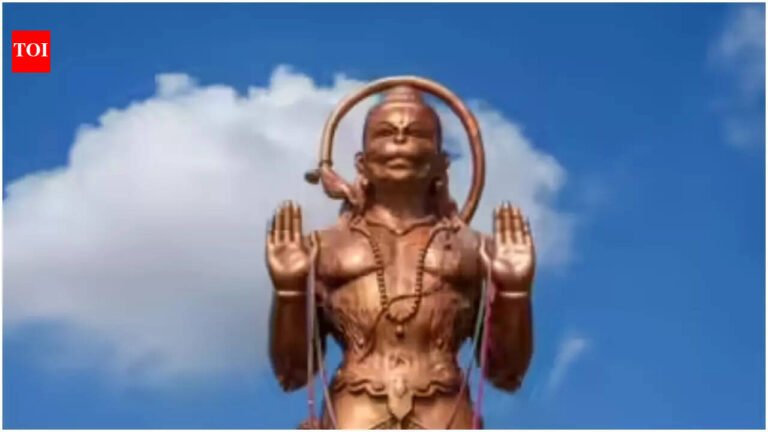
A conservative activist in Texas sparked controversy after sharing a video of a 90-foot-tall “federal statue” of Lord Hanuman at the Shri Ashtalakshmi Temple in Sugar Land, Texas. Carlos Tuccios, a Republican activist in the Dallas-Fort Worth area, shared the video and said Third World aliens are slowly taking over Texas and the United States. “Stop the invasion,” he said in a post on X.His comments were supported by some anti-immigration users, while others criticized the post as racist and misleading.One supporter said: “Stop the invasion and kick them all out.” Another said: “Disgusting. Get rid of it as soon as possible. What’s wrong with Texas? It must be money. “Critics claim, “Didn’t Charlie Kirk say that secularism is a Western and Christian value? Furthermore, India has more churches and statues of Jesus than there are Hindu temples and statues in the United States.”Inaugurated in August 2024, this statue of Panchaloha Abhaya Hanuman is the tallest statue in North America and represents the “spiritual center” of strength, devotion and peace.Also earlier, Tursios criticized the notion that “third world foreigners” are entering the U.S. on H-1B visas and said Frisco had been “invaded.”