Home Blog Page 655

Explained: 5 reasons why New York Times op-ed calls this ‘India’s century’

0

Explained: 5 reasons why New York Times op-ed calls this 'India's century'

For years, 21st-century geopolitics has been viewed as a heavyweight contest between Washington and Beijing. But what if the most important players aren’t in either corner?The world’s fastest-growing major economy and most populous country is not China. This is India.As other big countries age, India’s biggest export may just be its people. So what does this mean for global order?On the podcast “Interesting Times,” host Ross Douthat talks with international relations scholar Amitav Acharya about demographics, growth, and what Acharya calls a “diversified” world—a world shaped by multiple rising powers rather than a single superpower.Here are five takeaways from the New York Times conversation on why this could be India’s century:

third pole

The “Third Pole” sees India as an independent center of global power – distinct from the United States and China.India will not align entirely with Washington or Beijing but will act as its own gravitational pull: a top three economy, a strategic power in the Indian Ocean, a populous power and a diplomatic swing country that engages both sides without formal alliances.In Acharya’s “pluralistic world order,” power is distributed among a few major players—India being one of them.

Growing faster than China

Acharya acknowledged that China is industrializing and reducing poverty faster. But he warned against shortsightedness.In the early decades after independence, India played a major role in Asian affairs while China consolidated communist rule. India’s growth rate has recently surpassed that of China’s — albeit from a lower base — although China later took a big lead.India has also retained its democratic institutions. The main challenge now is employment. If India expands trade access—particularly with Europe and the United States—it can combine growth with greater economic resilience.

Demographic advantage

China is facing a sharp decline in its birth rate and a rapidly aging population, while India is entering a “demographic dividend” phase – a large working-age population but few elderly dependents.Unlike China, India has never implemented a one-child policy, resulting in a younger workforce.But demographics are not destiny. Without job creation, education reform and skills development, dividends can become a burden. Integration into global supply chains—merging manufacturing with services and technology—will be critical.

Multiple alignment

India’s strategy has evolved from “non-alignment” during the Cold War to what Acharya calls “multilateral alignment.”Goal: Avoid overreliance on any single authority. India maintains ties with the United States, engages with Russia, and deepens trade with the European Union—while retaining strategic autonomy.This balancing act works as long as great powers tolerate flexibility. Things will become more difficult if Washington asks countries to take sides.

this indian diaspora

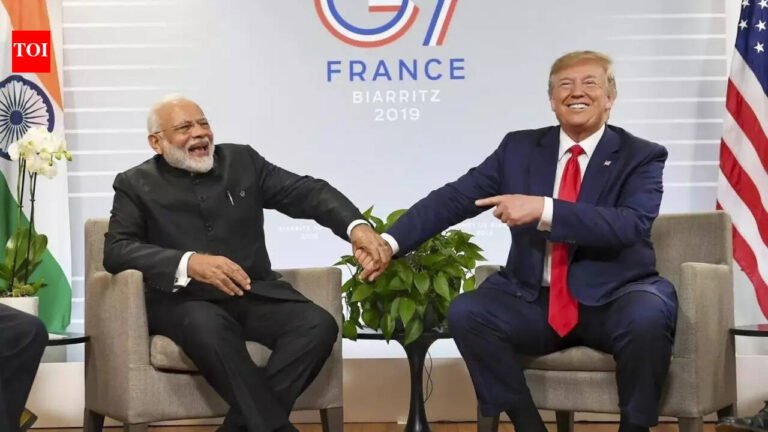
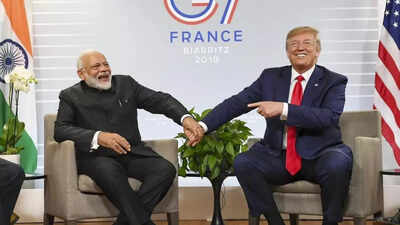
Prime Minister Narendra Modi has turned the Indian diaspora into a diplomatic asset, staging major events in U.S. cities to demonstrate global influence.However, U.S. understanding of India still lags behind attention to China. Indian Americans have made remarkable advances in tech and politics, but their success — especially in Silicon Valley and through H-1B visas — has sparked a backlash amid rising populism.Acharya believes the dissatisfaction reflects a broader anti-immigration trend rather than direct job losses. As a result of political pluralism, parts of the diaspora appear to be leaning toward conservatism—in some cases, a path toward assimilation in a polarized America.

US-sanctioned Iran-linked oil tanker stuck at Pakistan maritime borders for 8 days: FIR | India News

0

FIR: US-sanctioned Iran-linked oil tanker stuck at Pakistan maritime border for 8 days

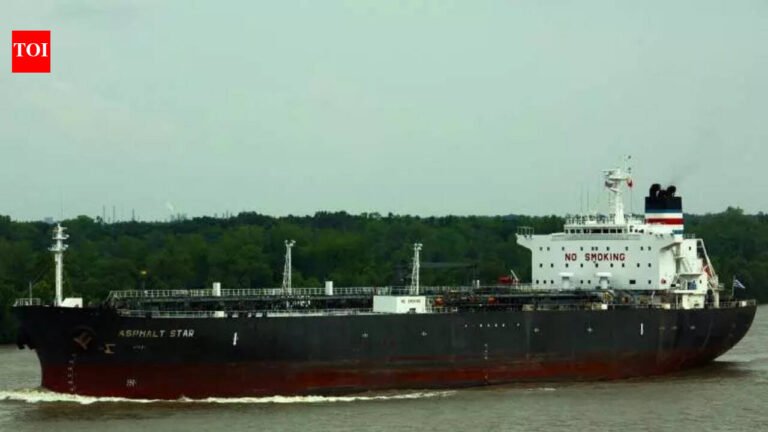
New Delhi/Mumbai: One of three Iran-linked oil tankers sanctioned by US seized indian coast guard According to an FIR registered in Mumbai, on February 6, the Pakistan Coast Guard (ICG) stayed within Pakistan’s maritime borders for several days and its tracking system was switched off.The ICG seized three ships – Asphalt Star, Stellar Ruby and Al Jafzia – about 100 nautical miles west of Mumbai for investigation and lodged a police complaint with the Yellow Gate police station on February 15 charging nine people, including the owners of the three ships, with allegedly engaging in illegal activities related to Iran and smuggling oil. A total of 55 crew members were on board all three seized vessels.Based on a complaint by ICG Commander Aniruddha Dharampal Dabash (40), Mumbai Police filed an FIR and arrested the captain and a crew member of MT Asphalt Star for their alleged involvement in oil smuggling and counterfeiting. TOI has a copy of the FIR.On the issue of the ship’s presence in Pakistani waters, the FIR said: “Coast Guard Deputy Commander P Siddharth Ratnam examined the electronic chart display and information system data of MT Asphalt Star. It was observed that the ship entered Pakistan’s Maritime Exclusive Economic Zone (EEZ) between January 20 and January 28.”“On January 28, at approximately 11 o’clock, the ship shut down the Automatic Identification System (AIS), Very High Frequency (VHF) and all sensors, thereby concealing its identity and conducting suspicious activities. Upon further enquiry, the captain stated that the ship’s Voyage Data Recorder (VDR) system had ceased operation,” it said. All three ships used AIS spoofing and false identity data to evade detection.Indian national Jogendar Singh Brar, currently residing in Abu Dhabi, United Arab Emirates, is alleged to be the owner of the vessels and was named as one of the accused in the FIR.The ICG expert boarding team determined the criminal’s modus operandi through continuous searches and verification of electronic data and verification documents on the suspected ship, as well as interrogation of crew members.“We have arrested Shyam Bahadur Chauhan and one other person in this case. They have been produced in court and are in police custody till February 23,” a police officer said. Chauhan is the master of MT Asphalt Star. In the UAE, Brar claimed that his ships were providing necessary supplies to other distressed ships far away from the Indian coast and that the ships were not engaged in any illegal activities, local media reported.The FIR stated that MT Asphalt Star was found to have illegally transferred 30 tons of heavy fuel oil to MT AL Jafiza in the Indian Ocean Exclusive Economic Zone through ship-to-ship operations without notifying any Indian government authority. It was also found to have illegally diverted 5,473 tonnes of bitumen used for road construction to MT Stellar Ruby.

Trump’s ‘bulging ankle’ sparks new health concerns, Josh Pate reveals on podcast

0

Sports podcaster Josh Pate shared a photo showing President Donald Trump’s controversial swollen ankle. in Rome, GeorgiaOn Thursday, the president visited The Varsity fast-food restaurant before the rally.

A photo from podcaster Josh Pate highlights Donald Trump's swollen ankles and his health condition of chronic venous insufficiency. (Photo by Mandelyan/AFP) (AFP)
A photo from podcaster Josh Pate highlights Donald Trump’s swollen ankles and his health condition of chronic venous insufficiency. (Photo by Mandelyan/AFP) (AFP)

There, he spoke with sports podcaster Josh Pate. The photo, taken during the informal conversation, shows Trump sitting with his calf exposed and visible swelling above his shoe.

The post sparked speculation about the cause of the president’s “bulging ankle” and sparked new controversy surrounding his health.

Read more: Trump’s vague words at ‘Coal Champions’ event raise health concerns

Trump’s ‘ankle’ and health issues

The White House insists Trump’s ankle swelling is caused by chronic venous insufficiency, a condition that affects many older adults and prevents veins in their legs from pumping blood back to their hearts.

The Daily Beast reported that Trump sat next to the 65-year-old Colombian president last week Gustavo Petro In the Oval Office, he accidentally exposed his “ankle.”

Trump has previously admitted that he used compression stockings to treat his ankles, but gave them up because “I didn’t like them” during a public interview with the Wall Street Journal about his growing health concerns.

Additionally, when The Daily Beast commented on Josh Pate’s latest photo of Trump’s exposed swollen ankle, White House spokesman Davis Ingle said, “President Trump is the most astute, approachable, and energetic president in modern American history. The only swollen thing is Erkki Forster’s stupidity, which will prevent [him] Work for a legitimate news outlet. “

Trump was also caught on camera dozing off during the first meeting of the Peace Council on Thursday, the Daily Beast reported, the latest in a series of public events in which the aging president appeared to fall asleep.

Read more: How is Trump? Air Force One U-turn raises concerns about US president’s health

Online discussion about Trump’s swollen ankles

trump ankle His ankle swelling has long been a point of discussion. There were multiple posts focusing on his ankle and speculating on his health.

Popular Liberal Party post on X featuring an enlarged photo of the 79-year-old president’s ankles explain“Trump thinks he’s cunning. It’s your tax dollars stuffed in his socks. He’s sucking the entire treasury right up to his ankles.”

Another X post commented on Trump’s ability to campaign within “the circle.” User @juliie22793699, wrote“First of all, Trump can’t run. His ankle makes it almost impossible for him to walk. And honestly, Trump doesn’t know what a circle is.”

Another X post by RiotWomenn showed Trump posing with Melania Trump in what appeared to be a game day photo with a swollen ankle. X users wrote“Is Trump’s ankle serious, or is he wearing double diaper bags on both legs? A sling?”

Operation Jwala: Arms and ammunition recovered near Line of Control in Rajouri, J&K | India News

0

Operation Jwala: Arms and ammunition found near Line of Control in Rajouri, J&K

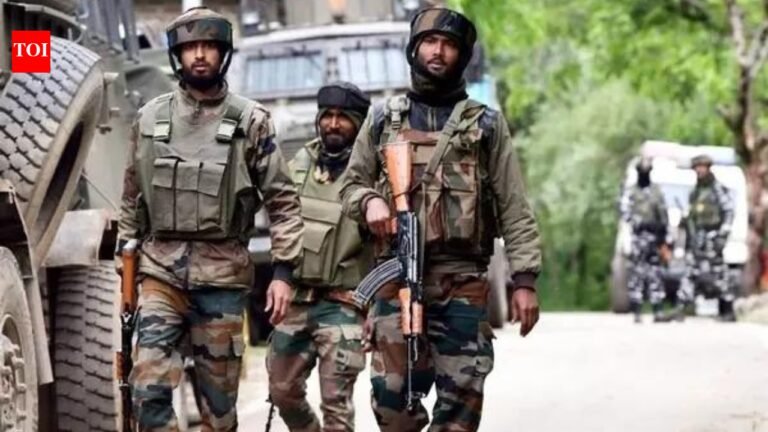
Jammu: A joint team of the Army and Rajouri police on Friday discovered a cache of arms and ammunition during a search operation in Nathua Tibba area of ​​Sunderbani district along the Line of Control in Rajouri district of J&K.The Operation Jawara raids came a day after security forces foiled an infiltration operation in the area. The items recovered included an AK-47 rifle, two magazines, ammunition, three backpacks, blankets, rations and clothing, the Army White Knight Corps posted on X.Severe blood stains were found, indicating the terrorist had been seriously injured, the post said. “Operations continue with a high level of vigilance and firm control of the area,” it added.GOC White Knights Lieutenant General PK Mishra on Friday inspected forward areas in Balnoi area of ​​Poonch border district to review the prevailing security situation and assess the operational readiness of Army troops deployed at the border.Later in the day, Lieutenant General Mishra, accompanied by government counter-insurgency forces, inspected forward areas in Sunderbani sector to review the security situation following the foiled infiltration attempt.

New rules for asylum seekers in the United States: Work permits can be suspended for “14 to 173 years”

0

New rules for asylum seekers in the United States: Work permits can be suspended for

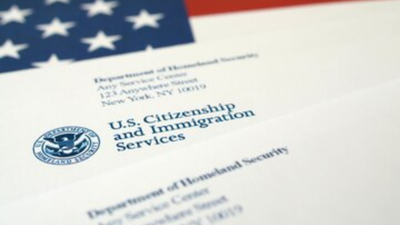
Donald Trump’s administration announced an overhaul of the asylum system on Friday to ease the burden of unfounded claims. Asylum applicants could have their work permits suspended for years under the proposed rules.“Fraudulent asylum claims have long been a shortcut to working in the United States, flooding our immigration system with a flood of unfounded claims,” a Department of Homeland Security spokesperson said. “We are proposing an overhaul of the asylum system to enforce the rules and reduce the backlog we inherited from the previous administration. Aliens are not authorized to work while we process asylum claims. The Trump Administration is increasing the review of asylum applicants and restoring the integrity of the asylum and work authorization processes.

1.4 million pending asylum applications—a state’s entire population

The government cited figures to explain the pressure on the system. The report states that U.S. Citizenship and Immigration Services currently has more than 1.4 million pending asylum applications, equivalent to the entire population of New Hampshire. The rule, if finalized, will reduce incentives to file frivolous, fraudulent, or otherwise baseless asylum claims by changing application and eligibility requirements for aliens requesting employment authorization based on pending asylum claims.

What are the new asylum rules?

  • New asylum applicants will not be granted work authorization until the average processing time for some asylum applications reaches 180 days or less.
  • It could take 14 to 173 years to reach a level where work permits can be resumed.
  • Immigrants who entered the United States illegally will not receive new work permits. They will be exempted only if they tell U.S. authorities within 48 hours of entry that they feared persecution for crossing illegally.
  • Under current rules, asylum seekers can apply for work authorization after a waiting period of approximately 150 days.

Are Uber Eats, Workday and Bet365 now out of business? Users say the service isn’t working properly

0

US users have reported issues with Uber Eats, Workday and Bet365, with many saying the services are currently unavailable.

Uber Eats is out of business. (Bloomberg)

According to DownDetector, reports of outages across all three platforms began around 1:30 pm ET on Friday.

Uber Eats appears to be the hardest hit, with nearly 4,000 outage reports logged as of 1:40 p.m.

One user complained on X: “Imagine you’re hungry and the Uber Eats app is down.”

Another added, “So my Uber eats app stopped working while my order was being sent.”

A third user said, “What’s the point of having an Uber One when Uber Eats is so unreliable? Last time we tried to order, you wouldn’t let us order because you said there were no drivers and now the whole app is down. We’re wasting our money!”

Another reported, “Unable to access the Uber Eats section on the Uber app.”

Another user wrote: “I rarely order food. Of course, today I wanted to order food but Uber Eats was down.”

Workday and Bet365 each have over 500 reports.

BRO snow clearing, NH-701A opens ahead of schedule | India News

0

BRO clears snow, NH-701A opens early

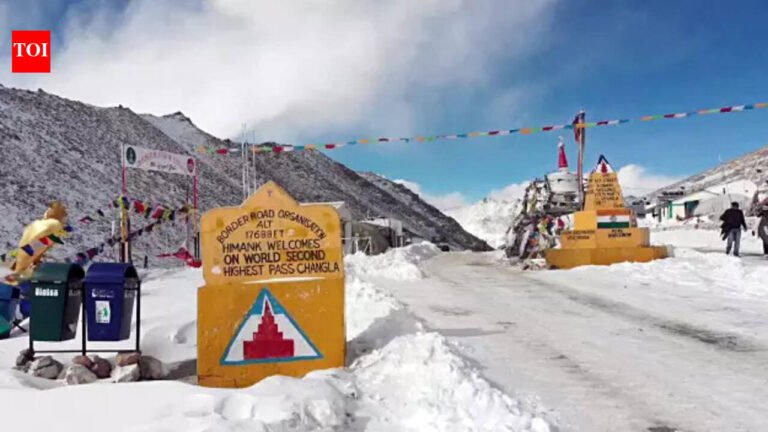
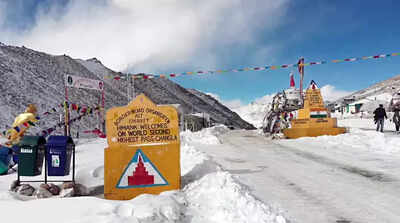
Jammu: The Border Roads Organization has completed snow removal work on National Highway 701A (Old Mughal Road) and two sections of it were opened early on Friday. These roads usually open around the end of March.The BRO team cleared the stretch from Bufliaz (Poonch) to Peer Ki Gali (Poonch) under the Sampark project and from Shopian to Peer Ki Gali under the Beacon project. “MoRTH Director General VK Rajawat and CE Project Sampark and Beacon were present at Peer Ki Gali during the opening of the road,” Defense PRO Lieutenant Colonel Suneel Bartwal said on Friday.“Snow remains on adjoining slopes in some vulnerable locations. “Due to the current weather conditions, the possibility of an avalanche cannot be ruled out,” Lieutenant Colonel Batwal said, urging commuters to adhere to traffic warnings issued by the Poonch and Shopian district administrations.An official spokesperson advised commuters to take extra care when traveling on this stretch of road. “Operations may be adjusted based on weather conditions and authorities’ safety assessments,” the spokesman said.“DG MoRTH commended all those involved in the snow clearing operation in extremely adverse weather conditions. He said route survey and widening plan of NH-701A is on,” Colonel Batwal said. “During the visit, DF MoRTH also reviewed the work progress of NH-144A in all kits and gave instructions to expedite the progress,” he added.

Ohio teacher shot to death: ‘American Idol’ husband arrested for murder

0

Ohio teacher shot to death: 'American Idol' husband arrested for murder

An Ohio man accused of murdering his wife, a school teacher and volleyball coach, allegedly shot her in their home and tried to stage the scene to resemble a home invasion, according to court documents and police records.Caleb Flynn, 39, is charged with murder, two counts of felonious assault with a deadly weapon and two counts of tampering with evidence in connection with the death of his wife, Ashley Flynn. The incident occurred early Monday morning at their Tipp City, Ohio, home.Dispatch records show a 911 call was made from inside the house reporting that Ashley Flynn had been shot in the head. The caller also claimed someone had broken into the home and the garage door was open. Respondents learned the couple’s two children were at the residence and sleeping in their room.However, authorities claim in court documents that Caleb Flynn shot his wife with a 9 mm handgun in the early morning hours of February 16, 2026. Investigators further claimed that he tampered with the crime scene in an attempt to mislead police and divert suspicion.Flynn was taken into custody Thursday night and was being held at the Miami County Jail. He appeared in court on Friday and pleaded not guilty. His bond was set at $2 million. A preliminary hearing in the case is scheduled for February 26.Police said the investigation involved multiple agencies and described the case as complex. In a statement, the Tipp City Police Department thanked the community for its patience and support as investigators worked to unravel the murder.Earlier, police said the incident appeared to be isolated and there was no immediate threat to the public.Ashley Flynn is described as a devoted mother, educator and coach. Caleb Flynn, who previously auditioned as a contestant on American Idol in 2013, publicly expressed his love for his wife in a hometown interview.The investigation remains ongoing as authorities continue to examine evidence and prepare for upcoming court proceedings.

The cost of tariffs paid by U.S. households since Trump took office is huge

0

after United States Supreme Court Overturning President Donald Trump’s tariffs, the minority Joint Economic Committee has released a new report estimating the financial impact on American households.

New data highlights rising costs of Trump's tariffs on American households (AFP)
New data highlights rising costs of Trump’s tariffs on American households (AFP)

Pay more than $1,700 per family

The updated report estimates that each American household has paid more than $1,700 in tariffs since Trump took office. The committee used tariff revenue data collected by the U.S. Treasury Department during the first year of Trump’s term. It also relies on independent estimates from the nonpartisan Congressional Budget Office to calculate the share of every dollar consumers pay in tariffs.

The report found that between February 2025 and January 2026, Americans paid more than $231 billion in total tariff costs. On average, this equates to more than $1,700 per household.

Senators call tariffs ‘disaster’ after Supreme Court ruling

U.S. Senator Maggie Hassan, ranking member of the Joint Economic Committee, criticized the tariffs and welcomed the court’s ruling.

“president trump card“Tariffs have been a disaster for American families, driving up costs at the worst possible time,” Hassan said. “While the Supreme Court correctly ruled that much of Trump’s tariff agenda was an unlawful exercise of presidential power, today’s ruling cannot undo the damage the tariffs have already caused.”

Also read: What is IEEPA? The heart of Trump’s Liberation Day tariffs is law

Supreme Court ruling

The U.S. Supreme Court on Friday rejected President Donald Trump’s sweeping tariff bill in a 6-3 decision. International Emergency Economic Powers Act (IEEPA) The president is not given the authority to impose tariffs.

The ruling, written by Chief Justice John Roberts, said the Trump administration’s interpretation of IEEPA would override the authority of Congress and break the “significant issues” doctrine, which requires major actions to be explicitly approved by Congress.

“The president must ‘point to Congress’ clear authorization’ to justify his extraordinary assertion of authority to impose tariffs,” Roberts wrote, adding, “He cannot.”

The court said the Constitution gives Congress, not the president, the power to impose taxes and tariffs and that Trump exceeded his authority.

India a natural partner in building inclusive, trustworthy AI; Sri Lankan President Dissanayake acknowledges India’s security interests in Indian Ocean India News

0

India is a natural partner in building inclusive, trustworthy AI; Sri Lankan President Dissanayake recognizes India’s security interests in the Indian Ocean

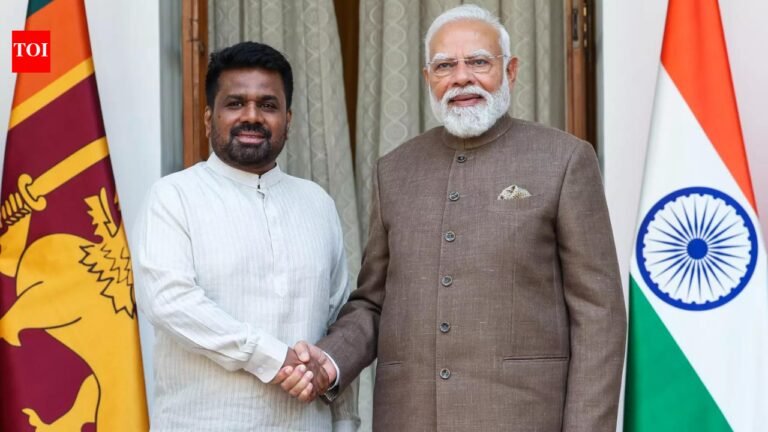
In an exclusive interview your Sachin Parasharpresident of sri lanka Anura Kumar Dissanayake Talking about the importance of the AI ​​Impact Summit, he supported India’s legitimate security interests in the Indian Ocean and expressed Sri Lanka’s hope to resume ETCA negotiations in a progressive and transparent manner. you are visiting india Prime Minister Narendra ModiAI Summit invitation letter. You have spoken in the past about the disparity between countries in AI and the inability of some countries to leverage AI for development due to insufficient infrastructure. What are your expectations for this summit and its outcome documents? We congratulate India for hosting this important AI Impact Summit for countries in the Global South. The summit is not only important for technology, but also for partnerships. Sri Lanka sees this as an opportunity for India and Sri Lanka, and the wider South, to work together to shape AI governance. Artificial intelligence will define competitiveness, public service delivery and economic transformation. For a developing country like ours, access to infrastructure, research networks, and human capital development are crucial. This is the importance of cooperation.For Sri Lanka, the theme of this summit must be the democratization of AI infrastructure and the translation of global principles into practical partnerships in the global South. Sri Lanka has laid the foundation for AI-driven development, including the National Digital Public Infrastructure Framework, AI Governance Structure, Departmental AI Councils and AI Champions Program to build institutional capacity. We are also advancing initiatives to expand our sovereign data centers and AI computing capabilities, including partnering with hyperscale cloud providers and developing infrastructure to support AI-ready workloads. But it remains critical for countries like ours to have access to the global computing ecosystem, research networks, and advanced talent development. Initiatives like the Global AI Impact Share and the Trusted AI Share are important because they can help democratize AI resources and ensure that innovation is not limited to a few developed economies. The real impact of the summit will be in translating principles into practical partnerships and Sri Lanka stands ready to work with India. We are already building such pragmatic partnerships, for example, IIT Madras is hosting 25 Sri Lankan technology startups for six-week internships.What do you think about India’s focus on inclusive and human-centered AI and the fact that the AI ​​Summit is being held for the first time in the Southern Hemisphere? what is sri lanka What’s your stance on artificial intelligence regulation?India’s human-centric approach to AI is closely aligned with Sri Lanka’s own reform and development priorities. Sri Lanka supports a balanced and risk-based regulatory framework that protects citizens while encouraging innovation. Sri Lanka has enacted strong data protection legislation, strengthened its cybersecurity framework, and is establishing a structured AI governance structure to guide responsible adoption. Regional cooperation between Sri Lanka and India can promote interoperability, ethical safeguards and shared learning rather than fragmented standards. AI governance should foster growth, strengthen institutions, and expand opportunity. This is best achieved through partnerships. We see India as a natural collaborator in building a trusted and inclusive AI ecosystem.Looking back, how has your vision for India-Sri Lanka relations evolved over the past 18 months, given your party’s historical suspicion of India and the Indian government’s recent support for Sri Lanka’s economic recovery and aid following Cyclone Ditwa? The first country I visited as President was India; the first foreign leader I hosted as President in Sri Lanka was Prime Minister Narendra Modi. In recognition of India’s support to Sri Lanka under Prime Minister Narendra Modi’s leadership, including during the economic crisis, we confer on him the highest honor Sri Lanka bestows on a foreign leader – Sri Mithra Vibhushana. The ties between our two countries and peoples are deep, historic and civilized. When I visited India as President in December 2024, we adopted the India-Sri Lanka Joint Statement titled “Promoting a Community with a Shared Future”. Relations between our two countries now cover all areas of contemporary relevance to our peoples. India provided important support during Sri Lanka’s economic stabilization period. The same goes for India’s support in the context of cyclone Ditwa. Our relationship today is about structural integration and long-term growth. India is Sri Lanka’s largest trading partner. India is an important investor and the largest source of tourism. Just a few days ago, we welcomed a large number of Indians to Sri Lanka to watch the India-Pakistan T20 Cricket World Cup match. We are exploring expanding cooperation in energy connectivity and renewable energy; digital systems and public infrastructure; maritime security and Indian Ocean stability and security; ports, logistics and supply chains; skills and human capital development and a range of other areas. We are willing to consider all possible cooperation. The strength of Sri Lanka’s economy complements India’s growth trajectory. When Sri Lanka and India work together, it will enhance regional stability and economic resilience across the Indian Ocean region.Your government appears to be engaging in a difficult balancing act as it looks to secure Chinese investment without jeopardizing India’s security. As Sri Lanka hopes to finalize standard operating procedures for foreign research vessels this year, will it consider India’s concerns about not allowing ships with dual-use capabilities to dock in Sri Lanka? Sri Lanka pursues an independent foreign policy. At the same time, geography determines liability. We recognize India’s legitimate security interests in the Indian Ocean region. Our security is intertwined. We signed a defense cooperation agreement between the two countries. Sri Lanka will not allow its territory to be used to undermine the security of other countries. Stability in the Indian Ocean region is our common responsibility, and Sri Lanka will always work closely with India to jointly safeguard this responsibility. Negotiations on the Economic and Technical Cooperation Agreement remain at an impasse. You have emphasized economic freedom, but given growing economic ties, do you think now is the time to sign a deal?Sri Lanka believes that now is the best time to re-strengthen its economic engagement with India. Global trade dynamics are changing. India is expanding its trade architecture. Sri Lanka will explore how to integrate into this growth environment in a mutually beneficial manner. We hope to restart the discussion on ETCA in a progressive and transparent manner. We are expanding our free trade zone capacity and welcome Indian investment. In addition to the trade agreement, the port partnership between Sri Lanka and India offers huge opportunities. Sri Lanka’s ports have emerged as major transshipment hubs for Indian cargo. By deepening our cooperation, we can: position Sri Lanka as a logistics and value-added partner for Indian manufacturing; develop maritime services joint ventures; strengthen industrial connectivity; and integrate more closely into regional supply chains. Economic integration should create jobs in Sri Lanka and enhance the resilience of both economies. Our direction is clear: deepening cooperation with India, structural integration, common growth, and mutual benefit.