When Disney Jr. launches a new pint-sized superhero online, it’s probably expecting giggles and sparkles. Hey Ajay! ——But something unexpected happened. Episode 8 of the animated series unveiled “Captain Durag,” a caped crusader who was meant to celebrate black culture but is now accused by critics of leaning into stereotypes. What was intended to be a funny show instead sparked a heated online debate, especially when the episode was launched during Black History Month.According to the show’s premise, “‘Hey AJ!’ is a high-energy adventure comedy that tells the story of AJ, a curious and imaginative 7-year-old girl.”The superhero wears a durag covering his face as a mask, a purple superhero costume and a cape. In the show, the superhero has his own show and serves as an inspiration for AJ. According to International Business Times, Captain Dulag taught her how to clean a house and fold laundry.The creators believed this was representation, but critics objected to this depiction. In the show, Captain Dulag’s legend is that he is a superhero who takes care of Slime City by cleaning up trash and fighting off trash monsters.In anOn TikTok, content creator Eli (elijxhvega) criticized the show. He said, “Should Captain Durag be some kind of representation? Like, am I missing something? This is not what we mean when we say we want black superheroes without power! Fact! This man, Martellus Bennett, needs to be tried for the crimes he has committed against the black community!”Eli called the show “ridiculous” and said it was not a satire but a children’s show. “So not only is this ridiculous and outrageous, but to air this shit during Black History Month requires some form of justice against this villain,” he said.Amid the backlash, one of the writers of “Hey AJ!” Response Captain Dulag received backlash from the community.Camille Corbett said in the X post that she created the character to celebrate black culture and give children a superhero of their own. She wrote: “I created the character Duragman who is now called Captain Duragman on the Disney show and hey AJ I just find that people find it problematic? I just want our culture to have a superhero of our own!”She added, “He’s just a homage to blaxploitation films and a satire of respectability politics.” Corbett also said Captain Durag will have many adventures in the coming episodes, saying: “The garbage man got his way! I don’t think we should belittle the work that makes our society work.”Corbett also posted on TikTok, encouraging everyone to “take a deep breath together and free ourselves from the constraints of respectability politics,” adding that black culture finally has a superhero.“Where is the joy? Why is everything so serious? We have to celebrate our people,” she said.She asked, “What’s better than using a durag? Because me, I own a six-foot durag and when I put it on, it makes me feel like a superhero. Why can’t someone be like AJ?”“I really beg you to give this show another chance,” Corbett added.
‘Bhupon Bora joins BJP’: Assam chief minister after meeting disgruntled Congress leader India News
New Delhi: Chief Minister of Assam Himanta Biswa Sarma Former state Congress chief Bhupan Bora will join the Bharatiya Janata Party (BJP) on February 22, it was announced on Tuesday. Sarma met Bora at his residence in Guwahati this evening.Sarma told reporters, “Bhubun Bora will join the BJP on February 22. Dilip Sakya will work out the details. Along with him, many Congress leaders from Guwahati and North Lakhimpur will also join the BJP.”He described Bora as “the last recognized Hindu leader in the Congress” and said the national leadership of the BJP had approved his induction. “Our national President Nitin Nabin has approved his entry and welcomed him. Bhupen Bora will be treated with all due respect and dignity,” Sarma said.Calling the move a “homecoming”, the chief minister said, “Joining the BJP is like a homecoming for him because there are many people like him in this party whose fathers did not hold any senior office.”
Is today Fat Tuesday? About the History, Significance and Significance of Carnival
called carnival In French-speaking areas, Fat Tuesday is also known as “Mardi Gras Tuesday,” “Shrove Tuesday” and “Pancake Tuesday.” Regardless of its name, the centerpiece of the celebration is the feasts, celebrations and processions that precede the start of Lent.

Grease Tuesday is celebrated around the world, starting with new orleans Paris flies to Rio de Janeiro and Venice. While the holiday has important religious origins, over the past hundred years it has evolved into a cultural event and is now commonly associated with beaded necklaces, king cakes, masquerade masks and the consumption of spirits.
What is Fat Tuesday or Mardi Gras?
Traditionally, this day is known for indulgence, following the custom of eating greasy food before Eid. Christianity Lent, defined by fasting and abstinence.
Ash Wednesday, which falls immediately after February 18, marks the beginning of the Lenten season, a 40-day period of reflection before Easter.
Mardi Gras is often associated with extravagant celebrations, and is considered the last and “most important day of celebration,” as one of the largest celebrations, New Orleans Mardi Gras, says.
What are other names for Carnival?
Whether it’s called Fat Tuesday, Shrove Tuesday, or the end of Mardi Gras, Carnival has different names.
Shrove Tuesday stems from the tradition of “confession,” which, as the Old Farmer’s Almanac notes, involves purifying oneself through penance before Lent. It is also known as “Carnival” and represents the festival that begins on January 6th.
In addition, this day is recognized by other titles. In south-central Pennsylvania, this day is known as Fasnacht Day. In Europe, this day is often called Pancake Day.
How do people commemorate Fat Tuesday?
Fat Tuesday celebrations include lavish banquets, lively masquerade celebrations, lively parades and enthusiastic drinking and dancing.
Attendees often dress themselves in purple, gold and green, with costumes, sporting masks and beaded necklaces to enhance the joyful and festive atmosphere. King cakes are a traditional feature of these festivals, and grand parades and balls are organized by krewes.
What is the origin of Fat Tuesday?
According to historians, Fat Tuesday originated in ancient Roman times and dates back thousands of years.
Originally, people celebrated this festival to celebrate the harvest season. However, as Christianity spread across Europe, the holiday changed from its original pagan custom to a period of indulgence before Lent.
Despite its strong ties to religion, the celebrations still resemble contemporary customs – featuring festivities, feasts, masquerades and dances.
Fat Tuesday became recognized around the world as European colonists introduced their customs to the territories they occupied.
What is king cake?
According to Southernliving.com, the classic king cake is made from luxurious brioche dough, comes in a variety of filling options such as chocolate, cinnamon and cream cheese, and is topped with glaze and brightly colored powdered sugar in gold, green and purple.
The king cake is made without a center core and a small plastic baby figurine is placed inside. Each color symbolizes a specific meaning:
Gold: Symbolizes strength
Green: related to faith
Purple: represents justice.
Husband catches Indiana school secretary having sex with student World News
A 31-year-old Union City school secretary was arrested following a police investigation into allegations she had sex with two students, authorities said.According to police, officers received a report of a domestic battery over the weekend. During the investigation, police learned the woman’s husband spotted her with an 18-year-old student and confronted her. The Randolph County Sheriff’s Department is separately investigating the reported domestic incident.The initial reaction prompted police to further investigate the woman’s actions. Investigators identified her as Alicia Hughes, who was employed by the Randolph Eastern School Corporation as a secretary. Police said Hughes also had a separate sexual relationship with a 17-year-old student.Authorities said the alleged relationship with the minor occurred on multiple occasions. Hughes was arrested and charged with five counts of child grooming in connection with that charge. Police have not announced any charges over what happened to the 18-year-old student.Hughes was taken into custody and transported to the Randolph County Jail, where he is being held on $25,000 cash bail. Her husband has not been identified, and authorities have not said whether charges will be filed in connection with the reported domestic incident.The school corporation confirmed that Hughes has been relieved of duties involving students while legal proceedings continue. School district officials said they would not comment further due to the ongoing investigation and the need to protect student privacy.The Union City Police Department said the investigation is ongoing and more information may be released as the case progresses.
What is PSP? Reverend Jesse Jackson suffered from rare neurodegenerative disease
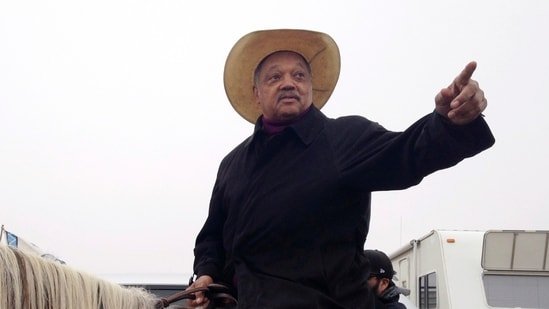
priest. Jesse JacksonA prominent figure in the civil rights movement who fought alongside him martin luther king Jr., who promoted global hostage negotiations and criticized corporate diversity and lack of support for voting rights, has died. He is 84 years old.

The civil rights leader was diagnosed with Parkinson’s disease The illness occurred more than ten years ago. He was admitted to the hospital on November 12 last year after a long battle with progressive supranuclear palsy (PSP), a progressive neuromuscular disease similar to Parkinson’s disease.
What is progressive supranuclear palsy (PSP)?
Progressive supranuclear palsy is a rare neurological disorder that affects walking, balance, eye movements, and swallowing. This condition is caused by the degeneration of cells in areas of the brain responsible for body movement, coordination, cognition, and other important functions.
Progressive supranuclear palsy is also called Steele-Richardson-Olszewski syndrome.
The condition gradually worsens over time and can lead to serious complications, including pneumonia and difficulty swallowing.
Currently, there is no cure for progressive supranuclear palsy, so treatment is aimed at reducing symptoms.
It affects movement, balance, eye movements and swallowing. Other symptoms include stiffness, sensitivity to bright light, difficulty sleeping, depression, anxiety and dizziness.
Jackson receives Presidential Medal of Freedom
jackson won Presidential Medal of Freedomran for the Democratic presidential nomination and was recognized as one of the world’s most prominent black activists.
Although the disease has affected his voice and reduced his mobility, he has continued to advocate for civil rights and faced arrest twice in 2021 for opposing Senate filibuster rules. That same year, he and his wife, Jacqueline, were hospitalized in a Chicago hospital with complications from COVID-19.
He made two unsuccessful attempts to become the first black president of the United States, and his career was marked by controversy.
Jackson was born in Greenville, South Carolina, in October 1941, the son of a 16-year-old schoolgirl named Helen Burns and her older married neighbor Noah.
A year later, his mother married postal worker Charles Jackson, who adopted the young child.
‘We are open’: Ashwini Vaishnaw apologizes for inconvenience, sets up ‘war room’ at AI Impact Summit | India News
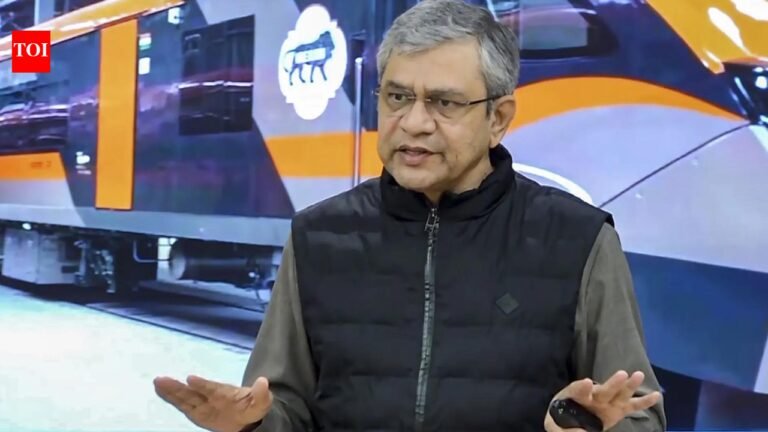
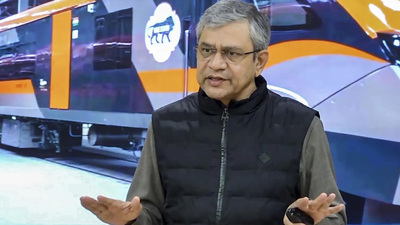
New Delhi: Union IT Minister Ashwini Vashno On Tuesday, it apologized for the inconvenience caused to organizers, exhibitors and visitors on the opening day of the India Artificial Intelligence Impact Summit and assured that all issues will be resolved and ensure smoother arrangements in the coming days.His remarks came amid reports of long queues, crowds and logistical challenges at the Bharat Mandapam as the five-day summit begins on Monday.
Vishnu told a news conference that the government was open to feedback and had a dedicated system in place to resolve complaints quickly.“Whatever feedback you have, please share it with us. We’re open to it. We have a war room operating right now, and if you have any issues, please report them to us. We will definitely work hard to make everything smoother and more enjoyable for everyone. ” he said.The minister also issued a direct apology to those who experienced difficulties on their first day. “I apologize if anyone had any issues yesterday. We are working very hard. The entire team is working around the clock to organize this, the world’s largest AI summit, and we will do everything we can to make sure it is enjoyable for everyone,” Vaishnaw added.“We apologize if AI Summit exhibitors experience any issues or inconvenience. All issues will be resolved,” he said in a separate statement.Earlier, Congress accused the Center of mismanagement. Party president Mallikarjun Kharge called the situation “utter chaos” and described the government as “PR hungry”, claiming founders, exhibitors and visitors were facing hardship due to lack of basic facilities.He listed complaints such as shortage of food and water, theft of products, failed Digi Yatra, restrictions on laptops and personal electronic devices, acceptance of only cash payments and not digital payments, and high cost of participation without adequate facilities.The AI Impact Summit, touted as the world’s largest AI event, will be held in New Delhi from February 16 to 20. Prime Minister Narendra Modi hosted the event, which attracted thousands of participants, including policymakers, industry leaders, startup founders and global technology executives.More than 20 heads of state and government, including French President Emmanuel Macron and Brazilian President Luiz Inacio Lula da Silva, are expected to attend. Technology leaders such as OpenAI’s Sam Altman and Google’s Sundar Pichai also plan to attend.The summit aims to formulate a “common roadmap for global artificial intelligence governance and cooperation” with the theme of “Humanity, Planet and Progress”. India is positioning itself as a global hub for digital infrastructure and artificial intelligence, with a focus on expanding the use of AI technology and building consensus on responsible AI development.PTI reporters at the venue observed long queues outside the conference hall due to high demand and tight schedule. Organizers said registrations exceeded expectations and reflected strong global interest in AI infrastructure, enterprise adoption and governance.
The ‘Battle of Begums’ chapter ends: Bangladesh turns a new page with a new nawab, Tarique Rahman
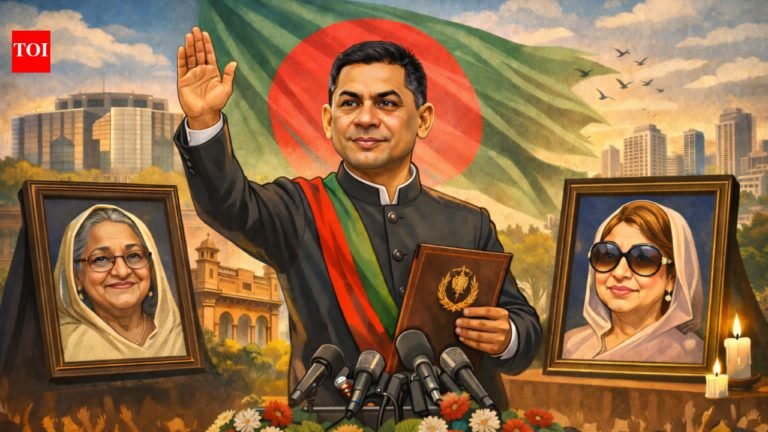
Bangladesh’s decades-long “battle of begums” era has ended, and a new power centre has emerged in Dhaka. With Sheikh Hasina in exile and Khaleda Zia no more, the country is witnessing a political shift that would have seemed improbable even two years ago. After decades of dominance by its two most powerful women leaders, Bangladesh has now democratically elevated a man to its top office: BNP scion Tarique Rahman, marking the beginning of a new chapter in the nation’s politics.Tarique Rahman took oath on Tuesday, becoming Bangladesh’s first male Prime Minister in 35 years.Both towering figures of Bangladesh’s political landscape remained absent from this election, with Hasina’s Awami League not even participating in the general polls. For over three decades, the country’s politics revolved around the “battle of begums” — a rivalry that shaped elections, governance, and Bangladesh’s foreign policy trajectory.Hasina now lives in exile in India after being forced from power by a mass uprising, while Zia’s death following prolonged illness has brought a definitive end to one of South Asia’s most enduring political rivalries.Into this historic vacuum has stepped Tarique Rahman, son of Khaleda Zia and heir to one of Bangladesh’s most influential political dynasties. His return from exile after 17 years, followed by a sweeping electoral victory, has reshaped Bangladesh’s political order, marking the end of the “battle of begums” and the emergence of a new centre of power.Rahman’s ascent is more than a political comeback. It marks a generational shift, the end of a decades-long political order, and the beginning of a new phase in Bangladesh’s leadership under a figure who has moved from exile to elected power.
The end of ‘battle of begums ‘
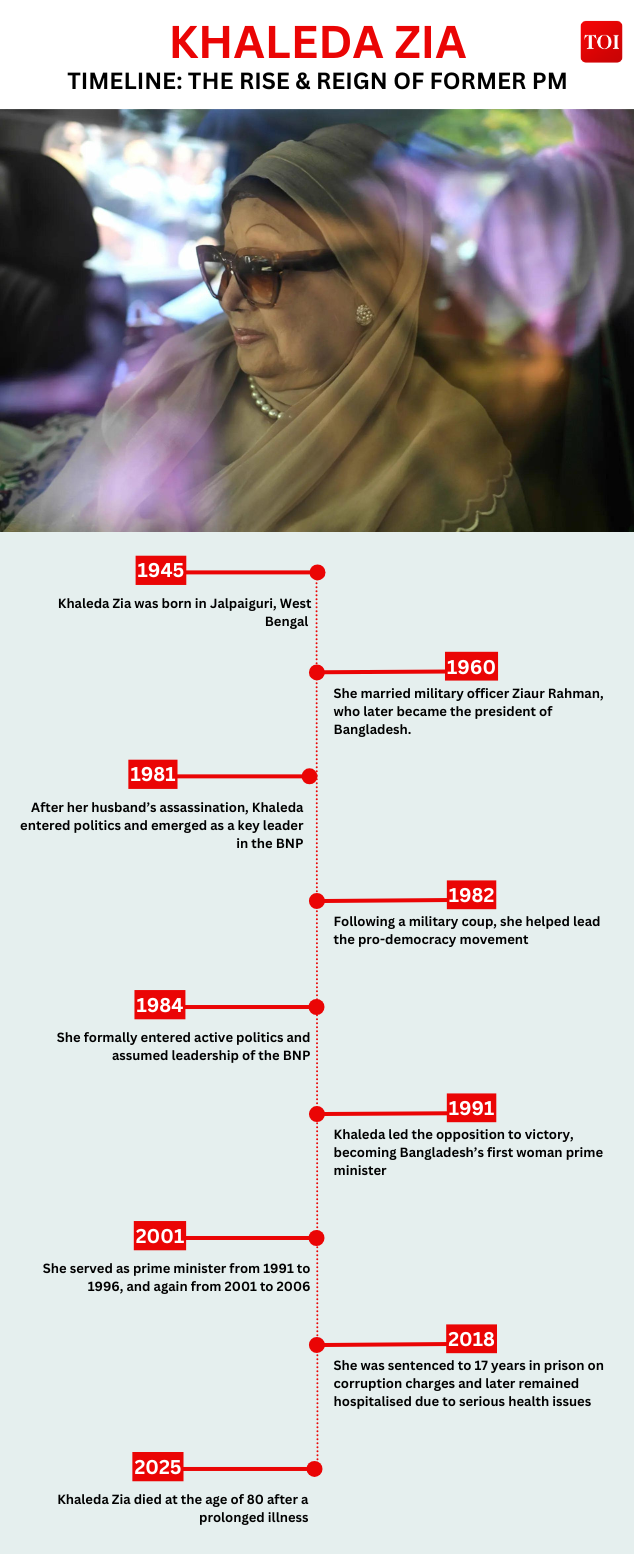
The longstanding rivalry between Sheikh Hasina and Khaleda Zia, two leaders whose personal histories were closely intertwined with Bangladesh’s founding and political evolution.Sheikh Hasina, daughter of Sheikh Mujibur Rahman, the country’s founding father, dominated Bangladesh’s political landscape for much of the past two decades. Her tenure transformed Bangladesh economically and strengthened its global standing. However, in her later years, her leadership drew criticism for being increasingly autocratic, suppressing opposition, weakening democratic institutions, and concentrating power.Her rival, Khaleda Zia, widow of former president Ziaur Rahman and leader of the Bangladesh Nationalist Party (BNP), represented the principal alternative political force. She became Bangladesh’s first female prime minister in 1991 and led governments in 1991, 1996, and 2001. Her political strength ensured that Bangladesh remained defined by a bipolar political system.

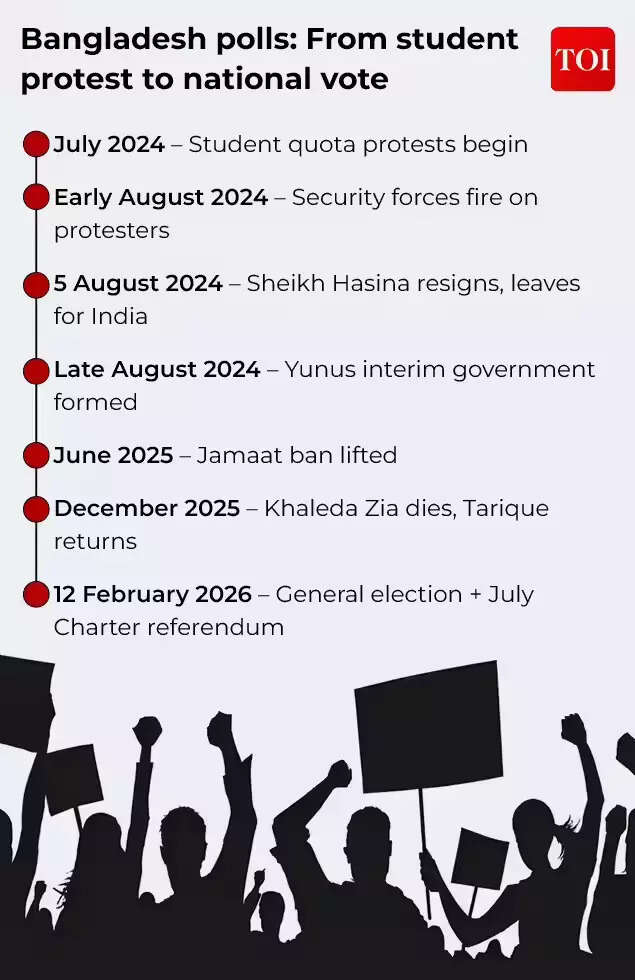
Their rivalry, often described as the “battle of begums,” became the central narrative of Bangladesh’s political life.That era ended abruptly in August 2024.A massive youth-led uprising swept across Bangladesh, driven by frustration over unemployment, economic inequality, and political repression. Tens of thousands of young Bangladeshis poured into the streets, demanding systemic change and accountability. The protests intensified rapidly, spreading from university campuses to cities, highways, and government institutions to ultimately Hasina’s official palace in Dhaka.

The wave of unrest grew so strong that protesters surrounded and stormed Hasina’s residence, leaving her with no option but to flee the country to avoid the fate her father, Sheikh Mujibur Rahman, and his family faced in 1975, when they were killed during a violent uprising.As unrest spiralled, Hasina’s hold on power collapsed. Facing mounting pressure, she fled and took refuge in India, ending her uninterrupted 15-year rule in dramatic fashion.Her departure created an unprecedented political vacuum.Khaleda Zia, once her fiercest rival, was no longer able to step into that space. Years of illness had weakened her physically, even as her symbolic political influence endured. Within days of her son Tarique Rahman’s return to Bangladesh, she died, marking the definitive end of an era defined by her rivalry with Hasina.The “battle of begums,” which had dominated Bangladesh’s political narrative for decades, ended not with an electoral defeat, but with exile and death.
Tarique Rahman’s improbable return from exile
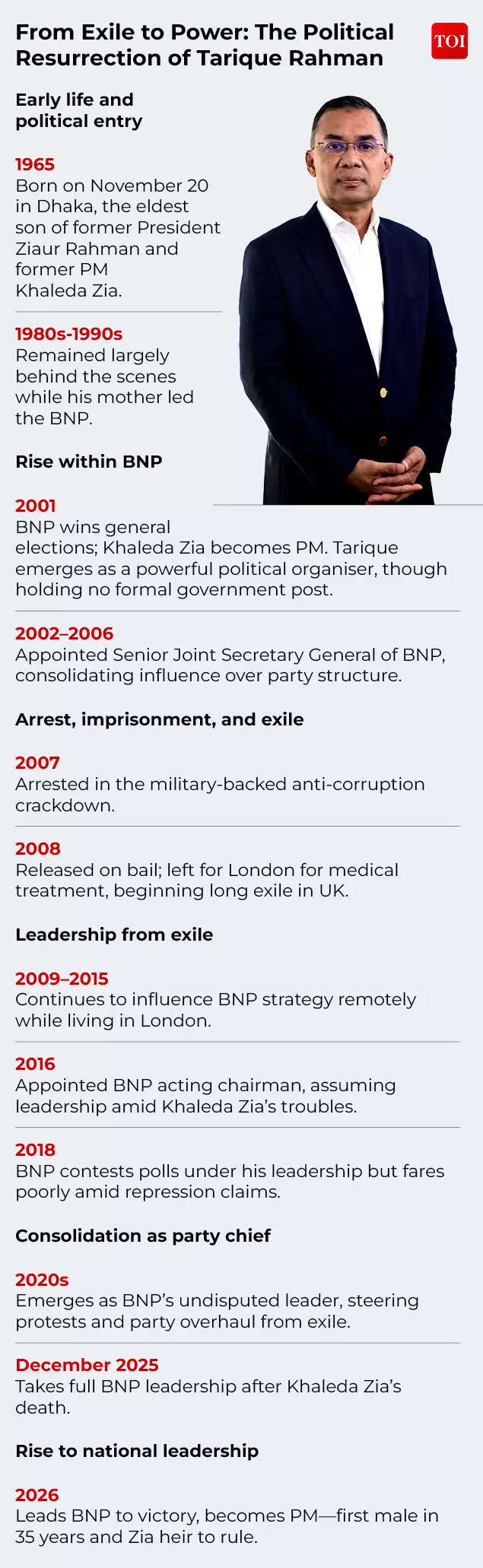
Until recently, Tarique Rahman’s political comeback did not seem foreseeable.Once a controversial and polarising political figure, Rahman went into exile in London in 2008 amid corruption charges and political pressure. For nearly two decades, he remained physically absent from Bangladesh’s political stage.Not even two months after returning from his self-imposed exile of 17 long years, Rahman rose rapidly to prominence.

London-return Tarique Rahman, as soon as landed in country with celebration scenes, boarding a bulletproof bus, painted in the red and green, theme colours of Bangladesh national flag, Dhaka crowd erupted to give him a massive welcome. After Hasina’s exit, this was almost that kind of crowd but in a different mood this time.In his first public address on the same day, also Christmas, he invoked American political veteran Martin Luther King, declaring, “I have a plan.”

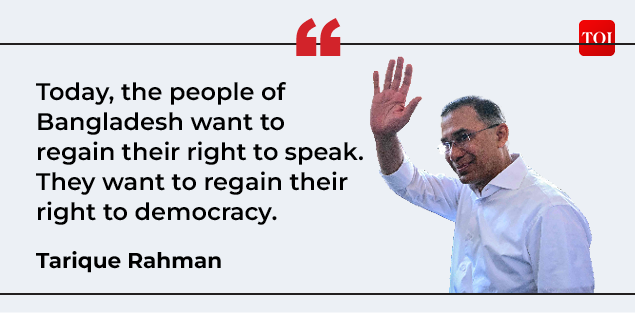
“Today, the people of Bangladesh want to regain their right to speak. They want to regain their right to democracy,” he said in first address.He also struck a reassuring and secular tone in a country shaken by communal tensions, outlining BNP’s inclusive vision ahead of the elections. Rahman stressed on the values of unity and also safety for all citizens of the country.
It is time for us all to build the country together. In this country, there are people from the hills, plains, Muslims, Hindus, Buddhists, Christians. We want to build a safe Bangladesh. In Bangladesh, no matter who a woman, man, or child is, they should be able to leave their homes safely and return safely.
Tarique Rahman
His message was clear: he was positioning himself not merely as a dynastic successor, but as a national leader capable of restoring democratic legitimacy and unity.The strategy resonated with voters.The BNP secured a landslide victory, winning nearly two-thirds of parliamentary seats, restoring the party to power and elevating Rahman to the position of prime minister.
Political inheritance
Rahman’s political rise was marked by personal tragedy.Rahman was struck by a personal tragedy as Khaleda Zia died after a prolonged illness in December.Her death marked not only the loss of a mother but the passing of one of Bangladesh’s most influential political figures and first lady PM.Rahman inherited not only leadership of the BNP but also a powerful political legacy shaped by struggle, violence, and sacrifice.His father, President Ziaur Rahman, who founded the BNP in 1978, had been assassinated in a military coup in 1981 when Tarique was a teenager.Despite years of exile, political isolation and legal battles, Rahman’s return signified both his resilience and his determination to reclaim political relevance.He dedicated his victory to the people.

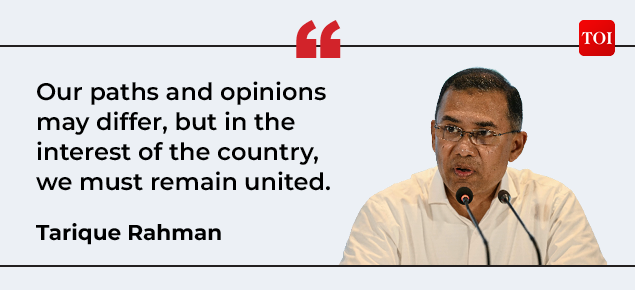
“Our paths and opinions may differ, but in the interest of the country, we must remain united,” he said in his first speech since the election. “I firmly believe that national unity is a collective strength, while division is a weakness.”
July Charter reshapes power as Tarique takes charge
The recently held polls in Bangladesh were different in many ways, as for the first time voters were asked to cast ballots twice—once to choose their next Prime Minister and again to give their consent to the “July Charter”, which seeks to overhaul the nation’s governance structure.The referendum was conducted across all 64 districts under tight security and international observation.The referendum count suggested a commanding “Yes” vote, with most constituencies reporting strong backing from both urban and rural regions, as most major parties—even those with minor disagreements over details—campaigned in favour of the Charter.Under the regulations of the July Charter, the powers of new Prime Minister Tarique Rahman will face closer checks to prevent a return to authoritarianism in the country.The power centre in Dhaka was founded on democratic and secular principles in 1971, following Bangladesh’s independence from Pakistan after the Mukti Bahini-led liberation struggle. Formerly East Pakistan, the country has, from time to time, suffered under autocratic rule.The July National Charter Implementation Order 2025 is a 28-page political agreement signed by Muhammad Yunus and 25 political parties. Its goal is to transform Bangladesh into what many call the “Second Republic”—a state designed to prevent any future return to authoritarianism.
Violence, communal tensions, and fragile stability
Rahman took charge at a time when Bangladesh was facing one of its most unstable internal security situations in years.December proved to be a turbulent month. Dhaka and several other cities witnessed explosions, widespread unrest, and internet shutdowns.Much of the violence was triggered by an assassination attempt on influential student leader Osman Hadi, who later died from his injuries in Singapore.News of his death sparked anger across the country. Violent attacks followed, with minorities, especially Hindu labourers, businessmen, and community members, among those targeted.However, people from other communities were also caught in the violence.Dipu Chandra Das was one of the victims. The 28-year-old garment factory worker was burnt alive on December 18, the same day Hadi’s death was confirmed. His killing shocked the country and drew widespread attention on social media.As Bangladesh voted for a new government under Tarique Rahman, Das’s family said they cast their vote hoping for justice and safety.Rahman’s inclusive messaging and his promise to protect all communities may help reassure minorities and broaden support for the BNP.
Reinventing his leadership style
Since his return, Rahman has tried to present himself as a calmer and more mature leader, ready to move beyond past political conflicts.The image of an aggressive political operator from the BNP’s 2001–2006 era has largely faded.Although he never held an official government position, Rahman was often accused of influencing decisions behind the scenes during his mother Khaleda Zia’s tenure, an allegation he has denied.“What does revenge bring to someone? People have to flee from this country because of revenge. This does not bring anything good,” he said. “What we need at the moment in the country is peace and stability.”During Sheikh Hasina’s rule, Rahman faced multiple corruption cases and was convicted in absentia. In 2018, he was also sentenced to life imprisonment over a 2004 grenade attack on a rally Hasina was addressing.Rahman denied all allegations, calling them politically motivated. Following Hasina’s ouster, he has since been acquitted in these cases.Since returning, he has adopted a more measured tone, avoiding aggressive rhetoric and calling for unity and reconciliation.He has spoken about restoring “people’s ownership of the state” and rebuilding institutions — a message that has energised BNP supporters and raised hopes for political change.
Jamaat’s rise and changing political currents
The elections also marked a significant gain for Jamaat-e-Islami, which won nearly one-third of the parliamentary seats, its strongest performance in decades.Notably, the party did not field a single woman candidate, reflecting its ideological position on women’s role in politics.Its rise signals a shift in Bangladesh’s political landscape, especially after decades dominated by two powerful female leaders, Sheikh Hasina and Khaleda Zia.Two months earlier, Jamaat had surprised observers by forming an alliance with the National Citizen Party (NCP), created in 2025 by leaders of the student uprising.The NCP promised a more inclusive democracy and stronger protection of women’s rights. However, this contrasts with Jamaat’s long-held belief that women’s participation in public life should follow Islamic principles. The election results, meanwhile, suggested that voters gave greater support to Jamaat than to the NCP.This alliance reflects the complex and evolving nature of Bangladesh’s political alliances.
Muhammad Yunus and the interim transition
After Hasina’s departure, Nobel laureate Muhammad Yunus assumed charge as caretaker, leading the interim government during the country’s political transition.Yunus became chief adviser of the interim government.He repeatedly said his role was temporary.Throughout his tenure, Yunus maintained that he had “no desire to be part of the next elected government”.His focus, he said, was to ensure a peaceful and fair transition.According to JNU professor Rajan Kumar, Yunus is likely to remain influential even after the new government takes over.“I think he is likely to remain as an advisor because this government would be favourable to him and they’ll press no charges against him, whatever happened earlier,” Kumar said.“He fits perfectly into that structure. So he’ll remain in some capacity as an advisor — maybe some role of economic adviser, either formal or informal.”
What it means for India
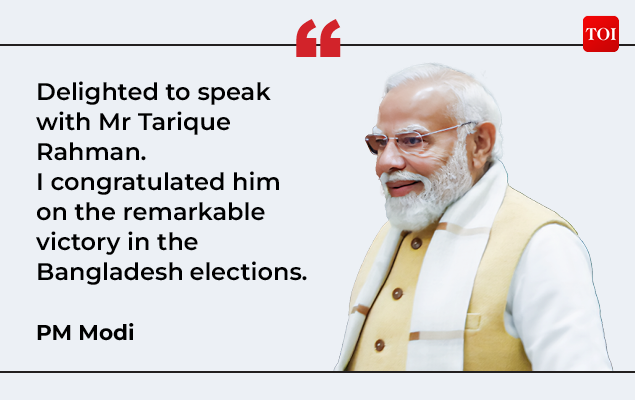
Rahman’s rise carries important implications for India-Bangladesh relations.After Sheikh Hasina fled and took refuge in India, ties between the two countries became strained. The interim government under Yunus did little to improve relations.Rahman, however, moved quickly to reach out diplomatically.Prime Minister Narendra Modi spoke with Rahman and congratulated him.“Delighted to speak with Mr Tarique Rahman. I congratulated him on the remarkable victory in the Bangladesh elections.”

The BNP also thanked India and Prime Minister Modi for recognising the election results and expressed hope for stronger ties.India sent Lok Sabha Speaker Om Birla and Foreign Secretary Vikram Misri to attend the oath-taking ceremony, signalling its willingness to rebuild relations.Under Sheikh Hasina, India was Bangladesh’s closest regional partner. Rahman’s outreach suggests an effort to restore stability and cooperation between the two neighbours.
Bangladesh at a historic crossroads
Tarique Rahman’s rise marks a major turning point in Bangladesh’s political history.For decades, politics was dominated by Sheikh Hasina and Khaleda Zia. Their rivalry shaped the country’s leadership, elections, and direction.That era has now ended.Rahman’s leadership represents both continuity and change — continuity through political legacy, and change through generational transition.He faces major challenges: restoring trust in institutions, maintaining communal harmony, managing rising political forces, and rebuilding foreign relations.Bangladesh now stands at an important moment, entering a new political phase under a leader whose journey reflects the country’s own years of conflict, change, and political transformation.

Scotland 0/0 in 0.0 overs | Scotland vs Nepal Live Score, T20 World Cup 2026: Nepal wins toss, pick bowling vs Scotland
Nepal got off to a promising start and trailed by just four runs in a thrilling 184-run chase against England. However, that match ended in crushing defeats against Italy and West Indies, with batting failures and lack of bowling penetration taking their toll.
Scotland’s campaign is equally high-profile. After losing to the West Indies, England finally brought them back down to earth with a convincing win over Italy. However, their spin attack thrives in Indian conditions and on a surface that offers the most spin in the tournament, they may feel their chances.
For both sides, it was all about finishing strong.
Robert Dorgan Family: Everything we know about ex-wife Rhonda Dorgan and kids after Pawtucket mass shooting
Authorities have identified the person responsible for the Pawtucket hockey arena shooting, rhode island56 years old Robert Dorganalso known as Roberta Esposito.

Three people, including the suspect, were killed in what was described as a “targeted” shooting during a youth hockey game, officials said. Pawtucket Police Chief Tina Goncalves reported that three other victims are currently hospitalized in critical condition. She further stated that the suspect died of an apparent self-inflicted gunshot wound.
Gonsalves publicly named Many rootsDuring Monday night’s news conference, he was at a stadium watching a family member’s hockey game.
Officials said the shooting appeared to be intentional and stemmed from a domestic conflict. Goncalves mentioned Monday night that one person involved was described as a “family friend,” although she did not clarify whether that person was among the killed or injured.
Rhonda Dorgan divorces Rhonda Dorgan and her children
Dorgan’s former spouse, Rhonda Dorgan, filed for divorce in 2020. Initial court documents reportedly mentioned “gender reassignment surgery” and “personality disorder traits” as grounds for divorce, although those grounds were later changed to “irreconcilable differences.” The divorce was finalized in June 2021.
During the legal proceedings, records showed Dogan lived in Jacksonville, Florida, and worked as a truck driver. The couple had at least three children. Authorities have not publicly named the children, but reports say one of the sons is a senior at North Providence High School and a lacrosse player who was present during the shooting.
An adult daughter later communicated with the media that her father suffered from long-term mental health issues. Among the people shot and killed was another adult child, some reports said he was a daughter.