Home Blog Page 641

AI Summit: From Tata Sons Chairman Chandrasekaran’s expansion strategy to Google CEO Pichai’s ‘vision’ – who has the final say | India News

0

Google CEO Pichai praises rise of AI in India, highlights Vizag investment, warns of AI divide

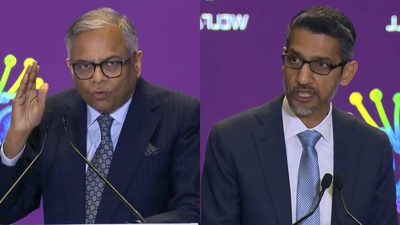
Tata Sons Chairman N Chandrasekaran and Google CEO Sundar Pichai attended the New Delhi Artificial Intelligence Summit

India’s AI ambitions took center stage at the India AI Impact Summit 2026 in New Delhi, where national and global leaders, policymakers and top technology executives discussed how AI could reshape economies, governance and society.From Union Minister Ashwini Vaishnaw’s emphasis on democratizing AI and building sovereign capabilities, to Tata Sons Chairman ChandrasekaranIn describing artificial intelligence as the next big infrastructure shift, speakers defined the technology as transformative and foundational. Additionally, industry leaders such as Google CEO Sundar Pichai and Anthropic CEO Dario Amodei highlighted India’s growing role in the global AI ecosystem, while also pointing out the scale of opportunities and emerging risks.

Google CEO Pichai praises rise of AI in India, highlights Vizag investment, warns of AI divide

On the fourth day of the summit, speakers highlighted themes such as accessibility, sovereignty, infrastructure and inclusive growth, reflecting India’s efforts to position itself as a trusted AI hub in the global South.

‘AI must be democratized and scaled’: Union Minister Ashwini Vaishnaw

Union Minister Ashwini Vaishnaw described AI as a foundational technology that will transform work and decision-making and highlighted India’s comprehensive five-tier AI strategy covering applications, models, computing, infrastructure and energy.“Welcome to the first and largest AI summit in the Southern Hemisphere to date… The true value of technology is in ensuring that it reaches the masses,” Vaishnaw said.“Artificial intelligence is a fundamental technology that will transform work and decision-making, and the Prime Minister’s vision is to democratize and scale it so that it benefits the masses. India is working on all five levels of the AI ​​stack, focusing on practical solutions in areas such as healthcare, agriculture, education and finance. At the model layer, the focus is on sovereignty, believing that more than 90% of use cases can be solved by smaller, more specialized models, providing value at a lower cost. ” he added while addressing heads of state, representatives, industry leaders, students and members of the media.He emphasized the importance of sovereign AI capabilities at the model layer, arguing that most use cases can be solved by smaller, specialized models that provide value at a lower cost.Vaishnaw also announced what he called a key outcome of the summit, the New Delhi Frontier AI Commitment, a voluntary framework adopted by leading global AI companies and India’s leading AI companies. He said the program focuses on two priorities: advancing the use of real-world AI through anonymized, aggregated insights to support evidence-based employment and skills decisions; and strengthening multilingual, use-case evaluation to ensure AI systems work effectively across languages ​​and cultures.

Artificial intelligence is the next major infrastructure: Tata Sons chairman N Chandrasekaran

Chandrasekaran defines AI as a transformative infrastructure shift comparable to the steam engine, electricity, and the Internet. “In my opinion, artificial intelligence is the next big infrastructure. It’s smart infrastructure,” he said.Chandrasekaran believes that AI tools must reach the “last person” and highlights how accessibility will define the technology’s social impact. He cited examples of rapid AI adoption, including rural actors learning and deploying AI tools within hours, as examples of how the technology lowers barriers.He also positioned India as a nation of “AI optimists,” linking the country’s confidence to its record in building large-scale digital public infrastructure, from digital identity systems to payment platforms. He emphasized the need to build capabilities across the entire technology stack, from chips and systems to energy and applications, to ensure long-term competitiveness.

Anthropic CEO Dario Amodei says the energy of building together is palpable

Anthropic CEO Dario Amodei expressed his appreciation for India’s AI ecosystem, praising the country’s unique drive and ambition. “The energy and ambition in this room and across India is incredible… The energy of building together here is palpable and unlike anywhere else,” Amodei said in his speech.Highlighting Anthropic’s growing footprint, he added: “As a sign of our commitment, we have just opened an office in Bengaluru this week… We have also announced partnerships with major Indian players including Infosys.”Amodai highlighted the transformative potential of artificial intelligence, saying the technology could “cure diseases that have been incurable for thousands of years” and “help billions of people escape poverty.” At the same time, he warned of the risks, adding, “I worry about the autonomous behavior of AI models, their potential for abuse… and their potential to cause economic displacement.”

Google CEO: ‘The biggest platform shift of our lifetime’ Sundar Pichai

Google CEO Sundar Pichai has highlighted artificial intelligence as a decisive technological change, describing it as “the biggest platform shift of our lifetimes.” Speaking at the summit, he stressed that AI showed “when humans dream big, anything is possible,” while warning that its benefits “are neither guaranteed nor automatic.”Pichai further mentioned India’s expanding role in global artificial intelligence and noted the rapid development in Visakhapatnam. “I remember it being a quiet and modest coastal city, full of potential. Now…Google is building a full-stack artificial intelligence center as part of our $15 billion infrastructure investment in India,” he said, adding that the facility would bring “gigawatt-scale computing and a new international undersea cable gateway.”Pichai cited scientific breakthroughs in explaining his reasons for optimism about artificial intelligence. “Artificial intelligence can improve the lives of billions of people and solve some of the most difficult problems in science,” he noted, citing AlphaFold’s impact on drug discovery. He added that the Nobel Prize-winning innovation “compresses decades of research into a database that is now open to the world” and is currently used by “more than 3 million researchers in more than 190 countries.”Pichai also emphasized the need for bold and responsible deployment of AI, saying, “We must be equally bold in addressing areas where technology is lacking,” while reiterating the importance of inclusive and responsible development to ensure the benefits of AI are widely shared.

UN Secretary-General António Guterres: “Artificial Intelligence must belong to everyone”

In one of the most direct warnings at the summit, U.N. Secretary-General Antonio Guterres warned that the trajectory of artificial intelligence cannot be determined by “the whims of a few billionaires” or by just a few countries. He stressed that “artificial intelligence must belong to everyone” and pushed for the establishment of global guardrails to ensure oversight, accountability and fairness as the technology rapidly develops.Guterres called on governments and technology leaders to support a proposed $3 billion global artificial intelligence fund aimed at building basic capabilities and ensuring open and fair opportunities. That’s not a huge number, he added, adding that the target represents less than one percent of a major tech company’s annual revenue and calling it “a small price to pay for the proliferation of AI that benefits everyone.”Speaking about the transformative prospects of artificial intelligence, from accelerating medical breakthroughs to enhancing food security and climate resilience, he warned of parallel risks. Without coordinated safeguards, AI could exacerbate inequalities, amplify bias and harm vulnerable groups. He also stressed the need to protect individuals from exploitation, noting that “no child should be a test subject for unregulated artificial intelligence”.In addition to ethics and governance, Guterres also pointed to growing environmental pressures related to AI infrastructure. As energy and water demands from data centers surge, he urged businesses to prioritize clean energy rather than “passing costs onto disadvantaged communities.”

French President Macron: “India’s digital model sets a global benchmark”

French President Emmanuel Macron has spoken about Europe’s role in shaping the future of artificial intelligence, describing the region as a “space for innovation and investment” amid rapid technological change. Addressing the summit, he also hailed India’s digital public infrastructure as a global benchmark.“India has built something that no other country in the world has built. Digital identity for 1.4 billion people. A payments system that now handles 20 billion transactions a month… They call it the India stack – open, interoperable, sovereign. That’s what this summit is about.” Macron said of the scale and impact of India’s digital system.Looking back on past collaborations, he recalled the AI ​​Action Summit co-hosted by France and India in Paris. “We have developed a global guiding principle… that artificial intelligence will be an enabler of faster innovation for us humans… for the benefit of humanity. We all believe in this revolution,” he said.Macron also acknowledged the competitive dynamics surrounding artificial intelligence. “Artificial intelligence has become a major area of ​​strategic competition, with large technology companies becoming more powerful,” he noted, stressing the need for balanced, responsible and investment-driven innovation.

Prime Minister Modi: Artificial intelligence is a global common good and must be trusted and protected

Prime Minister Narendra Modi has positioned artificial intelligence as a shared global responsibility, urging leaders to “develop AI as a global common good.” Emphasizing inclusivity, he said AI must be democratized and become “a tool of inclusion and empowerment, especially for countries in the Global South.” Prime Minister Modi also unveiled the “MANAV Vision” for AI, which has at its core a moral and ethical system, responsible governance and national sovereignty.He stressed that the AI ​​ecosystem must remain “child-safe and family-guided,” while warning that deepfakes and fabricated content were destabilizing open societies. He called for the development of global standards, advocating for authenticity labels, watermarks and clear provenance specifications to embed trust in artificial intelligence technology “from the beginning”, noting that artificial intelligence not only makes machines intelligent, but also amplifies human potential at unprecedented speed and scale.

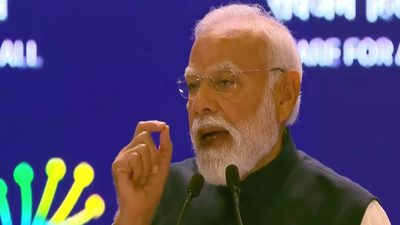
‘Give AI an open sky, but…’: PM Modi praises AI, but warns of caution – Top Quotes India News

0

'Give AI an open sky, but...': PM Modi praises AI, warns of caution - Top quotes

New Delhi: Indian Prime Minister Narendra Modi on Thursday attended the Artificial Intelligence Impact Summit along with world leaders, heads of states and global technology leaders and expressed his appreciation for India’s development in the field of artificial intelligence.In his keynote speech, Prime Minister Modi said that AI needs to be democratized to ensure that humans do not become data points or raw materials.

‘A very positive case study’: Meta AI CEO Alexandr Wang praises India’s AI startup ecosystem

Here are the key quotes from PM Modi’s speech

  • We have seen the devastation of nuclear energy, but also its positive contributions. Likewise, artificial intelligence is a transformative force. Without direction, it leads to chaos; with the right direction, it leads to solutions. How to make artificial intelligence from machine-centered to human-centered, and how to become sensitive and responsible – this is the main purpose of this Global Artificial Intelligence Impact Summit. “
  • India sees a bright future in artificial intelligence. We have the people, energy capabilities and clear policies. I am happy to tell you that at this summit, three Indian companies launched their artificial intelligence models and applications. These models showcase the talent of our young people. I invite everyone to design and develop in India and deliver humanity to the world.
  • We are entering an era where humans and intelligent systems co-create, work together and evolve together.
  • Decades ago, when the Internet was born, no one could have imagined how many jobs it would create. The same is true for artificial intelligence. Today, it is difficult to imagine what kind of job opportunities this field will create in the future. The future of AI jobs is not predetermined. It will depend on our decisions, our approach and our course of action. I believe the future of work is a new opportunity for us. This is the era of humans and intelligent systems working together.
  • Today at the Artificial Intelligence Impact Summit in New Delhi, I presented the MANAV Artificial Intelligence Vision. MANAV means human being and MANAV Vision means M-Moral and Ethical System: Artificial Intelligence should be based on ethical guidance. A-Responsible governance means transparent rules and strong supervision; N-National sovereignty means whose data belongs to him. A-Accessibility and inclusion means AI should be a multiplier, not a monopoly. V-valid and legal means that the AI ​​should be legal and verifiable. India’s MANAV vision will serve as an important link for human welfare in the 21st century AI world.
  • We must be more careful about children’s safety. AI spaces should also be child-safe and family-oriented.
  • Let us commit to developing artificial intelligence as a global common good. A key need today is the establishment of global standards. Deepfakes and fabricated content are destabilizing open societies. In the digital world, content should also have an authenticity label so that people know what is real and what is created by AI. As AI creates more text, images, and videos, the industry increasingly requires watermarking and clear-source standards. Therefore, it is critical to build this trust into the technology from the beginning.
  • To artificial intelligence, humans are just data points. To ensure that humans are not reduced to mere raw materials, AI must be democratized. It must be a medium of inclusion and empowerment, especially in countries of the Global South. We must give AI an open sky, but also put the command in our hands like GPS. GPS shows us the way, but the final decision about which direction we should take rests with us. The direction we take in artificial intelligence today will determine our future.
  • The speed at which the world’s youth are embracing and mastering AI is commendable. Young people have great enthusiasm for the Artificial Intelligence Summit.
  • Artificial intelligence is a transformative force. If there is no direction, it becomes a distraction; if the right direction is found, it becomes the solution. How to transform artificial intelligence from machine-centered to human-centered, and how to make it sensitive and responsive are the basic goals of this Global Artificial Intelligence Impact Summit. The theme of the summit clearly reflects India’s perspective on artificial intelligence. The welfare of all beings, the happiness of all beings. This is our baseline.
  • We must make skills training, reskilling and lifelong learning a mass movement. The future of work will be inclusive, trustworthy, and people-centered. If we move forward together, AI will advance human potential.
  • We must have a big vision and an equally big responsibility. Like the current generation, we must also worry about what form of artificial intelligence we will hand over to the next generation. So the real question today is not what AI can do in the future. The question is, what do we do with artificial intelligence now? Such problems have been faced by mankind before. The most powerful example is nuclear energy. We have seen its destruction as well as its positive contributions.
  • I welcome you all to the world’s most historic Artificial Intelligence Summit. India is the center of the world’s largest technology pool. For countries in the southern hemisphere, it is a matter of pride for the Artificial Intelligence Summit to be held in India.
  • When signals were first transmitted wirelessly, no one imagined that one day the entire world would be connected in real time. Artificial intelligence is a revolution in human history. What we are seeing today and what we are predicting is just the beginning of its impact.
  • Artificial intelligence is making machines smarter, but more importantly, it is also exponentially improving human capabilities. The only difference is: this time the speed is unprecedented and the scale is unexpected. Earlier, the impact of technology often took decades to manifest. Today, the journey from machine learning to learning machines is faster, deeper, and broader than ever before.

‘Culturally insensitive’: Mamata slams PM Modi over ‘Swami’ prefix in Ramakrishna’s name India News

0

'Culturally insensitive': Mamata slams PM Modi over 'Swami' prefix in Ramakrishna's name

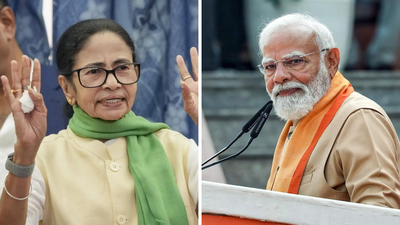
New Delhi: Chief Minister of West Bengal Mamata Banerjee Thursday launched scathing attack on PM Narendra Modi While paying tribute to Sri Sri Ramakrishna Paramahamsadeva on his birth anniversary, an “unprecedented and inappropriate prefix” has been added to his name.Mamata accused the Prime Minister of “displaying aggressive cultural insensitivity towards the great men of Bengal”.

‘Targeting people like terrorists’: Mamata Banerjee cites Bangladesh polls to attack EU Commission over SIR

“Once again our Prime Minister has shown cultural insensitivity to a great personality of Bengal. Today is the janmatithi of Yugavatara (the incarnation of God in our time) Sri Sri Ramakrishna Paramahansadeva. While trying to pay tribute to this great saint on this occasion, our Prime Minister has added an unprecedented and inappropriate prefix of ‘Swami’ to the name of this great saint!” Mamata said in X’s social media post.“It is known that Sri Ramakrishna was widely revered as Thakur (literally God). Although his ascetic disciples formed the Ramakrishna Math Society and the Ramakrishna Mission after the death of the Master, and these monks were called “Swami” according to Indian tradition, the Master, Acharya himself, was still known as Thakur “The prefix ‘Swami’ refers to his disciples in the Hindu Order of Ramakrishna; but the holy trinity of the Order remains Thakur-Ma-Swamiji, Thakur is Sri Ramakrishna Paramahansadeva, Ma Sri Rama Sarada and Swamiji is Swami Vivekananda,” she added.Earlier in the day, Prime Minister Modi paid tribute to Swami Ramakrishna Paramahansa on his birth anniversary and said his noble thoughts will always be a source of inspiration.“On the occasion of Swami Ramakrishna Paramahansa’s birth anniversary, a tribute is paid to him. The way he established spirituality and meditation as important life forces will continue to bless humanity in every era. His noble thoughts and messages will always be a source of inspiration. “Modi said in a Hindi post on X.Ramakrishna Paramahansa was born on this day in 1836.Ramakrishna Paramahansa served as the priest of the Dakshineswar Kali Temple in Kolkata and was famous for his teachings on religious harmony.Ramakrishna Mathematics and Ramakrishna Mission were founded by Sri Ramakrishna and his chief disciple Swami Vivekananda.The Ramakrishna Mathematical Society and the Ramakrishna Mission are world-wide, non-political, non-sectarian spiritual organizations that have been engaged in various forms of humanitarian and social service activities for more than a century.

PM Modi’s nameplate carries ‘Bharat’ message at AI summit | India News

0

PM Modi's nameplate carries 'Bharat' message at AI summit

New Delhi: Prime Minister Narendra Modi addresses plenary session on Thursday Artificial Intelligence Impact Summitcalling on the international community to transform the current technological disruption into humanity’s greatest opportunity.Addressing the plenary session, Prime Minister Modi expressed confidence that the summit will help shape a more ethical and responsive digital future.

From 1910 to present: PM Modi retells Veer Savarkar legend in meeting with French President Macron

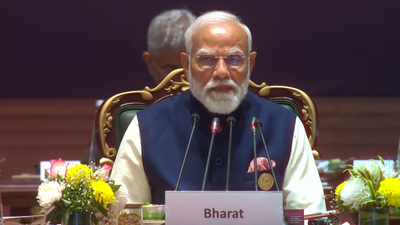
In addition to his address, equally eye-catching is the nameplate on the desk he sits behind.The placard read “Bharat” instead of “India”.This is not the first time that the name ‘Bharat’ has been used to refer to the country at official events around the world.During the G20 summit in New Delhi in 2024, “Bharat” placards were used, sparking widespread controversy. Moreover, in the invitation issued by President Dhurupati Murmu to world leaders, “India” was replaced with “Bharat”.The word “Bharat” also appears in a G20 manual prepared for foreign delegates titled “Bharat, the Mother of Democracy”. “Bharat is the official name of the country. It is mentioned in the constitution and in discussions of 1946-48,” the pamphlet reads.“Correct action comes from correct understanding”Prime Minister Modi said in his speech at the plenary session: “I believe this summit will play a vital role in building a human-centered and sensitive global artificial intelligence ecosystem. Looking back at history, we will find that mankind has transformed every disruption into new opportunities. Today, we are faced with such an opportunity again. We must work together to transform this disruption into the greatest opportunity for mankind.”Prime Minister Modi invoked the teachings of Buddha and emphasized the importance of clear and timely decision-making in AI governance.“India is the land of Buddha, who said: ‘Right action comes from right understanding.’ Therefore, it is important that we work together to create a roadmap that demonstrates the true impact of AI. Real impact only occurs when a person makes the right decision at the right time with the right intention. ” he observed.The Prime Minister highlighted the collaborative response during the COVID-19 pandemic, drawing parallels with recent global challenges.“During the global COVID-19 pandemic, the world has seen that when we come together, the impossible is possible. From vaccine development to supply chains, from data sharing to saving lives, collaboration provides solutions,” he said.Earlier in the morning, the Prime Minister attended the opening ceremony of the India AI Impact Summit 2026. French President Macron, United Nations Secretary-General Antonio Guterres and several top industry leaders from around the world also delivered speeches at the ceremony.The first Global Artificial Intelligence Summit to be hosted in the Southern Hemisphere reflects the transformative potential of artificial intelligence, in line with the national vision of “Sarvajana Hitaya, Sarvajana Sukhaya” and the global principle of artificial intelligence for the benefit of humanity.

French nationalist killed: Raphael Arnault, man at center of French political scandal World News

0

French nationalist beaten to death: Meet anti-fascist activist-turned-MP Raphael Arnault at the heart of France's latest political scandal
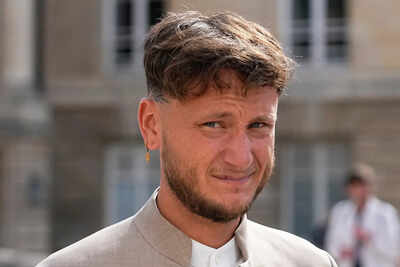
FILE – Raphael Arnault, elected member of far-left party La France Insoumise (LFI), arrives at the National Assembly in Paris, Tuesday, July 9, 2024. (AP Photo/Michel Euler, File)

Deadly street clashes in Lyon sparked one of France’s most explosive political controversies in recent years, thrusting first-term lawmakers into the national spotlight.Earlier this month, 23-year-old nationalist activist Quentin Deranque was brutally beaten to death during a confrontation between far-left and far-right groups, Reuters reported. Prosecutors launched a homicide investigation and police detained multiple suspects in connection with the attack.What turned the incident into a political crisis was the road to parliament. Reuters reported that some of the detainees had ties to the parliamentary office of Raphaël Arnault, a far-left lawmaker from La France Insoumise. French media later identified one of them as a current parliamentary assistant and the other as a former intern, and investigators are looking into whether one of them was directly involved in the attack and whether the other helped the suspect evade police.Arnault himself has not been accused of participating in the violence. He said he had initiated dismissal proceedings after a staff member was arrested and said he would fully cooperate with investigators.

Who is Raphael Arnault

The controversy attracted intense attention because Arnault is not a traditional political figure. His rise reflects a broader shift in European politics, with radical grassroots activism increasingly intertwined with electoral institutions.Before entering parliament, Arnault was best known as the leader of Lyon’s radical anti-fascist network. French authorities disbanded the group in 2023, citing its risk to public order and its involvement in numerous violent confrontations with far-right activists. Arnault also has previous convictions for protest-related violence, which became a major issue during his campaign.This activist background is why the Derank case was politically explosive. Critics argue it highlights the blurred lines between radical movements and institutional politics, while supporters see anti-fascist action as a legitimate political response to extremism.

How did he come to power?

Arnault’s entry into parliament is not the result of a gradual rise in the party’s standing, but the result of a dramatic political moment in France.In 2024, French President Macron dissolved the National Assembly after his party suffered a crushing defeat in the European elections. The surprise vote could split voters on the left and benefit the far right.To prevent this outcome, several left-wing parties formed a broad electoral alliance called the New Popular Front. Under this arrangement, constituencies are divided between coalition partners to ensure that only one left-wing candidate runs for each seat.Arnault was nominated by La France Insoumise in a constituency allocated to the party under the seat-sharing agreement. With the entire left-wing coalition backing him, he benefited from a unified tactical vote in France’s two-round electoral system and won a seat despite a controversial past for his activism.His election is indicative of a broader trend across Europe in which political legitimacy increasingly derives not from traditional party hierarchies but from the mobilizing capacity of grassroots movements.

Why this case is politically explosive

Nine people including French parliamentarian assistant arrested for killing French far-right activist • FRANCE 24 English

The Derank murder has become a national flashpoint because it intersects with several deep tensions in French society.First, Lyon has long been the center of ideological street conflicts between anti-fascist networks and far-right nationalist groups. The city’s history of recurring confrontations gave the event wider symbolic significance.Second, the arrests of individuals linked to the offices of sitting MPs have intensified the debate over whether radical activism can coexist with democratic institutions. Opponents argue that Arnault’s continued ties to radical networks and his hiring choices reflect poor judgment, while allies say he was targeted for political reasons.Third, the controversy unfolds in an already polarized political climate following snap elections in 2024, amplifying its national impact.

The bigger picture

Arnault’s political journey and current controversies illustrate the structural transformation taking place in European democracies. As protest movements increasingly translate street legitimacy into electoral power, unresolved ideological conflicts tend to move from public demonstrations to parliamentary politics.The ongoing investigation into Derank’s death will determine individual criminal responsibility. Whatever the outcome, however, the incident has become a decisive moment in the French debate on radicalism, extremism and the limits of political legitimacy in a deeply polarized society.

Kuwait crackdown on road rage: 45 reckless drivers arrested, 19 teenagers referred to National Safety Campaign

0

Kuwait crackdown on road rage: 45 reckless drivers arrested, 19 teenagers referred to National Safety Campaign
Kuwait traffic crackdown: 45 reckless drivers arrested, 19 teenagers handed over

In order to firmly curb reckless driving and youth-related crimes, KuwaitThe authorities have concluded a major nationwide policing and traffic safety operation, recently arresting 45 reckless drivers and referring 19 teenagers to judicial authorities. The Interior Ministry is leading the effort to combine traffic police forces, patrols and intelligence resources to enforce stricter enforcement of road laws and address growing concerns about public safety on Kuwait’s streets. The campaign reflects a wider strategy to tackle irresponsible behavior linked to deaths, property damage and escalating public unrest.Authorities stress that the increased enforcement is not arbitrary but is a measured response to statistics and community complaints showing an increase in dangerous driving behavior such as speeding, illegal drifting, ignoring traffic signals and other infractions that increase the risk of accidents. By focusing on these priorities, the campaign aims to protect residents and visitors and strengthen respect for the rule of law in one of the Bay’s busiest urban landscapes.

Kuwait National Traffic Control: What Happens and Why It Matters

From coastal highways to urban main roads, traffic law enforcement officers from various provinces and cities have carried out concentrated law enforcement operations against repeat offenders and spontaneous violations. The Department for Transport reported that 45 drivers were detained for reckless behaviour, which included drivers performing stunts, performing dangerous maneuvers and blatantly violating traffic rules in a manner that threatened other road users. The campaign also recorded the following violations:

  • Ignore red lights and fail to obey road signals
  • Driving without a valid license or insurance
  • Speeding beyond the prescribed limit
  • Take part in informal street races

By arresting offenders on the spot, police aim not only to punish unsafe behavior but also to set a clear deterrent example to those who may view dangerous driving as casual indulgence rather than a serious public hazard.Officials stressed that reckless driving is the leading cause of traffic accidents in Kuwait and remains a priority enforcement area for the Ministry of Interior. Through targeted campaigns, authorities hope to drive lasting cultural change and reduce the rates of crash-related injuries and fatalities that have burdened families and emergency services in recent years.

Referral Youth in Kuwait: Addressing Youth Behavior and Transferring Risks

Concurrent with the traffic crackdown, 19 teenagers were handed over to legal authorities for various offenses discovered during the operation. While specific details of each case have not been disclosed, juveniles are often cited when it comes to:

  • Promotes traffic violations (e.g., cycling or encouraging reckless driving)
  • petty property crime
  • Behavior endangering personal or public safety

The handover of the teenagers highlights another aspect of the Home Office’s strategy, which is recognition of the need for responsible legal and social intervention, not just punitive measures. In many jurisdictions, including Kuwait, juveniles referred to authorities may receive rehabilitation programs, legal guidance or supervision designed to help them avoid deeper involvement in crime as they mature.Community observers and youth advocates in Kuwait note that such referrals, combined with educational initiatives, can be an effective way to steer young people away from habits and circles that normalize high-risk behavior.

Traffic Safety and Reckless Driving in Kuwait: Regional Challenges

Kuwait is not the only country facing traffic safety challenges. Across the Gulf, countries have repeatedly identified road accidents and reckless driving as major social problems. Both foreign and local drivers contribute to a diverse driving culture, and authorities respond with tough action, fines, vehicle impoundments and awareness programs.For example:

  • Saudi Arabia Enforcement has been stepped up through advanced traffic surveillance systems and hefty fines, particularly for speeding and using mobile phones while driving.
  • United Arab Emirates Police conducted high-visibility patrols and public education campaigns emphasizing safe driving.
  • Qatar and Bahrain A similar strategy has been adopted to link road safety initiatives to broader public health goals.

In the case of Kuwait, the recent arrests have been publicly announced and serve a dual purpose: to improve safety statistics and to show the community that traffic enforcement is an ongoing priority and not just a periodic operation.

Why Kuwait’s election campaign matters

Road safety is a public health priority. Traffic accidents remain a significant cause of injury and death in many countries, and a proportion of serious collisions in Kuwait are related to reckless behavior. By targeting high-risk drivers, law enforcement hopes to reduce not only violations but also accident rates and emergency hospital admissions. Norms of behavior are at stake. Public perception matters. When drivers regularly see enforcement actions, especially on-the-spot arrests, it reinforces a cultural expectation that compliance with traffic laws is non-negotiable and not optional. Over time, this helps reduce dangerous driving.Youth participation demonstrates community concern. Teenagers were among those cited, suggesting risky behavior is not limited to adult drivers. Addressing youth behavioral problems early can prevent risks from escalating and guide teens and young adults into safer habits and legal awareness. Enforcement changes public behavior. Traffic movements can have a visible deterrent effect, signaling to potential offenders that authorities are actively paying attention and prepared to take action, a dynamic that is more effective than fines alone.

Looking ahead: What’s next for Kuwait traffic enforcement

Reaction to the campaign on social media was mixed, but there was widespread support for stricter enforcement, especially among those who witnessed reckless driving. Many users praised the Ministry of Home Affairs for taking a tough stance, noting that enforcement was long overdue and that speeds in Kedah, Hawali and other busy areas often felt out of control.Some commentators also noted the need for additional measures, such as:

  • School road safety education
  • Public information campaign on the consequences of reckless driving
  • Better pedestrian infrastructure
  • Youth engagement program that teaches legal and driving responsibility

The interplay between law enforcement and community engagement is increasingly recognized as key to long-term behavior change. While recent operations have made headlines with arrests and juvenile referrals, authorities say enforcement will continue and may expand. Possible future priorities may include:

  • Traffic monitoring system technology upgrade
  • Random patrol operations on major highways
  • Public awareness campaigns combined with enforcement arrangements
  • Program for youth to encourage legal knowledge and responsible behavior among teen drivers

The overall message from the Home Office is clear: lawful behavior and public safety are non-negotiable and drivers of all ages must comply with traffic laws if they hope to avoid legal penalties and create a safer environment for everyone. A nationwide operation in Kuwait resulted in the arrest of 45 reckless drivers and the transfer of 19 teenagers for investigation. The crackdown is focusing on dangerous driving behaviour, traffic offenses and youth-related incidents. The authorities aim to improve public safety, road compliance and driving culture. The initiative is part of a wider regional effort to tackle traffic-related deaths and irresponsible behavior. Public reaction has been mostly supportive, calling for supplemental education to accompany enforcement.

‘You’re a Korean immigrant’: US professor defends Indian-American visibility, bans content creators who turn Texas into ‘New Delhi’ in tweets

0

'You're a Korean immigrant': US professor defends Indian-American visibility, bans content creators who turn Texas into 'New Delhi' in tweets
Is Texas becoming “New Delhi”? Social media fight breaks out over India presence

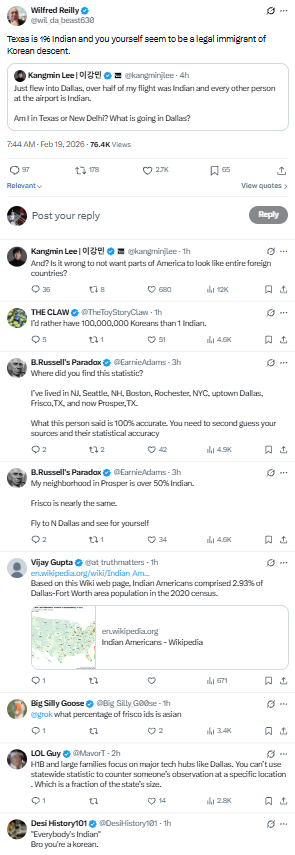
A seemingly casual social media exchange this week drew attention and criticism for highlighting deep tensions in the United States around immigration, demographic change and cultural identity. Scholar and commentator Wilfred Reilly retweeted a post claiming “Texas is 1% Indian,” in response to Korean content creator Kangmin Lee, who observed that many of the passengers on his flight to Dallas, as well as many people at the airport, appeared to be of Indian descent. The response sparked a rapid online debate about race, belonging and who gets to define “real America.”

What happened?

Using his social media handle on X (formerly twitter), Lee Kang-min posted on Thursday morning, “Just flew into Dallas and more than half of my flight was Indian, and everyone else in the airport was Indian. Am I in Texas or New Delhi? What happened in Dallas? (sic). ” Wilfred Reilly retweeted unnecessary hate, arguing, “Texas is 1% Indian and you yourself appear to be a legal immigrant of Korean descent (sic),” to which Bumrunmin replied, “And what? Is it wrong to not want parts of the United States to look like an entire foreign country? (sic).Subsequently, a heated debate ensued in the comment area, with some people amplifying their opinions. indians While some have defended it, the exchange had a much larger context viral There is discussion about the visibility of Indian Americans in parts of Texas, particularly in the Dallas-Fort Worth (DFW) metropolitan area, where Indians form one of the fastest-growing immigrant communities. According to census data, more than 235,000 Indian Americans live in the DFW area, accounting for about 3% of the total population, mainly concentrated in suburbs such as Plano, Frisco and Lewisville, where Indian-owned businesses, cultural centers and communities have flourished in recent decades. Some commentators have repeatedly reframed viral videos showing light-hearted footage of Indian grocery stores and restaurants as evidence that the cultural landscape in parts of Texas is changing “too fast.” In one notable case last year, a viral video of a Ganesh Chaturthi celebration outside a Dallas-area Indian bazaar was repurposed by critics to support claims that Indian customs and immigrants overwhelm local culture, even though many viewed the celebration as a quintessential cultural holiday among expat communities.

Social media reactions to tweets from Korean content creators, stereotypes against Indians, and the politics of belonging in the United States

Reactions online to the tweets and videos have been wildly different. Some users were amused or identified with Lee’s comments, noting that racial diversity is increasingly visible in American cities, especially in tech and university-related communities. Others, including some fringe commentators and MAGA-aligned activists, have seized on the topic to amplify narratives of an “invasion” or cultural takeover.Recently, a conservative commentator in Texas slammed a 90-foot tall statue of Hanuman in a Hindu temple as evidence of an “invasion” by “third world aliens,” echoing similar rhetoric about Indians “taking over” Texas towns.

X (formerly Twitter) users react to Korean content creator's dig at American Indians.

X (formerly Twitter) users react to Korean content creator’s dig at American Indians.

Critics of this framework argue that it fosters xenophobia and anti-immigrant sentiment, and point to demographic change and multiculturalism as long-standing features of American society. Indeed, the debate over H-1B visas, a highly contentious work-related immigration category in U.S. politics, often figures in these discussions, with some voices blaming foreign professionals for what they see as economic pressures on local workers, even as economists emphasize the tech and technology industries’ heavy reliance on global talent.Experts and diaspora commentators warned that what might begin as a comment on community development could quickly devolve into divisive rhetoric if taken out of context. Sree Sreenivasan, an Indian-American senior digital strategist, warned in a recent interview that “anti-India hate is happening in the United States right now,” an example of how broader anxieties about the economy and security are being targeted against immigrants on social media.

Texas, US, microcosm of wider identity debate

Texas has a rich history of immigration and cultural integration, once part of Mexico and now a fusion of Latin, Asian, African and European heritage, often at the center of broader national debates about identity and the reality of demographic change. Many Indian Americans in the Dallas-Fort Worth area work in fields such as information technology, engineering and medicine, forming a vibrant, close-knit community with its own cultural, business and civic institutions.

X (formerly Twitter) users react to Korean content creator's dig at American Indians.

X (formerly Twitter) users react to Korean content creator’s dig at American Indians.

However, social media comments like Lee’s tweet and Riley’s reply show that such topics can be very sensitive, especially when they contain provocative language or broad generalizations. Some believe that pointing out the visibility of a community is just observation; others believe that such comments promote fear-based identity politics that can escalate into xenophobia or shame. Analysts note that while discussions about immigration are legitimate in democratic discourse, these issues must be approached with attention to nuance and awareness of how marginalized groups are affected by broad generalizations.

bottom line

Wilfred Reilly and Kangmin Lee’s exchange on “X” sparked debate about Native American visibility in Texas, touching on sensitive topics such as immigration and cultural change. The Dallas-Fort Worth area has a large Indian-American population, contributing to its multicultural character and economic growth. Some social media users and commentators have described this demographic presence in alarmist terms and linked it to debates over H-1B visas and cultural identity. Analysts warn that online discussions risk amplifying divisive narratives and that promoting context, empathy and accurate data are key to constructive discussions about immigration and community dynamics.

Hugh Hefner appears in Epstein dossier? Playboy founder’s wife Crystal seeks investigation into photos of “possibly” underage girls

0

Crystal Hefner’s widow playboy Founder Hugh Hefnercalling for an investigation into his foundation. She claimed her late husband’s foundation was in possession of his personal scrapbooks and diaries, which contained reams of highly sensitive information and explicit photos of women, “possibly” even underage girls.

Hugh Hefner's widow has claimed the Playboy founder had explicit photos of
Hugh Hefner’s widow has claimed the Playboy founder had explicit photos of “possibly” underage girls, sparking online comparisons to Jeffrey Epstein. (X/@RyJamesGoodman, X/@GeneralMCNews)

The news was announced at a press conference on Tuesday. “The material spans decades, starting in the 1960s. It may include images of underage girls at the time who were unable to consent to how their images were retained or controlled,” Hefner said.

She added, “They may also contain photos of women who did not consent to having their photos taken in the first place.” Hefner also noted that she was fired as CEO and president of the Hugh M. Hefner Foundation on Monday after she refused to resign.

ALSO READ | Howard Lutnick, Cantor Fitzgerald take center stage in Epstein connections; sister Edie Lutnick allegedly linked to Ghislaine Maxwell

Given that Hefner’s announcement comes amid continued interest Jeffrey Epsteinmany are wondering if the Playboy founder is mentioned in Epstein’s documents.

“Oh, I bet Hugh Hefner is in the Epstein dossier,” one person said commented Another added, “Hugh Hefner and Jeffrey Epstein are presumably related. Additionally, multiple accounts over the years have proven that most Playboy bunnies were actually victims of sexual slavery in some way.”

Another person said “They’re basically doing the same damn thing!!!” while one person agree Adding: “I wonder why no one mentions Hugh Hefner… pretty much the same thing happened to him as Epstein but is this socially acceptable?”.

Is Hugh Hefner in the Epstein dossier?

Hugh Hefner died in 2017, two years after Epstein was found dead in his cell in what authorities ruled a suicide. Although people on social media have compared Hefner’s style to Epstein’s, the Playboy founder does not appear directly in Epstein’s files.

In other words, Hefner was not mentioned in Epstein’s client list. However, Hefner’s name does appear in documents related to Epstein in various capacities.

There is one e-mail About the Hugh Hefner auction Epstein learned about. “The Hugh Hefner Auction is now and tomorrow,” the subject line reads.

More relevant is a 2019 email in which Epstein spoke with his then-attorney, David Schoen. When convicted child sex offenders told Epstein they needed “some kind of brief narrative in a public setting,” Schon mentioned Hefner to Epstein.

Epstein wrote to Schon, explain “The girls have money and; a deal… no trafficking. No prepubescent females Jane doe 1 and 2 Worked at a strip club. Before meeting me.” To which the lawyer responded: “There’s a big difference between a 17-year-old or an 18-year-old pretending to be a 19-year-old or a 20-year-old in a story that portrays you as a 14-year-old man/father, etc. Criminals and wealthy people buy their way out of repentance, make all “victims=9D whole (even those with no real claims), get ripped off by opportunistic lawyers who make fortunes off their “victims,” have entire lives changed by scarlet letter sex offenders, etc.

Stunning glass dome wonder inside Al Nasr Mosque in Sharjah to open in Ramadan 2026 | World News

0

The stunning glass dome wonder inside Sharjah's Al Nasr Mosque will open in Ramadan 2026
Sharjah’s new Al Nasr Mosque opens during Ramadan with stunning glass dome / Picture: File

In a city known for its record-breaking skyscrapers, one of its most stunning architectural achievements is hidden in the historic center of Udmeta. The Nasr Mosque (also known as the Nasr Grand Mosque) is a unique masterpiece in the UAE landscape. While most traditional mosques feature solid stone domes, Al Nasr breaks the mold with a structure that gives the impression of reaching up to the sky.

Al Nasr Mosque in Sharjah completed

At the start of Ramadan 2026, Sharjah opened the Al Nasr Mosque, a striking new prayer space designed to serve more than 1,300 worshipers and bring spiritual and architectural beauty to the community.Sheikh Sultan bin Ahmed Al Qasimi, Deputy Ruler of Sharjah, officially opened the mosque on the night of the moon-watching announcement confirming the arrival of Ramadan.Located in the Jabal Omar neighborhood of Al Dhaid, the mosque spans over 7,800 square meters and provides a space for prayer, reflection and social interaction for residents of Sharjah and nearby areas.

glass dome building

The architectural centerpiece of the Nasr Mosque is its large spherical glass dome:

  • It is 20 meters in diameter and 16 meters high, covering almost 80% of the mosque’s roof.
  • It is made from hexagonal glass panels in a honeycomb pattern that reflect light throughout the day.
  • At sunset, when golden light shines through the dome into the prayer hall, the entire space seems to glow, creating a spiritually uplifting atmosphere.

Next to the dome stands a 38-meter-high minaret, whose soft and flowing lines are a modern interpretation of the silhouette of a classical mosque, blending in with the rounded dome rather than strictly following tradition.

welcome believers

The layout of the mosque has been carefully designed to create a sense of comfort and community, providing ample space for worshipers to gather. The main prayer hall provides an intimate setting for 470 worshipers, while the spacious external courtyard and outdoor prayer area can accommodate an additional 1,180 male worshipers, ensuring that large congregations can pray together during peak times. The dedicated women’s prayer hall provides a private and tranquil space for 145 worshipers, bringing the total capacity to more than 1,300 people.In addition to its primary function as a place of worship, the mosque serves as a comprehensive community center. It is equipped with necessary amenities including modern bathing areas, toilets and water stations. For staff and ongoing spiritual guidance, the complex includes the Imam’s residence. It also looks to the future of the community, with practical facilities such as a public reading library and mortuary and ample parking spaces. The interior architecture emphasizes openness and tranquility; the hall is bathed in natural light, complemented by a modern mimbar (pulpit) with built-in soft lighting that enhances the spiritual atmosphere without overwhelming worshipers.

Ramadan’s new landmark

The inauguration of the Al-Nasr Mosque is part of a larger nationwide effort to enhance mosque facilities and support growing congregational numbers across the UAE. In Sharjah, this initiative has led to the construction and renovation of dozens of mosques, ensuring that every community has a modern, well-equipped place of worship. Across the UAE, mosques are expanding their role beyond prayer by launching creative Ramadan programs for families and children to encourage community engagement. These efforts are supported by practical measures such as providing free parking spaces for worshipers in busy areas, reflecting the UAE’s commitment to making the spiritual journey of Ramadan as easy as possible for everyone to enjoy and benefit from it.

New clues in Nancy Guthrie case? Arizona netizen gets attention after searching for 84-year-old’s address and Savannah salary

0

in search Nancy GuthrieSavannah Guthrie’s missing mother, an anonymous internet user Arizona He gained attention for searching Nancy’s address and Savannah’s wages in the weeks before the potential kidnapping. Google Trends data shows Guthrie’s home address was searched on Jan. 11 and she was reported missing three weeks later. It was also searched by someone in the Grand Canyon State between June 21 and June 28, 2025, Fox News Digital reported.

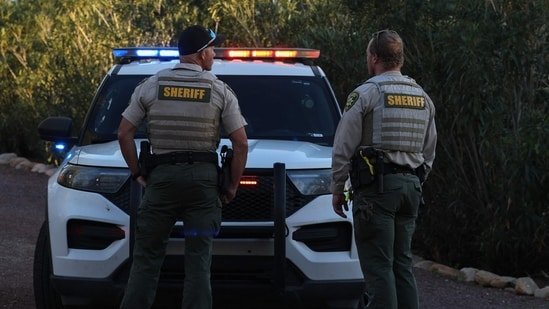
TUCSON, AZ - FEBRUARY 18: A Pima County Sheriff's deputy stands in the driveway of Nancy Guthrie's home on February 18, 2026 in Tucson, Arizona. (Photo by Joe Reddell/Getty Images North America/Getty Images via AFP) (Getty Images via AFP)
TUCSON, AZ – FEBRUARY 18: A Pima County Sheriff’s deputy stands in the driveway of Nancy Guthrie’s home on February 18, 2026 in Tucson, Arizona. (Photo by Joe Reddell/Getty Images North America/Getty Images via AFP) (Getty Images via AFP)

There were also two searches for Google images of Nancy’s house. One was completed between March 1 and 8, 2025, and the other was completed between November 30 and December 1, 2025.

Learn more | Savannah Guthrie’s husband Michael Feldman arrives in Tucson amid search for Nancy, sparking outrage: ‘Where’s he?’

People online appear to be specifically searching for images or maps of houses.

In the weeks before Nancy disappeared on January 31, someone in Tucson also searched for “Savannah Guthrie salary” between December 13 and 20, 2025.

The search for Nancy has entered its 18th day. A reward of up to $100,000 is being offered for information leading to Nancy’s recovery or the arrest and conviction of her kidnapper.

Latest developments of the case

Pima County Sheriff Chris Nanos told NBC that DNA evidence found in Nancy’s home could be traced back to her kidnapper. “We believe there may be some DNA there that could be our suspect,” he said on the Today show on Wednesday morning, February 18.

Learn more | Was the Nancy Guthrie case a “burglary”? Reporter reports 84-year-old man “may still be alive”, latest news released

After Nancy disappeared, TMZ received several purported ransom notes. The outlet posted on social media on Wednesday that the latest information it had received was “very complex and has put the outlet in a difficult position.”

Meanwhile, a source told Fox News that the FBI has contacted Mexican authorities as part of the search. According to TMZ, which received the letter, an alleged ransom note author claimed the 84-year-old was being held “south of the border.”

However, the FBI has not officially confirmed that it is looking for Nancy in Mexico.