Home Blog Page 513

‘Khejri Bachao Andolan’: Why Rajasthan is rallying to protect its ‘Kalpavriksha’? Explained | India News

0

‘Khejri Bachao Andolan': Why Rajasthan is rallying to protect its ‘Kalpavriksha’? Explained

In the heat of Rajasthan’s desert districts, a tree has become the focal point of a widening confrontation. Markets have shut, saints have gone on strike, political rivals have shared protest stages, and thousands have gathered under open skies to demand its protection.What began in Bikaner as a local objection to the alleged felling of khejri trees for solar power projects has since evolved into the ‘Khejri Bachao Andolan’, a statewide campaign pressing for stricter legal safeguards and an immediate ban on cutting the species. The movement has drawn support across party lines, producing a rare moment of political convergence.The khejri, botanically known as Prosopis cineraria and recognised as Rajasthan’s state tree, occupies a distinctive place in the ecology of the Thar desert. Amid the ongoing protests, chief minister Bhajan Lal Sharma, assuring the protection of the khejri, termed the tree as the state’s “Kalpavriksha,” a wish-fulfilling tree in Indian tradition. In an arid landscape where survival is closely tied to ecology, the reference reaffirms the tree’s symbolic and practical importance. For many communities in western Rajasthan, the debate now extends beyond development policy into questions of history, identity and survival.
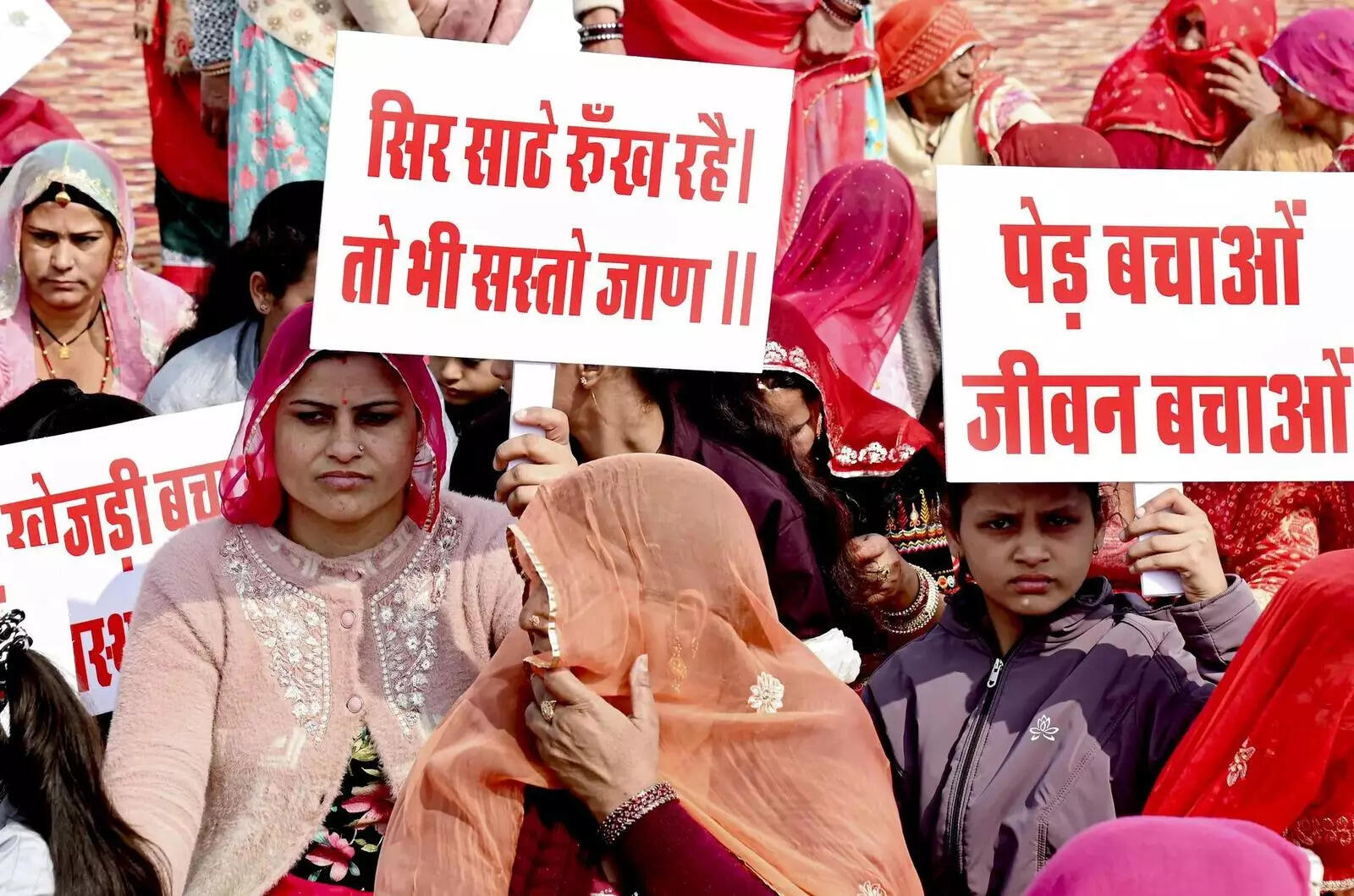
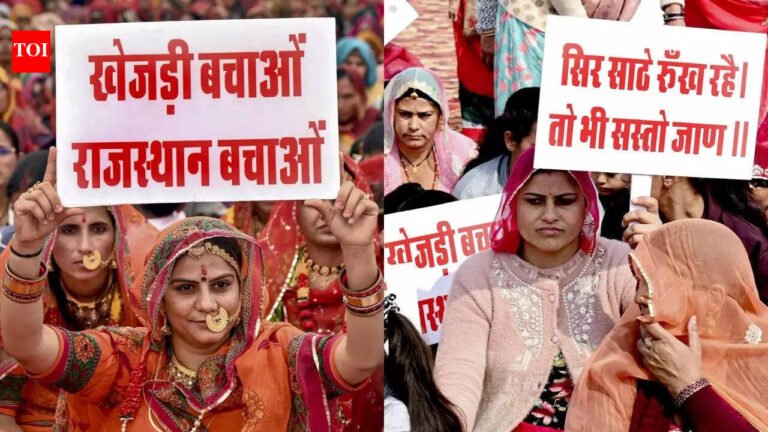
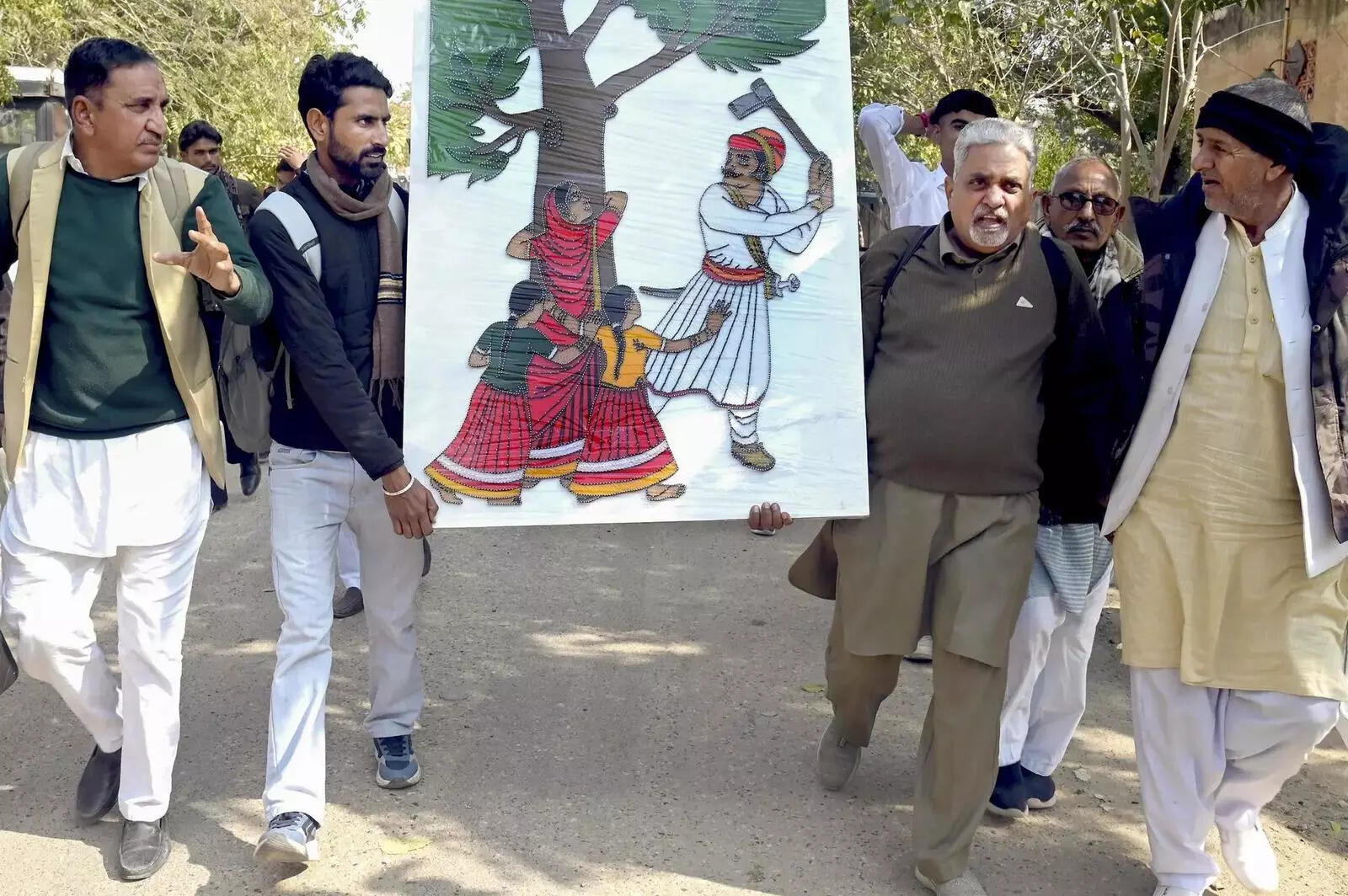
Protest against proposed cutting of Khejri trees in Bikaner (1).

Protestors carried posters featuring a revered proverb in the Bishnoi community: “Sir saanthe rukh rahe to bhi sasto jaan” (If a tree can be saved, even at the cost of one’s head, consider it a bargain). (PTI)

How the agitation unfolded

The present phase of the movement intensified in early February, when over 360 saints and local residents began a hunger strike in Bikaner, demanding an immediate ban on the felling of khejri trees for solar power projects. The protest site was initially the Polytechnic College ground near the Collectorate before shifting to the Bishnoi Dharamshala, where the hunger strike continues.In Bikaner, markets remained closed for hours on Monday after a call by trader associations. Government and private schools in urban areas observed a half-day holiday in solidarity. Thousands gathered at the Polytechnic College ground before marching towards the Collectorate, where organisers announced an indefinite sit-in.Protesters came not only from different districts of Rajasthan but also from Uttar Pradesh, Haryana, Maharashtra and Madhya Pradesh. Organisers said they had arranged food for nearly one lakh participants, with hundreds of volunteers handling logistics. Police deployed additional forces, erected barricades near the Collectorate and kept water cannons on standby. Despite the scale and tensions, the protest remained peaceful.
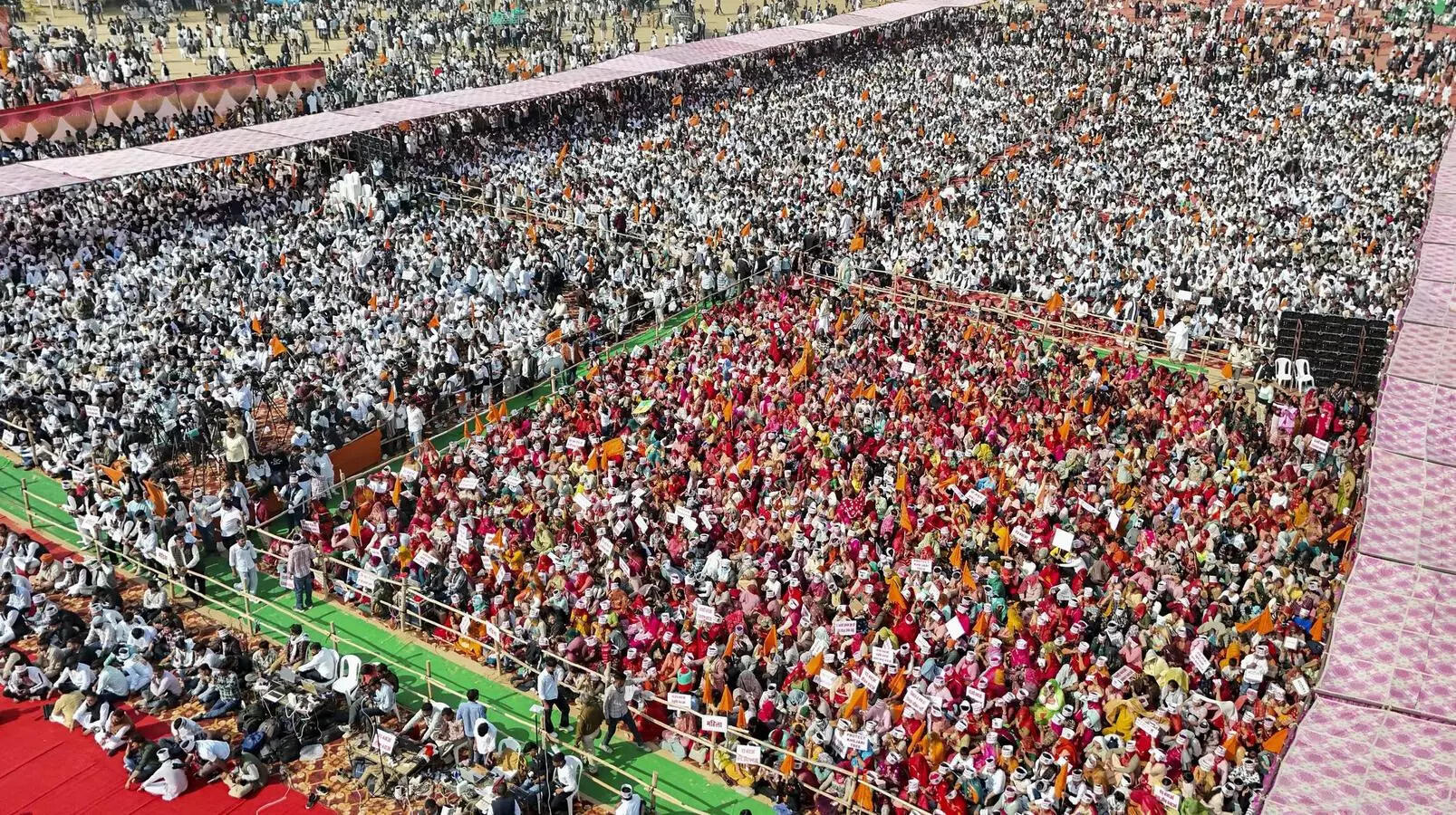
Save Khejri Movement in Bikaner (1).

Environmental activists and members of the Bishnoi community participate in the Save Khejri Movement at Polytechnic College, protesting against the proposed cutting of Khejri trees for a solar power plant, in Bikaner. (PTI)

Four protesters were admitted to Prince Bijay Singh Memorial Hospital as their health deteriorated during the hunger strike, while several others received medical assistance at camps set up near the site. Mokhram Dharaniya, one of the hospitalised protesters, said, “People are sitting on a hunger strike, including me. Our protest will continue until our demands are met.”

The trigger? Solar expansion

At the centre of the agitation are allegations that large numbers of khejri trees have been cut to facilitate solar power projects in western Rajasthan. The region has emerged as a hub for renewable energy, given its high solar irradiance and availability of land. While solar development is central to India’s energy transition goals, protesters argue that project implementation has come at the cost of ecologically vital trees.Tensions escalated when the state government announced a restriction on felling khejri trees only in the Jodhpur and Bikaner divisions. Protesters rejected the move as inadequate, demanding a blanket statewide ban. During one address by a government representative, protesters reportedly took away the microphone, insisting on a written assurance.
Protest against proposed cutting of Khejri trees in Bikaner.

Environmental activists and members of the Bishnoi community take part in the ‘Save Khejri Movement’, protesting against the proposed cutting of Khejri trees for a solar power plant, in Bikaner. (PTI Photo)

Minister for skill, employment and entrepreneurship KK Bishnoi and State Animal Welfare Board chairman Jaswant Bishnoi visited the Bishnoi Dharamshala and offered juice to the hunger strikers in an attempt to persuade them to break their fast. The minister said the government was ready to provide a written commitment and appealed to protesters to end the hunger strike. However, saints on the stage refused to withdraw without formal documentation.Agitation leader Parsaram Bishnoi said, “The hunger strike did not end. The government order was incomplete as it failed to cover the entire state.” Former minister Bhanwar Singh Bhati said: “All sections of society participating in the agitation decided to continue until a complete ban on cutting Khejri trees was imposed across Rajasthan.”

Storm in the assembly

The issue has resonated in the Rajasthan Assembly. Congress MLA Dungar Ram Gedar raised the matter during Zero Hour, accusing the government of failing to act despite a persistent two-year protest led by the Bishnoi community in Bikaner. “Khejri being the state tree, there is an urgent need for a strict law to protect it,” Gedar said.Independent MLA Ravindra Singh Bhati stated that the matter was already under discussion in the assembly. “Bhagat Singh (the Indian freedom fighter) said that sometimes a blast is needed to make the voice heard. If it takes gheraoing the Assembly to save khejri, I will be at the forefront,” he said.Chief Minister Bhajan Lal Sharma told the assembly that his government was drafting a conservation law for the khejri tree, which he described as the state’s “Kalpavriksha”. “In August, saints from Bikaner, Phalodi, Jodhpur and Nagaur met me. Following that, I instructed officials to prepare the draft legislation. The process is under way, and it will soon be presented in the assembly,” he said.The chief minister also used the assembly session to defend his government’s broader record, speaking about economic growth, recruitment reforms and water supply projects. However, protesters have maintained that until a formal statewide ban is issued, the agitation will continue.Former chief minister and senior Congress leader Ashok Gehlot expressed support for the public movement, describing the indiscriminate cutting of khejri trees in the name of development as “extremely painful and unacceptable.” He recalled the historical sacrifice associated with the tree and said environmental protection must be prioritised.In a development seen as politically significant, former chief minister Vasundhara Raje publicly backed the movement that has put her own party, the BJP, in the dock.Sharing a photograph of herself worshipping a khejri tree, she wrote, “I also worship the Khejri tree. Rising above politics, we should all come forward to protect it. We must save it. I stand with everyone in the campaign to save the Khejri tree and the Oran (grazing land).” She also quoted a proverb revered in the Bishnoi community: “Sir saanthe rukh rahe to bhi sasto jaan” (If a tree can be saved, even at the cost of one’s head, consider it a bargain).Observers have noted that her intervention has added to political pressure on the state government.
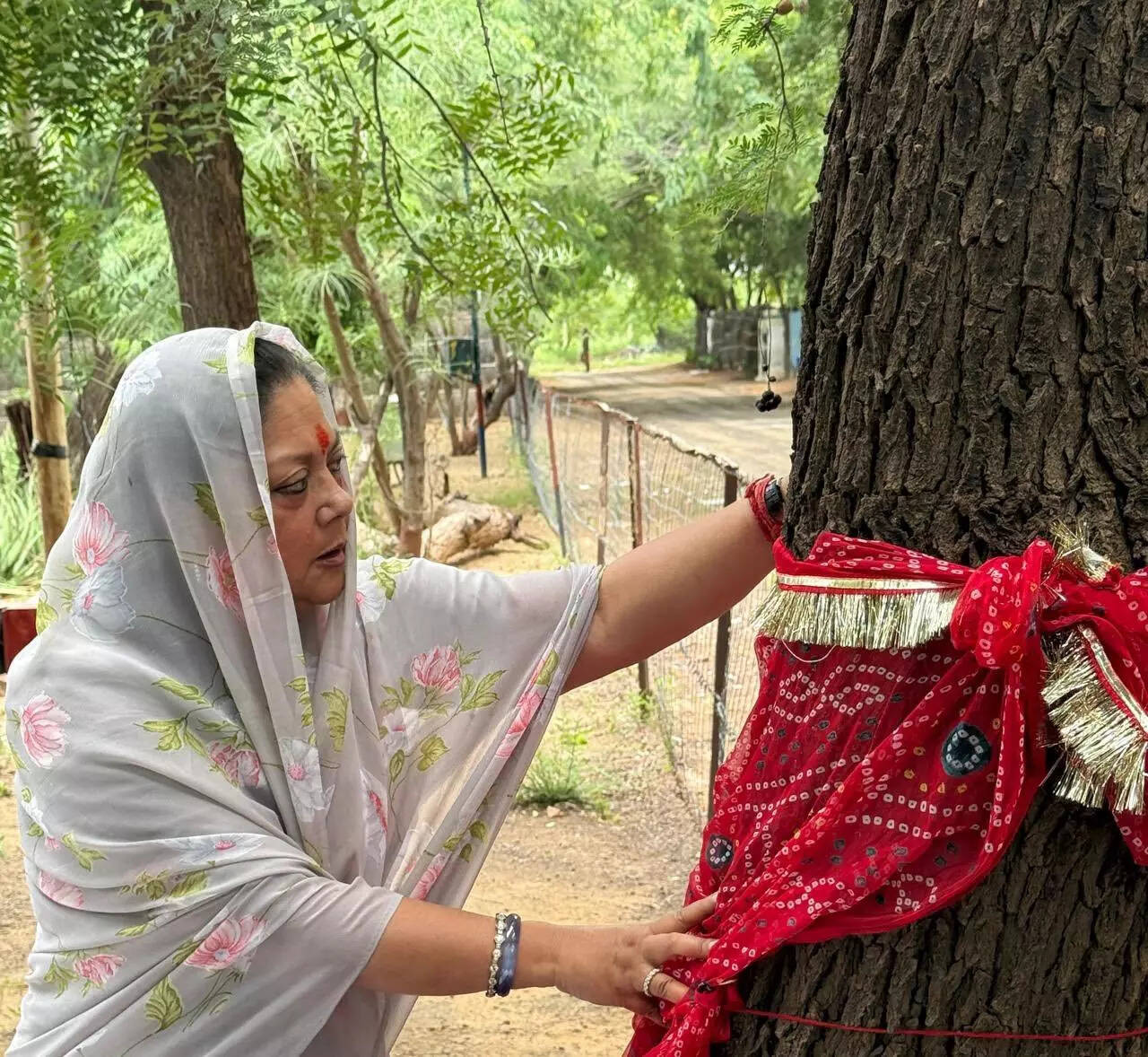
HANljwpbcAEAvxv

Vasundhara Raje shared a photo of herself performing a ritual puja, while pledging cross-party support to protect these trees and associated Oran grazing lands from development threats.

The historical memory: Khejarli and Amrita Devi

Any discussion of the khejri in Rajasthan inevitably returns to the events of 1730 in the village of Khejarli near Jodhpur. According to historical accounts, 363 members of the Bishnoi community, led by Amrita Devi Bishnoi, sacrificed their lives to prevent the felling of khejri trees ordered for royal construction.The episode, often referred to as the Khejarli massacre, is widely regarded as one of the earliest recorded instances of environmental resistance. Amrita Devi is said to have declared that the loss of her head would be a small price to save a tree. Her sacrifice and that of the others form a cornerstone of Bishnoi identity and environmental ethics in the region.
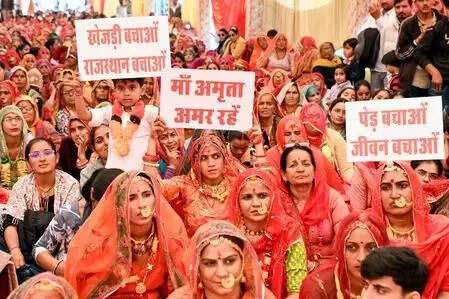
Khejri movement_ Rajasthan govt steps in as saints' health worsens, minister visits Bikaner.

According to historical accounts, 363 members of the Bishnoi community, led by Amrita Devi Bishnoi, sacrificed their lives to prevent the felling of khejri trees ordered for royal construction.

Protesters in the current agitation have repeatedly invoked this legacy. Even Ashok Gehlot referred to the sacrifice of 363 individuals, including Amrita Devi Bishnoi, and said their legacy should be honoured.

Ecological significance

The khejri is uniquely adapted to arid (extremely dry) and semi-arid climates. It has a deep root system that allows it to access groundwater and survive prolonged drought. Unlike many other species, it does not compete aggressively with crops and is often grown in agricultural fields in a traditional agroforestry system. An agroforestry system is a land-use practice where trees are grown alongside crops or livestock on the same land to improve productivity and sustainability.Its leaves, known as “loong,” are used as fodder for livestock. Its pods, called “sangri,” are a staple ingredient in traditional Rajasthani cuisine, particularly in the dish Ker Sangri. The wood is used as fuel and timber, while its bark and other parts have been used in traditional medicine.
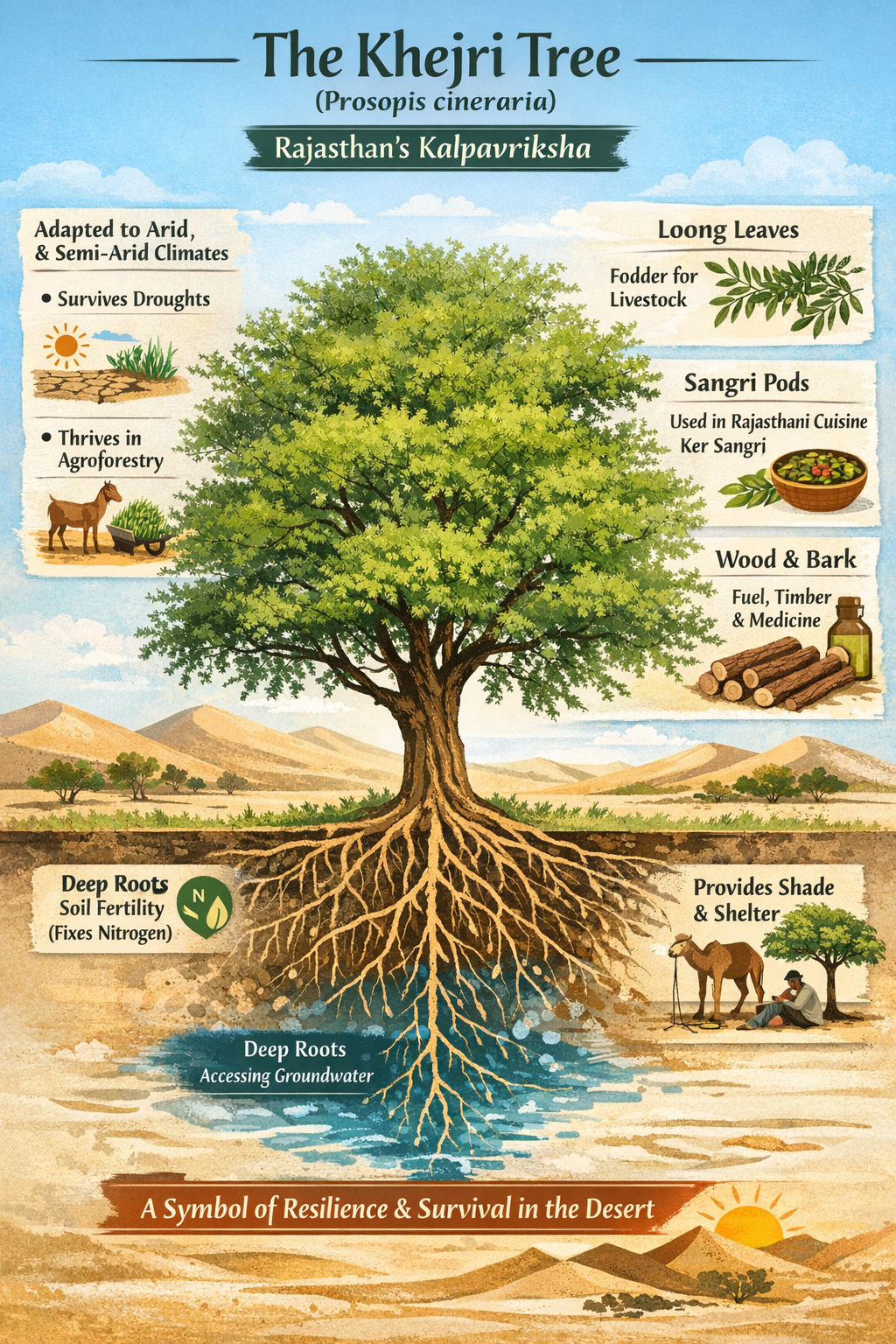
Khejri tree

The Khejri tree (Generative image)

Ecologically, the tree improves soil fertility by fixing nitrogen, reduces desertification by stabilising sand dunes and provides shade in extreme heat. In regions where annual rainfall is minimal, it plays a crucial role in sustaining both human and animal life.Given these attributes, many in Rajasthan see the khejri not just as a tree but as a symbol of resilience and survival in a harsh environment.

Legal framework and demands

Currently, khejri trees are protected under various forest and environmental regulations, but protesters argue that enforcement is inconsistent and that ambiguities in existing laws create loopholes. Former Luni MLA Mahendra Vishnoi said, “Confusion exists in current laws concerning khejri conservation. The penalties must be precise and severe. Without a fear of the law, this destruction will persist.”Environmental activist Mokhram Dharniya alleged administrative inaction. “The administration has betrayed us repeatedly. Over the past year, we have held numerous protests, receiving assurances each time, while the trees continue to be axed. We will not permit the cutting of khejri anymore,” he said.One of the demands emerging from the agitation is a provision imposing a fine of Rs 1 lakh for violations. Activists have also called for a temporary statewide ban on felling until a comprehensive conservation law is enacted.

Spread of the movement

The agitation has extended beyond Bikaner. In Barmer, protesters gathered at the Collectorate, and some youths climbed the gate and raised slogans after police closed the premises. A memorandum addressed to the chief minister was submitted.The movement has also taken on a deeply personal dimension for some families. Following the death of environmental activist Radheshyam Bishnoi in a road accident last year, his mother Ratni Devi and wife Nirma Bishnoi have continued his work and are now on a hunger strike demanding protection for khejri trees.
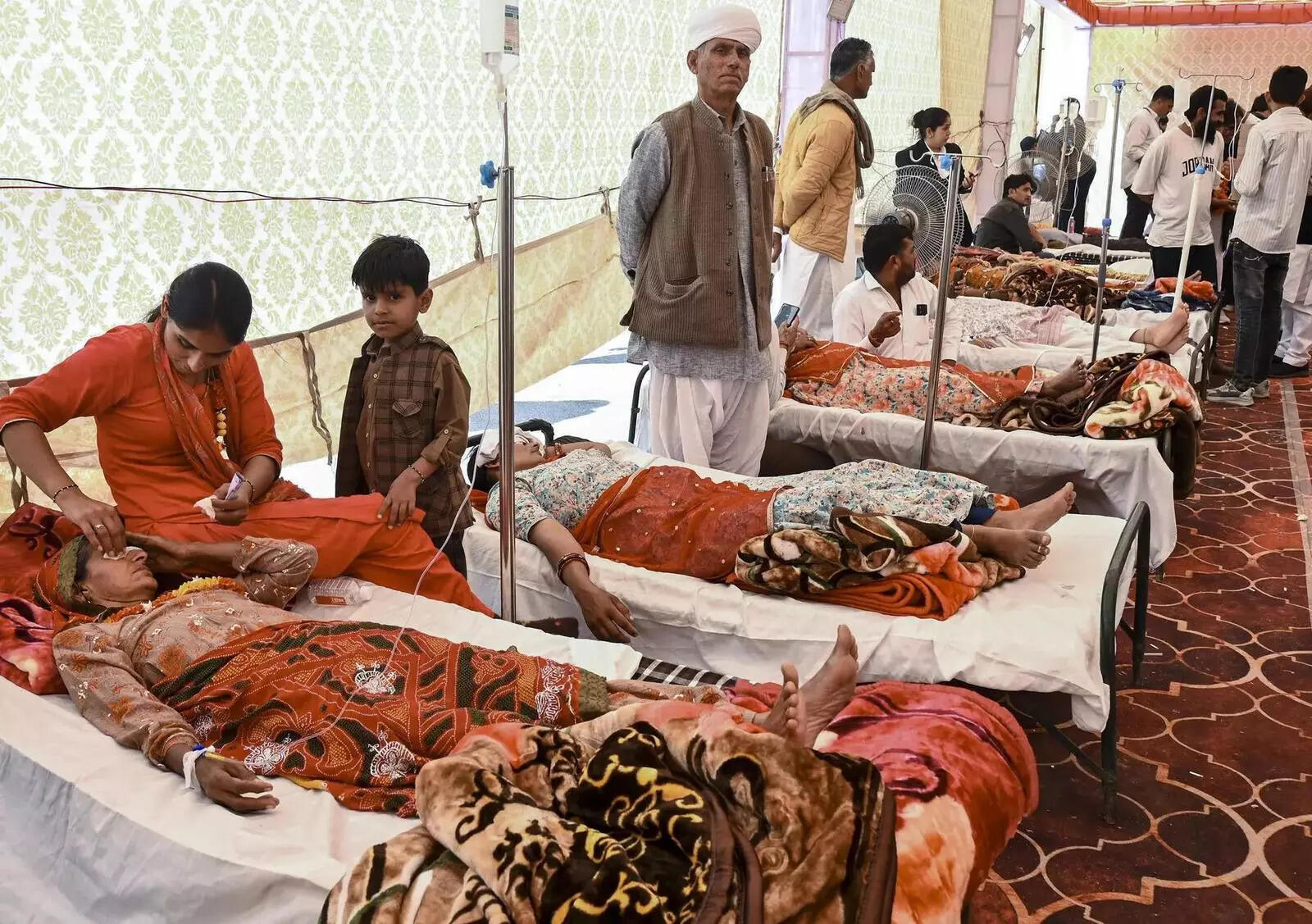
Bishnoi community's hunger strike.

Members of the Bishnoi community during an indefinite hunger strike, demanding a tree protection bill in the ongoing assembly session and a complete ban on cutting of khejri trees, near a Bishnoi Dharamshala, in Bikaner, Rajasthan. (PTI Photo)

Meanwhile, reports of illegal logging in other parts of the state, including in the forest area of Bayana subdivision in Bharatpur district, have further fuelled concerns about enforcement.Activists said the issue concerns the entire desert belt, including Jaisalmer, Barmer, Jodhpur, Pali, Jalore, Phalodi, Sriganganagar, and Churu. Protesters alleged that thousands of khejri trees were felled in recent years, largely for infrastructure and solar power projects.Founder of the Khejri Bachao Andolan, Parasram Bishnoi, said the agitation would continue until the state enacts a specific law making the cutting of khejri trees a punishable offence.“Large tracts of desert land are being indiscriminately handed over to solar parks, destroying the local ecosystem. Without legal protection, the desert’s survival is at stake,” Bishnoi told TOI.He added that participation is swelling daily and asserted that the onus now lies on the state government led by chief minister Bhajan Lal Sharma. Bishnoi alleged that khejri trees were uprooted across vast desert areas both in the name of renewable energy projects and by an illegal wood mafia, with little effective oversight.

Development versus conservation

The unfolding debate reflects a broader tension between renewable energy expansion and environmental safeguards. Rajasthan is a key state in India’s solar mission. Large tracts of land are being allocated for solar parks, transmission corridors and associated infrastructure.
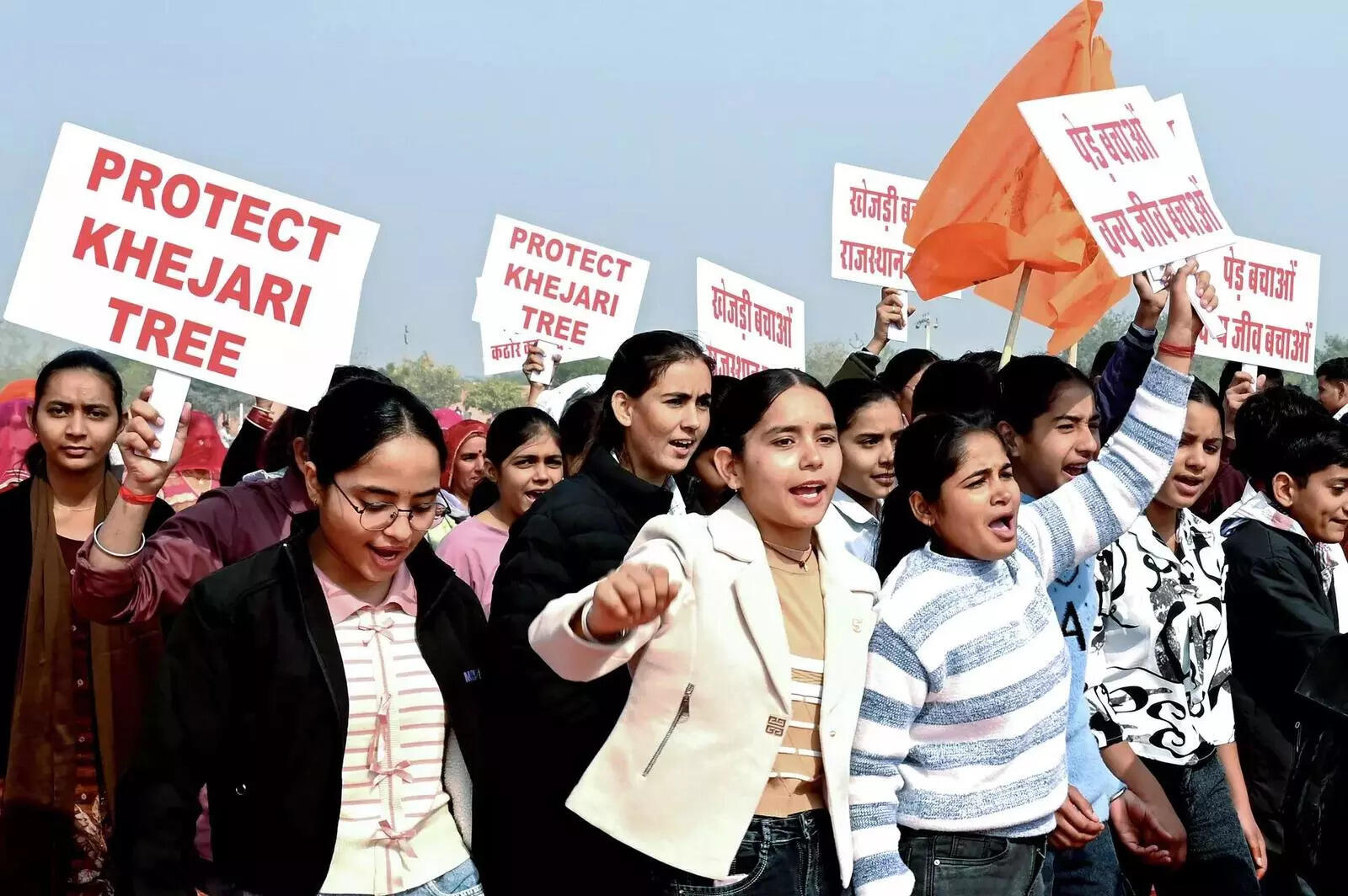
Bikaner, Feb 02 (ANI)_ Environmental supporters and members of the Bishnoi commu....

Environmental supporters and members of the Bishnoi community participate in the ‘Save Khejri Movement’ (ANI photo)

While renewable energy is seen as essential for climate mitigation, local communities argue that development planning must take into account ecological realities and traditional land-use patterns. The khejri, embedded in agricultural and grazing systems, is not easily replaceable.For many protesters, the demand is not to halt development but to ensure that it does not erode the ecological foundation of desert life.

An evolving movement

As the Khejri Bachao Andolan entered its sixth day, its trajectory remains uncertain. The state government has indicated it is drafting legislation. Protesters insist on immediate written assurances and a comprehensive statewide ban.What is clear is that the agitation has tapped into a powerful historical memory and a deeply rooted cultural ethos. The khejri tree stands at the intersection of ecology, economy and identity in Rajasthan. Its fate has become a test case for how the state balances development with conservation in one of India’s most fragile landscapes.Whether the movement results in a new conservation law, stricter enforcement or a recalibration of project implementation, it has already reaffirmed the enduring symbolic power of a tree that many in Rajasthan consider their “Kalpavriksha”.


PAK vs NED: From 98/2 to 114/7, then Faheem Ashraf’s rescue act; How did the Pakistan T20 World Cup almost end on day one? cricket news

0

PAK vs NED: From 98/2 to 114/7, then Faheem Ashraf's rescue; how Pakistan T20 World Cup almost ended on day one
Netherlands’ Logan van Beek (centre) reacts after being hit for a six by Pakistan’s Faheem Ashraf (left) during the T20 World Cup cricket match in Colombo, Sri Lanka, on Saturday, February 7, 2026. (Associated Press)

With the specter of a boycott hanging over the match against India on February 15, Pakistan cannot afford to make any more mistakes in the remaining three games against its partner nations. They almost did that on Saturday, nearly ending the 2026 T20 World Cup before it even officially started before Faheem Ashraf rescued Salman Ali Agha’s side from a major setback.In the opening match at the Sinhala Sports Club Stadium in Colombo, Pakistan scored 148 runs against the Netherlands, scoring 98 runs for 2 in 11 overs, scoring 50 runs off 54 balls.The game soon turned around when Paul van Meekeren dismissed the defensively brilliant Sahibzada Farhan, who was caught at 47 off 31 balls by Roelof van der Merwe. Van Miklen then removed Usman Khan for a duck in the same over.Babar Azam followed in the 13th over when he was caught by Michael Klein at long-on off van der Merwe. As Mohammad Nawaz and Shadab Khan were dismissed consecutively, Pakistan scored 100 for 5, then 114 for 6, and 114 for 7, with a total score of over 16.1 overs.Pakistan still needed 34 off 23 balls and they could only score five off the next 11 balls. It was 29 points short of 12 when Logan van Beek came on. Pakistan was about to lose and Netherlands smelled victory.Faheem Ashraf then changed the game. He scored 24 runs in the 19th over and hit three sixes. At the end of the game he was dropped into the abyss by Max O’Dowd. This shift completely shifted the situation in Pakistan’s favour.After that burst, Ashraf completed the chase with a high cover shot to earn the winner as Pakistan returned home with a three-goal advantage. Just nine deliveries ago, that goal looked out of reach.Ashraf remained unbeaten on 29 off 11 balls as Pakistan beat the Netherlands by 3 wickets to avoid a major shock in the opener in Colombo.Van Miklen and van der Merwe put Holland in a strong position to break through Pakistan’s lower-middle order. But one in the 19th over proved decisive as Van Beek failed to reach his target and Ashraf took advantage of the opportunity. Although the day was shelved, questions about Pakistan’s batting still lingered.

‘A blow to Indian farmers’: Opposition slams Indo-US trade framework – who said what? indian news

0

'A blow to Indian farmers': Opposition slams India-US trade framework - who said what
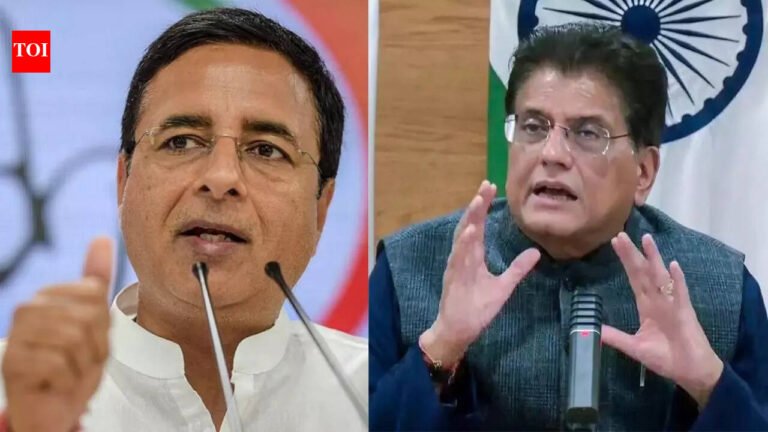
Randeep Surjewala, Piyush Goyal

NEW DELHI: Opposition leaders on Saturday criticized the framework for an interim trade agreement between India and the United States, accusing the government of undermining India’s interests and raising concerns about its impact on farmers, tariffs and oil imports.Congress leader Randeep Singh Surjewala warned that the deal could harm farmers and rural livelihoods. He said, “A blow to the stomach of India’s 720 million farmers has taken away the livelihood of India’s 720 million food providers, farm workers and farmers.”He also expressed concerns about agricultural imports from the United States. “U.S. corn, U.S. soybeans, U.S. sorghum, U.S. walnuts, almonds, pistachios, fresh fruits such as apples and oranges, processed fruits and other ‘additional’ agricultural products will flood the Indian market,” he said.Surjewala questioned the government on the possible impact. “We have imported $334 million worth of cotton from the United States, which has led to a collapse in cotton prices for Indian farmers. Now, with corn, cotton, sorghum, fruits, processed fruits and soybeans being imported from the United States, I ask Prime Minister Modi and Piyush Goyal: What will happen to Indian farmers? Where will they go?” he said.Congress leader Pawan Hera also attacked the government over the India-US interim trade agreement, questioning what he called a change in India’s diplomatic posture. “Where is the India that looked the Nixons, George Bushs and Obamas in the eye and had pragmatic relations?” he asked. Kaira claimed that the interests of ordinary Indians were being harmed, saying: “This is not an agreement with the United States, but a compromise on our self-esteem.” He said those who predicted the success of the framework were already aware of its impact. “This is not an agreement, this is a surrender,” he said, adding that the opposition was unable to raise the issues in parliament because the government feared scrutiny of the deal’s terms.RJD MP Manoj Kumar Jha also criticized the tariff changes and accused the government of misleading the public. “On most things, our tariffs, at the worst of times and at the best of times, were 2.9 percent. Through threats, it was raised to 50 percent. Then it was lowered to 18 percent. Is that something to celebrate? Aren’t you misleading the entire country?” he said.He warned the deal could spark public outrage once its full implications are understood. “When this situation develops further and comes to the forefront, there will be riots on the streets,” Jia said.India and the United States on Saturday announced a framework for an interim agreement on mutually beneficial trade as part of wider talks on a bilateral trade deal.

Disappearance of Nancy Guthrie: FBI, Sheriff examine new clues after ‘new information’ uncovered

0

Arizona Authorities announced they are investigating a second letter from the person claiming to be responsible for Nancy Guthrie’s kidnapping.

Arizona officials are reviewing a second piece of information related to the kidnapping of Nancy Guthrie. (Savannah Guthrie/Facebook)

KOLD reported that new information about the disappearance was received on Friday. Savannah Guthrie’s mother and turned it over to law enforcement.

“The FBI and the Pima County Sheriff’s Department have learned of new information regarding Nancy Guthrie. Investigators are actively reviewing the veracity of the information provided in the tip.” pima county officials said.

Also read: Who is Michael Feldman? Savannah Guthrie’s husband finally breaks silence on missing mother-in-law Nancy

Nancy Guthrie Disappearance: Here Are the DNA Test Results

Friday marked the sixth day of the search for Nancy Guthrie, who was last seen Saturday night. Authorities have not identified any suspects or persons of interest in the 84-year-old’s disappearance.

The most recent message was received a day later Savannah GuthrieThe Today program host urged families to appeal to the kidnappers to contact them.

“Whoever is out there holding our mother, we want to hear from you. We haven’t heard anything directly yet,” said Cameron Guthrie in a video shared on social media.

Authorities believe she was abducted from her Tucson-area home over the weekend. DNA testing confirmed that bloodstains found on Guthrie’s front porch matched her own, according to the sheriff.

“Right now, we believe Nancy is still out there. We want her home,” Pima County Sheriff Chris Nanos said at a news conference Thursday. However, he acknowledged that authorities had no evidence that she was in good condition.

Also read: Annie Guthrie and Tommaso Cioni’s Marriage and Children: Inside Their Relationship Amid ‘Prime Suspect’ Allegations

View previous ransom letters

On Monday, at least three media organizations, including KOLD, received previous extortion letters. Hayes Janke FBI Phoenix officials said details include monetary demands, with a deadline set for Thursday night and a second deadline on Monday if the first deadline isn’t met.

Authorities reported the arrests after discovering a ransom note was fraudulent. The man is from california Identified as Derek Carrera.

Sheriff Nanos noted that Guthrie had dinner at a relative’s residence on Saturday, then was sent back to her home later that night and was never seen again.

Vaibhav Sooryavanshi is currently unavailable for the Indian team – here’s why | Cricket News

0

Vaibhav Sooryavanshi can’t play for India now – here’s why
Vaibhav Sooryavanshi (X-Cricbuzz)

The dust has yet to settle at Harare Sports Club, but Vaibhav Sooryavanshi’s stunning performance in the Under-19 World Cup final against England continues to resonate in the cricketing world. He struck out 175 off just 80 balls, which was more than an innings – a record-breaking blitz. With 15 towering sixes and a strike rate that seemed to mock the intensity of a final, the 14-year-old prodigy from Bihar left fans asking a burning question: If he can knock off England U19 toppers and smash centuries in the IPL, why can’t he be part of the Indian senior team? The answer lies with the International Cricket Council (ICC). The main hurdle Sooryavanshi faces is the ICC’s minimum age policy. The rules, introduced in 2020 to protect the physical and mental health of young players, stipulate that players must be at least 15 years old to participate in international cricket.

Why Gautam Gambhir and Hardik Pandya had a heated chat ahead of India vs USA T20 World Cup

Born on March 27, 2011, Vaibav He was only 14 years old when he won the World Cup in February 2026. Ironically, while he was too young for the senior team, he also outgrew the U19 team. The BCCI has implemented a strict “one match” rule for the U19 World Cup, which is aimed at preventing the emergence of age-group specialists and ensuring a constant influx of fresh talent. Vaibhav has already dominated the 2026 edition and won the Player of the Tournament award, but he is not eligible for the 2028 or 2030 editions despite being less than 19 years old.

Vaibhav Sooryavanshi Records

The excitement surrounding the young opener is easy to understand considering the string of records he has broken over the past year:

  • U19 World Cup final high scores: Scored 175 off 80 balls against England, the highest score in an U19 final.
  • World Cup Six-a-side record: In the 2026 edition, a total of 30 sixes were hit, surpassing the previous record of Dewald Brevis.
  • Global list-A record: The youngest player in history to score an A-century at the age of 14 years and 272 days.
  • Fastest 150 miles in history: 150 out of 59 balls Vijay Hazare trophy, break AB de Villiers‘ Record.
  • IPL Century Milestones: Youngest IPL centurion, 14 years and 32 days old, batted 35 balls rajasthan royals.
  • Indian Pioneer: The first player to score a T20 century for India A, scored a 32-ball hundred against UAE.
  • Youth ODI pace: Fastest youth ODI century, 52 goals against England U19s.
  • Youth test records: Fastest teenage Test century by an Indian (58 balls), second fastest in world history.
  • Domestic T20 records: the youngest centurion Syed Mushtaq Ali Trophy with an unbeaten record of 108 games.
  • Border landmarks: The first player to hit 100 sixes in his junior ODI career.

Currently, ‘Sooryavanshi Storm’ is limited to domestic cricket and franchise tournaments. But time is passing. Later in 2026, when he turns 15, it’s only a matter of time before the blue jersey with his name on it makes his debut at the highest level.

‘Reckless and politically motivated’: Sonia Gandhi objects to guilty plea over 1980 electoral roll entries India News

0

'Reckless and politically motivated': Sonia Gandhi objects to guilty plea over 1980 electoral roll entries

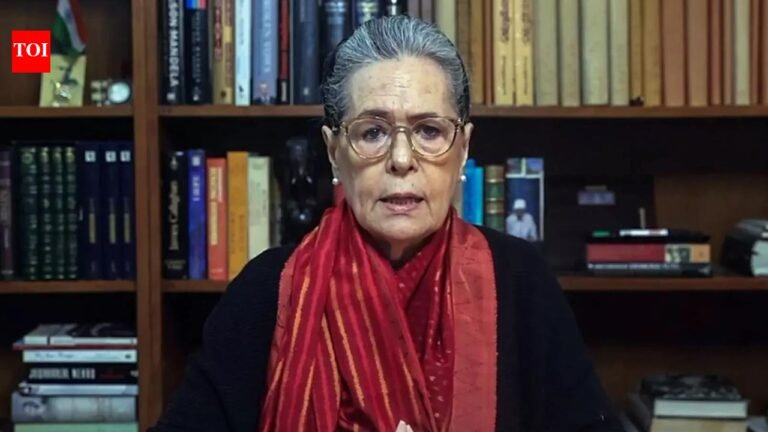
New Delhi: congressional leaders Sonia Gandhi objected to a criminal modification petition filed against her in the Louth Avenue Courthouse, calling it “completely misunderstood, frivolous, politically motivated and an abuse of the legal process.”“She believed that, forty years later, citizenship and electoral roll issues could not turn into criminal proceedings.The reply, filed through her lawyer before the court of special judge (CBI) Vishal Gogne, challenged the allegation that she was included in the electoral roll before she was granted Indian citizenship.She urged the request to be dismissed, calling it baseless and speculative.According to her response, complainant’s allegations were based on assumptions, media reports, and personal presumptions rather than actual government records.The response further emphasized that no specific documents were found to be forged or fabricated, and therefore the allegations had no substance. It argued that citizenship issues were entirely within the jurisdiction of the central government, while the Election Commission of India was responsible for maintaining the electoral rolls.The reply held that the Criminal Court could not have jurisdiction over such matters and noted that entertaining the petition would constitute interference in the electoral process.It also denied that Gandhi’s name was ever re-entered into the electoral roll as a result of any forged or improper application, saying the complainant failed to produce any genuine documents or make efforts to obtain them legally.Sonia Gandhi’s reply also dismissed the claims of fake identity documents or Gandhi’s voting in the 1980 general elections as “baseless”. The Committee also objects to the complainant’s reliance on media reports from decades ago, stating that these sources are not legally binding and cannot serve as the basis for criminal proceedings.The response emphasized that the complaint attempted to revive an issue from 1980-83 (more than four decades later) without underlying evidence, making it both archaic and legally untenable.Procedural objections were also raised claiming non-compliance with the mandatory requirements of the Indian Code (BNSS), including the lack of a valid affidavit, which Gandhi’s lawyers argued deprived the court of its jurisdiction.The revision petition filed by advocate Vikas Tripathi challenged a September 2025 magistrate court order dismissing his earlier complaint. The magistrate held that issues of citizenship and electoral registration fell within the purview of the central government and the electoral commission and could not be decided through criminal complaints.

T20 World Cup: Faheem Ashraf scripts thrilling script for Pakistan’s win over Netherlands Cricket News

0

T20 World Cup: Faheem Ashraf scripts thrilling Pakistan win over Netherlands
Faheem Ashraf (PTI Photo)

Faheem Ashraf A stunning late performance saved Pakistan from the brink, posting an unbeaten 29 off just 11 balls to register a dramatic three-wicket win over the Netherlands in the T20 World Cup opener on Saturday.Chasing 148 runs, Pakistan posted a brilliant performance of 2 for 90 in the middle of the over, but then suffered a dramatic collapse as they fell to 114 for 7 in 16.1 overs, still needing 34 runs. The Netherlands were riding high and the game seemed almost decided – until Achraf turned the game around.

T20 World Cup group details: Who can advance to the Super 8

Ashraf was bowled for seven by Max O’Dowd in the 19th over, costing the Netherlands dearly. Needing 29 runs in the last two overs, he had Logan van Beek hit 3 towering sixes and a four before sealing the score with a boundary in the penultimate over as Pakistan ended at 148 for 7 with 3 balls to spare.Off-field issues have dominated Pakistan’s World Cup preparations after the board decided to boycott the February 15 match against India, despite a recent 3-0 win over a weak Australia in the home T20I series. The Sinhala Sports Club Stadium hosted the T20I match for the first time since 2010 and the 2009 champions struggled but eventually found their way.Sahibzada Farhan top-scored with 47 off 31 balls and opener Saim Ayub scored 24 off 13 balls. However, senior batsman Babar Azam’s fluency was poor, with 15 off 18 balls, and skipper Salman Agha’s 12 off 8 balls.After 11 overs, Pakistan started from a comfortable 98 for 2 and quickly collapsed. Paul van Meekeren knocked out Farhan and Usman Khan with two strikes in the 12th round before Babar fell in the following round. In a stunning delivery, Pakistan conceded just 2 runs in 10 balls, lost 3 wickets, and ended up scoring just 5 runs, falling to 100 runs. Mohammad Nawaz and Shadab Khan followed and tightened the noose further.Earlier, Holland showed promise after being sent to bat, scoring 50 for 2 at the end of the powerplay and 79 for 3 at mid-on. A 40-run duel between captain Scott Edwards (37 off 29) and Bas de Leede (30 off 25) put them on track for a bigger total.However, Pakistan’s bowlers expertly restored the score. Salman Mirza led the way with 3 for 24 while Mohammad Nawaz and Abrar Ahmed played crucial knocks in the middle. As wickets fell in clusters, the Netherlands fell from 105 for 3 to 129 for 7. Saim Ayub’s backspin then did the job, removing Logan van Beek and Zach Lion-Cachet in quick succession as the Netherlands were bowled out for 147 in 19.5 overs.In the end, Ashraf’s late blitz proved decisive and kept Pakistan from blushing in a game that was rife with fluctuations until the very end.

North Korea executes teenagers who watched squid contest and listened to K-pop

0

North Korea executes teenagers who watched squid contest and listened to K-pop

North Korean citizens, including schoolchildren, were executed for watching South Korean TV shows like “Squidward” and listening to K-pop music, according to new testimonies shared by Amnesty International.The testimony comes from in-depth interviews with 25 North Koreans, including 11 who fled the country between 2009 and 2020, The Independent reported. Most respondents were aged between 15 and 25 when they left. Fugitives described harsh and humiliating punishments for consuming foreign media, including death in the most extreme cases.One interviewee said they heard from a related fugitive that some people, including high school students, had been executed for watching a squid contest in Liangjiang province, near the Chinese border. The other previously recorded execution for spreading the show was in North Hamgyong Province in 2021. Amnesty International said the reports indicated multiple executions linked to the show.The fugitives also described the dangers of listening to foreign music, especially Korean pop, citing bands such as BTS in their testimonies. In 2021, a group of teenagers were reportedly investigated for listening to BTS in South Pyongyang Province, near the capital Pyongyang.In 2020, North Korea introduced the Anti-Reactionary Ideology and Culture Law, banning the consumption of South Korean content. The law stipulates that those who watch or possess South Korean TV dramas, music or movies will be punished with five to 15 years of forced labor, and those who disseminate large amounts of content or organize group viewings can be punished with the death penalty.Kim Eunju, 40, described witnessing executions as part of “ideological education.” “When we were 16, 17, in middle school, they took us to the execution and showed us everything,” she said. “People were executed for watching or spreading Korean media. This is ideological education: if you watch, it will happen to you too.”Choi So-moon, who fled North Korea in 2019, also recalled a public execution in Sinuiju in 2017 or 2018. “The authorities told everyone to leave, and tens of thousands of people in Sinuiju gathered to watch,” she said. “They execute people to brainwash and educate us,” she said, adding that people often sell their homes to avoid punishment. “People were caught for the same behavior, but the punishment was all about money. People who had no money sold their houses to raise $5,000 or $10,000 to pay for leaving the camps.

American studying engineering in Bangalore seeks advice on how to find a job abroad

0

A third-year engineering student in Bengaluru has sparked a detailed discussion on social media after sharing the unique challenges of being an engineering student. American Citizens who live and study entirely in India. Despite holding a U.S. passport, the computer science major said he felt “stuck” as he navigated the global job market. The post was shared on Reddit’s NRI forum.

A US citizen’s post about studying in India has gone viral. (Representative image). (no splash)

“U.S. Citizen, Studying Completely in India – Don’t Know How to Get a Job Abroad,” Reddit the user wrote.

Also read: H-1B holder torn between U.S. career and moving to India to care for grieving mother

The student explained, “I am a US citizen but I have lived in India my whole life. I am currently pursuing my 3rd year in Engineering (computer science background) in Bangalore. I have been trying to figure out my options after graduation. I am a bit confused because: 1) Most of my education was done in India. 2) In my opinion, documentation/recruitment preferences sometimes feel like a barrier (uncertain).”

The person continued, “For NRIs or Americans studying outside the US, how do you apply for jobs abroad (US/EU/elsewhere)? Do you apply directly from India or through an internship? Any advice would be helpful.”

What is social media saying?

One person said: “First of all, there is no concept of a separate employment portal or situation for US citizens. American companies will not hire interns from India because from a logistical and cost perspective, they have to pay for relocation and other expenses. You need to apply like any other job application, and you have the advantage that no sponsorship is required. A smart plan would be to move to the United States to pursue a master’s degree and solve this problem. ” OP responded: “That’s what I thought too. Thank you for your information! “

Also read: Employee denied pay rise after finding out his job was advertised for $18,000 more than his salary: ‘They told me the budget was tight’

Another commented: “Learn some skills and get a job in India. A year or two after starting this job, use the experience you gained in your first job to apply for jobs in the US.” Entry-level jobs are drying up in the U.S. due to the impact of artificial intelligence tools, so take advantage by not getting into an entry-level job by getting your first job.” A third person said, “It looks like you are studying B.Tech in India. After completing your bachelor’s degree in India, apply immediately and pursue your master’s degree in the United States. Once you finish school, work will follow. “

A fourth wrote, “I think you should pursue a master’s degree at a decent but cheap university in the US. This will ease you into US life while getting the US education you need to apply for jobs. Another option is to get into Infy etc and eventually require an internship in the US. You might get preferential treatment considering you have US citizenship.” OP replied: “My mindset is that a master’s will set me back with student loans and I’m not sure I want that. Hence why I’m looking for a job directly, I’ll look into it. Thanks!”

(Disclaimer: This report is based on user-generated content on social media. HT.com has not independently verified these claims and does not endorse them.)

Send a message to Pakistan? Amid trade deal, India map shared by US Trade Representative raises eyebrows | India News

0

Send a message to Pakistan? Amid trade deal, India map shared by US Trade Representative raises eyebrows

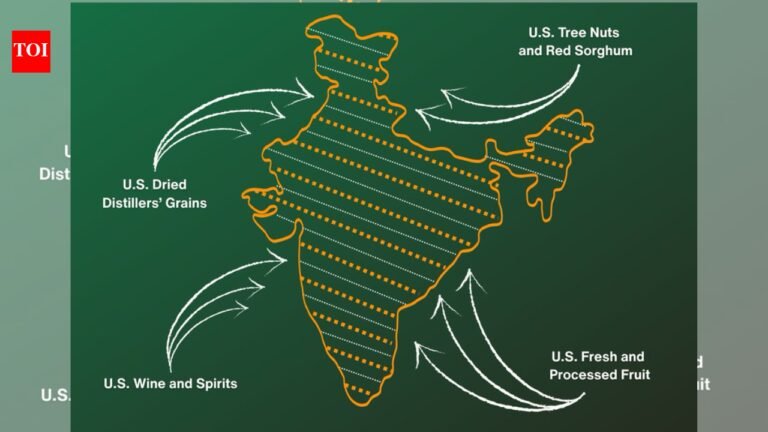
NEW DELHI: As New Delhi and Washington on Saturday announced the framework for an interim trade agreement, the map of India released by the Office of the United States Trade Representative has raised eyebrows.The map, shared along with details of the trade deal framework, shows that the entire Jammu and Kashmir region – including Pakistan-occupied Kashmir (PoK) – is part of India. It also depicts Aksai Chin, an area within Indian territory claimed by China.The U.S. Trade Representative posted onWhile India has always maintained that Jammu and Kashmir is an integral part of the country and does not require external verification of its sovereignty, the description marks a departure from earlier U.S. government maps, which typically showed other claims as part of the map.The timing of the map’s release is noteworthy as India and the United States are improving trade relations after months of speculation.Earlier this year, amid stalled trade talks, the Trump administration imposed 50% tariffs on Indian goods, including an additional 25% on Russian oil imports – the highest tariff ever imposed on a U.S. ally. Under the announced temporary framework, tariffs will be reduced to 18%, one of the lowest among Asian countries.The map also shows Aksai Chin, located in eastern Ladakh, which is part of India. China claims the area and objects to India’s stance, and the dispute remains a sensitive issue in bilateral relations between New Delhi and Beijing.

Signal to Islamabad

Although the Office of the U.S. Trade Representative did not comment on the map, it is an embarrassment for Pakistan, which claims sovereignty over Pakistan-occupied Kashmir. The release also comes amid Pakistan’s ongoing diplomatic engagement with Washington in recent months, including multiple visits by Prime Minister Shehbaz Sharif and Army Chief Asim Munir as well as meetings with President Trump.The interim trade agreement, expected to be signed in mid-March, is aimed at easing trade tensions and providing relief to Indian exporters after months of uncertainty.