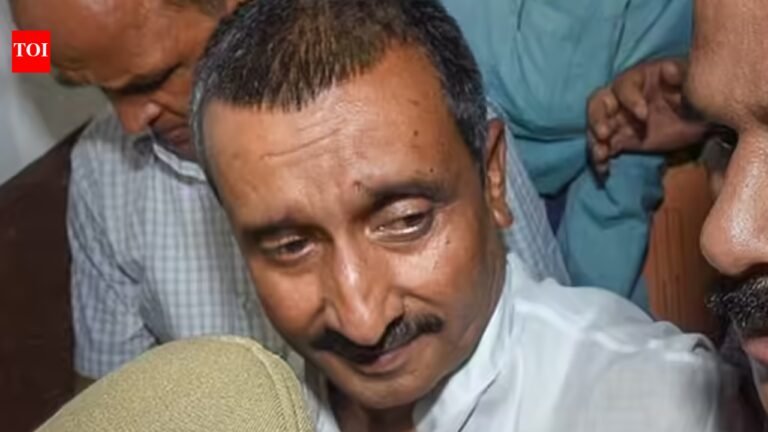
New Delhi: Supreme Court India on Monday refused immediate relief to rapist and former BJP MP Kuldeep Singh Sengar in the Unnao rape victim’s father’s custodial death case, but demanded delhi high court to hear his pleas seeking a suspended sentence and bail.A bench headed by Chief Justice of India Surya Kant asked the high court to expedite the proceedings and complete the hearing within three months. “We deem it appropriate to request the High Court to hear the appeal and decide the same but not later than three months,” the Supreme Court said.Just a few weeks ago, the Delhi High Court had denied bail to Sengar in a case related to the custodial death of Unnao rape survivor’s father. The cases stemmed from an FIR lodged at Makhi police station in Unnao, Uttar Pradesh in 2018 and were tried by the then District and Sessions Judge (West) of Delhi’s Tis Hazari Court.According to the prosecution, the minor survivor was allegedly lured on the pretext of work and raped at Sengar’s residence on June 4, 2017. On April 3, 2018, when the survivor’s family traveled to Unnao for a court hearing, her father was allegedly beaten in public.He was arrested the next day on charges under the Arms Act and died in police custody on April 9, 2018, reportedly from multiple injuries.
‘Act of fear’: Woman MP writes to LS Speaker OM Birla, rejecting ‘threatening’ accusations against PM Modi News India
Keir Starmer out, Shabana Mahmood in? How Epstein revelations led to Britain’s first Muslim prime minister World News
British Prime Ministers rarely get ruined for what they say. More often than not, they fail because of things they failed to anticipate.Keir Starmer is under increasing pressure not for any personal wrongdoing but for a political misjudgment made at the wrong moment: his decision to return Peter Mandelson to the heart of Labour’s power structure just as the Epstein dossier re-emerged in the public consciousness.Starmer has not been accused of wrongdoing and Mandelson has always denied any wrongdoing. However, British politics does not operate solely on legal thresholds. It operates on perception, timing and instinct. The renewed focus on Epstein has reignited broader unease about elite networks, proximity to power and the immunity of certain figures from consequences. In this climate, Mandelson’s return has become more of a liability than an asset, raising troubling questions not about guilt but about judgement.What unnerves Labor MPs is not the substance of any accusation, but the sense that Starmer failed to appreciate how unforgiving the political moment has become. When the moment called for moral distance and political clarity, his response was procedural and defensive. Once a leader’s judgment is called into question, Westminster’s authority quickly erodes.This is why Starmer’s once presumed retention of the premiership is now openly discussed as conditional.
Why Mandelson became a fault line

FILE – British Prime Minister Keir Starmer, right, speaks with British Ambassador to the United States Peter Mandelson during a welcome reception at the ambassador’s residence in Washington, Wednesday, Feb. 26, 2025. (Carl Court/Pool Photo via AP, File)
Peter Mandelson is more than just a former minister or adviser. He embodies Labour’s New Labor era, a survivor of past scandals and a symbol of a ruling class that many voters now view with suspicion. With Mandelson’s experience in hand, Starmer showed his ability and seriousness. Instead, he inherits the baggage of an era increasingly seen as divorced from public outrage over privilege and access.The Epstein dossier exacerbated this discomfort. Even without direct accusations, Mandelson’s name has become synonymous with elite proximity, and Starmer’s inability to foresee the backlash has exposed him to criticism within his party. The issue quietly raised by Labor MPs is no longer Mandelson’s behavior but Starmer’s political instincts.In British politics, this is often the beginning of the end.
Succession questions will become inevitable if Starmer falls
Labour’s leadership rules are designed to protect incumbents but fail to protect leaders who have lost the confidence of their parliamentary parties. If Starmer resigns or is forced out, the transition will be swift and pragmatic. When authority breaks down, governments don’t pause to reflect; they act to achieve stability.This has brought renewed attention to a small group of senior figures seen as immediately viable. These include Angela Rayner, Wes Streeting and, increasingly, Shabana Mahmood.This is no longer just media speculation. Betting markets and prediction platforms are already pricing in this scenario with a degree of seriousness. Mahmoud is not seen as the front-runner, but she has been placed among the second-tier contenders, with bookmakers offering odds roughly in the 7/1 to 12/1 range, while prediction markets give her a high single-digit chance of becoming prime minister. These numbers are not an endorsement, but they reflect plausibility. Bookmakers reflect structure, not symbolism.
What are the odds?

FILE – British Home Secretary Shabana Mahmood leaves 10 Downing Street, Wednesday, November 26, 2025, in London. (AP Photo/Kirsty Wigglesworth, File)
In the current market, when it comes to who can replace Keir Starmer, Shabana Mahmood is positioned as a solid second-tier contender rather than a long shot. On Polymarket, her implied probability is around 8%, well behind Angela Rayner, who trades in the mid-20s, and Wes Streeting, who typically trades in the mid-10s. Traditional bookmakers broadly reflect the same hierarchy. In recent snapshots, Bet365, William Hill, Ladbrokes and Paddy Power have all priced Mahmood in the 7/1 to 12/1 range, with Rayner and Streeting offering lower and more speculative odds significantly longer. The ranking places Mahmoud between frontrunners and outsiders, suggesting the market sees a plausible route to leadership, even if they don’t yet view her as the most likely outcome.
What does it mean for Mahmoud to be Prime Minister?
If Shabana Mahmood becomes prime minister, Britain will have its first Muslim prime minister. This will be an undeniable historical milestone, but it will come quietly, not triumphantly.Mahmoud never centered her politics around identity mobilization. She doesn’t view the campaign as a symbol, and she has shown little interest in cultural signaling. Her appeal really depends on competence, qualifications and institutional trust. Any history-making will be a by-product of parliamentary arithmetic, not ideological intent.
Who is Shabana Mahmood?
As interior minister, Mahmoud held one of the four major state offices and arguably the most politically punishing branch of government. The Home Office’s authority is tested every day, requiring decisions on borders, policing, national security and public order. This is a role that rewards control and punishes poor judgment.Mahmoud has been the councilor for Birmingham Ladywood since 2010, earning a reputation as a no-nonsense, detail-oriented administrator. She is not a born showrunner in the media age, nor does she seek rhetorical flourishes. Within the government, she was known as methodical, cautious and strong-willed.Her political views were closely aligned with Labour’s governing instincts rather than its activist impulses. On immigration and settlement, she supports a stricter framework related to conduct and contribution. On policing and protest, she highlighted the cumulative impact of public order and disruption. In terms of security and technology, she expressed satisfaction with the expansion and modernization of national capabilities.This positioning gave her wide acceptance within the Labor Party. She may not inspire enthusiasm, but she commands a level of trust that, in times of crisis, is more important than charisma.
Why she can win, why she can’t
Mahmoud’s case hinges on stability. She holds a high position, is scandal-free and already runs one of the most demanding departments in government. In a post-Mandelson era when Labor needs to project seriousness and distance itself from elite complacency, her low-key profile could prove to be an asset.Yet leadership competitions are rarely decided on merit alone. They are shaped by internal alliances, momentum and narrative control. Mahmoud does not yet possess a clear factional machine, and her cautious approach in office may limit her influence in the fast-evolving competition.Most importantly, this future remains hypothetical. Keir Starmer remains Prime Minister and until that changes, every succession scenario remains provisional.
greater irony
If the Epstein fallout and Mandelson’s miscalculation ends Starmer’s tenure as prime minister, if the debacle boosts Shabana’s standing Mahmoud, British politics will complete a quiet historical cycle.The same political system that once divided India and Pakistan along religious lines will within a decade produce a Hindu prime minister, Rishi Sunak, and possibly a Muslim prime minister.History, it turns out, has an irony that the imperial cartographers never planned for.

Want to know how long you really sleep? Apple Health gives the answer | Technology News
Sleeping habits are often ignored until fatigue sets in. Apple Health provides a way to record and view sleep patterns using iPhone and Apple Watch, putting your night’s rest data in one dashboard. When enabled, the system records sleep duration, schedule consistency, and time spent in different sleep stages. Here’s how users can set and read results.

Apple Health requires two things to track sleep. Users must turn on Sleep in the Health app on their iPhone and wear a compatible Apple Watch to sleep. While the iPhone can manage the schedule on its own, detailed sleep data is only displayed when the Apple Watch collects data throughout the night.
Also read: iPhone 17e launching soon with new MagSafe chip, price won’t rise: report
How to set up sleep in Apple Health
Setup starts in the Health app on your iPhone. Open Health, click Browse, then select Sleep. First-time users will see a settings option. The app guides users through selecting sleep goals, setting bedtime and wake-up times, and deciding whether to follow one schedule each day or make separate plans for weekdays and weekends.
During the setup process, users can also turn on reminders and buffering periods. Wind Down activates features like focus mode before bed to limit interruptions. These options are not required, but they help keep your sleep schedule regular, improving long-term tracking. Once completed, the iPhone will send these settings to the Apple Watch. Users can later edit the schedule under “Full Schedule” and “Options” in the “Sleep” section.
Also read: I’ve spent a few weeks with the Realme 16 Pro Plus, here’s why it surprises me with contradictions
How to prepare your Apple Watch
To record sleep, the Apple Watch must be on your wrist overnight and have sufficient battery power. If the battery is too low, the watch will ask to charge before bed. Sleep Focus automatically activates according to schedule. In the watch settings, users should confirm that sleep tracking is turned on. Thereafter, the watch tracks sleep on its own every night.
How to record sleep data
When Sleep Focus is running, Apple Watch uses motion and heart rate to detect sleep and wake times. Newer models can also identify sleep stages. Apple Health compiles this information into a nightly log. Users do not need to start or stop tracking. If bedtime or wake-up time changes, the data will be adjusted.
Also read: iPhone Tip: How to Turn Multiple Live Photos into One Video
How to view sleep data
To see the results, open Health, click Browse, and then click Sleep. The graph shows the duration of sleep from the previous night. Clicking on it will reveal details such as sleep time, bed time and sleep stages. Users can switch between daily, weekly, or longer-term views to spot trends. Apple Health also shows progress toward sleep goals and updates summaries as more data is collected.
Al Dhaid Wildlife Museum opens in Sharjah: Why tourists flock to this distinctive UAE destination
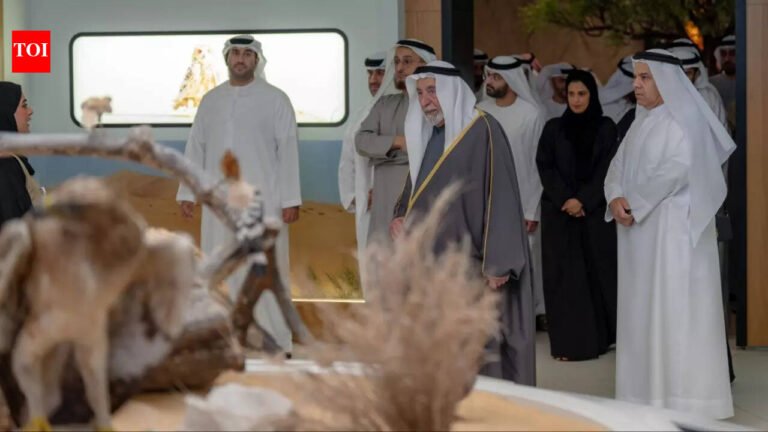
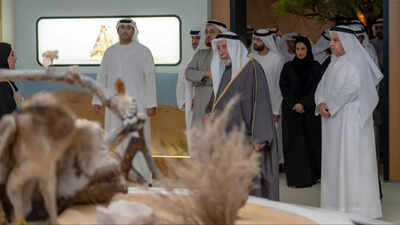
In a significant cultural and educational milestone for the central UAE region, His Highness Dr. Sheikh Sultan bin Mohammed Al Qasimi, Supreme Council Member and Ruler of Sharjah, inaugurated the Zayed Wildlife Museum in Al Zayed City, reinforcing the emirate’s long-term vision for environmental stewardship and public engagement with nature.The museum officially opens near the historic Souq Sharia’t Al Dhaid, adding to Sharjah’s growing network of educational and conservation destinations. Its launch follows Al Dhaid’s wider transformation into a multi-faceted area where heritage, nature and community life meet.
Al Dhaid Wildlife Museum: Sharjah Interactive Environmental Learning Center
The Wildlife Museum has been intentionally designed as an interactive and educational platform, inviting families, students, researchers and nature lovers to explore the rich biodiversity and ecological dynamics of the Arabian Desert landscape.Exhibits span multiple specialist galleries and cover a wide range of natural themes, from the adaptations of desert animals and plant life to geological formations and seasonal cycles. A notable feature includes three-dimensional models of desert animal anatomy, designed to deepen visitors’ understanding of how species thrive in harsh environments.By deploying advanced digital technologies and interactive learning tools, the museum aims to make environmental science more accessible and engaging. This is in line with an emerging trend in the Bay Area to combine technology with natural history to engage young audiences and increase public science literacy.
Al Dhaid Wildlife Museum is now open to visitors, offering an engaging educational experience that highlights the rich biodiversity of Sharjah’s natural environment.
We welcome you to explore wildlife up close. pic.twitter.com/anNV8Z1P6E— Sharjah Environment Agency (@EPAA_SHJ) February 7, 2026
In his inaugural speech, the Ruler emphasized the importance of ongoing scientific work to protect local ecosystems and wildlife, reaffirming Sharjah’s ongoing commitment to conservation efforts. These efforts extend beyond the museum. For example, long-term projects such as the Seed Collection and Storage Programme, which includes millions of seed banks, reflect a broader strategy to protect plant diversity and support scientific research.By housing educational laboratories and dedicated research spaces within the museum, the institution is positioned not only as a destination for visitors, but also as a learning center for academics and environmental professionals. It supports initiatives that promote ecological understanding and sustainable development, values that are increasingly central to the UAE’s national agenda.
Halls and features of Alzeid Wildlife Museum
Covering an area of 2,755 square meters, the carefully designed museum features a series of specialist halls that explore the unique environment of the Arabian Desert, the way life adapts to its challenging conditions, and the rich biodiversity of plant and animal species that thrive in the desert.
- Desert Hall: The hall introduces visitors to the environmental characteristics of the Arabian Desert and ingenious methods of surviving in the harsh climate. Exhibits include traditional Bedouin tents symbolizing desert heritage, as well as displays explaining how ancient communities determined the seasons by navigating through the stars. Visitors can also explore different types of dunes, learn about the dynamics of sand movement, and learn about the minerals and rock formations found in the area.
- Factory hall: The hall is dedicated to desert plants, presenting scientific and interactive content on seasonal and perennial plant species, including several endangered plants. Exhibits explain the structure of plant cells, the process of photosynthesis and techniques used to estimate the age of trees growing in arid environments.
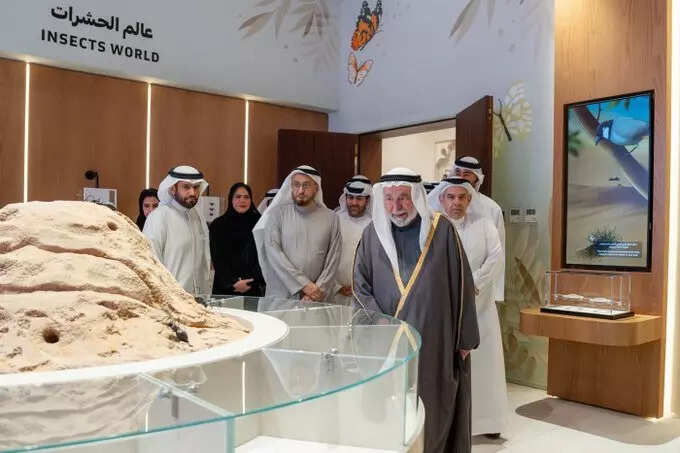
- Insectarium: The Insectarium displays a collection of rare butterflies donated by the Ruler of Sharjah, as well as carefully preserved insect specimens. The interactive display, supported by a dedicated app, provides scientific insights into insect taxonomy, geographical distribution and toxicity levels. The lobby also offers a virtual reality experience that allows visitors to explore the life cycle of a camel spider.
- Desert Zoo: The hall highlights the diversity of desert-dwelling reptiles, mammals and other species adapted to extreme conditions. A standout feature is a three-dimensional anatomical model of a camel, providing insight into how the animal’s structure supports survival in a desert environment.
- Bird House: The Bird Hall focuses on resident and migratory birds, and displays desert birds such as falcons and eagles. Interactive screens provide information on behavioral differences, hunting techniques and dietary patterns, as well as displays of nests and guidance on how to identify them.
- Library: These spaces offer comprehensive educational content covering publications and e-books from the Nature Reserve, Environment and Protected Areas Authority, as well as an interactive digital book highlighting Alzeid’s historical role as an agricultural oasis of environmental significance.
- Children’s Pavilion: The Children’s Room is designed to excite young visitors, with hands-on activities such as coloring and painting. The aim is to foster a love for nature, encourage scientific curiosity and develop environmental awareness from an early age.
The museum’s main entrance reflects the traditional Emirati architectural style of the central region, with its arched gates reminiscent of historic forts and heritage buildings. The design is a symbolic passage to a space dedicated to culture, knowledge and environmental awareness.
The Insectarium of the Al Zeid Wildlife Museum in Sharjah houses rare butterflies donated to the museum by the Ruler of Sharjah, as well as well-preserved insect models.
The earth-toned exterior blends perfectly with the surrounding desert landscape, while the hand-carved wooden doors are decorated with Islamic-inspired patterns, adding a sense of craftsmanship and authenticity. Together, these elements present a contemporary architectural expression rooted in Emirati identity and local memory.To support its scientific and educational mission, the museum is equipped with comprehensive facilities. These include administrative offices, dedicated space for scientific researchers, fully equipped laboratories and technical support departments. Other facilities include the Office of Environmental Education, Programs and Events Department, Guidance Unit, and visitor services such as parking and support facilities.
Alzeid Wildlife Museum as a pillar of regional tourism and cultural identity
The opening of the Wildlife Museum is part of a larger effort to reposition Alzeid as a destination that celebrates its natural environment and historical roots. In addition to museums, restoration projects and new attractions are enhancing the region’s cultural cycle, integrating heritage tourism with environmental exploration. This initiative coincides with the restoration of historic buildings and markets, which together provide a layered visitor experience, from traditional architecture and bazaar culture to immersive encounters with nature. These developments support the UAE’s broader sustainability narrative, with environmental protection, cultural preservation and community engagement increasingly integrated into urban and regional planning.
Looking to the future: education and sustainability through the Alzeid Wildlife Museum
The Alzeid Wildlife Museum highlights how cultural institutions continue to evolve to fulfill their multiple roles as centers of public education, platforms for scientific collaboration and pillars of tourism development. Promoting ecological awareness through interactive experiences and scientific engagement, the museum not only reflects Sharjah’s heritage but also helps shape the next generation of environmentally conscious citizens.As the museum opens, it demonstrates how investment in environmental education can deepen the public’s appreciation of nature while advancing wider cultural and development goals across the UAE.
Prime Minister Narendra Modi meets Seychelles President Patrick Ermini | India News
New Delhi: Prime Minister Narendra Modi Met Seychelles President Patrick Hemini at Hyderabad House on Monday. Earlier, the Seychelles President also paid tribute to Mahatma Gandhi at Rajat.Earlier on Monday, External Affairs Minister S Jaishankar called Seychelles President Patrick Hermini and thanked the President for his support for the MAHASAGAR vision.President Hemini arrived in the national capital on Sunday after completing events in Chennai and Mumbai on his state visit to India.His visit, which will last until February 10, is his first visit to India since taking office in October 2025. It coincides with the 50th anniversary of the establishment of diplomatic relations between India and Seychelles.According to a post by the Ministry of External Affairs onThe MEA highlighted Seychelles’ strategic importance to India, describing the island nation as an important maritime neighbor and key partner in India’s “MAHASAGAR Vision” and underlining New Delhi’s commitment to cooperation with the global South.“Seychelles is an important maritime neighbor of India and an important partner in India’s MAHASAGAR vision and its commitment to the Global South,” the post added.During his stay in New Delhi, President Hemini is expected to meet President Drupadi Murmu and hold discussions with Prime Minister Narendra Modi. Discussions are expected to focus on strengthening bilateral relations and exchanging views on regional and international issues of mutual interest.In Chennai, Hermini, along with Seychelles Health Minister Marvin Nolan Fanny, met SIMS Hospitals Chairman Ravi Pachamuthu to discuss a collaborative roadmap to strengthen healthcare services in the island nation through sustainable and long-term healthcare solutions such as super specialty medical outreach, hospital infrastructure development, digital healthcare integration, workforce support, affordable medicines and dialysis expansion.Meanwhile, the President of Seychelles met with Minister of Ports, Shipping and Waterways Sarbananda Sonowal in Mumbai and discussed exploring investment and cooperation opportunities at the India-Seychelles Business Roundtable.Mumbai’s engagement aims to strengthen ties with India and Seychelles, focusing on maritime trade, blue economy and sustainable development. (Arnie)
‘Back to the place I love’: Harshit Rana shares post-surgery update | Cricket News
New Delhi: Indian pacer Harshit Rana, who has missed the T20 World Cup due to a knee injury, shared a positive news on Monday. Rana posted a photo of herself post-surgery on social media.“Done well with surgery, now focusing on recovery and getting back to where I love to be,” Rana wrote.
In Rana’s absence, Mohammed Siraj Named his replacement.Rana was injured in a warm-up match earlier this week, with skipper Suryakumar Yadav admitting at the time that Rana “didn’t look good”.

The right-arm fast bowler bowled just one ball in the warm-up match against South Africa, conceding 16 runs, before limping off the field with a knee problem.“Siraj has played 45 Tests, 50 ODIs and 16 T20Is, with Rana being ruled out after he injured his right knee in the warm-up match against South Africa on February 4,” the ICC said in a media statement issued on Friday evening.
Cancers we can see but still miss | India News
It starts in the obvious places—tongue, cheeks, gums. However, oral cancer, one of the few cancers that can be detected with a simple oral examination, is still diagnosed too late in India.Nearly 70 to 80 per cent of oral cancer patients in the country are detected only at an advanced stage, when the chance of survival drops dramatically. While the five-year survival rate for early-stage oral cancer is over 80%, the survival rate for late-stage oral cancer is less than 30%. Today, India accounts for almost one-third of the world’s oral cancer burden, turning a largely preventable disease into a silent public health crisis.Doctors say the problem is delay. It usually takes three to seven months from the time a patient first notices symptoms to arriving at a specialized cancer center. Early lesions are usually painless, small, and easily overlooked. Minor ulcers, white spots, or mild discomfort when chewing can be ignored, especially in smokers, until the disease progresses to the point where treatment is difficult.“Early screening can make a huge difference in the outcome of oral cancer,” said Dr. Sultan A Pradhan, a surgical oncologist at the Head and Neck Cancer Institute of India. He said an organized screening program can reduce mortality by 24 to 30 percent by detecting precancerous lesions early. Mobile screening units and community cancer camps have shown that prompt identification can stop cancer before it becomes fatal.The risk factors are well known. More than 90% of oral cancer cases in India are related to tobacco use, especially smokeless tobacco such as gutka, kani and betel nut. Alcohol further increases the risk. Doctors also report rising rates of HPV-related oral cancers among younger patients with no history of smoking, extending the risk beyond traditional groups.Once patients enter the system, specialist hospitals play a vital role, integrating early detection pathways with advanced surgery, reconstruction and team care. But clinicians stress that even the best technology cannot fully offset the damage caused by late diagnosis. Oral cancer remains one of the few cancers for which recognition and timely referral can save more lives than any single drug or machine.Meanwhile, cancer care is moving beyond what a scan can show. Dr Shrinidhi Nathany, consultant molecular hematologist and oncologist at Fortis Memorial Institute, explains that tumors smaller than 5 mm are usually not detectable through CT or PET scans. Blood tests that analyze circulating tumor DNA, or ctDNA, can detect bioactive disease, early relapses and treatment resistance months before scans show any changes.In India, where repeat imaging is expensive and often inaccessible, such tests can help reduce unnecessary scans and ineffective treatments. Used judiciously, genomics can reduce overall costs while enabling more precise, timely care.Oral cancer doesn’t hide. It appears in public. Experts say that the tragedy is not that it cannot be seen, but that it often does not receive timely attention.