Home Blog Page 8

Day 5: US assets sweep across Middle East; Israel launches new strikes on Iran, Lebanon

0

Day 5: US assets sweep across Middle East; Israel launches new strikes on Iran, Lebanon

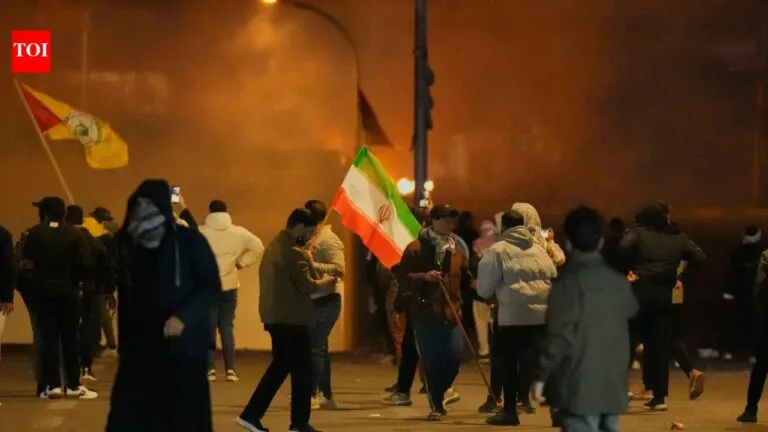
Explosions were heard across the Iranian capital before dawn on Wednesday as the country’s escalating conflict with the United States and Israel entered its fifth day, marking one of the most intense periods of fighting in the region in decades. The latest explosions in Tehran followed days of sustained U.S. and Israeli air strikes on Iranian military and nuclear facilities, with Tehran launching a sweeping retaliatory attack on Israeli territory and U.S. assets in the Gulf.Iranian state television reported explosions around Tehran at dawn, while Israel said its air defense systems had been activated in response to the Iranian missile attack.Israel has launched a new so-called “big wave” of strikes against Iran’s defense systems and missile launch sites. A day earlier, Israel carried out airstrikes against Iranian missile launchers and a nuclear research base.Follow live updates on the US-Israel-Iran warIsraeli military spokesman Brig.-Gen. General Efe Devlin said the military attacked a building in the Iranian city of Qom where clerics were expected to meet to discuss choosing a new supreme leader. He said the army was still assessing whether anyone was injured.The Israeli military said it also carried out air strikes on sites where Iran produces and stores ballistic missiles and destroyed what it called Iran’s secret underground nuclear headquarters. Without providing evidence, it said the site was used for research “to develop key components for nuclear weapons.”Iran says it has not enriched uranium since June, but it still reserves the right to do so and says its nuclear program is for peaceful purposes.

Iran retaliates in Israel, Gulf

Iran has launched dozens of ballistic missiles at Israel, but most have been intercepted. Eleven people have been killed in Israel since the conflict began.Tehran confirmed it had struck multiple locations in Bahrain, Kuwait, Qatar and the United Arab Emirates, all of which host U.S. military air bases, Fars news agency reported.“This operation will continue without mercy until the enemy is completely defeated,” Iran’s Islamic Revolutionary Guard Corps said, adding that all U.S. assets in the region are considered legitimate targets by the Iranian armed forces.Saudi Arabia’s Defense Ministry said two drones struck the U.S. Embassy in Riyadh, causing a “limited fire.” The embassy urged Americans to avoid the compound, which was later closed to the public.An Iranian drone struck a parking lot outside the U.S. consulate in Dubai, causing a small fire, Secretary of State Marco Rubio explain. The Dubai government media office said authorities put out limited fires near the consulate due to the drone strike.The CIA compound at the U.S. Embassy in Saudi Arabia was attacked on Monday by a suspected Iranian drone, according to people familiar with the matter.‘We’ve just begun’: US says it has bombed more than 2,000 targets in Iran – latest developments

US withdrawal and regional impact

The U.S. State Department authorized non-emergency U.S. government employees and family members to leave Saudi Arabia and Oman “due to security risks,” based on advice from the U.S. embassies in Riyadh and Muscat.The department also ordered the evacuation of non-emergency personnel and family members in Kuwait, Bahrain, Iraq, Qatar, Jordan and the United Arab Emirates. U.S. citizens were urged to leave more than a dozen Middle Eastern countries, although many were stranded by airspace closures. The U.S. State Department said it was preparing military and charter flights for Americans who wanted to leave the area.Oman has played a mediating role in negotiations between the United States and Iran, calling for a ceasefire. Riyadh condemned the salvos from Iran, including the attack on the U.S. Embassy in Riyadh.In view of the evolving situation in West Asia and the Gulf region, the Indian Ministry of External Affairs announced the establishment of a special control room and issued a helpline number to Indian nationals.

US military steps up military operations

Adm. Brad Cooper, commander of U.S. Central Command, said U.S. forces have struck nearly 2,000 targets in Iran as part of what he called the largest buildup of firepower in the region in a generation.“Simply put, we’re focused on shooting everything that can be shot at us,” Cooper said in a video message posted on X.“We are also sinking the Iranian navy – the entire navy,” he added. “So far, we have destroyed 17 Iranian ships, including the most combat-capable Iranian submarine that currently has holes in its sides.”“The Iranian regime has harassed international shipping for decades. Today, there is not a single Iranian ship operating in the Arabian Gulf, the Strait of Hormuz or the Gulf of Oman,” Cooper said. “We won’t stop.”He added: “We have hit nearly 2,000 targets with more than 2,000 munitions. We have severely degraded Iran’s air defense capabilities and destroyed hundreds of Iranian ballistic missiles, launchers, and drones. ““The first 24 hours of this operation were almost twice the scale of the first day of the shock strike against Iraq in 2003,” he said. “We will continue to strike Iran 24/7.”The U.S. military said it had destroyed 17 Iranian ships, including a submarine.According to the Red Crescent, U.S. and Israeli air strikes have killed at least 787 people in Iran. Iran has killed nearly 800 people since the conflict began, including the president Donald Trump said he had considered serving as a possible future leader of the country.In Lebanon, Israel launched retaliatory attacks against Hezbollah militants, killing at least 50 people, including seven children, according to the Lebanese Health Ministry. Lebanese state media also reported that an Israeli attack on a residential area in the city of Baalbek killed at least four people.The U.S. military confirmed the deaths of six U.S. service members. Four people were identified as captains. Cody A. Hawk, Sgt. 1st Class Noah L. Tietjens, Sgt. 1st Class Nicole M. Armor and Sgt. Declan J. Coady, assigned to the 103rd Sustainment Command, Iowa. A drone attack on a command center in Kuwait on Sunday killed four U.S. Army reservists and two other service members, the Pentagon said.Kuwait said an 11-year-old girl was killed by falling shrapnel as its troops intercepted “hostile air targets.” Three people died in the United Arab Emirates and one in Bahrain.

Uncertainty about Iran’s leadership

US President Donald Trump said Iran’s air force and navy had been “destroyed” and new attacks were targeting Iran’s leadership. He suggested the war could last weeks or longer.Trump said that as far as possible leaders in Iran are concerned, “the people in our minds are dead.”“I guess the worst thing that could happen is to do that and have someone replace someone who’s just as bad as the predecessor, right? That could happen,” Trump said. “We don’t want that to happen.”While the initial U.S. and Israeli strikes killed Iran’s Supreme Leader Ayatollah Ali Khamenei and Trump urged the Iranians to overthrow the government, senior administration officials have since said regime change was not the goal. Trump later suggested that “people within the Iranian regime” might be the best bet to take power once the campaign is over.Israeli media reported that the 56-year-old Ali Khamenei’s second son Mojtaba Khamenei has been selected as his successor, and the expert conference is expected to officially announce his successor. The New York Times reported that he had emerged as the leading candidate, with parliament allegedly electing him under pressure from the Islamic Revolutionary Guard Corps. Iranian state media has not independently confirmed this.
Trump worries Iran’s leaders could be ‘just as bad’ after war

0

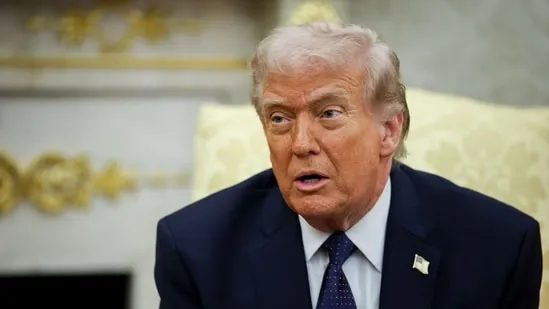
president Donald Trump Expressing concern that a strike on Iran could lead to the emergence of new leadership is as unsettling to Washington as the regime the United States and Israel are working to overthrow.

U.S. President Donald Trump speaks during a meeting in the Oval Office of the White House during the U.S.-Iran war (Bloomberg)

Trump’s comments are likely to stoke concerns about the administration’s ultimate outcome of the conflict, while Iran’s retaliatory actions against Saudi Arabia could fuel concerns about further escalation in the region. Follow live updates on the US-Iran war here

“I think the worst thing that could happen is that we do this and then someone takes over and he’s just as bad as the predecessor, right? That could happen,” Trump told reporters in the Oval Office on Tuesday. “You go through it and then five years later you realize you put someone in place who’s no better than him.”

The US president, who spoke alongside German Chancellor Friedrich Merz, reiterated his desire to see a more moderate leader emerge from Iran, but his top candidates were reportedly killed in the attack and a second group of officials “may have died as well”.

“So I guess the third wave is coming soon,” he added.

Earlier on Tuesday, Trump posted on social media that “wars can go on ‘forever'” and said the United States had an unlimited supply of nuclear weapons and long-range missiles that it wanted to prevent Iran from acquiring. Earlier, he claimed that Iran’s “air defense, air force, navy and leadership have disappeared.”

Trump insisted that oil and gas prices would return to stability, although he did not know how long the military action would last.

“If oil prices stay high for a while, once this is over, I believe those prices will come down, lower than they’ve ever been,” Trump told reporters.

Oil prices soared again on Tuesday, with Brent crude trading as high as $85 a barrel, the highest level since July 2024. As of 2 p.m. in New York, U.S. oil and the global Brent crude benchmark were both up more than 4% from Monday’s close.

this Strait of Hormuz – A vital route for oil tankers – remains virtually closed.

Israel According to Israel’s “Kan News”, Iran launched a new round of attacks on Tehran on Tuesday and attacked a building in the city of Qom where Iranian clerics were meeting to elect the successor to Supreme Leader Ayatollah Ali Khamenei. Iran’s semi-official Meir news agency said the building was attacked but was not in use at the time.

Trump pushed back on questions about whether the United States would launch an attack on Iran at the request of Israel, saying on Tuesday, “I might force them to take action.”

The Islamic Republic has launched missiles at countries with U.S. bases, including Qatar, Bahrain and Oman, and Doha says the targets are not limited to military interests. Qatar and Iraq halted production at major energy bases, exacerbating concerns about supply and prices.

China, which buys most of Iran’s oil, urged “all parties” to ensure the safe passage of ships through the Strait of Hormuz. The UAE and Qatar are privately lobbying allies to help them persuade Trump to find an exit ramp to shorten the conflict, according to people familiar with the matter.

Qatar Energy has halted production of some chemicals after an Iranian attack forced the shutdown of its main liquefied natural gas plant. Iraq has begun shutting down oil production at the giant Rumaila field operated by BP, according to a person familiar with the matter, who said storage space was running out while tankers struggled to leave the Persian Gulf.

Debris from an intercepted drone sparked a fire at the UAE oil trading hub of Fujairah.

Iran’s Red Crescent Society reported that 787 people have died since the conflict began, while the United States said six service members were killed. About a dozen people died in Israel.

Israel has sent soldiers into southern Lebanon, home to the Iran-allied Hezbollah militia, and launched a wave of attacks on targets in Beirut. The Lebanese Ministry of Health said more than 50 people had been killed in the attack.

The U.S. military said on the Iran admitted overnight that its Natanz nuclear facility had been attacked.

The U.S. State Department on Monday urged Americans to leave the Middle East, citing “There are serious safety risksIn danger of war. It advised U.S. citizens in more than a dozen countries, including Israel, Saudi Arabia, Qatar and the United Arab Emirates, to leave by “available commercial transportation.”

The news caused confusion because there was no similar announcement on the State Department’s website. As of Tuesday morning, it listed Iraq, Syria, Lebanon and Gaza as “no travel” areas. But other countries have given fewer warnings.

Assistant Secretary of State for Global Public Affairs Dylan Johnson said in a post on

Flights from the Gulf are likely to face challenges as nearly all civil air traffic in the Gulf has been shut down due to a weekend attack on Dubai’s main airport, the world’s busiest aviation hub. Emirates and Etihad Airways plan to resume limited operations to ease some congestion.

Speaking on state television on Monday, Iranian Foreign Minister Abbas Araghchi said Tehran had no dispute with its neighbor but was “confronting American soldiers stationed there.” Saudi Arabia and the United Arab Emirates have strongly criticized Iran for expanding the conflict into their territory.

Two drones struck near the U.S. Embassy in Riyadh at night, causing limited damage. The United States says three fighter jets crashed in Kuwait in an apparent incident of friendly fire and that the crew ejected safely.

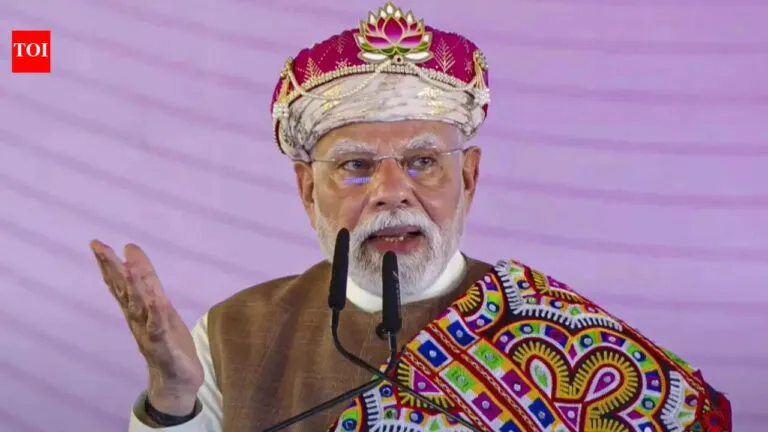
PM Modi calls for boost in exports, putting biopharma at center stage

0

New Delhi: Prime Minister Narendra Modi Tuesday marked a shift in India’s export strategy from a mere focus on cost competitiveness to quality-driven growth, urging the industry to scale up research, adopt global standards and align with emerging supply chain opportunities.Addressing the second post-budget webinar on sustaining economic growth, Prime Minister Modi said that as global trade and production networks are being reshaped, India must reposition itself as a trusted manufacturing partner. “Our direction is clear. Our resolve is clear. Build more, produce more, connect more and now there is a need to increase exports,” he said, viewing exports as the next phase of India’s economic trajectory.Modi said with multiple free trade agreements opening up wider market access, quality will determine how effectively India takes advantage of these opportunities. “When the opportunity comes for us to move forward, our mantra should be – ‘Quality, quality, quality,'” he said. “If we have to put our utmost strength, intelligence and effort into one thing, it should be quality,” Modi said, adding that Indian products must not only meet global benchmarks but also strive to exceed them.Modi also called for greater investment in research and development. “The days of being frugal in research are over. Now, we must invest heavily in research,” he said, urging manufacturers to closely study consumer preferences and regulatory standards in partner countries to produce products that are user-friendly and globally competitive.Among departmental priorities, Prime Minister Modi highlighted the Biopharma Shakti Mission to position India as a global hub for biologics and next-generation therapeutics. “We want to be a leader in advanced biopharmaceutical research and manufacturing,” he said.Modi linked manufacturing ambitions to infrastructure and logistics reforms, saying record capital spending, intermodal transport and new freight corridors will reduce costs and increase efficiency. However, he added that the outcome would depend on coordinated action by industry, financial institutions and the state.

‘Trump started Ecuador war’: US president slams military for joint action against ‘designated terrorist groups’

0

president Donald Trump U.S. Southern Command comes under fire online despite announcing joint operation with U.S. Ecuadormilitary force to target designated terrorist groups there.

U.S. Southern Command announced a joint operation with the Ecuadorian military to target designated terrorist groups. Images used for representational purposes. (no splash)

“On March 3, Ecuadorian and U.S. military forces launched operations against designated terrorist groups in Ecuador. These operations are a powerful example of the commitment of our partners in Latin America and the Caribbean to combat the scourge of narco-terrorism,” Southern Command announced on the 1st.

They shared a video of the operation, adding: “Together, we are taking decisive action against the narco-terrorists who have long inflicted terror, violence and corruption on citizens across the Western Hemisphere.”

The post also quoted Gen. Francis L. Donovan, commander of Southern Command, saying: “We commend the men and women of the Ecuadorian Armed Forces for their unwavering commitment to this fight, who have demonstrated courage and determination through sustained operations against narco-terrorists in their country.”

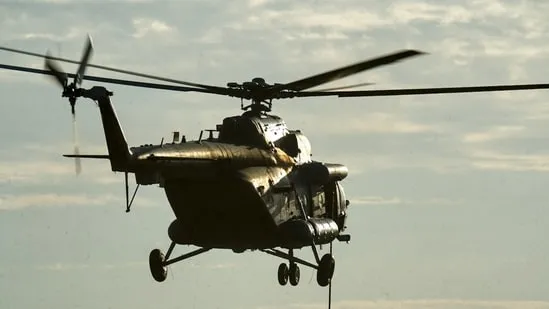
The video shows a helicopter taking off and appearing to lock onto its target.

Ecuador’s action comes as Trump focuses on South America, including sending troops to Venezuela to seize Nicolás Madurotheir president and his wife. The pair were flown back to the United States to face prosecution, an unprecedented turn of events.

ALSO READ | ‘Everything is knocked out’: Trump says US is ‘doing a great job’ in Iran, shares Tehran’s ‘succession plan’

Currently, tensions are high elsewhere as the United States and its ally Israel are locked in a conflict with Iran in the Middle East.

The recent acts of aggression have not appeased many who have begun to question why the United States is involved in the war, even as Trump promised the opposite while campaigning for a second term.

Trump slams Ecuador’s actions

Trump has been heavily criticized for his military actions in Ecuador. “The US empire just launched its latest clown war in Ecuador. Overnight, locals were labeled as terrorists. Anything to keep us away from Epstein since Iran started to stop distracting us,” page claim.

Another page, purporting to be a group of anti-Trump Republicans, wrote “U.S. Southern Command (SOUTHCOM) stated that on March 3, Ecuadorian and U.S. military forces launched an operation against a designated terrorist organization in Ecuador.”

Another one additional “President Trump is no longer backing down. He is waging an all-out war on the cartels.”

Trump took a tough stance on cross-border drugs during his second term. These include strikes against what the government calls “narco-terrorist” vessels in the Caribbean and eastern Pacific as part of Operation Southern Spear. However, reports indicate that some attacks may have affected civilians on board these ships.

BJP to contest 2 Bihar Lok Sabha seats, Nitin Nabin to make parliamentary debut

0

(From left) Bihar BJP president Sanjay Saraogi, BJP national president Nitin Nabin, Bihar deputy minister Samrat Choudhary and party MP Ravi Shankar Prasad at the Holi Milan Samaroh in Patna on Tuesday.

New Delhi: Bharatiya Janata Party national president Nitin Nabin will make his debut in the Lok Sabha from his home state of Bihar, with the party naming him as one of nine candidates to win 37 seats in 10 out of 10 states.While the BJP has nominated two candidates from the Bihar quota, Shivesh Kumar, a Dalit who lost out from Sasaram in the 2024 Lok Sabha elections, is the second nominee, the suspense over JDU’s selection is growing and the party is yet to officially announce any name, with indications that it will re-elect Union Minister Ram Nath Thakur but may drop RS Harivansh, Vice Chairman.

Bihar Buzz: Will CM Nitish Kumar’s son Nishant Kumar enter politics through the Rajya Sabha route?

A powerful section within the JDU supports Nishant Kumar, the son of party president and chief minister Nitish Kumar, whose nearly five decades of public life have been marked by his opposition to dynastic politics, but who faces pressure to cave in to demands from party workers amid concerns about his own health from some quarters.Ram Nath Thakur, son of prominent socialist leader Kapuri Thakur, and former journalist Harivansh have both served in the RS for two consecutive terms.Upendra Kushwaha will contest for the fifth seat again as the NDA candidate and the opposition parties are likely to force their way to the fifth seat despite the lack of unity among rivals, with the ruling alliance confident of winning.Nabin, an upper-caste Kayastha and fifth-term MLA from Bihar, will enter Parliament for the first time, a move that will cement his position in national politics.Meanwhile, the BJP has fielded two MLAs from Assam – Terash Gowalla and Jogen Mohan, former LS MP Sanjay Bhatia from Haryana, Odisha President Manmohan Samal from West Bengal and former West Bengal President Rahul Sinha. Bhatia has resigned from Karnal and takes over from former Prime Minister Manohar Lal Khattar, who is now the Union Minister.Outgoing Odisha MP Sujeet Kumar, who quit the BJD after the state assembly elections, is the only recurring candidate from the BJP in this list. The party is yet to announce its list for Maharashtra, where seven seats are vacant and the ruling alliance will get six seats. Laxmi Verma, a native of Kurmi who has risen through the party ranks in Chhattisgarh, is the only female candidate on the BJP’s list.The list is filled with experienced organizational personnel, BJP officials said, underscoring the leadership’s decision to groom a new batch of members for key positions.

Florida State University freezes H-1B visa hiring amid Trump immigration crackdown

0

Florida’s public university system, one of the nation’s largest, followed Texas’ lead and froze hiring through H-1B visas, a program that has become the focus of the president’s attention Donald TrumpWider immigration crackdown.

Under the administration of Donald Trump, U.S. visa rules have undergone significant changes. (no splash)

The board of trustees that oversees Florida’s 12 public universities voted 14-2 not to hire any candidates who require such visas this year and to study whether their past use has disadvantaged American workers. governor of florida Ron DeSantis In October, the committee ordered an end to the practice, claiming universities were using them to displace U.S. citizens.

Board members who voted against the measure worried it would harm Florida’s ability to attract the best talent.

“This sends a message to people in Florida that this is not a place where they can go to work,” said Carson Dale, a board member representing the system’s 430,000 students who voted against the proposal.

DeSantis said in October that “colleges across the country are bringing in foreign workers on H-1B visas instead of hiring Americans.”

Florida’s decision follows a similar move by Texas. The H-1B program, one of the primary vehicles for bringing skilled white-collar workers into the United States, has been the focus of the Trump administration’s broader crackdown on immigration, which has included more high-profile efforts to expand border enforcement and deportations.

ALSO READ | New rules for FY 2027 H-1B visa registration starting March 4: Check if you qualify

In September, Trump issued a proclamation mandating new, $100,000 fee H-1B applies and prioritizes high-wage applicants, leading business groups to warn that the changes could make it harder for large employers to compete internationally for the best talent.

Florida public universities are seeking H-1B visas for about 600 employees in fiscal year 2025, according to U.S. Citizenship and Immigration Services. Supporters say the visas allow Florida to compete with universities around the world for the best academic talent.

Across the United States, universities apply for thousands of H-1B visas each year, mainly for high-tech fields such as laboratories, engineering projects, medical research centers and artificial intelligence.

As of 2023, more than half of U.S. postdoctoral researchers in health, engineering, and sciences hold H-1B or other temporary visas, according to the National Center for Science and Engineering Statistics.

Here’s why you should buy a big-screen TV instead of a projector in 2026

0

For years, the choice was clear: If you wanted a larger screen, 75 inches or more, in your home, you could buy a projector and settle for washed-out visuals during the day. For clear video quality, you can buy a small screen TV as smart TVs larger than 70 inches are very expensive. Things have changed now, and you can buy a nice 75-inch TV for about $60,000. This is a smarter investment than a projector.

Big-screen TVs finally surpass projectors by delivering cinematic immersion
Amit Rakhi

For the past seven years, I’ve tracked consumer technology through the constant changes in hardware, platforms, and the way people actually use their devices. Covering everything from budget gear to flagship hardware, I focus on what readers need to know, not buzzwords or release cycle hype. My expertise spans gaming laptops and gaming chairs, high-performance computers, gaming monitors, printers, smartwatches, headphones, headsets, Bluetooth speakers, tablets, and more, with a special focus on how these products perform in daily use. Reviews, explainers, buying guides, and news stories all have a common goal: to provide readers with enough detail to make a confident decision rather than wading through nonsense. Outside of deadlines, I spend a lot of time playing games, watching movies, and anime, which naturally flows into work. Performance, comfort, display quality and sound are judged on how players and viewers experience it, not just lab data, which grounds my coverage in real-life scenarios, not just benchmarks.

This article will give you more reasons to buy a big screen TV instead of a projector so you don’t have to compromise on daytime visuals.

Large-screen smart TVs are now affordable

Large-screen smart TVs are becoming increasingly affordable as major manufacturers such as Samsung and TCL start producing TVs above 100 inches. Where once you could easily buy something for your living room for Rs 100,000, you can now spend approx. $Easily 70,000.

Comparison of smart TV and projector functions

Check out big-screen smart TVs on Amazon

Why big-screen TVs will beat projectors by 2026

Big-screen smart TVs beat projectors in many ways. Here are some of the top reasons why you should choose a smart TV over a projector.

Unparalleled deep black image quality

The main reasons to choose a smart TV over a projector are its brightness and contrast. Modern smart TVs also come with dimming zones, which allow them to achieve “near-perfect” blacks while reaching high brightness levels.

You can get better results with advanced features like HDR10, Dolby Vision, etc. on a smart TV compared to a projector. Laser projectors can easily achieve this level of brightness without fading, but they are very expensive compared to smart TVs.

View Laser Projectors on Amazon

Easy and quick installation

Installing a 100-inch smart TV isn’t easy, but you don’t have to worry about that because most models can be installed for free and easily. Projectors aren’t always free to install and set up, however. And the setup is finicky, especially if you buy an ultra-short throw projector, which requires millimeter precision or the image will be blurry.

Additionally, to get the best experience with your projector, you need an ALR (Ambient Light Reduction) screen, which is another expensive investment. If you mount it on the ceiling like most people do, accessing the external ports isn’t easy.

Excellent performance value

Value per performance has been in favor of smart TVs, which are much cheaper than 4k laser projectors plus high-quality motorized screens. When you factor in the TV’s 100,000 hour lifespan with the eventual dimming of the projector’s laser engine, the TV’s “total cost of ownership” is much lower.

Gaming and multi-purpose versatility

Projectors have come a long way in technology, but there are still issues with input lag and motion blur when you want to play games on them. TVs offer better refresh rates and sometimes even optimize the overall performance of consoles, such as Sony’s PlayStation 5 and select LG models of Xbox consoles.

If you have a dedicated basement or room with no windows or outside light, and you want a 100-inch-plus theater experience, a projector is still your best choice. But for that, you have to consider all the other costs, including the screen, setup hassle, and loss of premium features. But if you want a relaxing big-screen experience, go for a big-screen TV.

Best TV Brands of 2025: Top picks from LG, Acer, Samsung and more to help you find the perfect TV for your home

Best LED TVs in India: Top 10 models from best TV brands like LG, MI and more

Disclaimer: At Hindustan Times, we help you stay updated with the latest trends and products. Hindustan Times has affiliate partnerships, so we may get a share of the revenue when you make a purchase. We are not responsible for any claims relating to the products under applicable law (including but not limited to the Consumer Protection Act 2019). The products listed in this article are in no particular order of preference.

Iran Strategy: Iran’s Strategy: Expanding the War, Raising the Costs, and Defeating Donald Trump

0

Iran's Strategy: Expanding the War, Raising the Costs, Outlasting Donald Trump
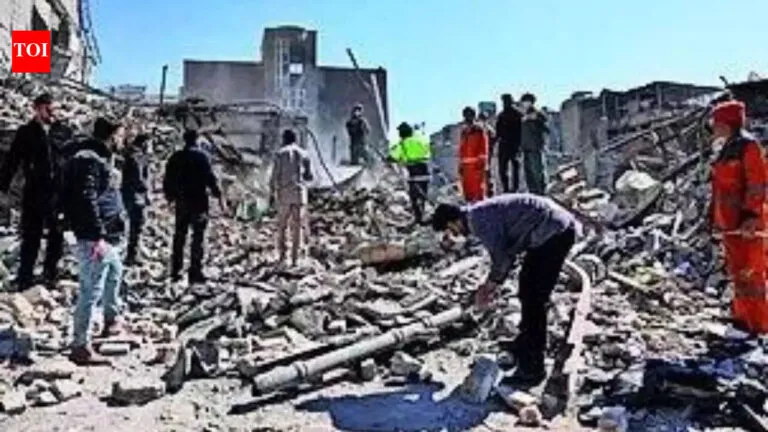
A police station in Tehran was reduced to rubble after an airstrike on Tuesday

Steven ErlangerThe Islamic Republic of Iran’s first priority is survival. To do this, its leaders will want to raise the cost of President Trump’s war — including American casualties, costs and inflation — to try to persuade him to declare victory and go home. Analysts say that Iran is working hard to expand the battlefield from its own territory to a wider area in the face of overwhelming firepower from the United States and Israel. The goal is to disrupt neighboring countries’ oil and gas infrastructure, close shipping in the Strait of Hormuz and restrict air traffic – all in an effort to disrupt the Persian Gulf economy and drive up global energy prices and inflation. Iran will also try to exhaust the number of expensive missile interceptors its enemies possess.

Iran’s war calculation: The price is so high that the United States made concessions to Khamenei’s strategy revealed

“War has become a test of will and endurance,” said Wali Nasr of the Johns Hopkins School of Advanced International Studies. “Iran faces a qualitatively superior military, so the strategy is to test their will by expanding the battlefield, complicating the war, and increasing the danger to the world economy.” The strategy is not complicated.“The Iranians want to spread as much pain as possible, regardless of the cost to themselves, regardless of the deterioration of relations with their neighbors, in the hope of building enough opposition to the war to force President Trump to back down,” said Ali Vaez, Iran director of the International Crisis Group, a Brussels-based think tank. “For the Islamic Republic,” he added, “survival is victory, even if the price is high.” The plan, known as “asymmetric endurance,” accepts initial damage to maintain the ability to escalate if Israeli, U.S. and Persian Gulf air defenses are stretched thin. Bases and embassies in the United States and even some Europe have been attacked, six US troops were killed and three planes were shot down. Hezbollah has entered the war, Persian Gulf states are anxious, and they have run out of expensive interceptors to deal with Iranian drones. Saudi and Qatari energy facilities were attacked. Oil and gas prices have soared, and shipping in the Strait of Hormuz has all but come to a halt.Ali Larijani, secretary of Iran’s National Security Council, claimed on social media on Monday that Iran “unlike the United States, is ready for a long-term war,” including plans to gradually escalate and expand the battlefield.Military analyst Franz-Stefan Gadi called the conflict “a race against time.” He said that Israel, the United States and their allies are trying to destroy missiles, launchers and communication nodes as quickly as possible so that Iran’s advanced missiles cannot be easily launched.Even heavily armed Israel had to limit the use of interceptors toward the end of its 12-day war with Iran in June, allowing some Iranian missiles to land without getting close to key locations or cities. If Iran’s strategy is clear, so are the risks. These have entered people’s field of vision.Analysts say the United States is encouraging Iran’s ethnic minorities, such as the Kurds and Baluchis, to rise up against the government, bombing police and army positions in those areas in the hope of at least triggering a popular uprising. Despite Iran’s attacks on Persian Gulf states, Tehran has so far failed to drive a wedge between those countries and Washington.Ellie Geranmaye, an Iran expert at the European Council on Foreign Relations research group, said that as always, it is difficult to know what Trump is thinking. “Trump has eliminated Khamenei, something no other president would dare to do,” she said. “He has an off-ramp if he wants to.”Former U.S. Department of Defense official Matthew Kroenig agreed. He said Trump was “sceptical of protracted military operations” and was pleased with many of the results, including the Venezuela model. “They’ve achieved several goals.”

Under pressure, Karnataka to revise internal quota for SC community

0

Under pressure, Karnataka to revise internal quota for SC community

BENGALURU: Under pressure from the Left-sectarian Scheduled Caste (SC) community and its two ministers, the Siddaramaiah-led Congress government in Karanataka has decided to revisit its earlier decision to fill 56,432 government posts without internal reservation. The Cabinet is expected to consider the issue of introducing internal reservation on a proportional basis within the existing 15% SC quota in its meeting on Thursday.A few days ago, Governor Thaawar Chand Gehlot approved the Karnataka Scheduled Caste Subdivision Bill, 2025, which provides for internal quotas among scheduled caste communities. The bill, passed in December last year, proposed to increase the overall reservation rate in SCs from 15% to 17% and distribute it to 101 SC communities. Gehlot’s agreement came in the wake of protests by job seekers in Dharwad, who demanded that the government fill nearly 2.5 lakh vacancies in various departments. Recruitment has been largely frozen since October 2024 to facilitate an internal quota system. Under the 17% structure in the bill signed by Grote, the left (16 communities) will get 6% under category A, the right (19 communities) will get 6% under category B and 63 communities will get 5% under category C. Adi Andhra, Adi Dravida and Adi Karnataka groups can choose to be reserved under Category A or Category B.But this matrix violates the 50 per cent cap on total reservation imposed by the Supreme Court and a disputed case is pending in the courts. Therefore, the government issued a notification to fill 56,432 posts under the existing 15% SC quota and clarified that the increased 17% quota will be implemented in recruitment only after the court’s decision. This triggered a strong reaction from stakeholders.

Iranian flag and ‘Property of Allah’ on suspect’s clothes: Shooting in US that kills Indian-American student

0

New information emerges after a fatal shooting at a crowded bar in Austin, Texas, reportedly left three people dead, including a 21-year-old man Indian-American student Savitha Shan.

Savitha Shan, 21, was one of the victims of Sunday's shooting in Austin. (X/@rfinney)
Savitha Shan, 21, was one of the victims of Sunday’s shooting in Austin. (X/@rfinney)

While police have not yet identified a motive behind the shooting, possible links to Iran have emerged. According to the Associated Press, citing law enforcement officials, the gunman was identified as 53-year-old Ndiaga Diagne. He was wearing clothes with an Iranian flag pattern and the words “Property of Allah” at the time of the shooting.

Savitha Shan was one of three victims of the shooting, the other two were identified as 19-year-old Ryder Harrington and 30-year-old Jorge Pederson.

What was the shooter’s motive?

Violence erupted on Sixth Street, a nightlife hub full of bars and clubs not far from the flagship campus of the University of Texas system, on Sunday when a gunman opened fire after driving through a Buford backyard beer garden.

Students, who made up a large portion of the crowd at the scene, took cover and ran to save themselves as the suspect opened fire on others with a rifle before being shot and killed by police.

However, the motive behind the shooting remains unclear, with both the FBI and Austin police saying it’s too early to know for sure.

According to University President Jim Davis, the handgun and rifle used in Ndiaga Diagne’s shooting were purchased legally by him in San Antonio several years ago.

Who is Savitha Shan?

Savitha Shan, Indian-American One of the victims of the fatal shooting was a 21-year-old management information systems and economics student at the University of Texas.

A professor at the McCombs School of Business described her as one of the “superstar students” and said she will graduate this May. “Involved in student organizations – a light in the classroom. Losing her is absolutely heartbreaking,” said Russ Finney, assistant professor in the College of Business, in a post on X.

Meanwhile, the gunman is reportedly from Senegal and arrived in the United States in 2000 on a B-2 tourist visa. He became a legal permanent resident six years after marrying an American, the Associated Press reported.