Home Blog Page 8

Candace Owens faces outrage after releasing unseen Charlie Kirk assassination footage: ‘Pure unfiltered evil’

0

Candace Owens faces outrage after releasing unseen Charlie Kirk assassination footage: 'Pure unfiltered evil'
Conservative commentator Candace Owens sparked backlash after sharing new video of Turning Point USA founder Charlie Kirk on the day he was assassinated at Utah Valley University. Owens highlighted what she said were unusual details in the video and warned Kirk’s “enemies” not to exploit his legacy. Months later, critics accused her of exploiting the tragedy while the suspects remain on trial.

Candace Owens stirs up more trouble by releasing what she says is new footage from the day Charlie Kirk Shot to death. The video, released months after the murder, quickly went viral on social media and sparked old debates about the assassination. Last September, Kirk was attacked while attending an event at Utah Valley University. This shocked his supporters and caused much political reaction across the country.The newly circulated clip appears to show another camera angle from behind Kirk. Owens shared the video during her podcast discussion, along with photos allegedly taken inside the vehicle that took Kirk to the hospital. Her decision to release the material now has raised eyebrows not only among followers but also among critics who question the timing of the release and the intentions behind it.

Candace Owens faces backlash after releasing assassination footage months later

Owens has repeatedly argued that key details of the shooting remain unexplained. In her latest post, she once again pointed out what she said were unusual elements in the shot. She noted the apparent “lack of blood” and questioned whether the bullet actually passed through Kirk’s body, a claim she has made before when publicly discussing the case.After posting the video, Owens sent a strong message to those she believes are exploiting Kirk’s legacy. She wrote onShe added, “I will not allow Charlie’s enemies to purchase him like a slave market in the afterlife. I reject that. No.”As soon as the news was released, it quickly triggered a wave of criticism online. Some users accused Owens of withholding the video for months and sharing it just to revive interest in her platform. One critic wrote, “Candace Owens… a pathological narcissist, a neurological blank slate where empathy should beat… has been hoarding assassination footage of the back of Charlie Kirk’s head like a serial killer keeping his loot in a basement freezer.Another social media user expressed outrage, writing: “This woman is completely shameless – has no boundaries and doesn’t care about anyone but herself. She makes me physically ill.” She didn’t care at all about his children or the horrors they would one day witness because of her. That video was like a punch to my soul for me – I couldn’t even watch anything anymore that day. Pure, unfiltered evil. “Authorities have arrested Tyler Robinson in connection with the shooting, and his murder trial is underway. Meanwhile, Kirk’s widow, Erica Kirk, previously urged Owens to stop spreading conspiracy theories related to the case. Despite criticism, the newly emerged video has once again thrust the assassination into the center of online political debate.

‘No need to queue outside LPG dealers’: Avoid panic buying, says govt

0

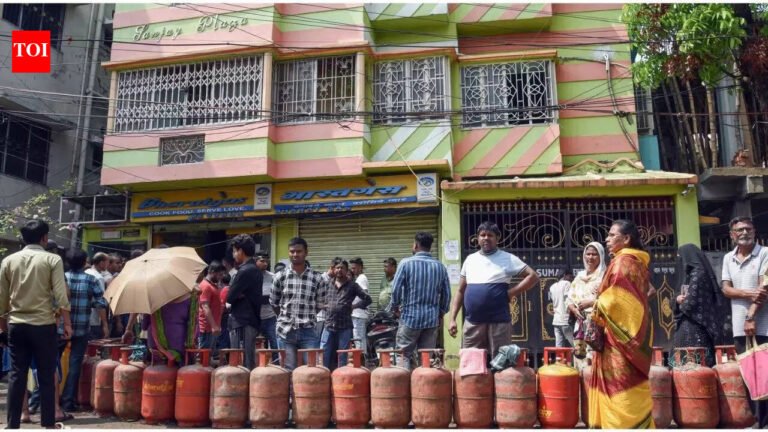
People queued up outside gas agencies to refill LPG cylinders amid reports of a nationwide LPG shortage in Kolkata on Friday. (Ani photo)

NEW DELHI: The government on Friday held a joint inter-ministerial briefing for the third consecutive day to address fears over LPG supplies at a time when global energy supplies are strained by raging war in West Asia and Iran’s blockage of the Strait of Hormuz.There is no need to queue outside LPG dealers, the government said, urging consumers to book cylinders online, citing data showing online bookings rose to 83% in March from 71% in February.Responding to concerns over tight supply of LPG cylinders both commercially and domestically, the central government assured “uninterrupted supply to households” and claimed that domestic LPG production increased by 30% from March 5.The ministry responsible for finding oil and gas said LPG supplies are also being provided to hospitals and educational institutions. Sujata Sharma, Joint Secretary, Ministry of Petroleum and Natural Gas, told a press conference: “Uninterrupted supply to domestic households has been ensured. Likewise, LPG supply is also being provided to hospitals and educational institutions. Domestic LPG production has increased by 30 per cent so far; our refineries are currently producing 30 per cent more LPG as compared to March 5.”The joint secretary called LPG a “matter of concern” following the closure of the Strait of Hormuz, but said “not a single one of the 25,000 distributors has reported drying up of LPG”. “LPG is a matter of concern for us, especially since most of our imports are through the Strait of Hormuz. The closure of the strait is a matter of concern. However, not a single one of the 25,000 distributors has reported drying up of LPG. I urge the people of the country not to believe rumours, and not to indulge in panic buying,” Sujata Sharma said.She also said the government was taking action against those indulging in the black market and hoarding LPG.As for commercial cylinders, the shortage of which has mainly affected food businesses, the central government said its supply has been “placed at the disposal of state governments to facilitate priority distribution”. “Regarding commercial gas cylinders, these cylinders have been placed at the disposal of the state government to facilitate priority distribution. We request the state government to identify priority criteria and ensure that these commercial cylinders reach the target consumers efficiently. ” she added.The joint secretary also addressed concerns about crude oil, saying all refineries in the country are “currently operating at 100% capacity or above.” “In terms of crude oil, we have a refining capacity of 258 million tonnes. We are self-sufficient in the production of petrol and diesel; therefore, there is no need to import these fuels into India. All of our refineries are currently operating at 100% or higher capacity. Refiners have ample crude oil inventories and supplies are sustained,” she said.The government said it ensures that there will be no disruption or curtailment in the supply of PNG (pipeline natural gas) and CNG (compressed natural gas) to domestic consumers. “Given the situation, there is absolutely no need to panic… Furthermore, for commercial consumers in our major cities and centres, many of whom are currently facing hardship due to dependence on LPG supply, the Government of India is making every effort to address their concerns. We appeal to all such commercial consumers to contact their local CGD (City Gas Distribution) network provider or designated dealer to get PNG connectivity,” Sharma said.“There is adequate supply of petrol and diesel at all petrol pumps… As for LPG, I would say it remains a matter of concern for us. Nonetheless, none of our 25,000 dealers have reported drying up. I would like to appeal to all our fellow citizens not to fall for rumours, and not to engage in panic buying,” she further added.

Iran’s war enters day 14: What we know now, two weeks after the conflict ended – Tehran bombings, Israeli attacks, US plane crash

0

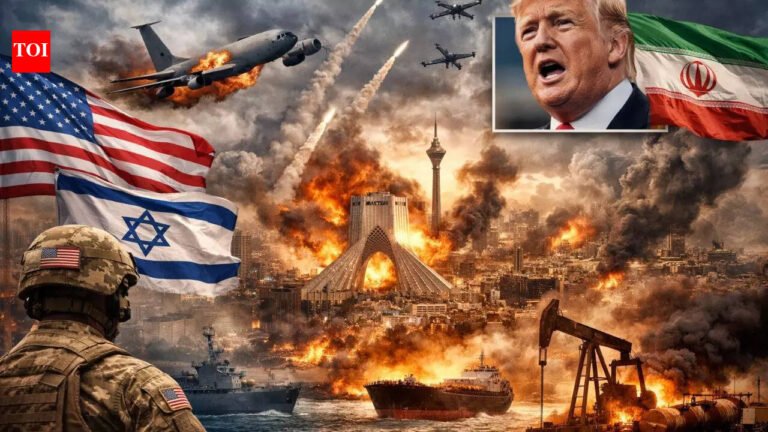
Iran's war enters day 14: What we know now, two weeks after the conflict ended - Tehran bombings, Israeli attacks, US plane crash
Representative image (AI generated)

The war between the United States, Israel and Iran is about to enter its third week, with no signs of letting up as missile strikes, drone strikes and airstrikes continue across the Middle East.According to Reuters citing Axios, U.S. President Donald Trump claimed in a virtual meeting that Iran is “about to surrender.” He further told G7 leaders that the conflict was moving in Washington’s favor. Despite his remarks, the war has escalated on multiple fronts, with casualties mounting and global markets reacting to growing instability.Nearly two weeks after the conflict began, oil prices have soared, shipping in the Strait of Hormuz has been disrupted and regional powers have been drawn into the fighting. Missile exchanges between Israel and Iran continue, while allied groups and regional countries are increasingly becoming part of the conflict.

Week 1: The war begins with the killing of Iran’s supreme leader

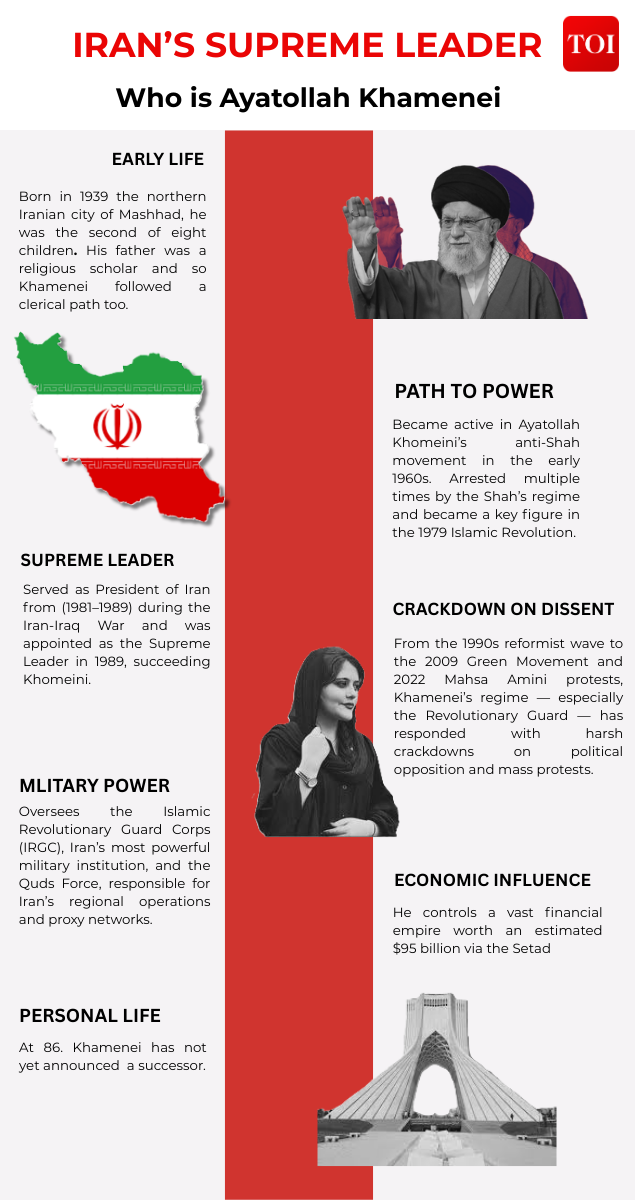
The war began on February 28, when the United States and Israel launched coordinated strikes targeting military infrastructure and missile systems inside Iran under Operation Epic Fury.The opening attack killed Iran’s Supreme Leader Ayatollah Ali Khamenei and several senior commanders, prompting immediate retaliation from Tehran.
.

.

Iranian forces launched missiles and drones at Israeli and U.S. military installations in the region, marking the beginning of a rapid escalation in the conflict.

Day 2: Iran launches major retaliation

On the second day of the conflict, Iran responded with a barrage of ballistic missiles and drones, targeting Israeli cities and military infrastructure. At the same time, the U.S. military has expanded air strikes against Iranian missile launch sites and Revolutionary Guard facilities. Iran has also begun targeting U.S. bases and allies in the Middle East, signaling that the conflict will not be limited to Iran and Israel.

Day 3: Hezbollah opens northern front

The Lebanese militant group Hezbollah joined the conflict, firing rockets into northern Israel. Israel retaliated with air strikes on Hezbollah positions in Beirut’s southern suburbs and other parts of Lebanon.The deadliest attacks included an overnight air strike on the eastern town of Nabichit, which killed at least 16 people and injured 35 others, according to Lebanon’s public health ministry. Officials warned the death toll could rise further as rescue efforts continue.

Day 4: bay Tensions rise

Missiles and drones began appearing over Gulf states where U.S. military bases are located, including Kuwait, Bahrain, Qatar and the United Arab Emirates. The attack near the Strait of Hormuz disrupted maritime traffic and raised concerns about a global energy crisis. Oil markets reacted sharply as traders worried the conflict could severely impact global supplies.

Day 5: Gulf states increasingly involved

Iranian drones and missiles have targeted multiple countries in the region. Emirati air defense forces intercepted the projectiles near Dubai International Airport and coastal areas.In Bahrain, a missile hit a state-run oil refinery, sparking a fire, authorities later said. Saudi Arabia has also intercepted drones near critical energy infrastructure.

Day 6: Mass strikes intensify

The United States and Israel have expanded attacks inside Iran, hitting hundreds of targets in a matter of days. Officials said the strikes destroyed much of Iran’s air defense network and missile systems. Israeli authorities claim to have destroyed approximately 80% of Iran’s air defense systems. Iranian authorities said the death toll from attacks across the country has risen to more than 1,300. Several cities reported severe damage to buildings and infrastructure, including government facilities, hospitals and residential areas.

Day 7: War spreads across the region

The conflict spread across multiple fronts, including Lebanon, Iraq and the Gulf. Explosions were reported in Dubai and Bahrain after air defense systems intercepted incoming projectiles. Shipping through the Strait of Hormuz has slowed, affecting global trade routes.Trump has demanded Iran’s “unconditional surrender” while ruling out immediate negotiations, a sign that the war could continue to expand across the region.

Week 2: Conflict expands in the Middle East

Day 8: Heavy bombing and area attacks

A week after the war began, Tehran came under heavy air strikes and Iranian missiles targeted Israel and Gulf states. Saudi Arabia, Qatar and the United Arab Emirates reported intercepting drones and missiles.As casualties rose sharply, Western countries began to strengthen military assets in the region. A new wave of heavy bombing has hit Tehran, with at least 1,332 people reportedly killed in U.S. and Israeli attacks, Al Jazeera reported.

Day 9: Attacks spread to Gulf and Iraq

Missile and drone attacks have been reported in Saudi Arabia, Bahrain, Kuwait and Iraq. A missile landed inside the U.S. Embassy in Baghdad, but no casualties were reported. Israel also attacked fuel storage facilities in Tehran, sparking fires.Trump said Washington was not interested in negotiating with Iran despite continued hostilities. “We’re not going to reconcile,” Trump told reporters aboard Air Force One. “They want to reconcile. We’re not going to reconcile.”Trump claimed that the United States and Israel had severely weakened Iran’s military capabilities, including its navy, air force and missile infrastructure.

Day 10: Iran names new supreme leader

After his father’s death, Iran appointed Mojtaba Khamenei as the country’s new supreme leader. The cleric, who has close ties to the Islamic Revolutionary Guard Corps, has taken on a leadership role as Iran continues its missile and drone attacks in the region.Saudi Arabia said it intercepted a drone targeting the Sheba oil fields and warned Iran it would be the “biggest loser” if the attacks continued. The United States has also begun withdrawing non-essential diplomatic personnel and family members from Saudi Arabia and other Gulf countries due to rising security risks.

Day 11: Intense bombings and protests

Heavy air strikes continue to hit various parts of Iran, with explosions reported in Tehran and other cities.Thousands of Iranians rallied in support of Mojtaba Khamenei, and the government vowed to keep fighting. Iranian forces have also launched drone attacks on Israeli infrastructure, including energy facilities in Haifa.Iranian Foreign Minister Abbas Araghchi said Tehran would continue fighting as long as necessary, casting doubt on Trump’s insistence that the conflict would end “soon.”

Day 12: America’s largest attack

U.S. Defense Secretary Pete Hegseth said that the U.S. military carried out the largest strike since the beginning of the war. Tehran reported heavy bombing of the capital, with thousands of civilians fleeing the main city.The United States also destroyed several Iranian naval vessels near the Strait of Hormuz over concerns that Tehran might try to block the shipping lane.

Day 13: War disrupts global energy markets

Conflict increasingly affects global energy supplies. With tanker traffic in the Strait of Hormuz all but halted, the International Energy Agency announced the release of 400 million barrels of oil from emergency reserves to stabilize the market.Missile and drone strikes continue in the Gulf, while Israel has expanded operations against Hezbollah targets in Lebanon.The number of casualties continues to rise in the area. Iranian authorities say more than 1,200 people have been killed in Iran, hundreds in Lebanon and dozens in Israel and other countries.The United Nations estimates that hundreds of thousands of people have been displaced, particularly in Lebanon, where ongoing bombing has forced residents to flee their homes.Children are among the worst affected, with humanitarian agencies warning that thousands have been injured or killed since the war began.

Day 14: Explosions in Tehran as war approaches third week; U.S. plane crash heightens tensions

According to Iranian official media reports, as the war entered its 14th day, serious explosions occurred across Tehran. The explosion occurred near a large pro-government demonstration in Tehran’s central square, where large crowds gathered to mark Al-Quds Day, an annual event in support of the Palestinian cause held on the last Friday of Ramadan.A major aviation incident also occurred in the skies over Iraq that day. A Boeing KC-135 Stratotanker operated by the U.S. Air Force crashed in western Iraq in the afternoon. U.S. Central Command confirmed that four of the six crew members on board died, and rescue operations for the remaining crew members are continuing.

Global Economic Impact and Energy Crisis

The conflict triggered major disruptions in global energy markets. Oil prices soared above $100 a barrel on concerns that shipping in the Strait of Hormuz could be blocked.The waterway typically carries about a fifth of the world’s oil supplies, making it one of the world’s most important energy corridors.Some Gulf countries have also reduced oil production due to shipping disruptions and storage facilities filling up. Global leaders held emergency talks to stabilize markets and prevent a wider economic shock.


BCCI breaks silence after Sunrisers sign Pakistan spinner Abrar Ahmed for hundred

0

BCCI breaks silence after Sunrisers sign Pakistan spinner Abrar Ahmed for hundred
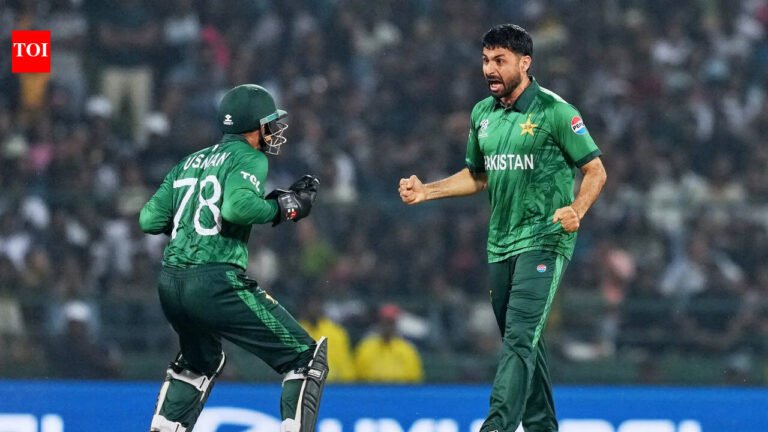
Pakistan’s Abrar Ahmed (right) celebrates (AP/Press Trust of India)

Board of Control for Cricket in India (BCCI) Vice-President Rajeev Shukla clarifies that the board has no power to interfere in the controversy surrounding Sunrisers franchise signing of Pakistan spinner Abra Ahmed for the upcoming 100-man season.The Sun TV-owned team faced heavy criticism on social media platforms after acquiring Abrar during the player auction. Many users in India expressed their anger at the decision, citing the national mood at the time. Franchise owner Kavya Maran has also been targeted by cyberattacks, while Sunrisers Leeds’ official X (formerly Twitter) account has reportedly been suspended amid the backlash.

Exclusive: Rahul Dravid on Eden Gardens’ iconic win over Australia in 2001

Despite the growing criticism, the team has yet to issue an official statement. However, Shukla on Friday made it clear that the matter does not fall under the BCCI’s jurisdiction as the match is being held outside India.“This has absolutely nothing to do with the IPL. This is an overseas league. It is not under our jurisdiction. There is nothing we can do. They have to answer the call,” Shukla told news agency ANI on Friday afternoon.At Thursday’s auction, bowler Abrar, currently ranked third in the world in T20 internationals, was acquired by the team for £190,000 (approximately $255,000). On the auction stage, the head coach Daniel Vettori and Malan beat out Trent Rockets for a successful bid.After the signing, Vettori explained that the team was targeting Abrar after missing out on England spinner Adil Rashid, who had already been picked by another team. He also mentioned Pakistan Spinners Usman Tariq was part of the franchise’s plans earlier, but once Abrar was locked up, the management decided not to pursue another spinner.In October 2025, India’s investment in the Top 100 tournament increased significantly, with the four participating teams receiving support from Indian owners. Since then, there have been rumors that teams with Indian ownership may avoid signing Pakistani players. Sunrisers’ move to acquire Abrar effectively dispels these rumors.In fact, only two Pakistani cricketers were selected in this year’s men’s hundred auction: Abrar and Tariq. Still, the Sunrisers’ decision sparked a strong reaction in India, with many fans urging the team to reconsider the signing.

Banner insert

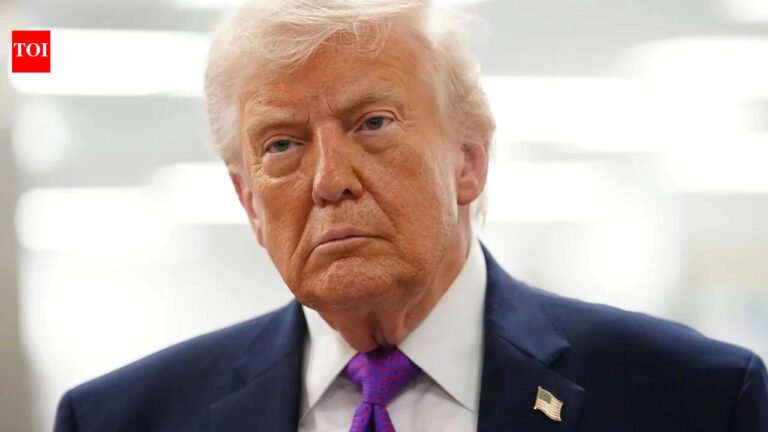
‘Surrender is imminent’: Trump makes big demands on Iran, says US ‘free from cancer that threatens us all’

0

“即将投降”:特朗普对伊朗提出重大要求,称美国“摆脱了威胁我们所有人的癌症”

Donald Trump (file photo)

Donald Trump Shining a spotlight on the Middle East crisis, claiming Iran is “about to surrender.” The US president stated this during a virtual meeting with G7 leaders on Wednesday, Axios reported, citing three G7 officials.According to reports, Trump told allies during a G7 conference call that he was “over the cancer that threatens us all” while talking about the results of the “Epic Fury” operation.Trump also reportedly said, “No one knows who the leader is, so no one can declare surrender.”The revelation came as Trump on Friday lashed out at Iran’s leaders, calling them “crazy scumbags” and saying it would be his “great honor” to kill them. The conflict in the Middle East has entered its second week, with intense drone and missile attacks taking place across the region.Referring to the massive U.S. military operation against the Islamic Republic, he said Washington was conducting military strikes to “destroy Iran’s terrorist regime.”Meanwhile, reports from the ongoing Middle East conflict indicate that Iran may attempt to target the USS Abraham Lincoln (CVN-72). Tehran also claimed responsibility for shooting down another U.S. plane during a refueling mission, although Washington called the incident an accident. However, U.S. Central Command (CENTCOM) claimed, “The Abraham Lincoln Carrier Strike Group continues to support Operation Epic Fury and project power from the sea.However, it did not reveal any details about the incident.

Uttar Pradesh pushes for investments, says over Rs 1,300 crore projects have started

0

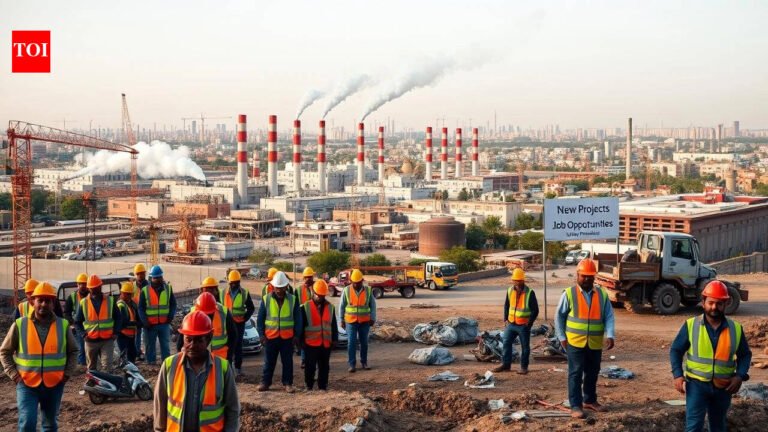
北方邦大力推动投资,称超过 130 亿卢比的项目已开始实施The state estimates these off-the-shelf projects could create more than 8 million jobs. During the Groundbreaking Ceremony (GBC) 4.0 in February 2024, projects worth Rs 1,011 crore were launched.The state is focusing on project execution alongside investment commitments, while also emphasizing on digital governance measures aimed at improving ease of doing business.Key initiatives listed include Nivesh Mitra, the state’s single-window clearance portal, which currently provides over 467 online services across 43 departments. The government also said that its Nivesh Sarathi platform is being used to monitor investment proposals from the MoU stage to operations. Additionally, 4,074 regulatory compliance or procedural burdens were reduced.The state also outlined expansion of industrial infrastructure in specific sectors. These include the PM-MITRA mega integrated textile zone and garment park across Lucknow and Hardoi, medical device park at Gautam Buddha Nagar, plastic park at Gorakhpur and leather park at Kanpur. It also added that approval has been given for the construction of 11 toy parks in places like Greater Noida, Aligarh and Jhansi.On the MSME front, the government said Uttar Pradesh has over 9.6 million units, making it the largest MSME base in the country.It also mentioned the Mukhyamantri Yuva Swarozgar Yojana, a scheme that provides financial support up to Rs 25 lakh to young entrepreneurs.The country further said that foreign direct investment received between 2017 and 2023 was almost four times the inflow between 2000 and 2017. The UP International Trade Show 2024 was attended by over 100 countries and generated business inquiries worth Rs 10,000 crore, it added.

Hormuz miscalculated? Trump in hot water over Iran closing strait

0

Hormuz miscalculated? Trump in hot water over Iran closing strait

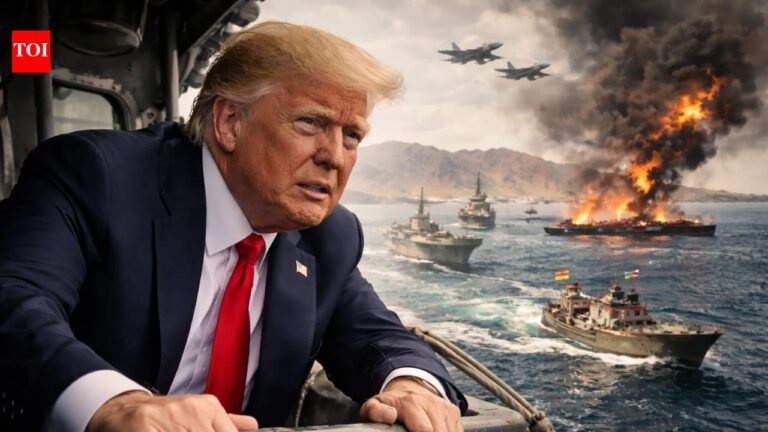
The Trump administration has greatly underestimated the possibility of Iran closing the Strait of Hormuz in response to a U.S. military strike, leaving Washington scrambling to contain the economic fallout as the conflict disrupts one of the world’s most important energy routes, CNN reported citing sources.Officials familiar with internal discussions said the Pentagon and the National Security Council did not fully consider the situation as they planned ongoing operations against Iran. That oversight now leaves the government facing what some officials say is a worst-case scenario, with global oil shipments under pressure and energy markets unstable.

strategic planning gap

CNN quoted sources as saying that although officials from the U.S. Treasury and Energy Departments attended some planning meetings before the operation began, the detailed economic forecasts and inter-agency analysis that usually influence such decisions played a smaller role.Finance Minister Scott Bessant and Energy Minister Chris Wright were involved throughout the planning and execution phases of the conflict. But President Donald Trump’s preference to rely on a small group of close advisers has limited a broader debate among government agencies about the potential economic consequences if Iran responded by closing the strait, sources said.Senior U.S. government officials also acknowledged to lawmakers in confidential briefings that the possibility of Iran shutting down the waterway had not been fully planned for, CNN reported.The assumption within the administration is that the move would hurt Iran more than it would hurt the United States. That view was influenced in part by early threats from Iran that did not materialize after the U.S. struck Iran’s nuclear facilities last year.

Shocked the diplomatic community and industry

The developments in the Strait have surprised diplomats, former U.S. economic officials and energy executives.“For decades, it has been a fundamental tenet of U.S. national security policy around preventing this from happening, even though it long seemed impossible,” a former U.S. official who served in both Republican and Democratic administrations told CNN. “I was dumbfounded.” Shipping companies operating in the region have repeatedly requested the U.S. Navy to provide military escort for the tankers, but these requests have so far been denied. U.S. military officials said they had not yet received orders to begin convoy operations and warned that risks to naval assets remained extremely high, the outlet reported, citing two industry executives.

Washington’s options are limited

U.S. officials say Iranian drones, missiles and mines pose a significant threat to ships trying to pass through the narrow waterway. In military simulations of a potential conflict with Iran, one of the main risks identified was that ships became close together at chokepoints such as the Strait of Hormuz, the Bab el-Mandeb Strait and the Red Sea, leaving them vulnerable to attack.Wright acknowledged the limitations of current military capabilities.“It’s going to happen very soon, but it’s not going to happen right now. We’re simply not prepared for it,” Wright told CNBC in an interview, referring to the possibility of providing naval escort for commercial ships.“All of our military assets are now focused on destroying Iran’s offensive capabilities and the manufacturing that provides its offensive capabilities,” he added.Bessant told Sky News that naval escorts would begin “as soon as it is militarily feasible”.“It was always in our plans that the U.S. Navy, or perhaps the international coalition, would potentially escort the tankers through,” he said.

Iran unleashes pressure tactics

In his first public comments since taking office, Iran’s new supreme leader Ayatollah Ali Khamenei said keeping the Strait of Hormuz closed may still be a “pressure tool,” according to a statement read by Iranian state television.The warning has raised concerns in global energy markets as the narrow waterway is key to transporting oil and liquefied natural gas from the Middle East.Energy industry executives have privately urged U.S. officials to seek a quick end to the conflict, according to people familiar with the matter. Many companies are reluctant to send tankers through the strait while hostilities continue.

Trump downplays oil market turmoil

Despite market volatility, Trump continues to downplay the economic impact.“The United States is by far the largest oil producer in the world, so when oil prices go up, we make a lot of money,” he wrote on Truth Social.Trump said preventing Iran from acquiring nuclear weapons remains his top goal.“As president, I am more interested and more important in preventing the evil Iranian empire from acquiring nuclear weapons and destroying the Middle East and the entire world,” he wrote.The White House defended its planning process. “Through a detailed planning process, the entire administration is prepared to respond to any actions that may be taken by Iran’s terrorist regime,” spokesperson Anna Kelly said.She added that disruptions in energy markets would be temporary and ultimately benefit the U.S. economy in the long run.

Emergency measures are being considered

With energy markets under pressure, the government is exploring a number of measures to mitigate the impact on fuel prices.The U.S. Treasury Department has temporarily lifted sanctions on Russian oil shipments stranded at sea. The White House is also considering limited exemptions from the century-old Jones Act, which requires goods shipped between U.S. ports to be carried by U.S. ships.“In the interests of national defense, the White House is considering waiving the Jones Act for a limited time to ensure the free flow of critical energy products and agricultural necessities to U.S. ports,” Press Secretary Carolyn Leavitt said in a statement to CNN.Officials are also studying regulatory changes to relax summer fuel production requirements in an effort to lower gasoline prices.However, experts warn that such measures may only partially offset the impact of global oil supply disruptions.“I think this is a very small potential offset compared to what’s driving up gasoline prices, which is concerns about the global supply of refined products and physical crude oil,” said Clayton Segel, an energy expert at the Center for Strategic and International Studies.

New Zealand coach to miss PSL international matches

0

New Zealand coach to miss PSL international matches

Two assistant coaches of the New Zealand national cricket team, Luke Ronchi and Jacob OramReceived permission from New Zealand Cricket to coach Islamabad United in the 2026 Cricket League pakistan super league Starting March 26th.Ronchi will serve as the head coach of the PSL team, while Oram will serve as his assistant coach. However, both coaches will miss New Zealand’s upcoming international matches, including the series against the South Africa national cricket team and the Bangladesh national cricket team’s tour, as the tournament runs until late April. New Zealand’s five-match T20I series against South Africa is scheduled to begin on March 15.

Exclusive: Rahul Dravid on Eden Gardens’ iconic win over Australia in 2001

New Zealand Cricket said it supported the move as it would help coaches gain valuable experience in leagues around the world. NZC performance manager Mike Sandle said the opportunity would benefit individuals and national institutions.Cricbuzz quoted Sandel as saying: “This is a great opportunity for Luke and Jack to further develop their coaching experience and develop their skills outside of the New Zealand cricket environment.” “Like our players, our coaches are popular around the world and we are confident that Luke and Jake will not only benefit from their experience in the PSL but will be able to bring back knowledge and intellectual property that can help BLACKCAPS and NZC in the future.”During their absence, other coaches in the NZC system will step in. Jonny Bassett-Graham and Graeme Aldridge will assist head coach Rob Walters for the South Africa series, while Brendan Tonks will join the staff for the tour of Bangladesh.Sandel added that the arrangement also creates opportunities for other coaches to gain international exposure.“One of the added benefits of Luke and Jack going to the PSL is the opportunity it provides for other coaches within the NZC network,” Sandel said. “It’s great that Jonny, Graeme and Brendan are joining the Blackcaps and I’m sure they will spend a lot of time in this environment and gain experience working with our players and support staff.”

Banner insert

Middle East crisis: Jaishankar speaks to Iranian Foreign Minister Araghchi for fourth time since war started to discuss bilateral relations

0

Iranian Foreign Minister Abbas Araghchi and S Jaishankar (Photo/PTI)

New Delhi: External Affairs Minister S Jaishankar Iranian Foreign Minister Abbas Araghchi held a fourth phone conversation on Thursday amid continued tensions in the Middle East.Jaishankar posted on X that the two leaders discussed bilateral relations and issues related to the BRICS grouping.“Speaked again last night with Iranian Foreign Minister Seyyed Abbas Araghchi. Bilateral affairs as well as BRICS-related issues were discussed,” he wrote.The latest interaction follows a series of phone calls between the two ministers since clashes broke out in the region on February 28. Earlier this week, the two leaders discussed the situation in the Strait of Hormuz, a vital shipping channel for global energy supplies.During that conversation, Jaishankar emphasized the importance of ensuring safe merchant shipping in the waterways that connect the Persian Gulf to global trade routes.According to the Iranian Foreign Ministry, the two sides also discussed the impact of the ongoing conflict on maritime traffic in the region.Iran said the instability affecting shipping in the Persian Gulf was the result of the United States’ “aggressive and destabilizing actions” and called on the international community to hold Washington accountable.Iran’s Foreign Ministry said Araghchi also expressed concern about the consequences of U.S. and Israeli military actions on regional stability and maritime security.Meanwhile, Jaishankar stressed the importance of maintaining and strengthening bilateral relations between New Delhi and Tehran. He also stressed the need for continued consultations to help restore stability to the region.

Who is Vanshika Chadha? Meet Kuldeep Yadav’s bride-to-be

0

Who is Vanshika Chadha? Meet the bride-to-be of T20 World Cup winner Kuldeep Yadav
Indian cricketer Kuldeep Yadav will get married to his long-time partner Vanshika Chadha on March 14 in Mussoorie. The couple, childhood friends from Kanpur, saw their friendship develop into a lifelong relationship. Vanshika works for the Life Insurance Corporation of India and leads a private life away from the limelight. The wedding festivities will begin on March 13 and cricket stars like Virat Kohli are expected to attend.

Indian cricketer’s wedding preparations in full swing in Mussoorie, Uttarakhand Kuldeep Yadavwho will marry his long-term partner Vanshika Chadha on March 14. While the wedding garnered much attention for the cricket star, many were also curious about the bride and her background.

Exclusive: Rahul Dravid on Eden Gardens’ iconic win over Australia in 2001

Who is Kuldeep Yadav’s bride-to-be Vanshika Chadha?

Vanshika Chadha and Kuldeep Yadav’s friendship goes back to their childhood. The two grew up in Kanpur and had been friends long before their relationship blossomed into a lifelong partnership. Kuldeep hails from Lal Bungalow in Kanpur, while Vanshika hails from Shyam Nagar area of ​​the city.Over the years, their friendship grew into a serious relationship. Despite Kuldeep’s fame in international cricket, Vanshikar has largely stayed away from the public spotlight and has maintained a private life.

What does Vanshika Chadha do?

Professionally, Vanshika Chadha is associated with Life Insurance Corporation of India (LIC), one of the most respected financial institutions in India. She reportedly holds an executive or managerial role within the organization.Unlike many partners of high-profile athletes, Vanshika has built a stable career outside of the glamor and attention that often accompanies celebrity life. She is known to keep a low profile in public, rarely appearing on social media or at public events.While Kuldeep Yadav’s cricketing achievements have been in the spotlight over the years, Vanshika Chadha has chosen a quieter path. Little is known to the public about her personal life, and she has largely escaped media attention.People close to the couple said Vanshika has been Kuldeep’s steady support system through the ups and downs of his cricketing career. Her preference for privacy has only increased public curiosity about the woman who is about to marry the Indian cricket star.The wedding festivities are scheduled to begin on March 13 with the traditional Haldi and Mehendi ceremony. The couple will tie the knot in Mussoorie on March 14 in the presence of close friends and family.Several prominent cricketing personalities are expected to attend the ceremony, including Virat Kohli, Rohit Sharma and Jasprit Bumrah, as well as officials from the Board of Control for Cricket in India.After the private hill wedding, the couple will host a grand reception in Lucknow on March 17, which is expected to attract cricket stars, political leaders and other high-profile guests.

Banner insert