Home Blog Page 7

Michigan synagogue shooter Ayman Mohamed Ghazali shared photos of relatives killed in Israeli attack before attack

0

Michigan synagogue shooter Ayman Mohamed Ghazali shared photos of relatives killed in Israeli attack before attack

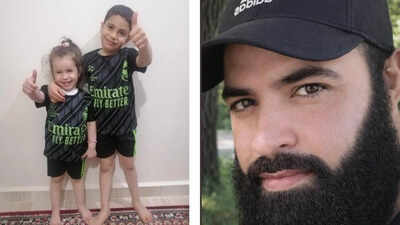
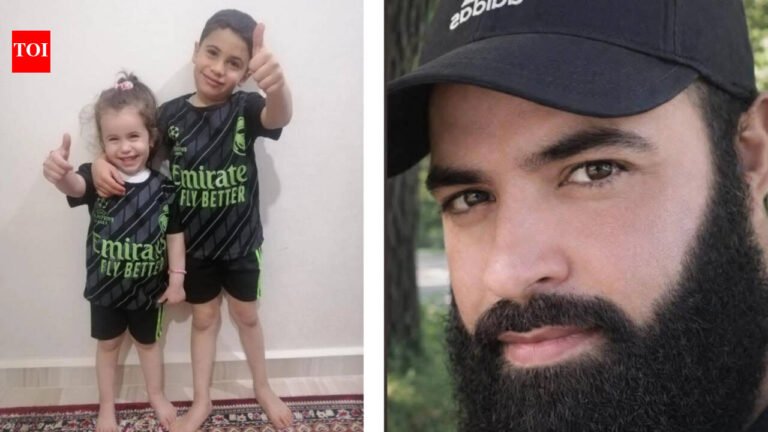
A man attacked a synagogue in Michigan and was shot to death after the incident. Investigators said he shared photos of children killed in Israeli airstrikes shortly before the attack.The attacker, identified as Ayman Mohamad Ghazali, drove a car into the Israeli temple on Thursday. After he attempted to carry out the attack, synagogue security guards confronted him and opened fire. Ansari died on the spot.Authorities said the synagogue houses a kindergarten and about 140 children and staff were in the building at the time. No children were injured in the incident.Investigators later examined Ansari’s phone and online activity and found that he had shared images showing children killed in Israeli attacks shortly before the attack. The posts, widely shared on messaging platforms, appeared to reference casualties from recent Israeli military operations in the Middle East.Ayman Mohamed Ghazali comes from Mashgara, a small town in Lebanon’s Bekaa Valley. The official said Israeli airstrikes killed his two adult brothers, as well as his niece and nephew, Sky News reported.Law enforcement officials also said Ansari recently lost several relatives in Israeli air strikes in Lebanon. Those deaths may have contributed to his actions, according to investigators, but authorities said the full motive remains under investigation.Following the incident, police sealed off the synagogue and searched Ansari’s home as part of the investigation.Jewish institutions in parts of Michigan increased security following the attack. The presence of security personnel inside the synagogue prevented the situation from becoming more serious.Ghazali is a naturalized U.S. citizen born in Lebanon who entered the United States on May 20, 2011 as the spouse of a U.S. citizen on an IR-1 immigrant visa. He applied for citizenship in October 2015 and was naturalized in February 2016. Ghazali lives in Dearborn Heights, Michigan, and works locally, including in the restaurant industry.

Iran-Israel-US 'triangle trap': Decoding India's stance amid rising Middle East tensions

0

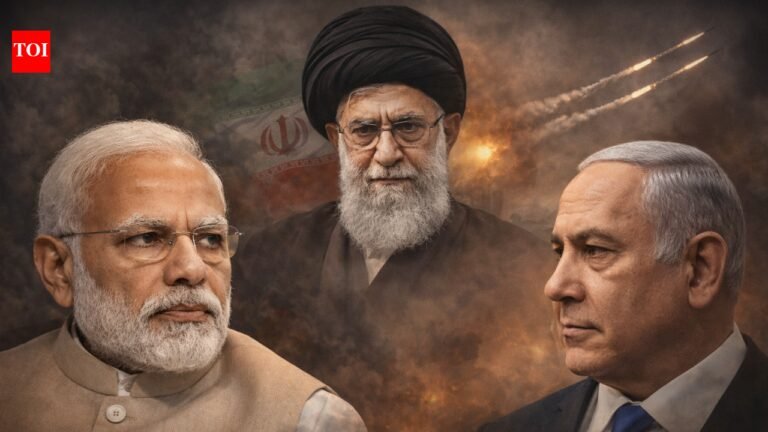
Is New Delhi recalibrating its approach to West Asia? The question has resurfaced after India’s notably cautious response to the latest escalation involving Iran. When the United States and Israel launched strikes on Iran on February 28, triggering retaliatory missile attacks across the region, several global powers reacted swiftly. India, however, avoided taking a clear position on Tehran.In the crucial hours after the escalation, Prime Minister Narendra Modi did not directly comment on Iran. His first response came nearly a day later and focused instead on attacks on the United Arab Emirates. Subsequent conversations with leaders across the Gulf emphasised respect for their territorial integrity and the need for de-escalation, but again avoided directly naming Iran. Even after the death of Iran’s Supreme Leader Ali Khamenei was confirmed, New Delhi stopped short of condemning the killing, offering only a condolence gesture days later.Experts describe this cautious approach as deliberate and calculated. “India’s policy has been very careful. Its interests are far more aligned with the US than Iran. That explains why it condoled and did not condemn Khamenei’s killing, even though it was a clear violation of international law,” said JNU professor Rajan Kumar. He noted that even though both India and Iran are BRICS members, New Delhi chose restraint over confrontation, highlighting the delicate balancing act in play.

How (When) India reacted on Iran war

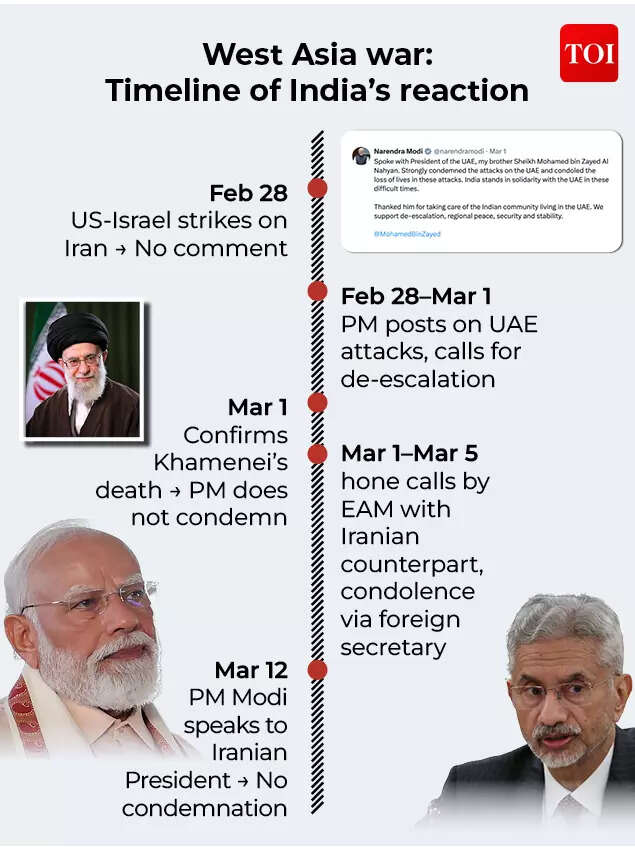
28 Feb: US-Israel attack Iran

The United States and Israel launch strikes on Iran amid negotiations between Washington and Tehran over its nuclear programme.Iran retaliates with missile and air attacks across the region, targeting military sites in Israel as well as US bases in Bahrain, Saudi Arabia, Qatar, the United Arab Emirates and Iraq.Prime Minister Narendra Modi makes over 15 posts on his social media X after the news of the war breaks out, but none of it on Iran situation.

March 1: Khamenei’s death confirmed

By midnight early March 1, the news that Iran Supreme Leader Ayatollah Khamenei is killed in the strikes gets confirmed.India, again, sees no reaction on breach of Iran’s sovereignty or the killing of its Supreme Leader Khamenei, even as its long-standing friend Russia is quick to condemn it in strong words, with President Vladimir Putin calling it a “cynical violation of law”.The first post by PM Modi comes on March 1, his 25th on his X account, at 11.26pm. The post condemns “attack” on the UAE. The Prime Minister was referring to Iran’s retaliatory strikes on US military bases in UAE, which had led to one death. However, he did not directly name Iran in his post.By midnight, PM Modi makes another post where he informs that he had a conversation with Israeli PM Benjamin Netanyahu, whom he had two days before the war broke out. In the post, the PM again makes no mention of Iran, but calls for “early cessation of hostilities”.In a series of posts by the next day, PM Modi speaks to the leaders of Bahrain, Saudi Arabia, Jordan, Oman, Kuwait, Qatar, condemning any violation of their territorial integrity. The PM was again referring to the strikes on US military bases in these nations by Iran in retaliation. India’s reaction to Khamenei’s death came five days after the incident. Foreign secretary Vikram Misri signed the “condolence” book in the Iranian embassy on behalf of the government. MEA dismissed this “delay” argument saying that the book was signed by India the first day it was opened, which was on March 5. However, MEA’s clarification failed to explain why the government itself took five days after the incident to formally convey its condolences.PM Modi’s reaction to Iran came only on March 12 when he spoke to Iranian president. The wording of the post was clear: “The safety and security of Indian nationals, along with the need for unhindered transit of goods and energy, remain India’s top priorities.” No condemnation or solidarity.

-

India did not condemn the death, neither did the PM or EAM make any direct comments on the killing. Then what explains this refusal to condemn the killing?Experts have termed it a “very cautious and very careful” move.“India’s policy has been very cautious and very careful. Its interests are much more aligned with US than Iran. Maybe that’s why it condoled and not condemned Khameinei’s death, while it was Khamenei’s death which was actually a violation of international law, said JNU professor Rajan Kumar, an international relations expert.“In fact, both Iran and India are members of Brics, still India chose not to condemn the attack,” he said.

Why historical Iran ties make current restraint notable

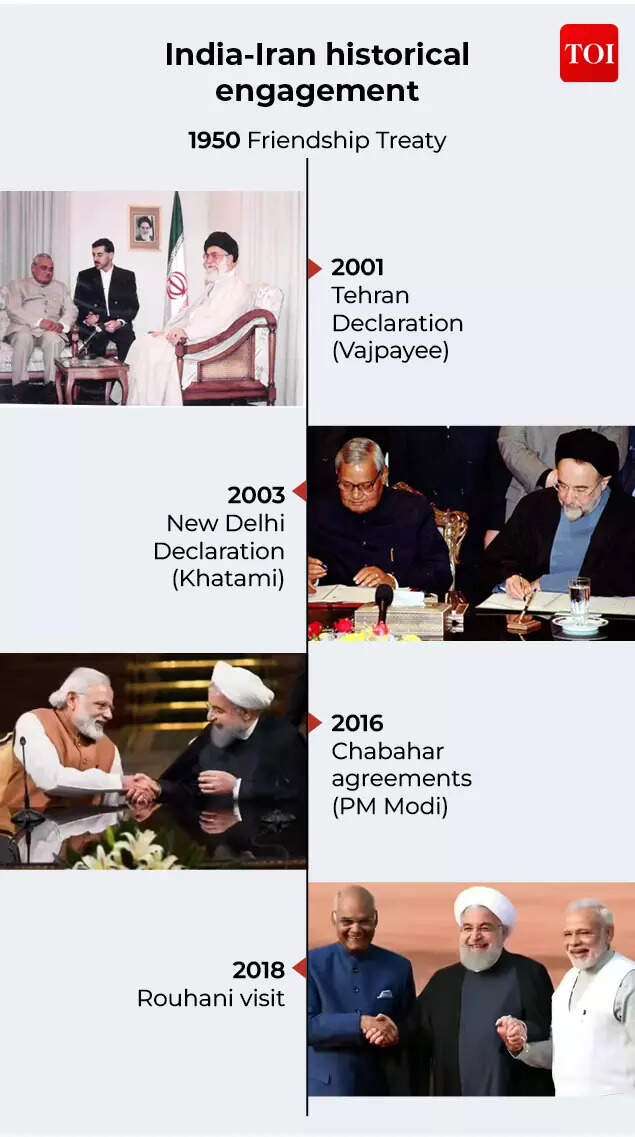
India’s historically close engagement with Iran makes this caution notable. The two countries share civilisational links stretching back centuries, which have shaped a modern partnership built on trade, culture and strategic cooperation. Diplomatic ties were formalised with a Friendship Treaty in 1950, and successive governments in New Delhi invested in maintaining strong political engagement with Tehran.Leaders from the Bharatiya Janata Party (BJP) were also central to strengthening these ties in the past. Prime Minister Atal Bihari Vajpayee’s visit to Iran in 2001 led to the signing of the Tehran Declaration, marking a new phase of strategic cooperation. This was followed by Iranian President Seyyed Mohammad Khatami’s visit to India in 2003 and the New Delhi Declaration, which expanded political and economic engagement between the two countries.Under Prime Minister Narendra Modi, the relationship continued to see high-level outreach. Modi’s 2016 visit to Iran resulted in multiple agreements and the trilateral transit pact with Afghanistan centred on the development of Chabahar Port, a project seen as strategically important for India’s connectivity to Central Asia. Iranian President Hassan Rouhani’s visit to India in 2018 further reinforced cooperation in connectivity and trade.

-

So, what explains this shift away from Iran?

Analysts point to a mix of immediate security concerns and long-term economic dependencies that have pushed New Delhi to adopt a more cautious posture in the current West Asia crisis.A major factor is the safety of the large Indian diaspora across the Gulf. References to the Indian community appeared consistently in Prime Minister Modi’s statements on the unfolding conflict. There are over one crore Indians who work and live in Gulf nations, external affairs minister S Jaishankar informed the Parliament on Monday. This, he said, makes the West Asia war even more concerning for India. He informed that India has already lost two of its mariners, with one missing in the current situation. “We are committed to supporting the Indian community at this time,” Jaishankar said in the Parliament.Moreover, India is significantly dependent on Gulf supplies, especially in energy sector. The key economic concerns include:Oil: India exports nearly 40% of crude oil from Gulf. In 2025, it sourced around $70 billion crude oil and petroleum products from West Asia.LNG needs: The country is heavily dependent on West Asia for LNG requirements. It sourced liquefied natural gas or LNG worth $9.2 billion from West Asia, which is around 68.4% of its total LNG imports.LPG: LPG imports from West Asia were $13.9 billion in 2025, making up 46.9 % of India’s total LPG purchases. Cities such as Bengaluru, Mumbai and Chennai are seeing disruptions in commercial LPG supplies as authorities prioritise domestic cooking gas for households.

Recent closeness towards Israel

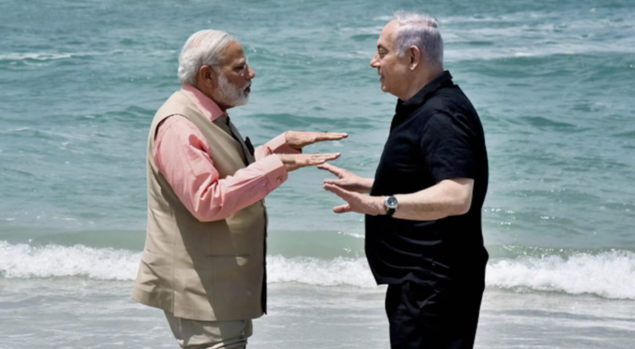
For decades after independence, India’s policy on Israel and Palestine was cautious. New Delhi supported the Palestinian cause and often voted with Arab countries in international forums, even voting against Israel’s admission to the United Nations. At the same time, India recognised Israel in 1950 and maintained limited contact while presenting itself as neutral. India later became the first non-Arab country to recognise the State of Palestine in 1988 and established diplomatic relations with Israel in 1992 after consultations with Yasser Arafat, leader of the Palestine Liberation Organization.Relations with Israel began expanding gradually after the Cold War, particularly in defence and trade. However, earlier governments often kept the relationship relatively low-key to avoid upsetting Arab partners or appearing to move away from India’s traditional support for the Palestinian cause.A more visible shift came after Narendra Modi became prime minister in 2014. Under his government, India’s ties with Israel grew more open and politically prominent. Defence cooperation increased and bilateral trade expanded, with both countries emphasising shared security concerns and technological cooperation.In 2017, PM Modi became the first Indian prime minister to visit Israel, marking a symbolic turning point in the relationship. During the trip, he was warmly received by Israeli prime minister Benjamin Netanyahu, and images of the two leaders walking together on Ogla beach became widely circulated, highlighting the new warmth in ties.

-

PM Modi’s 2017 Israel visit: PM with Israeli counterpart at Ogla beachThe closeness between the two governments has continued in recent years to a point where PM Modi was in Israel merely two days before Israel attacked Iran with the US.Referring to Israel as the “fatherland” and India as the “motherland”, PM Modi’s visit came at a time when Israel faced intense international criticism over its military campaign in Gaza, which has killed more than 60,000 Palestinians according to various estimates. “The timing of it was clearly wrong. The policy makers did not expect that to happen very soon. That sent a very wrong optics from a balanced policy perspective,” professor Rajan said.The war has also drawn renewed scrutiny of Netanyahu’s leadership, with critics and some international legal bodies describing him as responsible for alleged war crimes.The shift under PM Modi reflects both ideological and strategic factors. The Bharatiya Janata Party has long been seen as more openly supportive of Israel than previous governments. At the same time, India sees Israel as a key partner in defence technology, intelligence cooperation and innovation. As a result, India’s West Asia policy today attempts to balance closer ties with Israel while continuing to express support for Palestinian statehood.

-

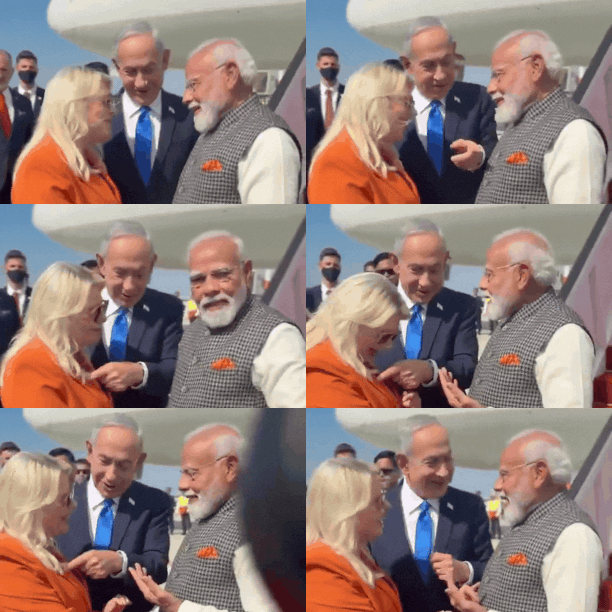
PM Modi’s 2026 Israel visit: Netanyahu pointing out ‘saffron match’ between PM Modi and SaraHowever, professor Rajan said that India’s policy is not “completely determined by Israel”, rather, currently, it is more concerned about “offending” the US.“India’s policy is not completely determined by Israel. Yes, Israel is an important partner but in the past also we have pursued our ties with Israel without damaging our relations with other countries,” he said.“India is primarily concerned about offending the US. At this time, it would not like to offend the Trump administration. And that’s exactly why it is not issuing any statements condemning of killing of Khamenei,” he said.

So, is there a shift?

Rajan Kumar, a professor at JNU, who teaches international relations said that currently, there is no shift in India’s policy towards the Middle East. Rather, he said, that the shift might happen after the war is over.“At the moment, I don’t see any shift happening. It is a continuation of policy where India’s preferred partner was United States and Israel. But at the same time trade ties were linked with many other countries in the region,” he said.“So, a shift is not apparent at the moment, but it might happen after the outcome of the event. Because if India thinks that Iran remains an important part and if the regime survives, it will pursue a different strategy. But if US wins, which is very unlikely, if the regime survives, resistance persists, it will have a different strategy. Now, India is pursuing a wait-and-watch policy in West Asia,” he added.However, he added that there was a need for India to go for a policy of multipolarity, rather than unipolarity under the influence of Israel and the US.Experts argue that India should embrace multipolarity in West Asia, rather than a unipolar tilt toward Israel and the US. While Israel is a valuable partner, destabilizing relationships with other West Asian countries could jeopardize India’s economic and security interests in the region.“India should pursue multipolarity, rather unipolarity under the influence of Israel and US in West Asia. Although we have good ties with Israel, we cannot de-stabilise our ties with other West Asian countries, for the reason that our economic and security interests are aligned there,” he said.

Temples, tilaks and trolls: How Hinduphobia threatens Indian Americans’ American dream

0

Temples, tilaks and trolls: How Hinduphobia threatens Indian Americans’ American dream

In his 1931 book The Epic of America, James Truslow Adams coined a term that would come to define the classic life America promised to the rest of the world. As Adams described it, the “American Dream” is a social vision in which everyone’s life should be better, richer, and more fulfilling, providing opportunities based on ability and achievement rather than social class or origin.Inspired by this promise, Indians began to immigrate to the Americas in the 19th century, and their numbers increased significantly in the 20th century. America ticks all the boxes for them: city life, better incomes, better opportunities, and a slightly improved social status back home where they might otherwise spend their lives working but still end up being a family man instead of a billionaire.Parsi businessman Bhicaji Balsara became the first Indian to obtain U.S. citizenship through naturalization in 1910. But the peak of proud Indian-American symbolism came much later, with Satya Nadella becoming Microsoft CEO in 2014 and Sundar Pichai becoming Google CEO in 2015. What started as Punjabi farmers migrating to the U.S. West Coast eventually evolved into families taking loans worth hundreds of thousands of dollars to send their children to the U.S. so they could chase the American dream, not the cost.

The dark ages of indian americans

Fast forward to barack obamaDuring his term as president from 2009 to 2017. The number of Indian Americans appointed to senior government positions was at its highest during those years, when the community’s population was about 3 million, leading some to jokingly call Obama the first “Indian American president.”followed by Donald TrumpTrump was in power from 2017 to 2021. Despite Trump’s efforts to court Indian-American voters, he only received about 16% of the Indian-American vote in 2016. The 2020 Asian American Voter Survey later found that about 28% of Indian Americans supported him.Joe Biden’s election as president further strengthens Indian-American representation Kamala Harris as his 2020 running mate. Harris then served as vice president from 2021 to 2025, becoming the first person of Indian descent to hold the position.Trump’s re-election in 2025 marks the beginning of what he calls America’s “golden age.” For many Indian Americans, however, the political and cultural climate since then has been far less rosy.

Indian Americans are exhausted

许多受访者表示经历过偏见、网络种族主义、个人骚扰和歧视<br />” msid=”129547994″ width=”” title=”” placeholdersrc=”https://static.toiimg.com/photo/83033472.cms” imgsize=”23456″ resizemode=”4″ offsetvertical=”0″ placeholdermsid=”” type=”thumb” class=”” src=”https://static.toiimg.com/photo/imgsize-23456,msid-129547994/many-respondents-reported-experiencing-bias-online-racism-personal-harassment-and-discriminationbr.jpg” data-api-prerender=”true”/></div>
</div>
<p> <span class=Since 2025, the word “anti” has increased significantly when talking about Indian Americans in the United States. A survey conducted by the European Council on Foreign Relations in the same year showed that 75% of the Indian population were “Trump welcomes.” Yet at home, Indian-Americans increasingly say they feel vulnerable in a country that once symbolized opportunity.a recent survey Carnegie Endowment Peace International surveyed the attitudes of some 5.2 million Indian-Americans living in the United States. The Indian American Attitudes Survey (IAAS), in partnership with research firm YouGov, surveyed 1,000 Indian American adults. The findings reveal a disturbing reality. Many respondents said they experienced prejudice, online racism, personal harassment and discrimination, forcing some to change the way they speak, dress or participate in public life to avoid confrontation.

Anti-Hindu amplification

近四分之一的印度裔美国人表示被称为诽谤。<br />” msid=”129548091″ width=”” title=”” placeholdersrc=”https://static.toiimg.com/photo/83033472.cms” imgsize=”23456″ resizemode=”4″ offsetvertical=”0″ placeholdermsid=”” type=”thumb” class=”” src=”https://static.toiimg.com/photo/imgsize-23456,msid-129548091/nearly-one-in-four-indian-americans-reported-being-called-a-slur-br.jpg” data-api-prerender=”true”/></div>
</div>
<p> <span class=Indian Americans make up at least 55% of the population and hold important positions in fields such as technology, medicine and academia.The immediate conclusion many observers drew from the survey was that the hostility experienced by Indian-Americans often overlapped with hostility toward Hindu identity, raising concerns about a rise in Hinduphobia or anti-Hindu prejudice.Yet researchers and institutions rarely use the term explicitly, reflecting ongoing debates in academic and policy circles about how best to categorize anti-Hindu bias.Surveys show that one in four Indian Americans have been called a slur since the beginning of 2025. The report describes the United States as “the epicenter of anti-India digital racism.” It also noted that much of the online hate directed at the Indian community often cited Hindu symbols, traditions or religious references.

Tracking Hinduphobia Online

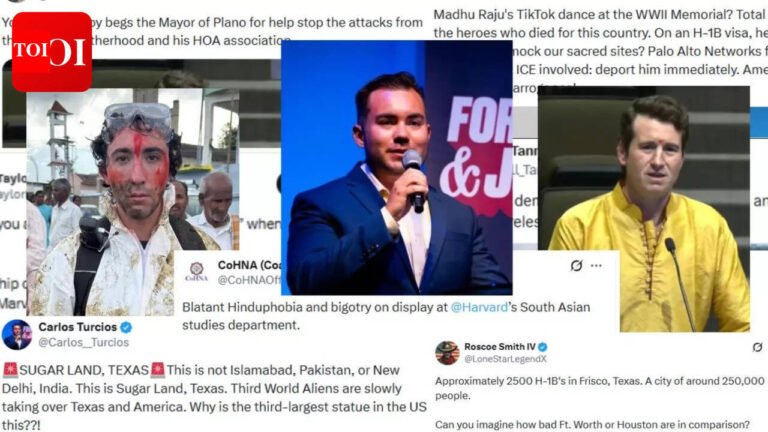
In October 2025, anti-H1B hatred erupted online with slurs targeting only Hindu gods, traditions, and names. Carlos Turcios, a Republican activist in the Dallas-Fort Worth area, ranted against Texas’ 90-foot-tall “Confederate statue” of Lord Hanuman in a February X post that went viral, claiming that “Third World aliens” were slowly taking over Texas and the United States. Many other posts ranted about “demon gods” and “monkey gods,” and a best-selling author spoke out against immigrants entering the temple. Around the same time, American YouTuber Tyler Oliveira’s A video mocking the festival of Gorehaba, a village in Karnataka, has received 5 million views on X. Instead of making an effort to understand the significance of the festival or talking to locals, he criticized it with the title “Inside India’s Poop Throwing Festival,” seducing Americans into waiting for a spoof of the country and its culture. Critics argued that the video failed to explain the cultural or ritual context of the festival and instead encouraged mockery of Indian traditions.In another video that went viral on The conservative media personality satirically mocked the culture’s cow worship and use of cow dung and urine, causing many Indian Americans to quit.Whether because of the incident or broader cultural tensions, almost a fifth of respondents shy away from wearing bindis and tilaks, and 23% of Indian Americans believe Hindus face severe personal discrimination, the Carnegie survey noted. Furthermore, by 2022, Internet Infection Research Institute Rutgers University researchers have documented a pattern in which social media is systematically weaponized, often by bots and geopolitical actors, to target Hindu communities. It also warned the Hindu community to be cautious as hate online often creeps into the real world.

Attacks beyond social media

Expressions of Hinduism, including temples and idols, have also been targeted. In 2025, a shooting occurred at an ISKCON temple in Utah while worshipers were inside. Several Hindu temples were vandalized in Indiana and Southern California, and a temple statue was attacked in North Carolina. California has also recorded an increase in hate crimes involving Hindus, although anti-Semitism remains the most reported category of religious hate crimes in the state.Agencies also face accusations of insensitivity. In February 2026, Harvard was accused of “blatant Hinduphobia” by the Hindu Alliance of North America, which accused Harvard of displaying artwork for a Sanskrit course on its South Asian Studies department website. The coalition accused the university of bigotry on “X,” adding an image “straight out of a horror movie” featuring a dark Hindu figure wearing a tilak “holding some kind of ghostly statue in his hand.” While the university issued an apology on its website on behalf of the department, saying it “deeply regrets” sharing the “insensitive” image, it echoed the ignorance of the deep-seated issues of Hinduism even among America’s prestigious academic institutions.

Madhu Raja Controversy

The latest example of anti-Hindu hatred is a video of Indian-origin techie Madhu Raja filming the “Don’t Rush Challenge” with a woman in front of a monument on the National Mall honoring Americans who served in the armed forces during World War II and those who lost their lives in the war. After the video circulated online, Raja was reportedly doxxed and forced to delete his social media accounts. He is believed to be employed by Palo Alto Networks, and calls for his firing have gone viral.Some posts also called for Raja’s deportation, claiming he was in the country on a non-immigrant H-1B visa.Before then, videos of American cheerleaders doing somersaults at the Lincoln Memorial, white brides dancing in the reflecting pool, men in Spider-Man costumes tumbling around World War II fountains, and many other similar videos that “disrespected” American history flooded the Internet every day.

What is the future for Indian Americans?

A study by Internet Infection Research Institute (NCRI) claims that by 2025, 24,000 posts on X will have more than 300 million views. Anti-India content on the platform has tripled in just one year. anti indian hatred Hinduphobia has orphaned Indians, and the second biggest thing that makes them stand out in a world dominated by capitalism and influenced by evangelicalism is their religion, the first being, of course, their bold audacity of talent. For many observers, the trend raises difficult questions about assimilation and identity.Take Indian-American golfer Akshay Bhatia, for example, who had a dramatic playoff victory at the Arnold Palmer Invitational in March 2026. Some online commentators noted that he seemed to have fully assimilated into American culture, arguing that there were few overt markers of Indian identity beyond his name.“Another thing you missed about Akshay Bhatia is – assimilation,” said one post on X, like many others. In the Carnegie survey, although Indian Americans are ready to assimilate into their own culture and give up tilaks, bindis, etc., they still do not intend to leave the country, and most suggest going to the United States for employment. As civilians of the country, Indians have had to barter to survive since ancient times. Under the rule of the British colonials, they became sepoys and babus, while the Mughals, Subedars and Mansabdars became sepoys and babus, all of whom were able to live on their own land, in their own society and culture, while practicing their own religion. For generations, immigrant communities in the United States have maintained a delicate balance between assimilation and cultural preservation. Indian Americans today face a similar dilemma: how to maintain a distinct cultural identity in a political environment increasingly shaped by debates about immigration, nationalism, and global competition.The American Dream promises opportunities that cannot be erased. For many Indian Americans, the coming years may determine whether that promise remains valid.

Who is next after Suryakumar Yadav? IPL 2026 should be the audition for the next T20I captain

0

Who is next after Suryakumar Yadav? IPL 2026 should be the audition for the next T20I captain
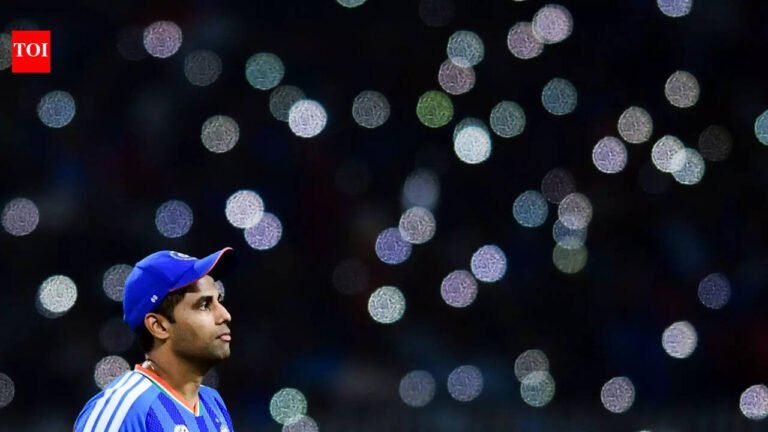
India captain Suryakumar Yadav during the ICC Men’s T20 World Cup 2026. (ANI photo)

New Delhi: With two consecutive T20 World Cup titles in their hands, India has become a powerhouse in cricket’s shortest format. The talent waiting list is also huge. Within two years, indian cricket team Preparations will be made for two major events, the Los Angeles Olympics and the 2028 T20 World Cup.When it comes to picking a 15-player squad, there’s nothing complicated about selecting teams based primarily on their form. The best example of this approach is Ishan Kishan. Since making his comeback after a two-year hiatus, the southpaw has been heating up the scene.

Ahmedabad erupts as India arrive at hotel after T20 World Cup win

He was selected in the Indian team after scoring a century in the Syed Mushtaq Ali Trophy final and leading Jharkhand to the title. In 13 games since his return, the 27-year-old has accumulated 532 points with a 207-point shooting percentage. In the recently concluded T20 World Cup, his 317 runs ranked third behind Pakistan’s Sahibzada Farhan and teammate Sanju Samson.But the real question is who will replace the aging Suryakumar Yadav As India’s next T20I skipper. The answer may come in 2026 indian premier league (intense pulsed light) – Just like head coach Gautam Gambhir’s successful experience with Kolkata Knight Riders (KKR).IPL is the best T20 league in the world. Unlike the T20 World Cup, this is an equal platform with all 10 teams of equal strength. Therefore, the selectors have to keep their eyes open to see who can lead India as picking a T20I squad with a lot of talent is a no-brainer but picking the right captain is not easy.Who are the competitors?

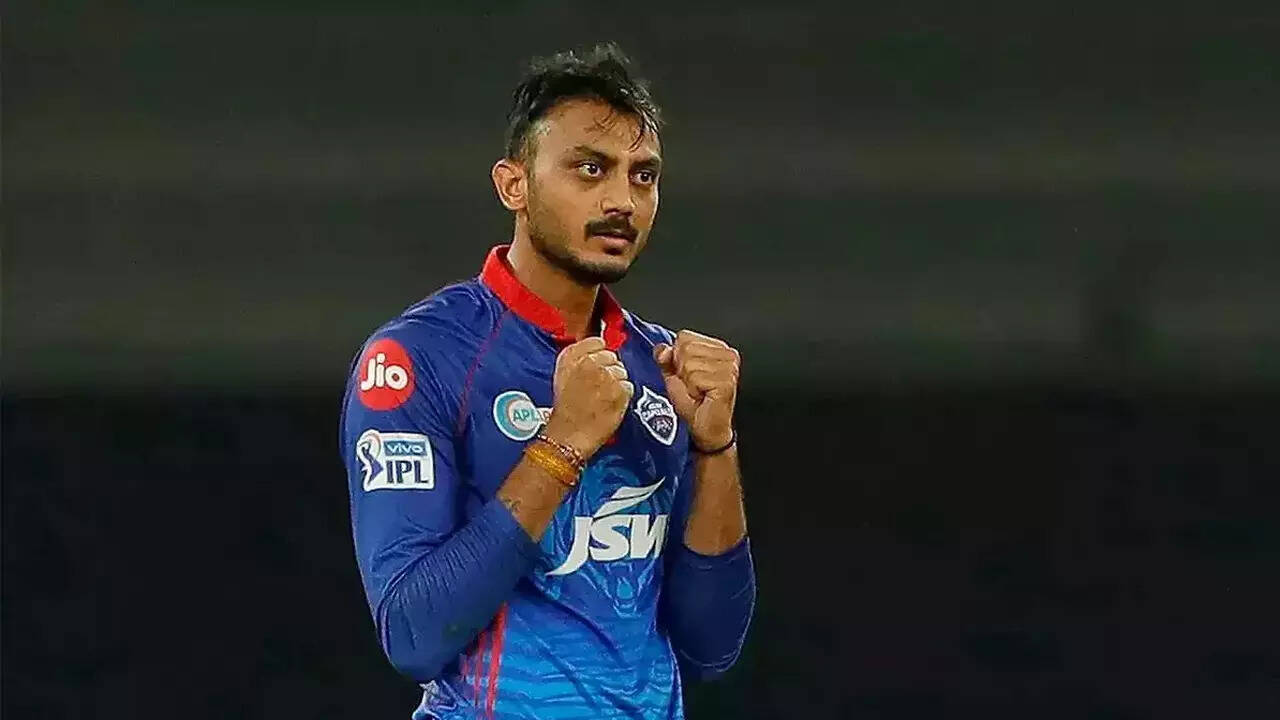
Axar Patel

Axar Patel leads Delhi Capitals in IPL.

Eight out of the 10 IPL teams have appointed Indian players as captains. KKR are yet to announce their next captain and Pat Cummins will lead Sunrisers Hyderabad.Chennai Super Kings (CSK) are captained by Ruturaj Gaikwad, who has not been part of the national team roster since leading India to the gold medal at the 2023 Asian Games in Hangzhou.Defending champions RCB captain Rajat Patidar is yet to make his international debut in a T20I tournament.Mumbai Indians captain Hardik PandyaHe was expected to succeed Rohit Sharma after winning the World Cup in 2024, but was not given the captain’s armband due to fitness issues. But come IPL 2026, he will captain Suryakumar Yadav, India’s current T20I captain.Axar Patel, 32, has been the proverbial bridesmaid in the Indian cricket world. He was appointed as the vice-captain for the first time after the 2024 T20 World Cup and was later replaced by Shubman Gill and was again appointed as Surya’s vice-captain before the 2026 World Cup. Axar might be a good choice but Delhi Capitals have to win trophies.

Ritha Pant

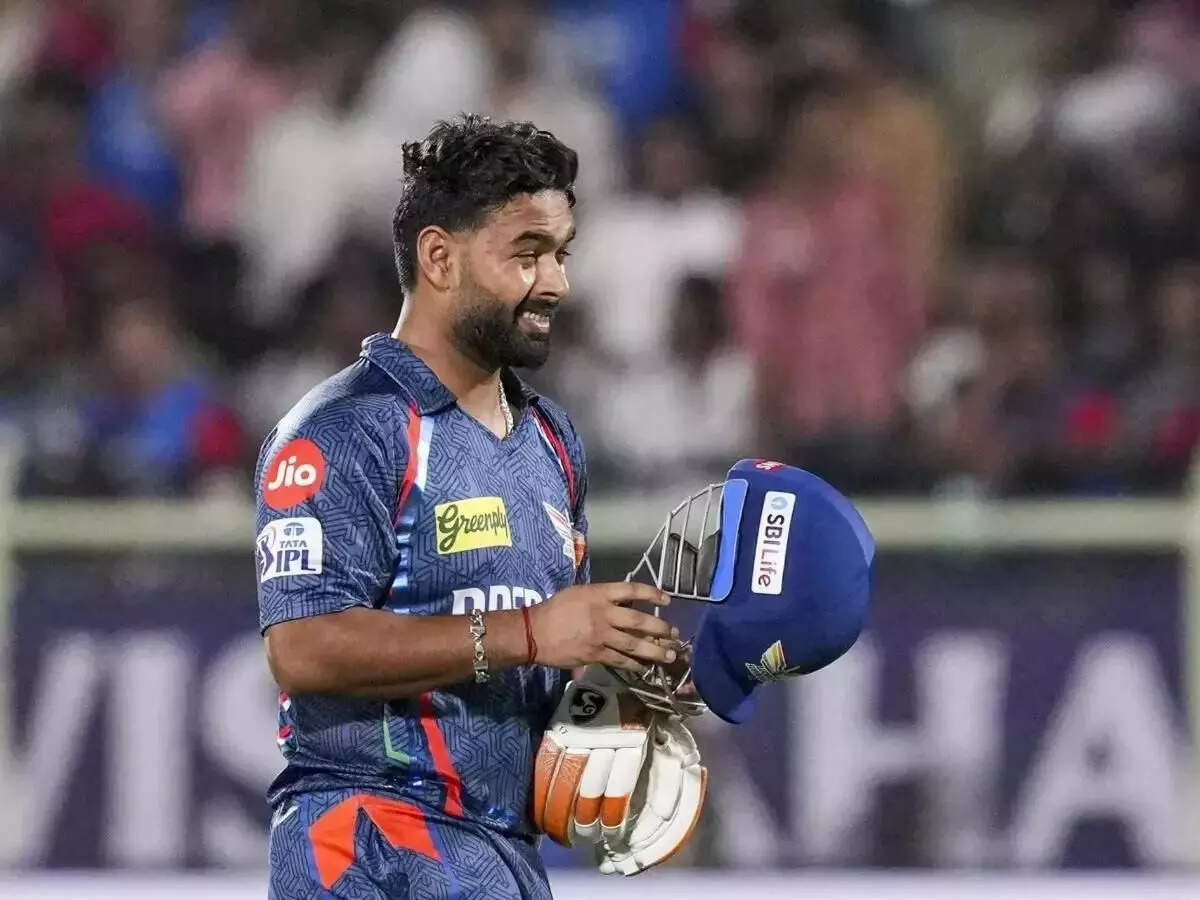
Lucknow Supergiants captain Rishabh Pant

24-year-old Riyan Parag leads Rajasthan in the absence of Sanju Samson during IPL 2025. But first the youngster must cement his place in the national team. There is no doubt that his bowling ability can make him a permanent face of the Indian team in the next cycle. His name was also on the shortlist when Washington Sundar was injured.28-year-old Rishabh Pant is also looking to recreate his T20I form, both with the bat and as captain of the Lucknow Supergiants. The left-hander has fallen out of the limelight and with Sanju Samson and Ishan Kishan in top form, Pant may have to wait for an opportunity in this format.Then there’s Shubman Gill of Gujarat Titans and Kings XI Punjab Shreyas Iyer. Both showed leadership qualities. Gill is the current captain of India’s ODI and Test teams, while Iyer led KKR to the 2024 IPL title and led Punjab Kings to the IPL 2025 final.

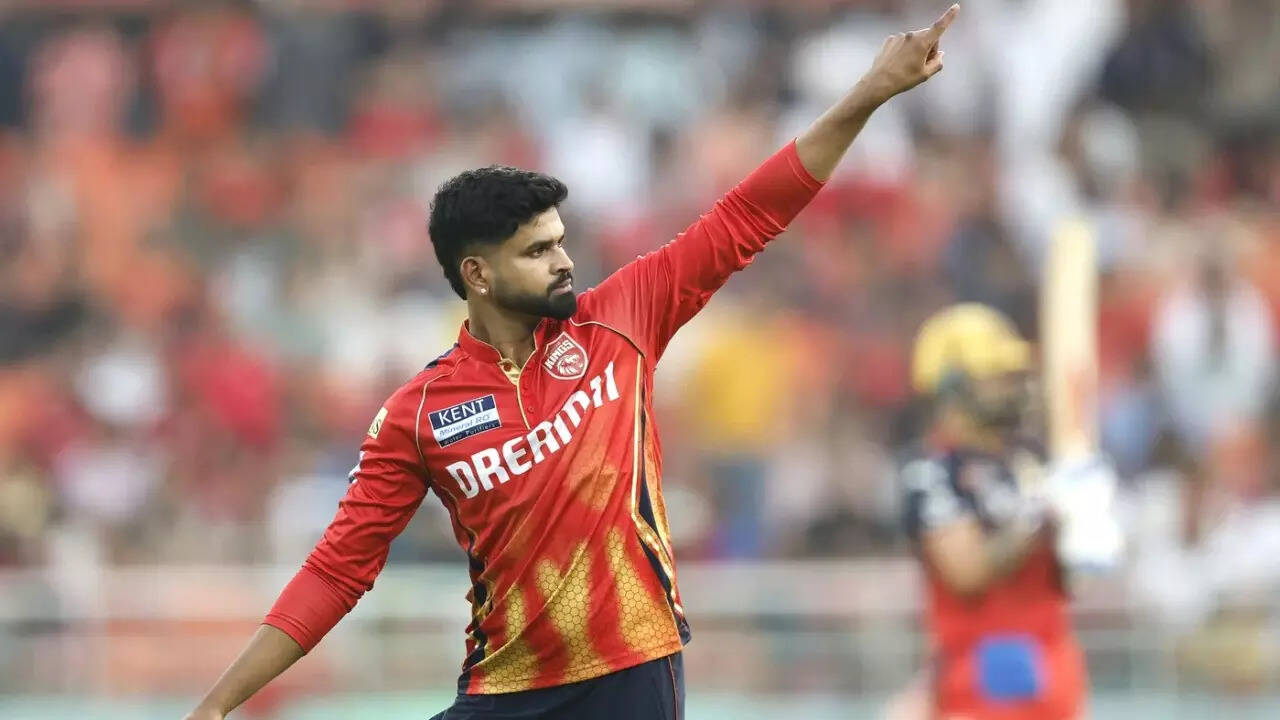
Shreyas Iyer

Shreyas Iyer (IPL Photo)

Shubman is considered the next face of Indian cricket and the successor to Suryakumar Yadav. But surprisingly, he was dropped from India’s T20 World Cup squad due to team combination. Shreyas was part of the team in the New Zealand series ahead of the T20 World Cup as a replacement for the injured Tilak Varma, but he did not get a chance to play. In an ideal scenario, Shreyas would be the right man to lead India to the Los Angeles Olympics and the T20 World Cup.Sanju Samson is another option that selectors have to consider. The 2026 T20 World Cup winner, who led Rajasthan Royals in the IPL, is currently showing confidence after being awarded the Player of the Tournament award.The IPL has long been the biggest T20 cricket laboratory in India. Just as Gambhir’s success in the IPL opened doors for national team coaching jobs, IPL 2026 may also quietly shape India’s next T20I captain. In a tournament that tests pressure, tactics and leadership every night, the selectors may find the man who will lead India into the next cycle.

Banner insert

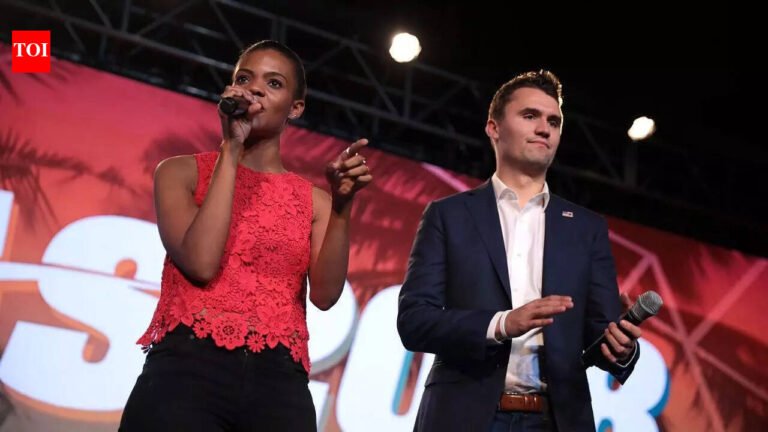
Candace Owens faces outrage after releasing unseen Charlie Kirk assassination footage: ‘Pure unfiltered evil’

0

Candace Owens faces outrage after releasing unseen Charlie Kirk assassination footage: 'Pure unfiltered evil'
Conservative commentator Candace Owens sparked backlash after sharing new video of Turning Point USA founder Charlie Kirk on the day he was assassinated at Utah Valley University. Owens highlighted what she said were unusual details in the video and warned Kirk’s “enemies” not to exploit his legacy. Months later, critics accused her of exploiting the tragedy while the suspects remain on trial.

Candace Owens stirs up more trouble by releasing what she says is new footage from the day Charlie Kirk Shot to death. The video, released months after the murder, quickly went viral on social media and sparked old debates about the assassination. Last September, Kirk was attacked while attending an event at Utah Valley University. This shocked his supporters and caused much political reaction across the country.The newly circulated clip appears to show another camera angle from behind Kirk. Owens shared the video during her podcast discussion, along with photos allegedly taken inside the vehicle that took Kirk to the hospital. Her decision to release the material now has raised eyebrows not only among followers but also among critics who question the timing of the release and the intentions behind it.

Candace Owens faces backlash after releasing assassination footage months later

Owens has repeatedly argued that key details of the shooting remain unexplained. In her latest post, she once again pointed out what she said were unusual elements in the shot. She noted the apparent “lack of blood” and questioned whether the bullet actually passed through Kirk’s body, a claim she has made before when publicly discussing the case.After posting the video, Owens sent a strong message to those she believes are exploiting Kirk’s legacy. She wrote onShe added, “I will not allow Charlie’s enemies to purchase him like a slave market in the afterlife. I reject that. No.”As soon as the news was released, it quickly triggered a wave of criticism online. Some users accused Owens of withholding the video for months and sharing it just to revive interest in her platform. One critic wrote, “Candace Owens… a pathological narcissist, a neurological blank slate where empathy should beat… has been hoarding assassination footage of the back of Charlie Kirk’s head like a serial killer keeping his loot in a basement freezer.Another social media user expressed outrage, writing: “This woman is completely shameless – has no boundaries and doesn’t care about anyone but herself. She makes me physically ill.” She didn’t care at all about his children or the horrors they would one day witness because of her. That video was like a punch to my soul for me – I couldn’t even watch anything anymore that day. Pure, unfiltered evil. “Authorities have arrested Tyler Robinson in connection with the shooting, and his murder trial is underway. Meanwhile, Kirk’s widow, Erica Kirk, previously urged Owens to stop spreading conspiracy theories related to the case. Despite criticism, the newly emerged video has once again thrust the assassination into the center of online political debate.

‘No need to queue outside LPG dealers’: Avoid panic buying, says govt

0

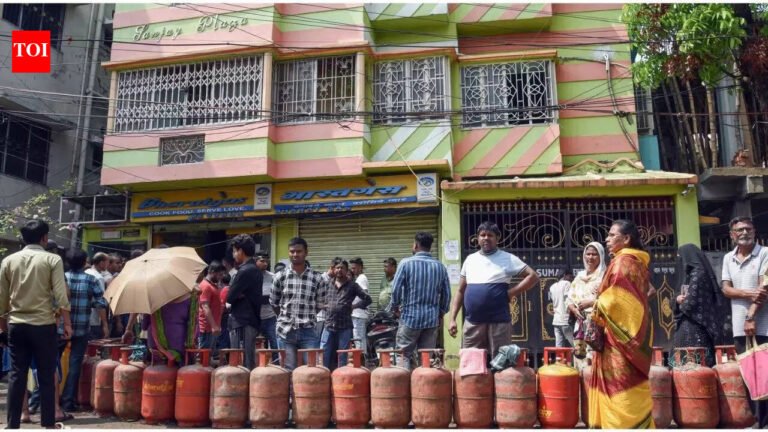
People queued up outside gas agencies to refill LPG cylinders amid reports of a nationwide LPG shortage in Kolkata on Friday. (Ani photo)

NEW DELHI: The government on Friday held a joint inter-ministerial briefing for the third consecutive day to address fears over LPG supplies at a time when global energy supplies are strained by raging war in West Asia and Iran’s blockage of the Strait of Hormuz.There is no need to queue outside LPG dealers, the government said, urging consumers to book cylinders online, citing data showing online bookings rose to 83% in March from 71% in February.Responding to concerns over tight supply of LPG cylinders both commercially and domestically, the central government assured “uninterrupted supply to households” and claimed that domestic LPG production increased by 30% from March 5.The ministry responsible for finding oil and gas said LPG supplies are also being provided to hospitals and educational institutions. Sujata Sharma, Joint Secretary, Ministry of Petroleum and Natural Gas, told a press conference: “Uninterrupted supply to domestic households has been ensured. Likewise, LPG supply is also being provided to hospitals and educational institutions. Domestic LPG production has increased by 30 per cent so far; our refineries are currently producing 30 per cent more LPG as compared to March 5.”The joint secretary called LPG a “matter of concern” following the closure of the Strait of Hormuz, but said “not a single one of the 25,000 distributors has reported drying up of LPG”. “LPG is a matter of concern for us, especially since most of our imports are through the Strait of Hormuz. The closure of the strait is a matter of concern. However, not a single one of the 25,000 distributors has reported drying up of LPG. I urge the people of the country not to believe rumours, and not to indulge in panic buying,” Sujata Sharma said.She also said the government was taking action against those indulging in the black market and hoarding LPG.As for commercial cylinders, the shortage of which has mainly affected food businesses, the central government said its supply has been “placed at the disposal of state governments to facilitate priority distribution”. “Regarding commercial gas cylinders, these cylinders have been placed at the disposal of the state government to facilitate priority distribution. We request the state government to identify priority criteria and ensure that these commercial cylinders reach the target consumers efficiently. ” she added.The joint secretary also addressed concerns about crude oil, saying all refineries in the country are “currently operating at 100% capacity or above.” “In terms of crude oil, we have a refining capacity of 258 million tonnes. We are self-sufficient in the production of petrol and diesel; therefore, there is no need to import these fuels into India. All of our refineries are currently operating at 100% or higher capacity. Refiners have ample crude oil inventories and supplies are sustained,” she said.The government said it ensures that there will be no disruption or curtailment in the supply of PNG (pipeline natural gas) and CNG (compressed natural gas) to domestic consumers. “Given the situation, there is absolutely no need to panic… Furthermore, for commercial consumers in our major cities and centres, many of whom are currently facing hardship due to dependence on LPG supply, the Government of India is making every effort to address their concerns. We appeal to all such commercial consumers to contact their local CGD (City Gas Distribution) network provider or designated dealer to get PNG connectivity,” Sharma said.“There is adequate supply of petrol and diesel at all petrol pumps… As for LPG, I would say it remains a matter of concern for us. Nonetheless, none of our 25,000 dealers have reported drying up. I would like to appeal to all our fellow citizens not to fall for rumours, and not to engage in panic buying,” she further added.

Iran’s war enters day 14: What we know now, two weeks after the conflict ended – Tehran bombings, Israeli attacks, US plane crash

0

Iran's war enters day 14: What we know now, two weeks after the conflict ended - Tehran bombings, Israeli attacks, US plane crash
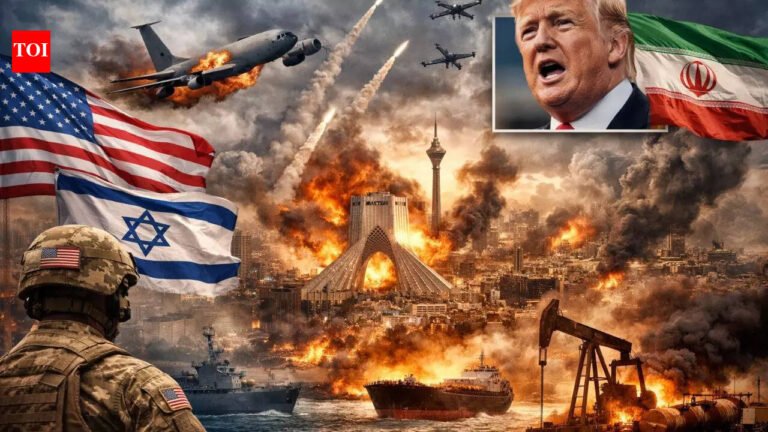
Representative image (AI generated)

The war between the United States, Israel and Iran is about to enter its third week, with no signs of letting up as missile strikes, drone strikes and airstrikes continue across the Middle East.According to Reuters citing Axios, U.S. President Donald Trump claimed in a virtual meeting that Iran is “about to surrender.” He further told G7 leaders that the conflict was moving in Washington’s favor. Despite his remarks, the war has escalated on multiple fronts, with casualties mounting and global markets reacting to growing instability.Nearly two weeks after the conflict began, oil prices have soared, shipping in the Strait of Hormuz has been disrupted and regional powers have been drawn into the fighting. Missile exchanges between Israel and Iran continue, while allied groups and regional countries are increasingly becoming part of the conflict.

Week 1: The war begins with the killing of Iran’s supreme leader

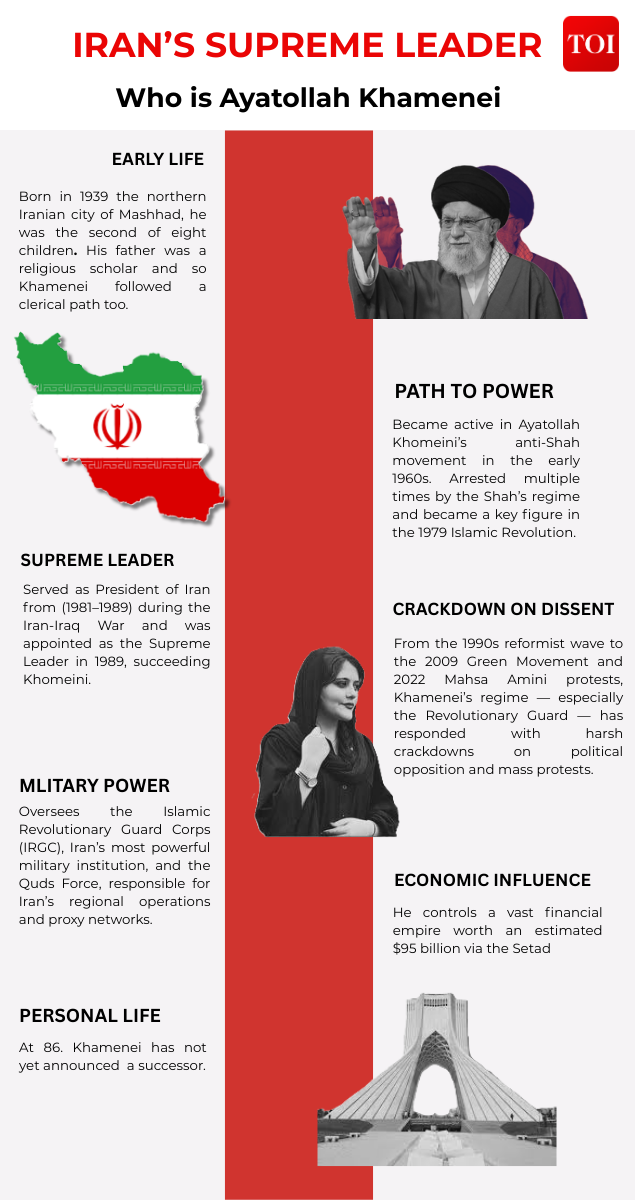
The war began on February 28, when the United States and Israel launched coordinated strikes targeting military infrastructure and missile systems inside Iran under Operation Epic Fury.The opening attack killed Iran’s Supreme Leader Ayatollah Ali Khamenei and several senior commanders, prompting immediate retaliation from Tehran.

.

.

Iranian forces launched missiles and drones at Israeli and U.S. military installations in the region, marking the beginning of a rapid escalation in the conflict.

Day 2: Iran launches major retaliation

On the second day of the conflict, Iran responded with a barrage of ballistic missiles and drones, targeting Israeli cities and military infrastructure. At the same time, the U.S. military has expanded air strikes against Iranian missile launch sites and Revolutionary Guard facilities. Iran has also begun targeting U.S. bases and allies in the Middle East, signaling that the conflict will not be limited to Iran and Israel.

Day 3: Hezbollah opens northern front

The Lebanese militant group Hezbollah joined the conflict, firing rockets into northern Israel. Israel retaliated with air strikes on Hezbollah positions in Beirut’s southern suburbs and other parts of Lebanon.The deadliest attacks included an overnight air strike on the eastern town of Nabichit, which killed at least 16 people and injured 35 others, according to Lebanon’s public health ministry. Officials warned the death toll could rise further as rescue efforts continue.

Day 4: bay Tensions rise

Missiles and drones began appearing over Gulf states where U.S. military bases are located, including Kuwait, Bahrain, Qatar and the United Arab Emirates. The attack near the Strait of Hormuz disrupted maritime traffic and raised concerns about a global energy crisis. Oil markets reacted sharply as traders worried the conflict could severely impact global supplies.

Day 5: Gulf states increasingly involved

Iranian drones and missiles have targeted multiple countries in the region. Emirati air defense forces intercepted the projectiles near Dubai International Airport and coastal areas.In Bahrain, a missile hit a state-run oil refinery, sparking a fire, authorities later said. Saudi Arabia has also intercepted drones near critical energy infrastructure.

Day 6: Mass strikes intensify

The United States and Israel have expanded attacks inside Iran, hitting hundreds of targets in a matter of days. Officials said the strikes destroyed much of Iran’s air defense network and missile systems. Israeli authorities claim to have destroyed approximately 80% of Iran’s air defense systems. Iranian authorities said the death toll from attacks across the country has risen to more than 1,300. Several cities reported severe damage to buildings and infrastructure, including government facilities, hospitals and residential areas.

Day 7: War spreads across the region

The conflict spread across multiple fronts, including Lebanon, Iraq and the Gulf. Explosions were reported in Dubai and Bahrain after air defense systems intercepted incoming projectiles. Shipping through the Strait of Hormuz has slowed, affecting global trade routes.Trump has demanded Iran’s “unconditional surrender” while ruling out immediate negotiations, a sign that the war could continue to expand across the region.

Week 2: Conflict expands in the Middle East

Day 8: Heavy bombing and area attacks

A week after the war began, Tehran came under heavy air strikes and Iranian missiles targeted Israel and Gulf states. Saudi Arabia, Qatar and the United Arab Emirates reported intercepting drones and missiles.As casualties rose sharply, Western countries began to strengthen military assets in the region. A new wave of heavy bombing has hit Tehran, with at least 1,332 people reportedly killed in U.S. and Israeli attacks, Al Jazeera reported.

Day 9: Attacks spread to Gulf and Iraq

Missile and drone attacks have been reported in Saudi Arabia, Bahrain, Kuwait and Iraq. A missile landed inside the U.S. Embassy in Baghdad, but no casualties were reported. Israel also attacked fuel storage facilities in Tehran, sparking fires.Trump said Washington was not interested in negotiating with Iran despite continued hostilities. “We’re not going to reconcile,” Trump told reporters aboard Air Force One. “They want to reconcile. We’re not going to reconcile.”Trump claimed that the United States and Israel had severely weakened Iran’s military capabilities, including its navy, air force and missile infrastructure.

Day 10: Iran names new supreme leader

After his father’s death, Iran appointed Mojtaba Khamenei as the country’s new supreme leader. The cleric, who has close ties to the Islamic Revolutionary Guard Corps, has taken on a leadership role as Iran continues its missile and drone attacks in the region.Saudi Arabia said it intercepted a drone targeting the Sheba oil fields and warned Iran it would be the “biggest loser” if the attacks continued. The United States has also begun withdrawing non-essential diplomatic personnel and family members from Saudi Arabia and other Gulf countries due to rising security risks.

Day 11: Intense bombings and protests

Heavy air strikes continue to hit various parts of Iran, with explosions reported in Tehran and other cities.Thousands of Iranians rallied in support of Mojtaba Khamenei, and the government vowed to keep fighting. Iranian forces have also launched drone attacks on Israeli infrastructure, including energy facilities in Haifa.Iranian Foreign Minister Abbas Araghchi said Tehran would continue fighting as long as necessary, casting doubt on Trump’s insistence that the conflict would end “soon.”

Day 12: America’s largest attack

U.S. Defense Secretary Pete Hegseth said that the U.S. military carried out the largest strike since the beginning of the war. Tehran reported heavy bombing of the capital, with thousands of civilians fleeing the main city.The United States also destroyed several Iranian naval vessels near the Strait of Hormuz over concerns that Tehran might try to block the shipping lane.

Day 13: War disrupts global energy markets

Conflict increasingly affects global energy supplies. With tanker traffic in the Strait of Hormuz all but halted, the International Energy Agency announced the release of 400 million barrels of oil from emergency reserves to stabilize the market.Missile and drone strikes continue in the Gulf, while Israel has expanded operations against Hezbollah targets in Lebanon.The number of casualties continues to rise in the area. Iranian authorities say more than 1,200 people have been killed in Iran, hundreds in Lebanon and dozens in Israel and other countries.The United Nations estimates that hundreds of thousands of people have been displaced, particularly in Lebanon, where ongoing bombing has forced residents to flee their homes.Children are among the worst affected, with humanitarian agencies warning that thousands have been injured or killed since the war began.

Day 14: Explosions in Tehran as war approaches third week; U.S. plane crash heightens tensions

According to Iranian official media reports, as the war entered its 14th day, serious explosions occurred across Tehran. The explosion occurred near a large pro-government demonstration in Tehran’s central square, where large crowds gathered to mark Al-Quds Day, an annual event in support of the Palestinian cause held on the last Friday of Ramadan.A major aviation incident also occurred in the skies over Iraq that day. A Boeing KC-135 Stratotanker operated by the U.S. Air Force crashed in western Iraq in the afternoon. U.S. Central Command confirmed that four of the six crew members on board died, and rescue operations for the remaining crew members are continuing.

Global Economic Impact and Energy Crisis

The conflict triggered major disruptions in global energy markets. Oil prices soared above $100 a barrel on concerns that shipping in the Strait of Hormuz could be blocked.The waterway typically carries about a fifth of the world’s oil supplies, making it one of the world’s most important energy corridors.Some Gulf countries have also reduced oil production due to shipping disruptions and storage facilities filling up. Global leaders held emergency talks to stabilize markets and prevent a wider economic shock.

BCCI breaks silence after Sunrisers sign Pakistan spinner Abrar Ahmed for hundred

0

BCCI breaks silence after Sunrisers sign Pakistan spinner Abrar Ahmed for hundred
Pakistan’s Abrar Ahmed (right) celebrates (AP/Press Trust of India)

Board of Control for Cricket in India (BCCI) Vice-President Rajeev Shukla clarifies that the board has no power to interfere in the controversy surrounding Sunrisers franchise signing of Pakistan spinner Abra Ahmed for the upcoming 100-man season.The Sun TV-owned team faced heavy criticism on social media platforms after acquiring Abrar during the player auction. Many users in India expressed their anger at the decision, citing the national mood at the time. Franchise owner Kavya Maran has also been targeted by cyberattacks, while Sunrisers Leeds’ official X (formerly Twitter) account has reportedly been suspended amid the backlash.

Exclusive: Rahul Dravid on Eden Gardens’ iconic win over Australia in 2001

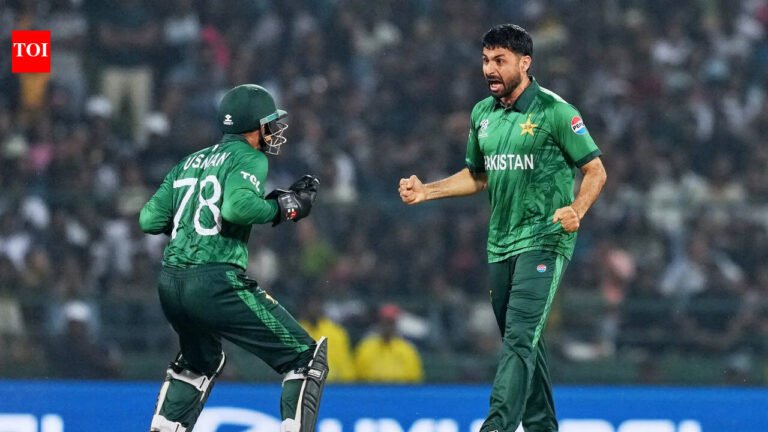
Despite the growing criticism, the team has yet to issue an official statement. However, Shukla on Friday made it clear that the matter does not fall under the BCCI’s jurisdiction as the match is being held outside India.“This has absolutely nothing to do with the IPL. This is an overseas league. It is not under our jurisdiction. There is nothing we can do. They have to answer the call,” Shukla told news agency ANI on Friday afternoon.At Thursday’s auction, bowler Abrar, currently ranked third in the world in T20 internationals, was acquired by the team for £190,000 (approximately $255,000). On the auction stage, the head coach Daniel Vettori and Malan beat out Trent Rockets for a successful bid.After the signing, Vettori explained that the team was targeting Abrar after missing out on England spinner Adil Rashid, who had already been picked by another team. He also mentioned Pakistan Spinners Usman Tariq was part of the franchise’s plans earlier, but once Abrar was locked up, the management decided not to pursue another spinner.In October 2025, India’s investment in the Top 100 tournament increased significantly, with the four participating teams receiving support from Indian owners. Since then, there have been rumors that teams with Indian ownership may avoid signing Pakistani players. Sunrisers’ move to acquire Abrar effectively dispels these rumors.In fact, only two Pakistani cricketers were selected in this year’s men’s hundred auction: Abrar and Tariq. Still, the Sunrisers’ decision sparked a strong reaction in India, with many fans urging the team to reconsider the signing.

Banner insert

‘Surrender is imminent’: Trump makes big demands on Iran, says US ‘free from cancer that threatens us all’

0

“即将投降”:特朗普对伊朗提出重大要求,称美国“摆脱了威胁我们所有人的癌症”

Donald Trump (file photo)

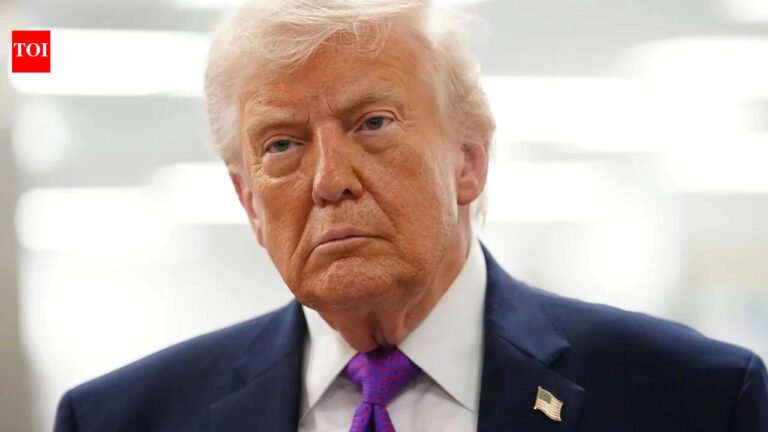
Donald Trump Shining a spotlight on the Middle East crisis, claiming Iran is “about to surrender.” The US president stated this during a virtual meeting with G7 leaders on Wednesday, Axios reported, citing three G7 officials.According to reports, Trump told allies during a G7 conference call that he was “over the cancer that threatens us all” while talking about the results of the “Epic Fury” operation.Trump also reportedly said, “No one knows who the leader is, so no one can declare surrender.”The revelation came as Trump on Friday lashed out at Iran’s leaders, calling them “crazy scumbags” and saying it would be his “great honor” to kill them. The conflict in the Middle East has entered its second week, with intense drone and missile attacks taking place across the region.Referring to the massive U.S. military operation against the Islamic Republic, he said Washington was conducting military strikes to “destroy Iran’s terrorist regime.”Meanwhile, reports from the ongoing Middle East conflict indicate that Iran may attempt to target the USS Abraham Lincoln (CVN-72). Tehran also claimed responsibility for shooting down another U.S. plane during a refueling mission, although Washington called the incident an accident. However, U.S. Central Command (CENTCOM) claimed, “The Abraham Lincoln Carrier Strike Group continues to support Operation Epic Fury and project power from the sea.However, it did not reveal any details about the incident.

Uttar Pradesh pushes for investments, says over Rs 1,300 crore projects have started

0

北方邦大力推动投资,称超过 130 亿卢比的项目已开始实施The state estimates these off-the-shelf projects could create more than 8 million jobs. During the Groundbreaking Ceremony (GBC) 4.0 in February 2024, projects worth Rs 1,011 crore were launched.The state is focusing on project execution alongside investment commitments, while also emphasizing on digital governance measures aimed at improving ease of doing business.Key initiatives listed include Nivesh Mitra, the state’s single-window clearance portal, which currently provides over 467 online services across 43 departments. The government also said that its Nivesh Sarathi platform is being used to monitor investment proposals from the MoU stage to operations. Additionally, 4,074 regulatory compliance or procedural burdens were reduced.The state also outlined expansion of industrial infrastructure in specific sectors. These include the PM-MITRA mega integrated textile zone and garment park across Lucknow and Hardoi, medical device park at Gautam Buddha Nagar, plastic park at Gorakhpur and leather park at Kanpur. It also added that approval has been given for the construction of 11 toy parks in places like Greater Noida, Aligarh and Jhansi.On the MSME front, the government said Uttar Pradesh has over 9.6 million units, making it the largest MSME base in the country.It also mentioned the Mukhyamantri Yuva Swarozgar Yojana, a scheme that provides financial support up to Rs 25 lakh to young entrepreneurs.The country further said that foreign direct investment received between 2017 and 2023 was almost four times the inflow between 2000 and 2017. The UP International Trade Show 2024 was attended by over 100 countries and generated business inquiries worth Rs 10,000 crore, it added.