Home Blog Page 5

Trump suffers dramatic meltdown after KC-135 crash; Hegseth makes new demands on Iran’s top leader

0

The Daily Beast on Friday called President Donald Trump’s late-night social media posts a “twisted meltdown.” The 79-year-old confirmed all six crew members of a ship KC-135 military tanker People who crashed in Iraq have died. The incident is under investigation. U.S. Central Command said the crash was not believed to be the result of enemy or friendly fire.

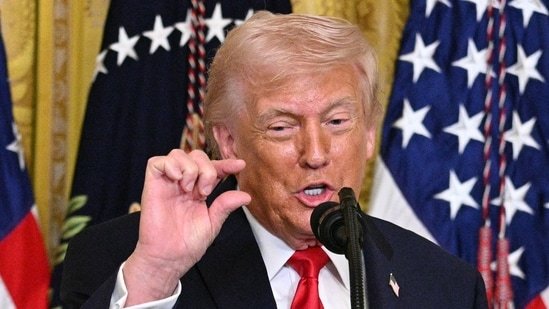
Donald Trump gestures while speaking at a Women's Month history event in the East Room of the White House (AFP)
Donald Trump gestures while speaking at a Women’s Month history event in the East Room of the White House (AFP)

In a post on The Truth Society, Trump said the United States was “totally destroying the terrorist regime in Iran,” further adding that it was a “tremendous honor” to “kill” members of the Iranian regime.

follow: US-Iran war live updates: US warns of ‘biggest strike’; Iranian president joins protest march

“We have unmatched firepower, unlimited ammunition and plenty of time – look what will happen to these crazy scumbags today,” Trump warned.

“For 47 years, they have been killing innocent people around the world, and now, I, as the 47th President of the United States of America, am killing them. What an honor to be able to do that!”

At around 00:33 a.m. local time on Friday, Trump claimed: “The Iranian navy is gone, their air force no longer exists, missiles, drones and everything else are being destroyed, and their leaders have disappeared from the face of the earth.”

Trump triggered by media reports

The Daily Beast further reported that Trump appeared to be triggered by reports on the “rising costs of conflict.” His government has also come under scrutiny over U.S. involvement in a strike at an all-girls primary school in Minapur. The matter remains under investigation.

Trump even lashed out at the New York Times after reporter Sean MacLeish asked Trump about the strike on Tuesday.

Read more: Iran’s president and supreme leader march in Tehran as bombs fall: ‘Trump doesn’t understand us’ | Video

“You just suggested that Iran somehow got its hands on a tomahawk and bombed its own elementary school on the first day of the war,” McCleish told Trump.

“But you’re the only one in the government who says that. Even your defense secretary, standing over your shoulder on your plane on Saturday, wouldn’t say that when asked. Why are you the only one who says that?”

Trump angrily responded: “I just don’t know enough about it. I think it’s something that I’ve been told is being investigated.”

“We are completely destroying the terrorist regime in Iran militarily, economically and otherwise, and yet if you read the New York Times that failed, you would mistakenly believe that we are not winning,” Trump said on The Truth Society.

Pete Hegseth makes new claims about Iran’s supreme leader

Meanwhile, Iran’s new supreme leader, Moytaba Khamenei, was “injured and possibly disfigured,” Defense Minister Pete Hegseth said on Friday. He confirmed reports that Ali Khamenei’s son was injured on the first day of clashes.

“Iran’s leadership is not in better shape, desperate and in hiding. They have gone underground, cowering. That’s what rats do. We know the new so-called less supreme leader is injured and probably disfigured,” Hegseth told reporters.

Why Meghan Markle split from Netflix — insider reveals split details

0

Why Meghan Markle split from Netflix — insider reveals split details

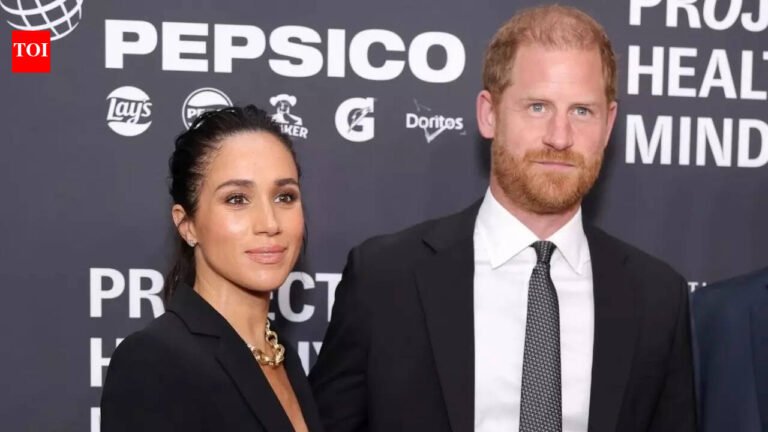
As questions mount about the future of the Sussex brand and what it means for Prince Harry, industry insiders have weighed in on Meghan Markle’s recent split from Netflix. Last week it was announced that Meghan’s brand would be operating independently, just 11 months after her brand was partnered with Netflix. Since then, there have been conflicting reports as to why the collaboration ended, with both sides offering different explanations, according to Express .The source also seemed to suggest that Meghan felt “hindered” by Netflix and was relieved to be on her own. However, a source in Los Angeles told the Daily Mail that Netflix was “not happy” with the performance of “As Ever.”Speaking about other shows on the streaming service, they added: “It doesn’t quite match up with Squidward or Stranger Things or Bridgerton as much as they hoped.”Communications guru and PR expert Mayah Riaz now told The Mirror: “It’s really interesting because when you see two very different narratives surrounding the same split, it’s usually a sign that both parties are trying to manage the optics. In a high-profile partnership like this, perception is almost as important as the deal itself. Netflix will naturally want to position this decision as strategic, and Meghan’s team will certainly want to see it as her taking control of her brand, rather than being thrown out.”“From a PR perspective, Sussex brands have always relied heavily on momentum and narrative. Looking back to the early years, there was a strong global curiosity about them. Now we’re seeing a shift where both the public and the platforms are asking a simpler question: What is the actual product?”Speaking about the Sussexes as a couple and as a brand, she added: “I personally think the bigger issue for the Sussexes is that the element of intrigue that once surrounded them is not as strong as it once was. This is important because attention is currency, and attention spans can change quickly.“To keep their brands strong, these projects need to be bigger than the headlines. One thing is for sure, though: In the world of celebrity PR, when both parties are eager to explain a breakup, it means the story behind the scenes is more complicated than either version of the story suggests.”

India’s LPG crisis: How countries are coping with supply disruptions caused by Iran war and Hormuz crisis

0

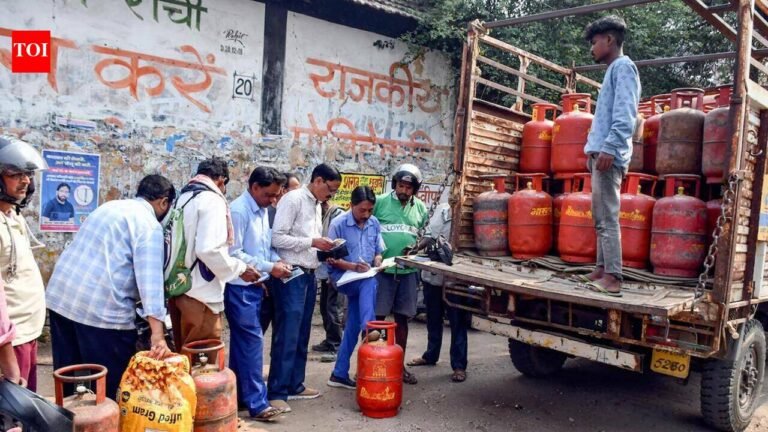
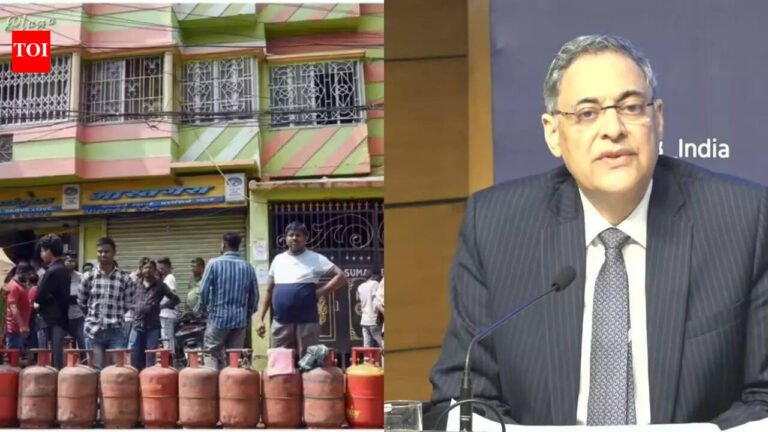
Liquefied Petroleum Gas Shortage: Long queues continue to form outside LPG refilling stations and reservation centers as concerns over LPG shortages mount due to the ongoing Middle East conflict between the United States, Israel and Iran.Iran has blocked the strategic Strait of Hormuz in retaliation for the Feb. 28 conflict triggered by a U.S.-Israeli attack, raising concerns about fuel supply disruptions. The body of water is a critical chokepoint and accounts for about a fifth of the world’s oil supply.

LPG shortage amid West Asia war, opposition labels ’emergency’, slams Modi govt

Despite government assurances that there will be no shortages, these assurances have done little to calm public concerns. The issue has also resonated in parliament, with opposition parties accusing the government of downplaying the seriousness of the situation.

polling

Do you think panic buying is exacerbating the LPG supply problem?

Here’s how different states are dealing with LPG supply issues:delhiThe Delhi government has assured people that supplies of LPG, petrol, diesel and PNG are normal and urged them not to panic buy or hoard.A statement from the office of Delhi Chief Minister Rekha Gupta said authorities are conducting strict checks to curb black marketing and hoarding of LPG cylinders.“The Ministry of Food, Supplies and Consumer Affairs has deployed field officers to facilitate hassle-free booking and ensure compliance. Enforcement teams are conducting stringent inspections to curb black marketing and hoarding. We are maintaining strict vigilance to prevent diversion of household LPG cylinders for commercial purposes in restaurants and eateries,” the statement said.The government also informed people that the minimum interval for LPG refueling booking has been revised from 21 days to 25 days.“Despite this modification, consumers will receive refills on average two to three days from the date of booking. To streamline the process, the government is encouraging the use of digital platforms for bookings,” the statement added.MaharashtraThe Maharashtra government has directed oil companies to immediately fix technical glitches in LPG booking apps and missed call services to ensure residents can easily book gas cylinders.The state government further announced that control rooms will be set up at all levels promptly and WhatsApp facilities will be provided for complaint handling.However, public institutions will be prioritized for uninterrupted supply of LPG cylinders in view of the upcoming festive season.The government also directed authorities to seek assistance from local representatives and village committee members to prevent citizens from panicking.It also said that the responsibility of providing necessary protection to vehicles transporting LPG as well as gas agencies has been entrusted to the Police Department.uttar pradeshChief Minister Yogi Adityanath convened a review meeting and assured the public that there is no shortage of diesel, petrol and cooking gas in the state.The Chief Minister was informed that the supply system was functioning smoothly.After the meeting, Adityanath posted onHe also suggested the use of alternative fuels by communicating with hotels, hospitals, Dharamshala, hotels and various commercial establishments.According to the Chief Minister’s Office, police personnel will be deployed at LPG distribution centers to help maintain order.KarnatakaKarnataka Deputy Chief Minister DK Shivakumar said the state government will discuss LPG shortage in the cabinet meeting.“There are some issues with gas supply; there is no access to gas. This creates problems for everyone. People have to have all the facilities they need for food. We don’t know what will happen in the coming days,” he told reporters.Shivakumar urged the Center to take immediate action to resolve the issue, otherwise farmers in Karnataka will have to use firewood as an alternative.Meanwhile, the Karnataka Hotels Association has called for reallocation of some commercial LPG cylinders for commercial purposes to ensure that kitchens across Bengaluru continue to function smoothly.biharIn state capital Patna, District Magistrate Thiyagarajan SM said the administrative agency was working proactively to ensure that domestic LPG consumers do not face any inconvenience.“Any form of laxity, negligence or irregularity will not be tolerated. We have also issued instructions to immediately register an FIR and arrest the agency or individual concerned if a complaint of black marketing, hoarding or high-price sales is received,” he said.According to the district administration, bookings and deliveries are made through missed calls, SMS/IVRS, WhatsApp and OTP-based systems.The government has also issued a hotline number (0612-2219810) for seamless distribution and monitoring of LPG cylinder supply. The hotline will be open daily from 9am to 6pm to accept public complaints.Leaves for Block Supply Officers and Assistant District Supply Officers have been canceled till next order.The district administration has also set up 28 Quick Response Teams (QRT) to promptly resolve complaints related to supply of LPG cylinders.tamil naduChief Minister Stalin urged the public not to panic and ensure that the country has adequate fuel reserves.“The Tamil Nadu government will extend its full support to the Center in meeting any challenges posed by the international situation,” Stalin was quoted as saying in an official statement.He stressed that he had chaired a high-level review meeting and written to Prime Minister Narendra Modi and concerned Union ministers on the shortage of cooking gas cylinders.The Tamil Nadu Petroleum Merchants Association also clarified that there is no shortage of petrol or diesel anywhere in the state. About 7,000 gas pumps across the state are regularly receiving fuel supplies, according to the agency.TelanganaCivil Supplies Minister N Uttam Reddy announced that the state government will meet representatives of oil marketing companies on Friday.He added that there has been no problem in the supply of LPG cylinders in the country so far.“In Telangana, domestic supply is 86 per cent and commercial supply is 14 per cent. So far, there is no problem with 86 per cent domestic supply. We have noticed some issues with commercial supply,” Reddy told reporters.Chief Secretary K Ramakrishna Rao will also attend the meeting.Hyderabad Hotels Association president Ashok Reddy said hotels are trying to control the situation by utilizing existing stocks, while some others are using wood as fuel.(Institutional investment)

IPL 2026: KKR make big move, bring in T20 World Cup stars to speed up attack

0

IPL 2026: KKR completes big move, ropes Blessing Muzarabani to step up attack
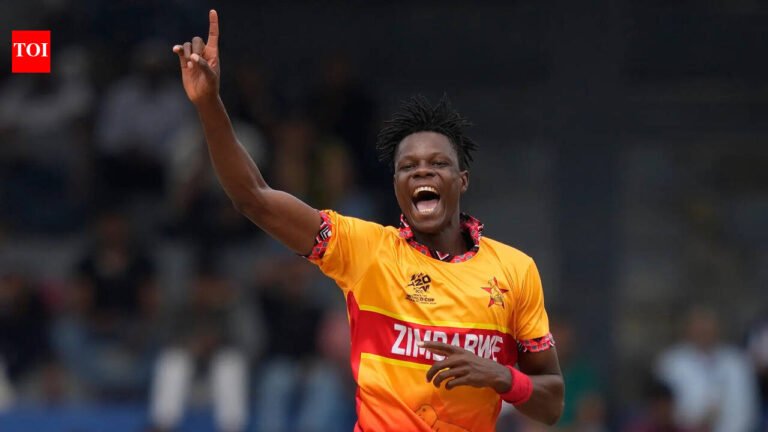
Blessings from Zimbabwe Muzarabani (AP/PTI)

Kolkata Knight Riders add Zimbabwean fast bowler Blessings to Muzarabani They will participate in the upcoming 2026 Indian Premier League season.The team confirmed the signing on Friday as they look to bolster their attacking rhythm ahead of the new season. Muzarabani is a tall right-arm fast bowler at 6 feet 8 inches who is known for his steep bounces and picking up wickets at crucial stages of the innings.The Zimbabwe international brings a wealth of experience in T20 cricket. In over 80 T20 internationals, he took 90 wickets at an average of around 21 and his best bowling figures were 3 for 8. His performances in international cricket and various franchise leagues have made him one of Zimbabwe’s leading fast bowlers in the format.Muzarabani also performed well in the recently concluded ICC Men’s T20 World Cup. The pacer finished among the top four wicket-takers in the tournament, taking 13 wickets in just six games and played a key role in helping Zimbabwe reach the Super Eight stage.The Zimbabwe pacer is scheduled to arrive in Kolkata on March 17 and is ready to join the team ahead of the match.Kolkata Knight Riders Riders – First 4 matches of Indian Premier League 2026:

date match site time
March 29 Mumbai Indians vs Kolkata Knight Riders mumbai 7:30pm
April 2 Kolkata Knight Riders vs Sunrisers Hyderabad historical results calcutta 7:30pm
April 6 Kolkata Knight Riders vs Kings XI Punjab calcutta 7:30pm
April 9 Kolkata Knight Riders vs Lucknow Supergiants calcutta 7:30pm

Banner insert

‘Certainly not conducive to peace’: Zelensky says easing US oil sanctions on Russian oil could cost Moscow $10bn in war costs

0

“当然无助于和平”:泽伦斯基表示美国放松对俄罗斯石油制裁可能会给莫斯科带来100亿美元的战争费用

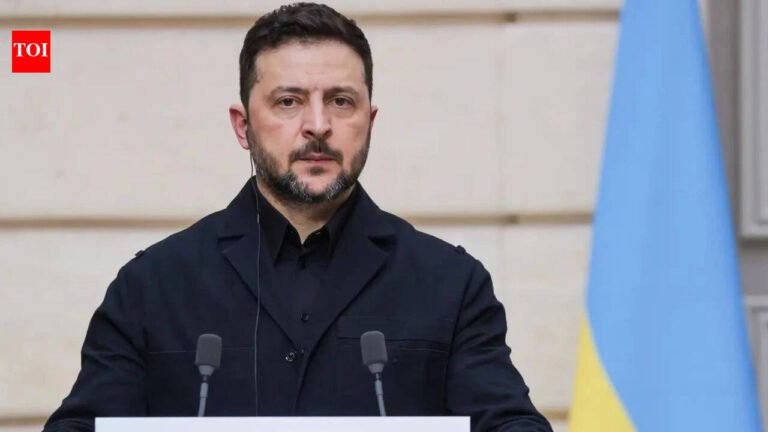
File photo: Ukrainian President Zelensky (Photo source: Associated Press)

Ukrainian President Volodymyr Zelensky said on Friday that the United States’ decision to temporarily ease sanctions on Russian oil sales could bring Moscow about $10 billion in additional revenue, warning that the move would directly undermine efforts to end Ukraine’s war.According to Agence France-Presse, Zelensky and French President Macron said at a press conference in Paris that “this concession from the United States alone will provide Russia with approximately $10 billion in war funds. This will certainly not help peace.”Zelensky’s comments came after Washington announced a 30-day license to allow countries to buy Russian oil and petroleum products that have been stranded at sea, a measure the United States said was aimed at cooling global energy prices that have soared after the Iran war.

Zelensky and Macron oppose U.S. move

Macron backed Kiev’s concerns, saying Russia would be “wrong” if it thought conflict in the Middle East would reduce international pressure on Moscow.“Today, Russia may have thought that a war with Iran would give it some breathing room. That would be wrong,” Macron told a joint news conference.He added that G7 leaders had made clear earlier this week that higher oil prices “should under no circumstances lead us to reconsider our sanctions policy against Russia.”The French leader’s comments reflected growing unease in Europe that a temporary lifting of sanctions could strengthen Russian President Vladimir Putin at a time when oil prices are rising due to the crisis in the Middle East.

U.S. says exemptions are temporary, aimed at calming markets

The U.S. Treasury Department issued a 30-day license, valid until April 11, for the delivery and sale of Russian crude oil and petroleum products that had been shipped as of March 12.U.S. Treasury Secretary Scott Bessant said the short-term move was aimed at “stabilizing global energy markets” and “expanding the global reach of existing supplies” after oil prices soared above $100 a barrel following the Iran war.Washington said the move would not bring significant economic benefits to the Russian government, Reuters reported. Prior to this, the United States issued a waiver specifically for India on March 5, allowing India to purchase Russian oil that had been stranded at sea.The easing of sanctions comes as the United States and the International Energy Agency also move to release large amounts of emergency oil stockpiles to curb soaring oil prices.

Paris talks focus on pressure on Russia

Zelensky’s 12th visit to France since Russia’s full-scale invasion of France in 2022 is aimed at increasing pressure on Russia, especially against Moscow’s so-called “shadow fleet” of oil tankers used to transport oil in violation of sanctions.The Paris talks are also overshadowed by concerns that war in the Middle East has undermined U.S.-brokered peace talks between Kiev and Moscow.German Chancellor Friedrich Mertz also criticized the U.S. move on Friday, saying “relaxing sanctions now would be a mistake for whatever reason,” AFP reported.The Kremlin, meanwhile, said the Paris meeting would hinder the peace process and called attempts to pressure Russia “ridiculous.”

Wider war and new battlefield pressures

The debate over sanctions comes as the war in Ukraine continues to intensify. A Russian attack in eastern Ukraine on Friday killed three people on a bus near Kupiansk, where Russian troops were trying to regain ground.Zelenskiy’s visit comes amid new political friction in Europe, with Hungary blocking a key EU loan package of 90 billion euros for Ukraine and a new round of sanctions on Russia.The dispute is partly related to the damaged Druzhba pipeline, which supplies Russian oil to Hungary and Slovakia, and which Kyiv said was affected by a Russian attack earlier this year.The temporary U.S. oil exemption, announced against a backdrop of soaring global energy prices and disruptions in the Strait of Hormuz, thus opens up new fault lines between Washington and its European allies, even as Kyiv warns it could exacerbate a war the West says it wants to end.

“Some of the actions have been proven to be inappropriate”: Oppn proposes impeachment of CEC Gyanesh Kumar; 193 MPs sign notice

0

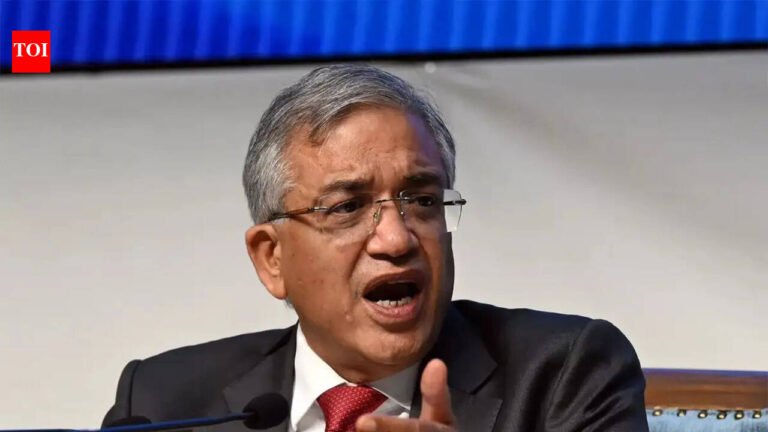
CEC Gyanesh Kumar (file photo)

New Delhi: The opposition on Friday filed notices in the Lok Sabha and the Rajya Sabha seeking the removal of Chief Election Commissioner (CEC) Gyanesh Kumar. They claimed there had been “favoritism” in favor of a particular political party and cited six other “allegations”.According to sources, the charges are also related to his handling of electoral roll revision, first in Bihar ahead of the assembly elections due in November 2025 and later in other states, some of which are poll-bound. He was also accused of “inappropriate conduct”.

Gyanesh Kumar under criticism: Opposition ousts Chief Election Commissioner after SIR controversy

The notification was spearheaded by the Trinamool Congress (TMC), which governs West Bengal, where assembly elections are expected to be held in April-May. The notice was signed by members of the India Bloc party, the Congress-led national opposition, as well as MPs from the Aam Aadmi Party, although the party is no longer part of the alliance.

polling

Should the Chief Electoral Commissioner be removed from office if he is proven guilty of misconduct?

A total of 193 MPs signed the notification, including 130 from the Lok Sabha and 63 from the House of Federation. Under the rules, at least 100 members of the Lok Sabha must sign a notice seeking the removal of the Central Election Commission, while the required number in the House of Federation is 50.Kumar joined the Election Commission (ECI) in April 2024 and became a member of the Central Election Commission in February last year. Opposition parties have repeatedly accused Kumar of “helping” the ruling Bharatiya Janata Party, especially over the ongoing Special Intensive Revision (SIR) of electoral rolls, which they claim could benefit the ruling party at the centre.Concerns have been raised specifically over the SIR exercise in West Bengal, with TMC supremo and West Bengal Chief Minister Mamata Banerjee accusing the ECI of “deleting” genuine voters.The process of deleting CECThis is the first time a notice of impeachment has been filed against the CEC.Under Article 324(5) of the Constitution, the procedure for removing a poll chief is similar to that for removing a Supreme Court or High Court judge, meaning impeachment can only take place where misconduct or incapacity has been proven.Such motions can be made in either House of Parliament and must be passed by a special majority – a majority of all members of the House and a two-thirds majority of those present and voting.After the motion is passed by the House of Representatives and the Senate, a committee will be formed by the Speaker of the House of Commons and the Chairman of the House of Federation.The panel will consist of the Chief Justice of India (CJI) or a judge of the Supreme Court, the chief justice of one of the 25 high courts and a “distinguished jurist”.The CEC will also have the opportunity to speak before the committee.Impeachment discussions will begin once the committee submits its report.(with PTI input)

‘The president wants you soon’: Treasury Secretary Scott Bessant exits live broadcast; viewers say his voice ‘shakes’ – Watch

0

'The president wants you soon': Treasury Secretary Scott Bessant exits live broadcast; viewers say his voice 'shakes' - Watch

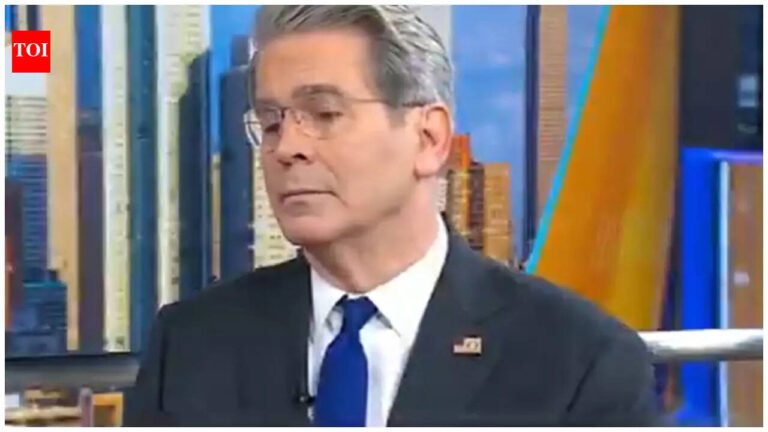
U.S. Treasury Secretary Scott Bessant abruptly exited the live interview after being informed of the news Donald Trump Want to see him “right away”. Bessant was speaking live on Sky News when the interview was suddenly interrupted and he had to leave the scene. He returned to the show nearly two hours later to continue the discussion. During the resumption of broadcasts, host Wilfred Frost said it was the first time he had seen a live interview interrupted midway through, and asked if the interruption meant there was pressure on President Trump. In response to the question, Bessant dismissed the suggestion. “No, the president is in a good mood. Iran’s mission is progressing well beyond plan,” he said. Bessant added that he has full confidence in government leadership handling the situation. “I have to tell you, Wilf, I have a teenager who is considering military service. I can give this team the highest praise,” he said. “From President Trump to the chairman of the Joint Chiefs of Staff to the secretary of war, I would say I would trust my children’s lives in their hands,” Bessant added.As clips of the interview that had been taken down went viral, some users on “I’ve never seen him so visibly shaken,” one user said onOne user said, “When he came back, his voice was visibly shaking.”

Evening News Report: Govt urges calm on LPG supplies; Oman attack kills 2 Indians, injures 10

0

  • The government is urging citizens not to panic buy liquefied petroleum gas as tensions in West Asia disrupt global energy routes and raise supply concerns.
  • US President Donald Trump has claimed that Iran is “about to surrender”, escalating his rhetoric as conflict in the Middle East intensifies.
  • The MEA confirmed that two Indian nationals were killed and 10 others injured in an attack in Sohar, Oman.
  • A US KC-135 tanker crashed in western Iraq during the Middle East conflict, killing four crew members.
  • The BCCI has said it has no authority to intervene after the Sunrisers signed Pakistan spinner Abrar Ahmed in the hundred.

Here are the top 5 stories of the day

Government urges calm over LPG supplies amid Hormuz tensions

The government asked consumers not to queue outside liquefied petroleum gas dealers or panic-buy despite concerns about supply disruptions due to the crisis in the Strait of Hormuz. Domestic LPG production has increased by 30% since March 5 and no dealers have reported supply depletion so far, officials said. Authorities added that refineries were operating at full capacity while action was being taken to combat hoarding and black marketing. Read more

Trump claims Iran is ‘on the verge of surrender’ in escalating conflict

U.S. President Donald Trump told G7 leaders that Iran is “about to surrender,” according to officials familiar with the matter. The comments come as Washington continues its military campaign against Iran, with missile and drone attacks escalating tensions in the region. The U.S. military also said the USS Abraham Lincoln aircraft carrier strike group continues to support ongoing operations in conflict zones. Read more

Attack in Oman’s Sohar city leaves two Indians dead and ten others injured

Two Indian nationals were killed and ten others injured in an attack in the Omani city of Sohar, Oman’s foreign ministry said. Additional Secretary (Gulf) Aseem R Mahajan confirmed that five injured Indians have been discharged from hospital while five others are undergoing treatment at local hospitals. The Indian Mission in Oman is coordinating with local authorities and relevant companies to assist those affected. Read more

Four US aircrew killed in crash after refueling in Iraq

The U.S. Central Command confirmed that a U.S. KC-135 tanker plane crashed in western Iraq, killing four of the six crew members on board. The U.S. military said the circumstances of the crash were under investigation but ruled out the possibility of a crossfire between enemy or friendly forces. The incident marked another aircraft loss during the conflict in the Middle East. Read more

BCCI says it cannot intervene after Sunrisers sign Abrar Ahmed

The BCCI has clarified that it cannot intervene in the controversy over the Sunrisers signing of Pakistan spinner Abrar Ahmed in the hundred. Vice-President Rajiv Shukla said the league was being played overseas and therefore did not fall under the jurisdiction of the board. The signing sparked criticism on social media, but the team has yet to issue an official statement. Read more

Michigan synagogue shooter Ayman Mohamed Ghazali shared photos of relatives killed in Israeli attack before attack

0

Michigan synagogue shooter Ayman Mohamed Ghazali shared photos of relatives killed in Israeli attack before attack

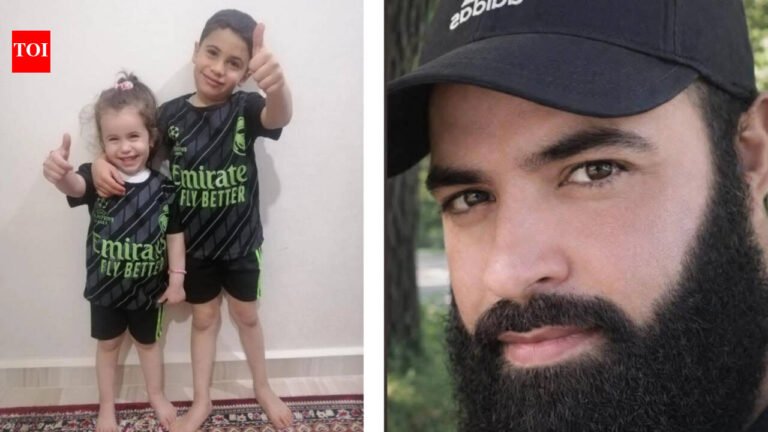
A man attacked a synagogue in Michigan and was shot to death after the incident. Investigators said he shared photos of children killed in Israeli airstrikes shortly before the attack.The attacker, identified as Ayman Mohamad Ghazali, drove a car into the Israeli temple on Thursday. After he attempted to carry out the attack, synagogue security guards confronted him and opened fire. Ansari died on the spot.Authorities said the synagogue houses a kindergarten and about 140 children and staff were in the building at the time. No children were injured in the incident.Investigators later examined Ansari’s phone and online activity and found that he had shared images showing children killed in Israeli attacks shortly before the attack. The posts, widely shared on messaging platforms, appeared to reference casualties from recent Israeli military operations in the Middle East.Ayman Mohamed Ghazali comes from Mashgara, a small town in Lebanon’s Bekaa Valley. The official said Israeli airstrikes killed his two adult brothers, as well as his niece and nephew, Sky News reported.Law enforcement officials also said Ansari recently lost several relatives in Israeli air strikes in Lebanon. Those deaths may have contributed to his actions, according to investigators, but authorities said the full motive remains under investigation.Following the incident, police sealed off the synagogue and searched Ansari’s home as part of the investigation.Jewish institutions in parts of Michigan increased security following the attack. The presence of security personnel inside the synagogue prevented the situation from becoming more serious.Ghazali is a naturalized U.S. citizen born in Lebanon who entered the United States on May 20, 2011 as the spouse of a U.S. citizen on an IR-1 immigrant visa. He applied for citizenship in October 2015 and was naturalized in February 2016. Ghazali lives in Dearborn Heights, Michigan, and works locally, including in the restaurant industry.

Iran-Israel-US 'triangle trap': Decoding India's stance amid rising Middle East tensions

0

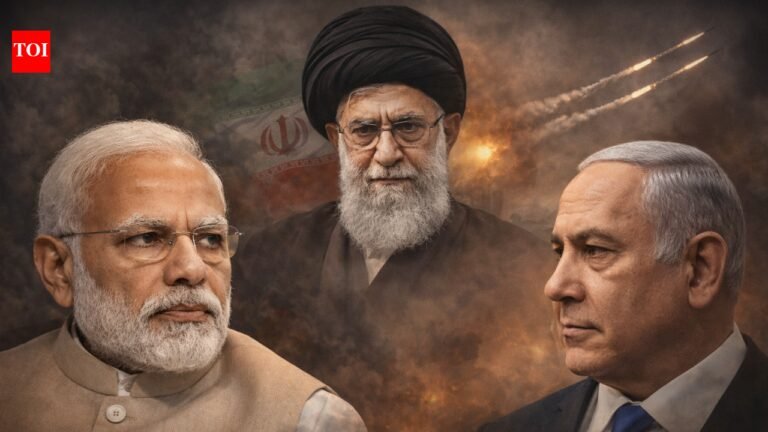
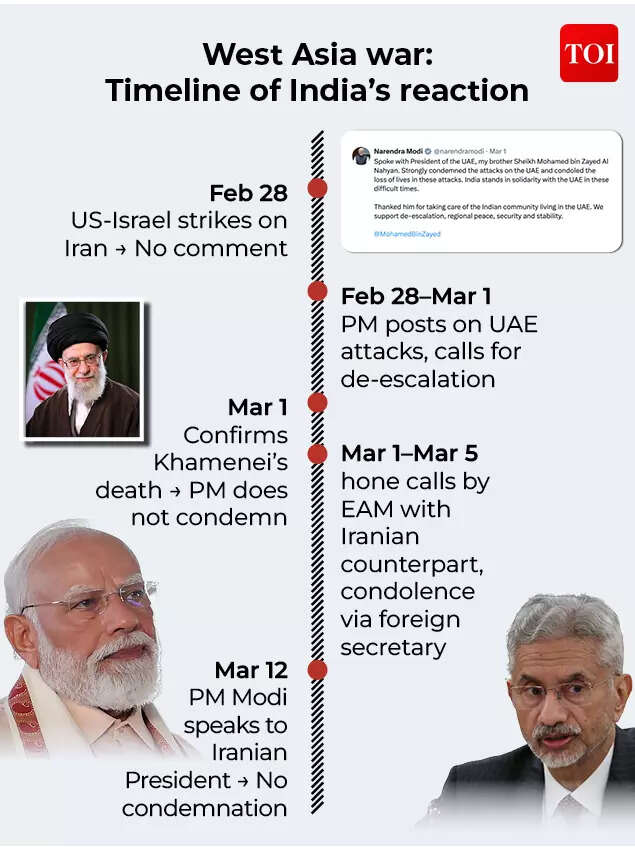
Is New Delhi recalibrating its approach to West Asia? The question has resurfaced after India’s notably cautious response to the latest escalation involving Iran. When the United States and Israel launched strikes on Iran on February 28, triggering retaliatory missile attacks across the region, several global powers reacted swiftly. India, however, avoided taking a clear position on Tehran.In the crucial hours after the escalation, Prime Minister Narendra Modi did not directly comment on Iran. His first response came nearly a day later and focused instead on attacks on the United Arab Emirates. Subsequent conversations with leaders across the Gulf emphasised respect for their territorial integrity and the need for de-escalation, but again avoided directly naming Iran. Even after the death of Iran’s Supreme Leader Ali Khamenei was confirmed, New Delhi stopped short of condemning the killing, offering only a condolence gesture days later.Experts describe this cautious approach as deliberate and calculated. “India’s policy has been very careful. Its interests are far more aligned with the US than Iran. That explains why it condoled and did not condemn Khamenei’s killing, even though it was a clear violation of international law,” said JNU professor Rajan Kumar. He noted that even though both India and Iran are BRICS members, New Delhi chose restraint over confrontation, highlighting the delicate balancing act in play.

How (When) India reacted on Iran war

28 Feb: US-Israel attack Iran

The United States and Israel launch strikes on Iran amid negotiations between Washington and Tehran over its nuclear programme.Iran retaliates with missile and air attacks across the region, targeting military sites in Israel as well as US bases in Bahrain, Saudi Arabia, Qatar, the United Arab Emirates and Iraq.Prime Minister Narendra Modi makes over 15 posts on his social media X after the news of the war breaks out, but none of it on Iran situation.

March 1: Khamenei’s death confirmed

By midnight early March 1, the news that Iran Supreme Leader Ayatollah Khamenei is killed in the strikes gets confirmed.India, again, sees no reaction on breach of Iran’s sovereignty or the killing of its Supreme Leader Khamenei, even as its long-standing friend Russia is quick to condemn it in strong words, with President Vladimir Putin calling it a “cynical violation of law”.The first post by PM Modi comes on March 1, his 25th on his X account, at 11.26pm. The post condemns “attack” on the UAE. The Prime Minister was referring to Iran’s retaliatory strikes on US military bases in UAE, which had led to one death. However, he did not directly name Iran in his post.By midnight, PM Modi makes another post where he informs that he had a conversation with Israeli PM Benjamin Netanyahu, whom he had two days before the war broke out. In the post, the PM again makes no mention of Iran, but calls for “early cessation of hostilities”.In a series of posts by the next day, PM Modi speaks to the leaders of Bahrain, Saudi Arabia, Jordan, Oman, Kuwait, Qatar, condemning any violation of their territorial integrity. The PM was again referring to the strikes on US military bases in these nations by Iran in retaliation. India’s reaction to Khamenei’s death came five days after the incident. Foreign secretary Vikram Misri signed the “condolence” book in the Iranian embassy on behalf of the government. MEA dismissed this “delay” argument saying that the book was signed by India the first day it was opened, which was on March 5. However, MEA’s clarification failed to explain why the government itself took five days after the incident to formally convey its condolences.PM Modi’s reaction to Iran came only on March 12 when he spoke to Iranian president. The wording of the post was clear: “The safety and security of Indian nationals, along with the need for unhindered transit of goods and energy, remain India’s top priorities.” No condemnation or solidarity.

-

India did not condemn the death, neither did the PM or EAM make any direct comments on the killing. Then what explains this refusal to condemn the killing?Experts have termed it a “very cautious and very careful” move.“India’s policy has been very cautious and very careful. Its interests are much more aligned with US than Iran. Maybe that’s why it condoled and not condemned Khameinei’s death, while it was Khamenei’s death which was actually a violation of international law, said JNU professor Rajan Kumar, an international relations expert.“In fact, both Iran and India are members of Brics, still India chose not to condemn the attack,” he said.

Why historical Iran ties make current restraint notable

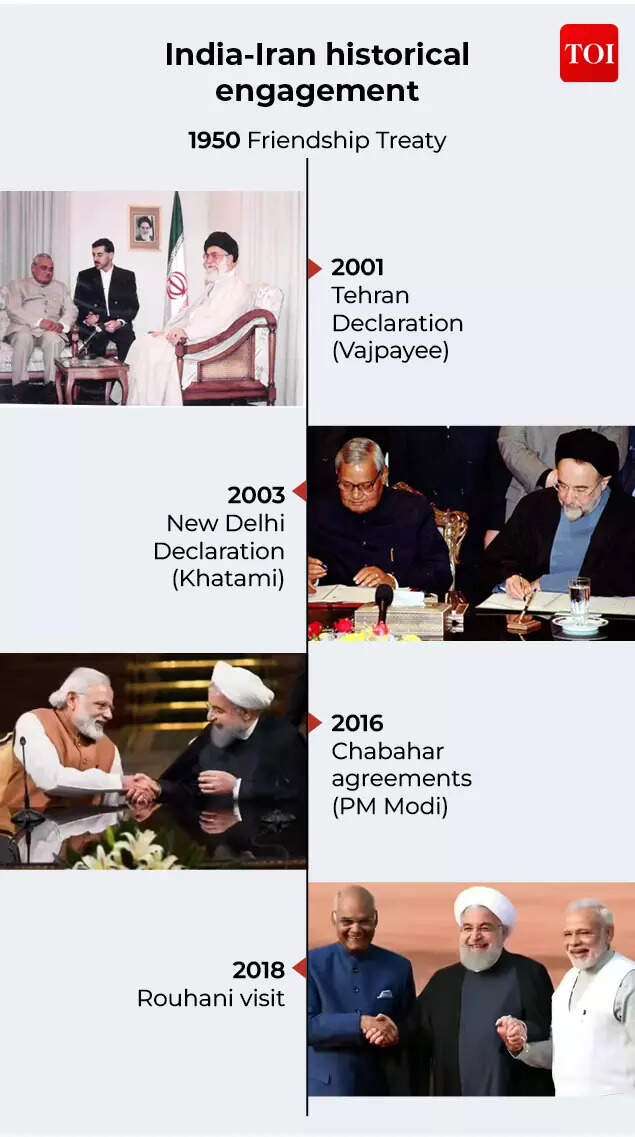
India’s historically close engagement with Iran makes this caution notable. The two countries share civilisational links stretching back centuries, which have shaped a modern partnership built on trade, culture and strategic cooperation. Diplomatic ties were formalised with a Friendship Treaty in 1950, and successive governments in New Delhi invested in maintaining strong political engagement with Tehran.Leaders from the Bharatiya Janata Party (BJP) were also central to strengthening these ties in the past. Prime Minister Atal Bihari Vajpayee’s visit to Iran in 2001 led to the signing of the Tehran Declaration, marking a new phase of strategic cooperation. This was followed by Iranian President Seyyed Mohammad Khatami’s visit to India in 2003 and the New Delhi Declaration, which expanded political and economic engagement between the two countries.Under Prime Minister Narendra Modi, the relationship continued to see high-level outreach. Modi’s 2016 visit to Iran resulted in multiple agreements and the trilateral transit pact with Afghanistan centred on the development of Chabahar Port, a project seen as strategically important for India’s connectivity to Central Asia. Iranian President Hassan Rouhani’s visit to India in 2018 further reinforced cooperation in connectivity and trade.

-

So, what explains this shift away from Iran?

Analysts point to a mix of immediate security concerns and long-term economic dependencies that have pushed New Delhi to adopt a more cautious posture in the current West Asia crisis.A major factor is the safety of the large Indian diaspora across the Gulf. References to the Indian community appeared consistently in Prime Minister Modi’s statements on the unfolding conflict. There are over one crore Indians who work and live in Gulf nations, external affairs minister S Jaishankar informed the Parliament on Monday. This, he said, makes the West Asia war even more concerning for India. He informed that India has already lost two of its mariners, with one missing in the current situation. “We are committed to supporting the Indian community at this time,” Jaishankar said in the Parliament.Moreover, India is significantly dependent on Gulf supplies, especially in energy sector. The key economic concerns include:Oil: India exports nearly 40% of crude oil from Gulf. In 2025, it sourced around $70 billion crude oil and petroleum products from West Asia.LNG needs: The country is heavily dependent on West Asia for LNG requirements. It sourced liquefied natural gas or LNG worth $9.2 billion from West Asia, which is around 68.4% of its total LNG imports.LPG: LPG imports from West Asia were $13.9 billion in 2025, making up 46.9 % of India’s total LPG purchases. Cities such as Bengaluru, Mumbai and Chennai are seeing disruptions in commercial LPG supplies as authorities prioritise domestic cooking gas for households.

Recent closeness towards Israel

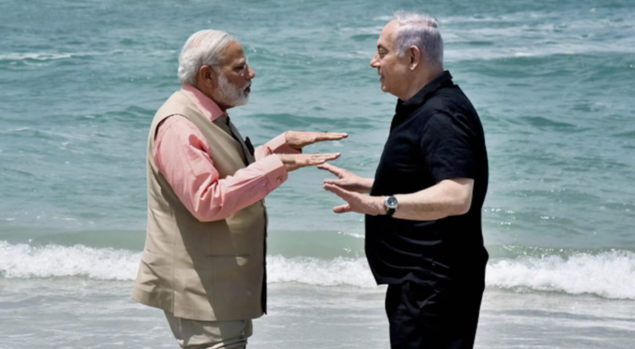
For decades after independence, India’s policy on Israel and Palestine was cautious. New Delhi supported the Palestinian cause and often voted with Arab countries in international forums, even voting against Israel’s admission to the United Nations. At the same time, India recognised Israel in 1950 and maintained limited contact while presenting itself as neutral. India later became the first non-Arab country to recognise the State of Palestine in 1988 and established diplomatic relations with Israel in 1992 after consultations with Yasser Arafat, leader of the Palestine Liberation Organization.Relations with Israel began expanding gradually after the Cold War, particularly in defence and trade. However, earlier governments often kept the relationship relatively low-key to avoid upsetting Arab partners or appearing to move away from India’s traditional support for the Palestinian cause.A more visible shift came after Narendra Modi became prime minister in 2014. Under his government, India’s ties with Israel grew more open and politically prominent. Defence cooperation increased and bilateral trade expanded, with both countries emphasising shared security concerns and technological cooperation.In 2017, PM Modi became the first Indian prime minister to visit Israel, marking a symbolic turning point in the relationship. During the trip, he was warmly received by Israeli prime minister Benjamin Netanyahu, and images of the two leaders walking together on Ogla beach became widely circulated, highlighting the new warmth in ties.

-

PM Modi’s 2017 Israel visit: PM with Israeli counterpart at Ogla beachThe closeness between the two governments has continued in recent years to a point where PM Modi was in Israel merely two days before Israel attacked Iran with the US.Referring to Israel as the “fatherland” and India as the “motherland”, PM Modi’s visit came at a time when Israel faced intense international criticism over its military campaign in Gaza, which has killed more than 60,000 Palestinians according to various estimates. “The timing of it was clearly wrong. The policy makers did not expect that to happen very soon. That sent a very wrong optics from a balanced policy perspective,” professor Rajan said.The war has also drawn renewed scrutiny of Netanyahu’s leadership, with critics and some international legal bodies describing him as responsible for alleged war crimes.The shift under PM Modi reflects both ideological and strategic factors. The Bharatiya Janata Party has long been seen as more openly supportive of Israel than previous governments. At the same time, India sees Israel as a key partner in defence technology, intelligence cooperation and innovation. As a result, India’s West Asia policy today attempts to balance closer ties with Israel while continuing to express support for Palestinian statehood.

-

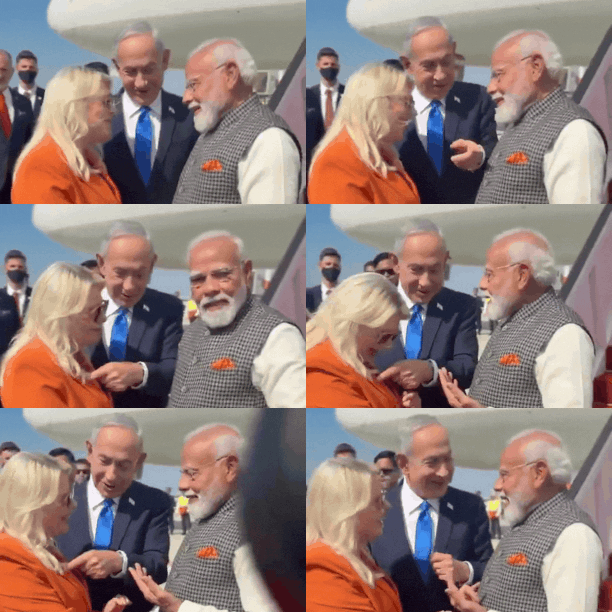
PM Modi’s 2026 Israel visit: Netanyahu pointing out ‘saffron match’ between PM Modi and SaraHowever, professor Rajan said that India’s policy is not “completely determined by Israel”, rather, currently, it is more concerned about “offending” the US.“India’s policy is not completely determined by Israel. Yes, Israel is an important partner but in the past also we have pursued our ties with Israel without damaging our relations with other countries,” he said.“India is primarily concerned about offending the US. At this time, it would not like to offend the Trump administration. And that’s exactly why it is not issuing any statements condemning of killing of Khamenei,” he said.

So, is there a shift?

Rajan Kumar, a professor at JNU, who teaches international relations said that currently, there is no shift in India’s policy towards the Middle East. Rather, he said, that the shift might happen after the war is over.“At the moment, I don’t see any shift happening. It is a continuation of policy where India’s preferred partner was United States and Israel. But at the same time trade ties were linked with many other countries in the region,” he said.“So, a shift is not apparent at the moment, but it might happen after the outcome of the event. Because if India thinks that Iran remains an important part and if the regime survives, it will pursue a different strategy. But if US wins, which is very unlikely, if the regime survives, resistance persists, it will have a different strategy. Now, India is pursuing a wait-and-watch policy in West Asia,” he added.However, he added that there was a need for India to go for a policy of multipolarity, rather than unipolarity under the influence of Israel and the US.Experts argue that India should embrace multipolarity in West Asia, rather than a unipolar tilt toward Israel and the US. While Israel is a valuable partner, destabilizing relationships with other West Asian countries could jeopardize India’s economic and security interests in the region.“India should pursue multipolarity, rather unipolarity under the influence of Israel and US in West Asia. Although we have good ties with Israel, we cannot de-stabilise our ties with other West Asian countries, for the reason that our economic and security interests are aligned there,” he said.