World’s ‘worst’ FIFA football team that lost every match, yet almost qualified for 2026 World Cup | International Sports News

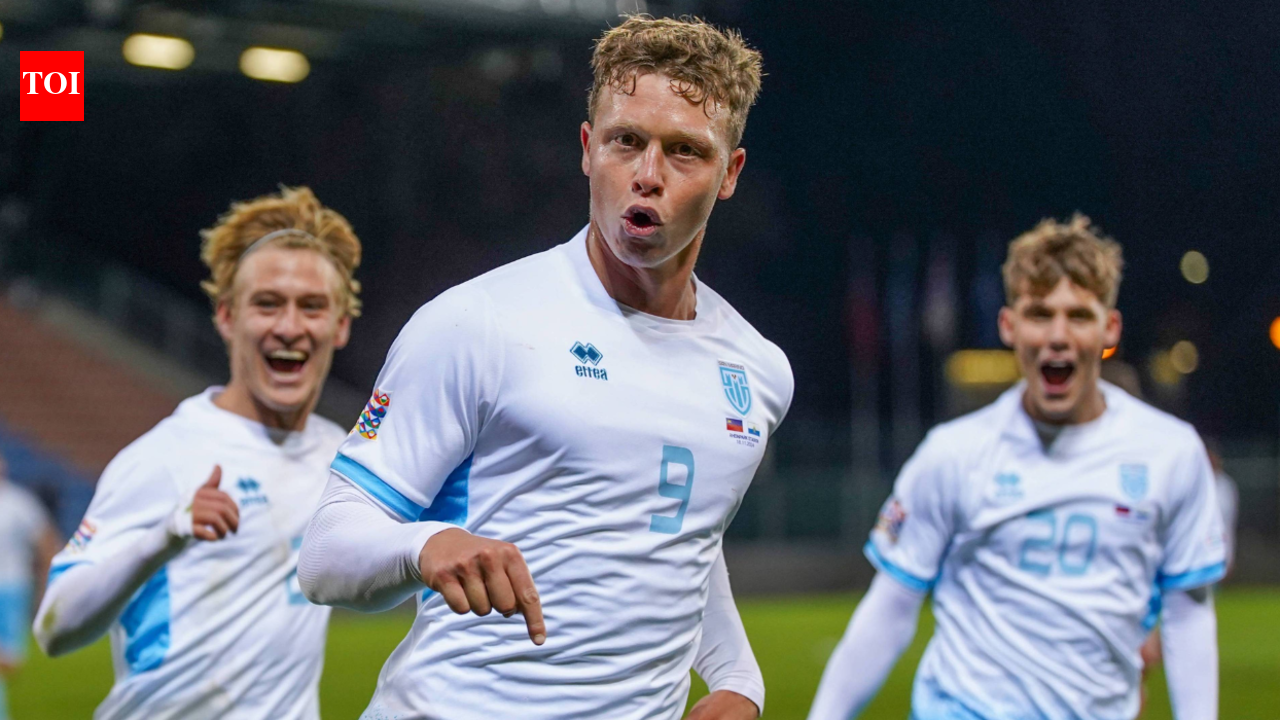
San Marino’s men’s team sits last in the FIFA rankings, 211th in the world, but that label only tells part of the story. La Serenissima, “The Most Serene,” a nickname used for both the national side and the republic, is drawn from a country of just over 30,000 people, where most players are not full-time professionals. Some work in offices, others in factories or the bar trade, some in jobs tied to olive oil or farm lighting, and a few are still students. They fit training around all of that, then line up against the likes of England, Spain and Germany, often carrying the tag no team wants: ‘The worst in international football.’ Since their first match in 1990, San Marino has faced an uphill battle, with over 196 matches lost out of the 200+ played and over 800 goals conceded.It stands in sharp contrasta to the players they face, many of whom operate in established leagues such as the Premier League or La Liga, where football is a full-time profession built on multi-million-pound contracts, global exposure, and commercial deals that bring in significant income off the pitch as well.And still, they keep turning up. In 2024, they beat Liechtenstein twice in a matter of weeks, including a 3–1 away win that secured promotion to Nations League C and sparked celebrations across the country. For a moment, it even stirred faint World Cup qualifying hopes, before reality returned in the group stage, where they went on to lose all their matches.
How San Marino can play the giants at all
And if you are wondering how a team built like this keeps ending up on the same pitch as Europe’s biggest sides, the answer sits in the way football is organised on the continent.San Marino are a full member of UEFA, which places them in the same World Cup qualifying system as every other European nation, from France and Spain to the smallest sides. There are no preliminary rounds to separate teams by level and no alternative pathway based on ranking. All 55 teams enter the same draw, where they are divided into seeding pots based on the FIFA rankings, with one team from each pot placed into every group.Each group therefore includes one of the top-ranked nations from Pot 1, which means San Marino go into every campaign almost certain to face at least one of Europe’s strongest sides. Over the years, that has meant matches against England, Germany, Spain, France, the Netherlands, Belgium and Italy, players they would usually only see on television.It is also part of the principle behind the system. As a sovereign nation and a full UEFA and FIFA member, San Marino has the same right to compete as any other country, regardless of ranking or resources.
That is very different from parts of Asia, where the AFC system often makes lower-ranked teams, including India, go through early rounds before reaching the main qualifying groups. UEFA does not work that way. San Marino, no matter how low they are ranked, still get to sit in the same draw as the elite, and then the football does the sorting. The same principle applies in UEFA’s other competitions too, including the Nations League, which was created to replace meaningless friendlies with competitive matches between teams of similar level. San Marino play in the lower tiers there, where the opponents are closer to them, and that competition gave them a second route, or at least the possibility of one, toward World Cup qualification.
The nights that stay with them
San Marino know what’s coming when they step onto the pitch against teams built at a completely different level, with deeper squads, full-time professionals and years of infrastructure behind them, and the results over time have reflected that gap. England have played them eight times and won every meeting, with an aggregate score of 54–1, including 10–0 and 8–0 wins, while Germany handed out a 13–0 defeat in 2006, still the heaviest in San Marino’s history, and the Netherlands recorded an 11–0 win in 2011. Fixtures against Spain, France, Denmark and Turkey have followed a similar pattern, where the difference tends to show over ninety minutes. Within those games, though, there have still been moments that linger. In November 1993, during a World Cup qualifier against England in Bologna, San Marino scored after just 8.3 seconds, a goal that stood for years as the fastest in international football. England went on to win 7–1, as expected, yet that opening sequence, a small team finding a way through almost immediately, has remained one of the most replayed and talked-about moments in their history. There have been others too. In March 2005, during a World Cup qualifier, San Marino went into half-time level at 1–1 against Belgium before the game shifted in the second half and finished 2–1. The result followed the usual pattern, but that half, holding their own against a stronger side, is still remembered.
What their most recent World Cup campaign actually looked like
San Marino were placed in UEFA Group H for the 2026 World Cup qualifying campaign, alongside Austria, Bosnia and Herzegovina, Romania and Cyprus. The group ran from March to November 2025 in a home-and-away round robin format, and Austria won it to qualify directly.San Marino finished bottom with zero points from eight matches, losing all eight, scoring two goals and conceding 39, leaving them with a goal difference of minus 37. They lost to every team in the group twice over. Their heaviest defeat came in a 10–0 loss to Austria in October 2025, which reflected the gap when the strongest sides in the group hit their stride.Their two goals both came against Romania. Their most competitive performance came in June 2025, when they lost 1-0 to Bosnia and Herzegovina, a result that showed they could stay organised for long stretches even when they still came away empty-handed.Bosnia eventually reached the World Cup too, after going through the play-offs and beating Italy in the final on penalties. That meant two teams from the group made it to North America, while San Marino were left with the same basic reality they have lived with for years: they compete, they absorb, they improve slowly, and they usually come up short.And yet, for a while, they were not entirely out of the World Cup conversation. There was still a slim, largely theoretical backdoor route into the play-offs despite finishing bottom of their group, a small opening that briefly kept the idea alive, however brief.
The Nations League “backdoor” and the road that almost opened
The “backdoor” route San Marino briefly had for the 2026 World Cup came through the Nations League. UEFA’s Nations League is split into four divisions, with Leagues A, B and C made up of 16 teams each and League D containing six of the smallest sides. Teams can be promoted or relegated between editions, and the best-performing group winners in the lower leagues can also earn a place in the World Cup play-offs if they do not qualify directly through the ordinary group stage. That is where San Marino became interesting in the 2026 cycle. They won their Nations League group in League D, which was their greatest achievement ever and earned them promotion to League C. For a while, that kept them mathematically alive for the World Cup play-offs, even though they were also getting beaten in their regular qualifying group. The route stayed open only in theory. By November 2025, results elsewhere, including Sweden securing a play-off spot, pushed San Marino below the ranking they needed to hold onto that berth. The path closed there. They had done enough to stay in the conversation for longer than anyone expected, but not enough to take the final step.
The people who make the team
Part of San Marino’s appeal is that the squad still looks like a group of ordinary people who happen to play international football. Historically, the team has been made up of part-time players balancing football with work, studies, and semi-professional club commitments, rather than full-time professionals. During qualification periods they train four or five times a week, increasing the load closer to matches, but outside that window most return to everyday routines. Many play in the domestic San Marino league, others have spells across the border in Italy, and at one stage only two players were fully professional: Mirko Palazzi at Gualdo Tadino in Serie D and goalkeeper Elia Benedettini at Novara in Serie B.
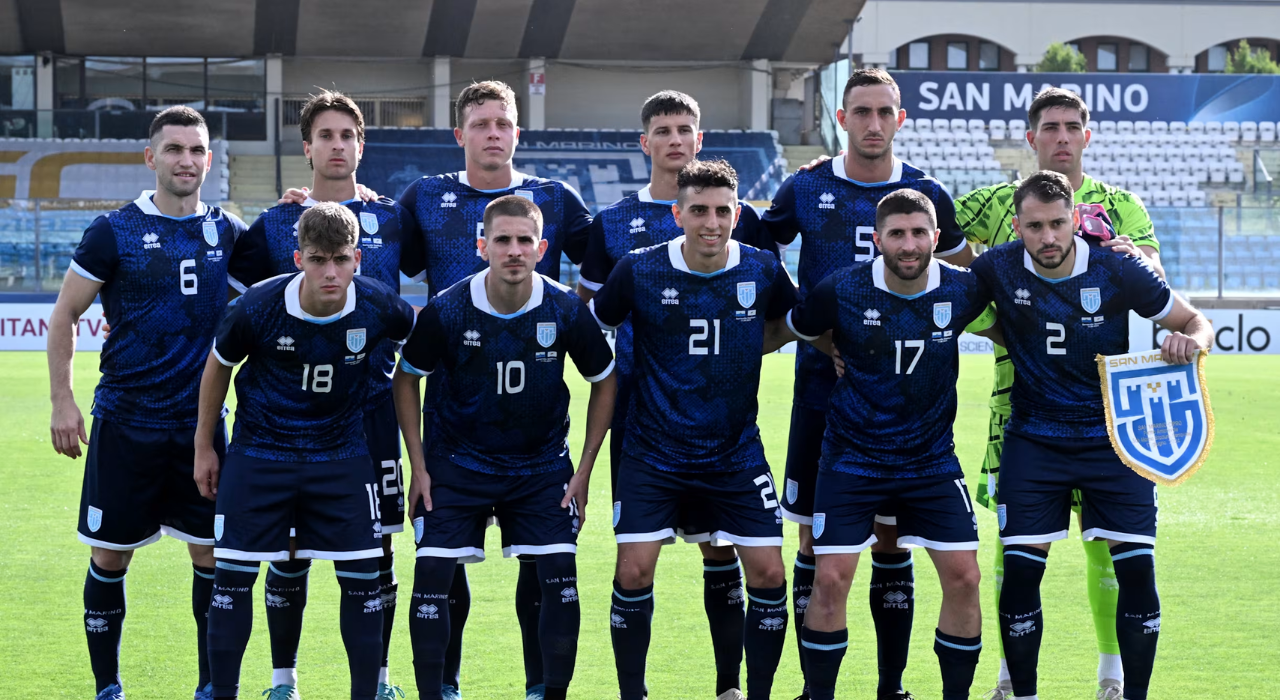
San Marino ended their 20-year long losing streak with a victory against Liechtenstein on 5 September/ Picture by REUTERS/Alberto Lingria
That structure still defines the squad today, even with a stronger presence from the domestic league, which itself feeds into UEFA competition through early qualifying rounds for the Champions League and Europa League. Football remains something fitted around life rather than replacing it, with jobs, shifts, and studies still shaping the rhythm of the week. Players arrive at training after work rather than from professional recovery or tactical sessions. Even the technical staff have day jobs. And yet the group has built a kind of stubborn unity that most national teams would envy. It comes from familiarity as much as circumstance, many have grown up playing together, there are three sets of brothers in the squad, and the core has been formed in the same small footballing environment over years. They know each other’s strengths and weaknesses better than most national teams ever could, which matters when the football gets difficult and when they have to pull themselves together after another heavy defeat.
The captain, the former captain, and the culture inside the squad
Two men stand out in the story of the team’s recent years. One is Andy Selva, the former captain, who recently passed the armband to Matteo Vitaioli. Selva is one of the few San Marino players ever to make it professionally at Serie A level, and that experience has made him important in a different way, because he can explain to younger players what it feels like to face opponents they usually only see on television. He has now shifted his focus to coaching youth football in San Marino, believing that better coaching at younger ages could produce more Serie A players in the future. Vitaioli is the current captain, a veteran forward and the nation’s record appearance holder, and he works as a graphic designer. He became San Marino’s youngest ever player at 17 in 2007, and by the time of the Liechtenstein win he was 35, with 103 caps, 97 losses, five draws and, finally, one win after a five-minute cameo at the end of the match.That victory mattered because it was not just another result in isolation. It came during a breakthrough period between September and November, when San Marino picked up their first ever competitive win and then followed it with a second, including their first away victory. They then produced their standout moment in Liechtenstein with a 3–1 comeback win. For a country this small, those results landed like a national event. Vitaioli told Sky Sports, still emotional almost a month later, “It’s a beautiful emotion after all those years of defeats,” “We were welcomed as heroes in San Marino. It was incredible.” That reaction said as much about the team’s place in the country as any ranking could.
A different way of measuring success
San Marino have played international football since 1990, facing almost every major European side along the way, and while the record is stark across those decades with only a handful of wins, most of them against Liechtenstein, including a 1–0 friendly in 2004 and another 1–0 victory twenty years later in a Nations League match, it only tells part of the story. What defines them sits elsewhere, in the fact that a squad made up largely of part-time players continues to compete in the same qualifying system as the biggest nations in the world, training after work, turning up for matches where the outcome is often expected, and still treating every rare positive result as something like a national event.It is the kind of quiet underdog story football has always carried at its edges, where the game remains open to everyone, and where, despite their terrible track record, they keep competing year after year. They are still 211th in the world. They did not qualify for the 2026 World Cup. The losses will keep coming. But San Marino’s place in the game has never really been about where they finish. It is about the fact that they are there at all.