
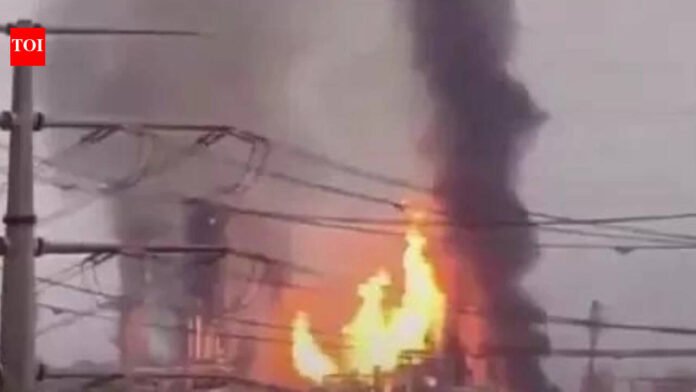
Iran stepped up attacks on oil and gas facilities in the Gulf on Thursday, raising the risk of a war that would shock the global economy.The attacks, in retaliation for an Israeli attack on a key Iranian natural gas field, sent fuel prices soaring and threatened to draw Iran’s Arab neighbors directly into the conflict. Tehran’s targeting of energy production further exacerbates global supplies that are under pressure from Iran’s control of the Strait of Hormuz, through which a fifth of the world’s oil is transported.
Iran has targeted energy facilities in Qatar, Saudi Arabia, Kuwait and the United Arab Emirates. The Iranian missile attack also hit an oil refinery in the northern Israeli port city of Haifa.A ship caught fire off the coast of the United Arab Emirates and another was damaged off Qatar, underscoring the dangers faced by ships in the region. Efforts to bypass the strait have also come under pressure: An Iranian drone struck a Saudi Arabian oil refinery in the Red Sea, which the country had hoped to use as an alternative export route.
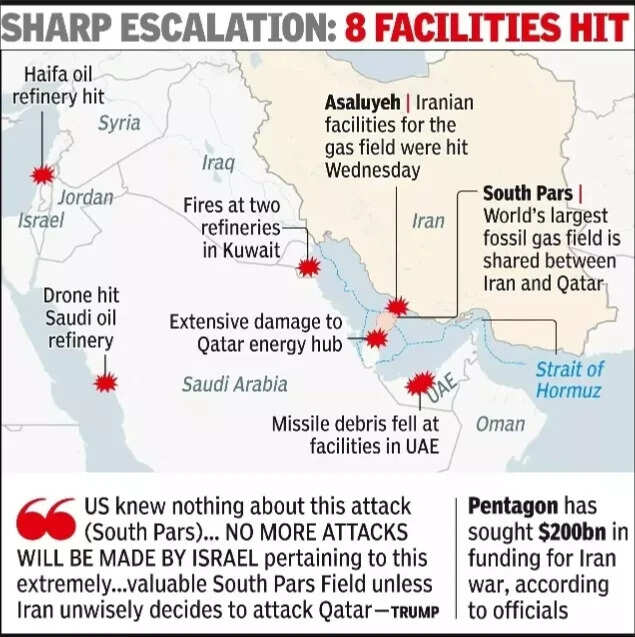
Brent crude, the international standard, surged to $118 a barrel, up more than 60% since Israel and the United States launched war. European natural gas benchmark prices rose 17% on Thursday, doubling in the past month. The United States may lift sanctions on Iranian oil stranded on tankers to help increase global supply and lower prices, Treasury Secretary Scott Bessant said on Thursday.Qatar, Saudi Arabia and the United Arab Emirates condemned the Iranian attack. Arab League Secretary-General Ahmed Aboul Gheit called this a “dangerous escalation.”But Iran shows no sign of backing down. The attacks paralyzed 17% of Qatar’s LNG export capacity, cost an estimated $20 billion in annual revenue and threatened supplies in Europe and Asia, Qatar Energy CEO and Minister of State for Energy told Reuters. Saudi Arabia said its SAMREF refinery in the Red Sea port city of Yanbu had been attacked.Two oil refineries in Kuwait and gas operations in Abu Dhabi were also targeted by Iran, local authorities said. In Israel, Iran has launched more than six waves of attacks targeting much of the country, sending millions of people into shelters. The strike caused damage to the building. An Iranian missile strike hit an oil refinery in Israel’s northern port city of Haifa but did not cause “significant damage,” Israel’s Energy Ministry said on Thursday.In Washington, Defense Secretary Pete Hegseth told reporters that U.S. forces “control Iran’s destiny.” “Iran has the ability to make the right choices,” he said, adding that Tehran “should not target Arab allies, Arab countries in the future to try to inflict pain that they themselves have caused.”Israel said on Thursday it had struck Iranian targets in the Caspian Sea for the first time. Israeli military spokesman Lt. Col. Nadav Shoshani said the attack hit dozens of targets, including ships, shipyards and command centers.The Trump administration has cited various war goals, including degrading Iran’s missile capabilities. Heges hinted on Thursday that more leaders could be targeted, particularly the Islamic Revolutionary Guard Corps and the Basij Forces, whose leaders were killed by Israel earlier this week. “The last job anyone in the world wants right now is a senior leader in the Islamic Revolutionary Guard Corps or the Basij, temporary jobs, all of that,” Heges said.