
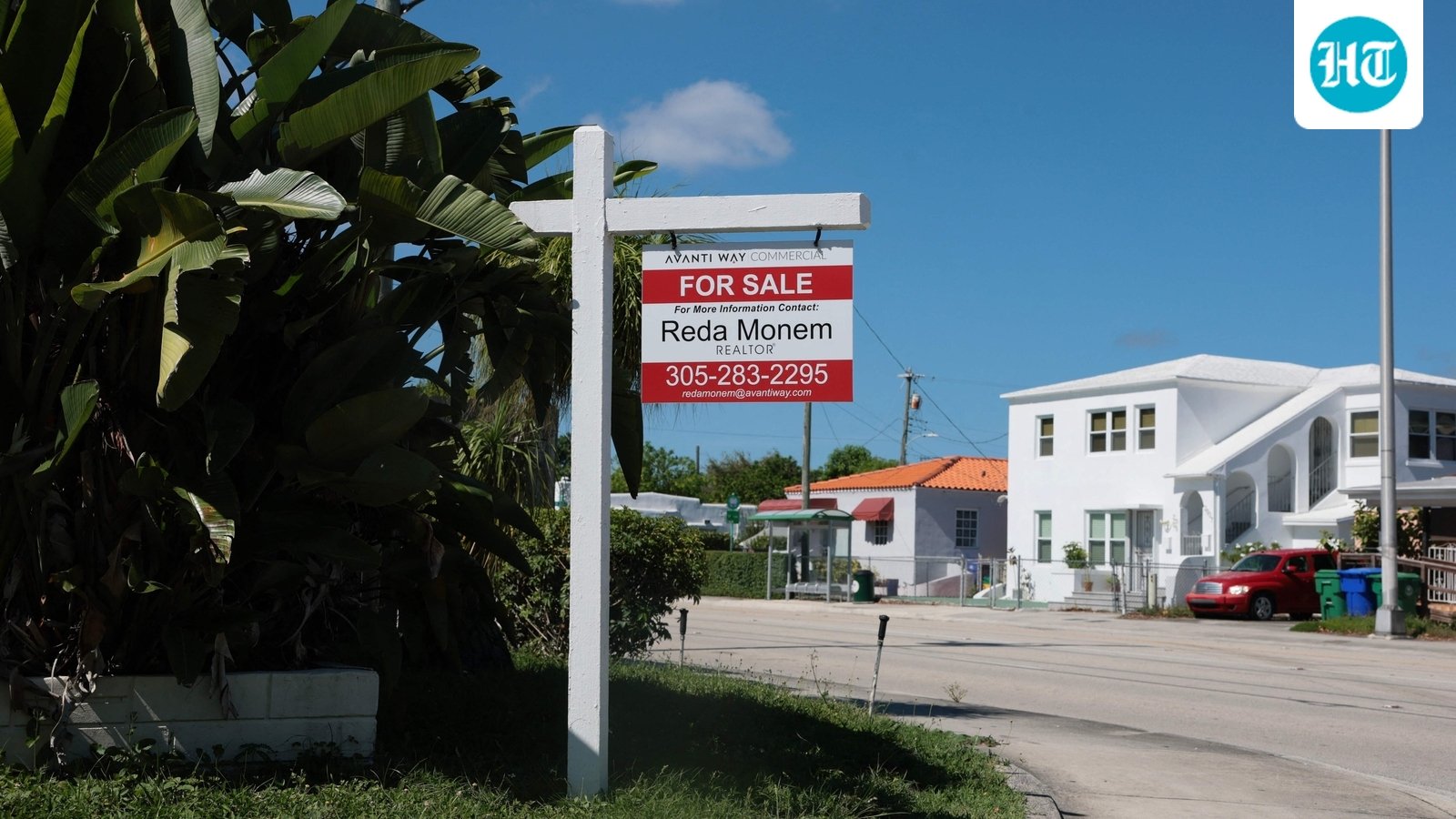
US existing home sales increased in September, but the housing market continued to struggle. Sales rose despite high mortgage rates and rising home prices, which have made buying a house difficult for many young Americans. The National Association of Realtors (NAR) reported the increase on Tuesday.
Home sales rose 1.5% in September to an annual rate of 3.99 million units. This figure is adjusted for seasonal changes and shows how many homes could be sold over a year if the monthly pace continued. Economists polled by Reuters had expected sales to fall to an annual rate of 3.95 million units.
US housing market sees weak sales
The increase in September sales partly reflected a downward revision to August’s figures. August existing home sales were revised to show a 3.2% decline, compared with the 2% drop reported earlier. This means the latest increase came after a weaker month than previously estimated.
Home sales remained below 4 million units for the second consecutive month. The US housing market has struggled since mid-2024, while existing home sales fell 2.2% in September compared with the same month last year, according to Reuters.
High mortgage rates hurt home buyers
High mortgage rates are one of the biggest reasons Americans are struggling to buy homes. Higher borrowing costs increase monthly mortgage payments, making houses less affordable for buyers. Lawrence Yun, chief economist at the NAR, said the weak sales activity was caused by a lack of demand rather than limited supply, adding that higher mortgage rates were the main reason.
The average 30-year fixed mortgage rate climbed to 7.40% last week. This was the highest level since November 2023, according to mortgage finance agency Freddie Mac. The rate was 7.28% in the previous week and has increased by 1.42 percentage points, or 142 basis points, since the end of February.
Also read: Why are Micron, SK Hynix and Samsung stocks falling? China’s CXMT sparks chip sell-off
The US-Israeli war with Iran has contributed to rising mortgage rates. The conflict, which began at the end of February, has added to inflation pressures and pushed up US Treasury yields. Mortgage rates generally move in line with Treasury yields, making home loans more expensive when yields rise.
The Federal Reserve has also raised its benchmark interest rate. In September, the central bank increased its overnight benchmark rate by 25 basis points to a range of 3.75%-4.00%. It was the Fed’s first rate hike in three years, and policymakers indicated that borrowing costs could rise further in the coming months, according to Reuters.
More homes available, but demand remains weak
The supply of existing homes increased to its highest level since November 2019. Housing inventory rose 1.9% in September to 1.60 million units, according to the NAR. Supply was also 4.6% higher than a year earlier, bringing it back to levels seen before the COVID-19 pandemic.
More homes are available, but buyers are not purchasing them quickly enough. At September’s sales pace, it would take 4.8 months to sell the available inventory of existing homes. This was unchanged from August but higher than the 4.5 months recorded a year earlier.
The increase in housing supply does not necessarily mean more sellers are entering the market. Nancy Vanden Houten, lead US economist at Oxford Economics, said the rise was mainly because homes were staying on the market longer. She noted that an increase in supply is unusual in September, when housing activity normally starts slowing in the fall, according to Reuters.
US home prices hit $417,500 record
Home prices continued to rise despite weak demand. The median price of an existing home increased 1.3% from a year earlier to $417,500 in September. This was the highest median price recorded for any September, according to the NAR, highlighting the affordability challenges facing buyers.
Most homes sold in September were priced between $250,000 and $750,000. However, sales trends differed across price ranges. Homes priced at $1 million or more recorded a 4.1% increase in sales compared with a year earlier.
Also read: US bank earnings: JPMorgan, Wells Fargo and Citi show consumers remain resilient despite high rates
Sales of lower-priced homes fell sharply. Homes priced at $100,000 or less and those in the 100,000-250,000 range recorded steep declines. Realtors have pointed to a shortage of starter homes, making it harder for first-time buyers and people with limited budgets to enter the housing market, according to Reuters.
First-time home buyers face affordability problems
First-time buyers made up 31% of existing home sales in September. Their share increased from 30% in August and 30% a year earlier. However, the NAR said first-time buyers need to account for around 40% of sales for the housing market to be considered healthy.
Homes are taking longer to sell, adding to the challenges faced by sellers. The median time a listed property remained on the market increased to 33 days in September, up from 31 days in August. The figure was unchanged compared with September last year.
Foreclosures and other distressed property sales remained a small part of the market. These transactions accounted for 2% of existing home sales in September, unchanged from August. Cash purchases made up 27% of transactions, also unchanged from the previous month but down from 30% a year earlier.
Individual investors and second-home buyers accounted for a larger share of transactions. Their share rose to 20% in September, up from 15% in August and 15% a year earlier. This indicates that investors and people buying additional homes continued to account for a notable part of the market, according to Reuters.
US housing market outlook remains weak
Home sales varied across US regions in September. Sales increased in the South and West, declined in the Northeast and remained unchanged in the Midwest, according to the NAR.
Real estate experts remain pessimistic about the housing market’s near-term outlook. A survey of realtors showed that only 8% expected sales to increase over the next three months. This was the lowest share since late 2023, when the 30-year fixed mortgage rate was approaching 8%, according to NAR chief economist Lawrence Yun.
Economists expect the housing market to remain weak as affordability worsens. Priscilla Thiagamoorthy, a senior economist at BMO Capital Marketssaid the unexpected rise in sales likely reflected delayed closings and improved inventory. However, she warned that mortgage rates approaching 7.5%, rising home prices and worsening affordability would keep the market subdued for some time, according to Reuters.
The housing affordability crisis has become an important issue ahead of the November 3 US midterm elections. High prices and borrowing costs have made homeownership increasingly difficult for many Americans, particularly younger buyers. Despite the increase in available homes, weak demand and rising prices continue to weigh on the market.
The overall outlook for the residential real estate market remains challenging. Carl Weinberg, chief economist at High Frequency Economics, said it was still difficult to find much positive news about the US residential property market. The combination of expensive homes, high mortgage rates and weak buyer demand continues to create problems for both buyers and sellers, according to Reuters.