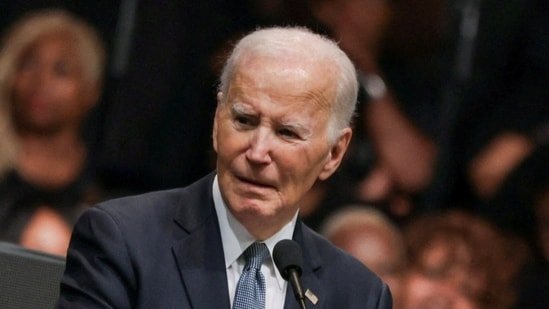
former president Joe Biden He sued the U.S. Department of Justice on Tuesday, May 26, seeking to block the release of recordings and transcripts of private conversations he had with his biographer in 2016 and 2017, Reuters reported. The lawsuit was filed in federal court in Washington, D.C.

The lawsuit was filed days before the department plans to release materials to the U.S. House Judiciary Committee and the conservative Heritage Foundation on June 15.
Biden’s lawyers noted in the filing that the recordings and transcripts contain “private, sensitive conversations that Biden had with his writing partner, Mark Zwonitzer, at the former president’s home in 2016 and 2017.” The Justice Department obtained the materials in 2023 after the special counsel investigation was launched.
The filing adds that Biden “cooperated fully with the investigation, and the special counsel ultimately concluded that criminal charges were not warranted.” The lawyers also said that when the Justice Department possesses private information in connection with a criminal investigation, “the department has a special responsibility to protect it from disclosure.”
Five things to know
Here are five things to know after Joe Biden sues the Justice Department:
- Special counsel Robert Hull obtained the recordings as part of an investigation into Biden’s alleged mishandling of classified documents while he was vice president and senator, Forbes reported.
- The recordings were made at Biden’s home as part of the writing process for his 2017 memoir, “Promise Me, Dad: A Year of Hope, Hardship, and Purpose.” It details Biden’s decision to run for president when his son, Beau, suffered from brain cancer.
- The lawsuit demands U.S. Department of Justice “President Biden’s private information” must not be disclosed to the House Judiciary Committee and the conservative Heritage Foundation, which has filed a Freedom of Information Act request for the same information.
- According to the document, every American, including the former vice president, has the right to privacy “for private conversations held in the privacy of one’s own home.”
- In the past, the Justice Department has refused to release the clips and transcripts. They argued that they were exempt from disclosure. However, trump card The U.S. Department of Justice now plans to release them on June 15.