
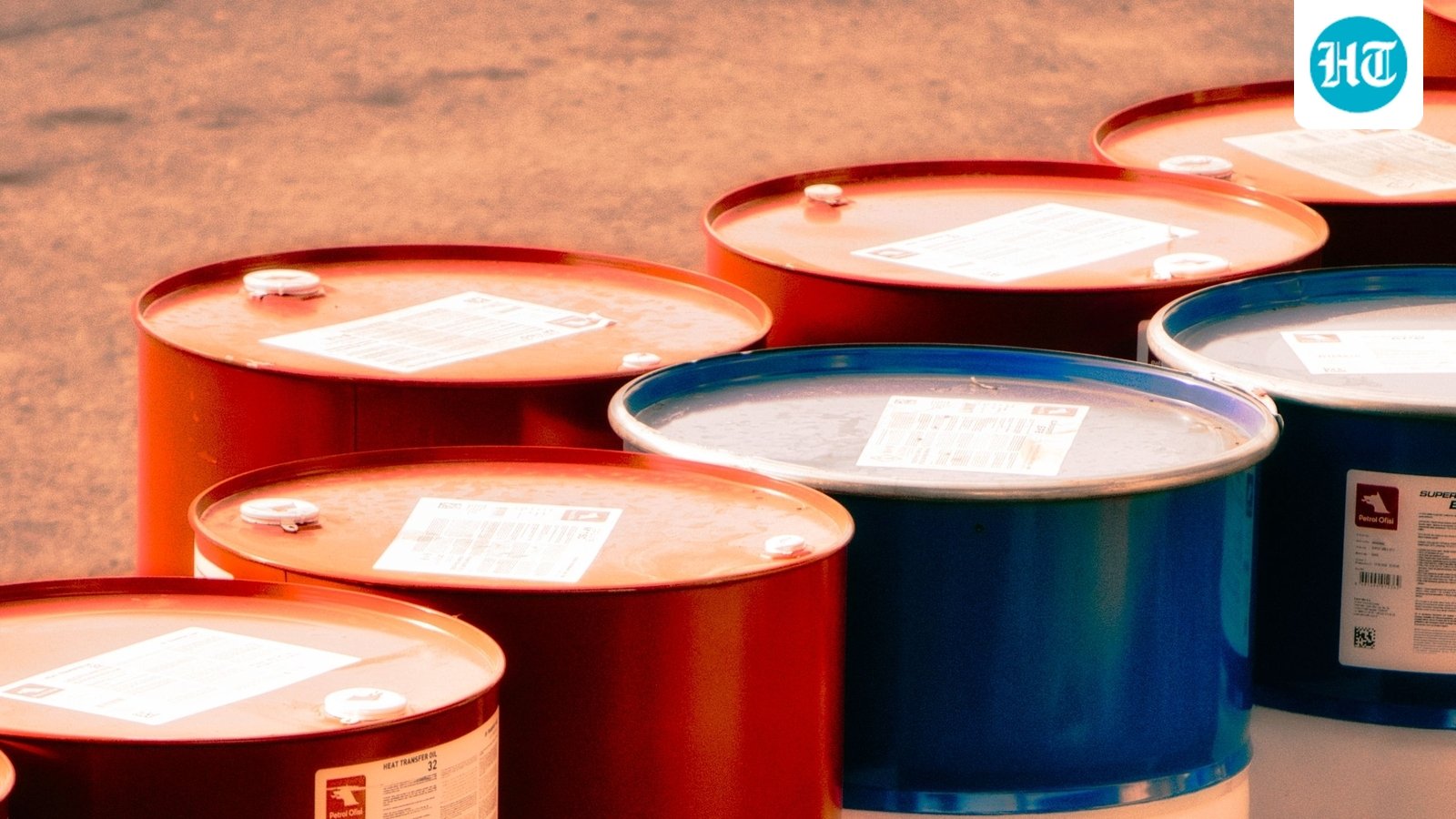
Oil prices slipped slightly on Friday but remained on track for a second straight weekly gain. The drop came as tensions between the United States and Iran increased, raising fears that oil supplies from the Middle East could face more disruptions.
Brent crude was trading at $93.28 a barrel, down 50 cents, or 0.53%, by 0949 GMT on Friday, according to Reuters. US West Texas Intermediate (WTI) crude was at $86.39 a barrel, down 44 cents, or 0.51%.
Oil prices gain this week
Despite Friday’s small fall, oil prices have had a strong week. Brent was up more than 5.4% for the week, while WTI had gained about 4.8%. Both major oil benchmarks had reached their highest levels since July 24 during the previous session. This shows how strongly concerns about Middle East oil supplies have pushed prices higher.
US sanctions on Iran
The main reason behind the latest oil price rise is growing tension between the US and Iran. Washington has threatened to impose what it called the toughest financial sanctions in history against Iran, Reuters reported. The US has also brought its blockade of Iranian oil shipments back into focus. The pressure could further reduce Iran’s ability to export crude oil.
“The US is taking a very firm stance against Iran,” said ANZ analyst Soni Kumari. She said the blockade and threats of tougher sanctions on Iranian oil exports are helping push oil prices back above $90 a barrel, according to Reuters.
Iran oil exports face pressure
Iran has warned that it will respond strongly to any new US threats. Iran said on Friday that its response would be “devastating” after Washington promised tougher financial penalties aimed at putting pressure on the Iranian leadership.
Also read: Why is crypto suddenly rallying? Bitcoin jumps 20% as $2.7 billion short squeeze hits
Analysts said the immediate impact on oil supply may not be very large because Iranian exports are already heavily restricted. Crispus Nyaga, a research analyst at Empire FX, said the US naval blockade has already limited Iran’s oil exports, according to Reuters.
However, the bigger risk is that the situation could become worse if attacks on shipping increase. Nyaga warned that retaliation against the new economic sanctions could create further problems for oil supplies.
Strait of Hormuz disruption
The Strait of Hormuz is a major concern for the global oil market. Oil and other energy shipments through the waterway remain far below normal levels. The Strait of Hormuz is one of the world’s most important routes for oil and gas. Before the US-Israeli attacks on Iran began in late February, about one-fifth of the world’s oil and liquefied natural gas supplies passed through the waterway, Reuters reported.
The disruption has continued as the conflict nears six months. Oil and gas shipments through the Strait are still being affected, putting pressure on global oil markets.
Shipping activity has also fallen sharply. Only seven commodity ships passed through the Strait on Thursday, compared with 14 the previous day, according to ship-tracking data from Kpler cited by Reuters.
Middle East oil supply risks
Lower shipping activity means traders are worried about how easily oil can move through the region. Any further problems in the waterway could make it harder for oil supplies to reach international markets.
Oil prices are also being supported by reduced production and supply disruptions from major oil producers. Saudi Arabia, Iraq, the United Arab Emirates and Kuwait are among the countries facing supply-related concerns.
US-Iran peace deal ends
Another major development is the collapse of an earlier peace deal between the US and Iran. The deal expired this week, and neither side has made an effort to restart talks. The end of the peace deal has added another layer of uncertainty to the oil market. Without renewed talks, traders are watching closely for further military, political or economic action between Washington and Tehran.
Iranian oil supplies to China are also showing signs of weakness. Offers of Iranian crude to Chinese buyers have declined, while prices have increased this week, according to trade sources cited by Reuters. The fall in Iranian shipments is linked to the US blockade. The blockade is making it harder for Iran to move its oil, while the threat of additional US sanctions is adding more pressure.
Oil supply and shipping risks
The oil market is therefore facing two major risks at the same time: lower supply and problems with transportation. A further reduction in Iranian exports or more disruption around the Strait of Hormuz could push prices higher, according to the concerns outlined by Reuters.
Also read: How did US debt go from a projected $0 by 2009 to more than $40 trillion in 2026?
Ukraine strikes Russian oil refinery
The conflict is also affecting oil infrastructure outside Iran. Ukraine’s military struck a Russian oil refinery in the city of Perm overnight, according to Ukrainian President Volodymyr Zelenskiy. The refinery is located more than 1,600 km, or about 1,000 miles, from the Ukrainian border. Zelenskiy said the Ukrainian military carried out the strike overnight.
Overall, oil prices remain under pressure from a mix of geopolitical risks. Even though Brent and WTI fell slightly on Friday, the threat of tougher US sanctions on Iran, lower oil flows through the Strait of Hormuz, weaker Iranian exports and attacks on energy infrastructure are keeping traders worried about global supply, according to Reuters.