
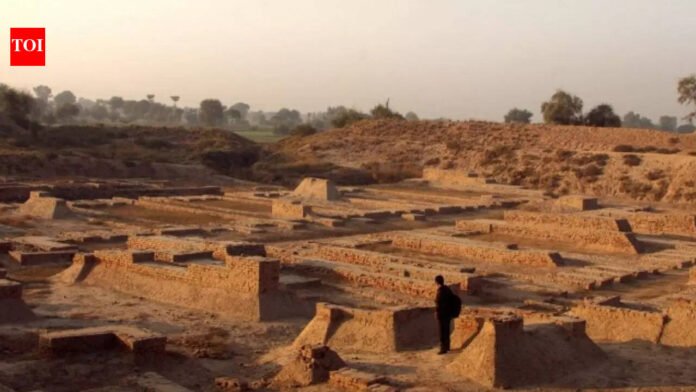
The Indus Valley Civilization may not disappear all at once. Long, recurring droughts may have slowly weakened one of the world’s earliest urban societies, new research suggests. Cities like Mohenjo-daro and Harappa were once built around reliable rivers, but as water became harder to find, they seemed to be in trouble. As conditions worsened, people began to move away, settlements declined, and daily life became uncertain. It’s astonishing that something as mundane as rainfall can so profoundly affect the fate of an entire civilization. The researchers believe the damage lasted for decades, with early changes so slow that they were barely noticed at first.
How the Indus River Basin is building smart cities along the river
as quoted Science Daily In a study titled “Scientists finally uncover the cause of the collapse of the Indus Valley Civilization,” the Indus Valley, also known as the Harappan civilization, was very advanced for its time. Cities are more than just piles of bricks; they organize streets, complex drainage systems, and water management systems. Experts say the association had trade links as far away as Mesopotamia. They even developed a script, although we can’t see it today.But life is never easy. Even with such ingenious engineering, civilization still relied heavily on the Indus River. When the flow of the river changes, the entire system begins to shake. Experts say climate change, especially rainfall patterns, could slowly make the area harder to live in.
How Long Has Drought Slowly Destroyed the Indus Valley?
Scientists studying this question used computer climate simulations spanning thousands of years. The simulations reportedly showed a steady decline in rainfall between 5,000 and 3,000 years ago. Some droughts apparently lasted for more than 85 years. There was no reliable water for a long time.It seems that as the drought continues, people are getting closer to remaining water sources. But eventually, even these areas could not sustain large populations. The city began to empty out. A particularly long drought reportedly occurred about 3,500 years ago, coinciding with widespread abandonment of key sites. Archaeologists believe this is the moment when civilization truly began to collapse.
Stone and soil tell the story of drought
To check the model, the researchers looked at stalagmites and stalactites in regional caves. When growth slows, it usually means less rainfall. They also examined lake sediments. Both seem to match the simulation very well. It’s as if the environment left a diary in the stone and dirt of what exactly happened.According to reports, climate scientist Nick Scroxton (Nick Scroxton) said this work helps explain how changes in rainfall affect urban settlement and agriculture. Earth scientist Liviu Giosan called the study an “important step” in understanding the hydroclimate of ancient civilizations. The scientists seemed satisfied with their cross-checks.