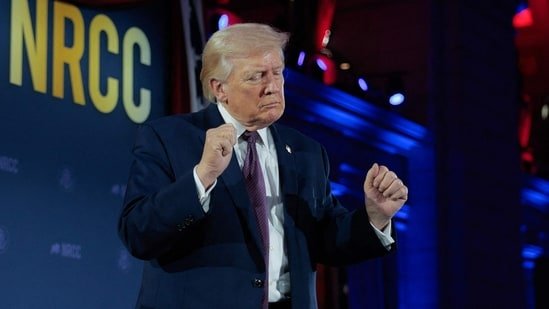
Speech by the President of the United States Donald Trump Remarks about “doing well on cognitive tests” sparked debate online, even as he dominated headlines for another move: allowing his signature to appear on U.S. dollars for the first time.
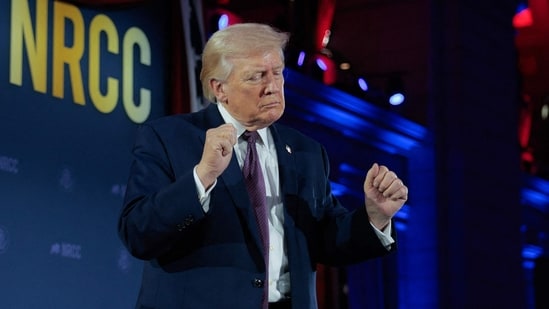
Trump said at a recent Cabinet meeting that he had taken cognitive testing Three times, it was perfect every time.
“I’m the only president who has ever taken a cognitive test… I took it three times. It’s actually a very tough test… I aced it all three times,” he said, according to the Daily Express and Inquisitor.
He described the assessment as starting out easy and then becoming increasingly difficult, involving “math equations and stuff,” and claimed doctors told him they rarely saw perfect scores.
Why did the Internet react?
Trump’s remarks went viral, sparking online ridicule and concern. social media Users questioned why multiple tests were performed, noting that such assessments are typically not repeated unless monitoring is required.
Others point out that cognitive screening tests are usually given when doctors want to check for signs of decline, rather than to measure intelligence.
Concerns about Trump’s health have heightened concerns, with reports in recent weeks of public speculation about his health.
What test is he actually referring to?
While Trump did not reveal the name of the exam, multiple reports, including the Inquisitr, referred to it as the Montreal Cognitive Assessment (MoCA).
The Museum of Contemporary Art is:
- A brief screening tool for doctors to use
- Designed to detect early signs of cognitive impairment or dementia
- Not an IQ test or intelligence measure
Medical experts note that the test assesses memory, attention, language and basic problem-solving skills, not overall intelligence.
Also read: ‘It’s not the brain’: Donald Trump on MRI scan results, Mar-a-Lago photos spark health concerns
Experts say MoCA is often used as a screening or tracking tool. If repeated, it may be to monitor changes over time rather than to “improve” the score.
Critics argue that repeated testing could indicate ongoing observation rather than a one-time assessment.
What does this have to do with the dollar bill decision
The controversy coincides with another move: Trump’s decision to have his signature appear on dollar banknoteswhich breaks long-standing convention.
Although essentially unrelated, the two developments overlapped in public discussion.