
After decades of frozen diplomatic and political hostility, the United States and Cuba are cautiously turning a new page. Under the leadership of the President of the United States barack obamadiplomatic relations were restored, and the U.S. Embassy in Havana reopened. On the Cuban side, the country is led by Raul Castro, who succeeded his brother Fidel Castro. U.S. diplomats, intelligence officials and support staff arrived in what is expected to be a routine overseas assignment. The mission was politically sensitive, but not unusual. No hazards beyond standard surveillance risks are expected. The first few months passed uneventfully as planned.Then something unexpected started to happen. This is not a political crisis or a security breach. Instead, U.S. personnel began reporting intense head pressure, severe headaches, dizziness and nausea. Some people have difficulty concentrating or remembering simple details. Others experience ringing in the ears or sudden balance problems. Some people say they hear strange noises shortly before symptoms appear, while others become sick without any sensory triggers. Medical tests have not given a clear answer. There were no obvious toxins, no obvious harm, and no explanation that anyone could point to. What started as sporadic complaints quickly took on a disturbing pattern. This phenomenon came to be known as Havana Syndrome.Nearly a decade later, the mystery is once again in the spotlight. A Norwegian government scientist has reignited controversy after building and testing a homemade microwave device. After the experiment, he developed symptoms similar to those reported by American personnel in Havana. The incident was reported to the CIA. While the experiment doesn’t explain the cause of Havana syndrome, it reopens long-standing questions and casts a new light on a disease that has never been fully understood.
The Beginning of the Mystery of Havana Syndrome in Cuba
As reports increased in late 2016, U.S. officials grew increasingly concerned. These symptoms appear suddenly and affect trained professionals with no shared medical history. Some people said their symptoms worsened in certain places and decreased after they left. Several affected personnel have quietly evacuated Havana for further assessment.In 2017, when the illnesses became public, the United States reduced embassy staffing and expelled Cuban diplomats from Washington. Cuba denies any involvement and invites an international investigation. At that time, no device had been found and the cause had not been identified.This story is not limited to Havana. Subsequently, similar symptoms were reported by U.S. personnel in China, parts of Europe and elsewhere. Cases have even been recorded in the United States. Geography complicates every theory. It is difficult for environmental explanations to account for such diverse locations. Because of the sudden onset and physical nature of the symptoms, psychological explanations aroused suspicion. Accounts of the attack lacked a clear weapon or perpetrator.The U.S. government initiated multiple intelligence and scientific reviews. Some experts believe these symptoms can be explained by stress-related or functional neurological disorders. Others say these explanations do not fully explain the reported sensory experiences or neurological findings.
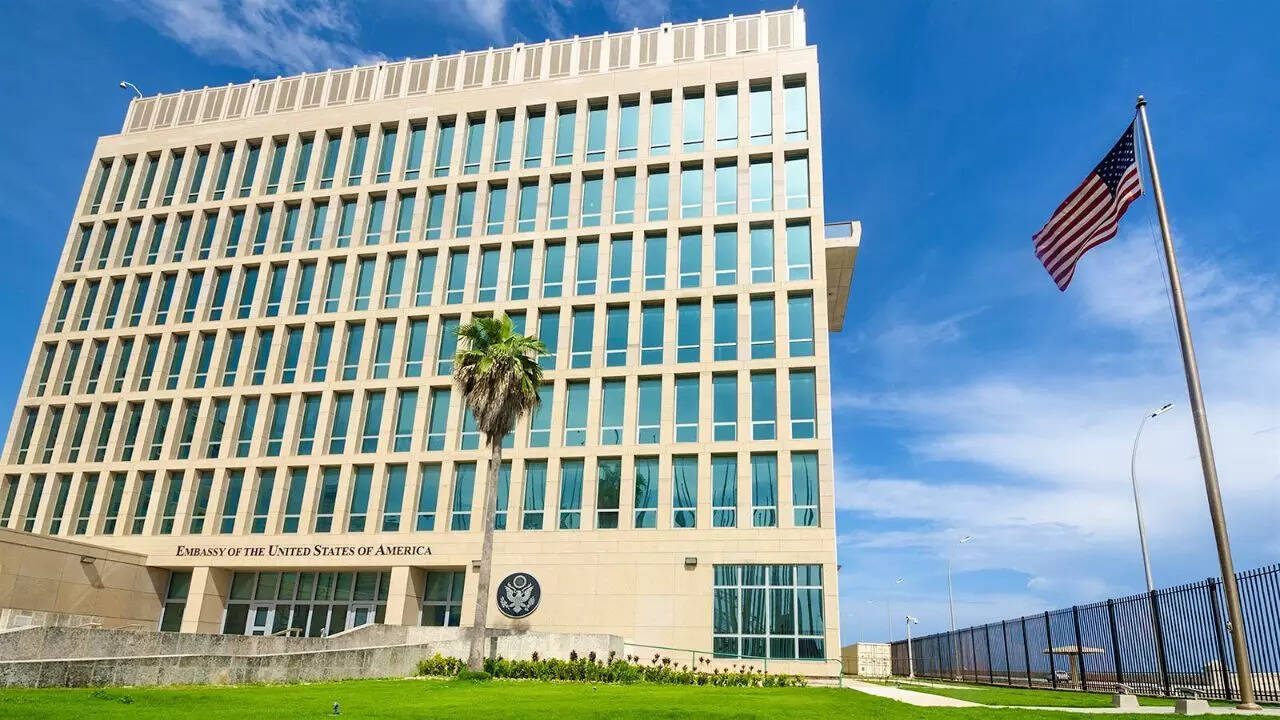
U.S. Embassy, Havana
Official assessments and divergent opinions
In 2023, a major U.S. intelligence assessment concluded that most cases were unlikely to be caused by foreign adversaries. Many of the events were better explained by common medical or environmental factors, the report said. It does not dismiss all cases or deny that those affected are indeed ill.Other reviews took a more cautious approach. A scientific panel convened by U.S. intelligence agencies has found that pulsed electromagnetic energy could plausibly explain some of the core symptoms. The lack of consistent data and the large differences between cases hinder firm conclusions.
Norwegian experiment changes perceptions
After developments in Norway, the debate shifted again. A government scientist skeptical of directed energy theory decided to test the idea himself. He built a homemade device that emitted pulsed microwave or radiofrequency energy and exposed himself to it.The scientist later developed neurological symptoms similar to those reported by U.S. personnel years ago, according to officials familiar with the case. Norwegian authorities alerted the United States. Officials from the CIA, Pentagon and White House reviewed the incident.The experiment did not prove that Havana syndrome was caused by the attack. It does show that pulsed energy can affect the human nervous system under certain conditions. That alone is enough to reopen an issue that many thought had been resolved.
Experts and critics discuss Havana Syndrome
Scientists and intelligence officials warn that a single self-experiment cannot solve a mystery as complex as Havana Syndrome. David Lehrman, chairman of the U.S. Disease Intelligence Advisory Group, said similar symptoms do not automatically point to a single cause. He believes that while pulse energy is still credible, the evidence is incomplete.U.S. intelligence agencies have expressed the same caution. The 2023 multi-agency assessment warned against confirmation bias driven by fear or geopolitics and urged restraint in drawing conclusions without stronger evidence.Other prominent figures have also questioned the government’s messaging. The bipartisan Senate Intelligence Committee criticized the CIA for inconsistent handling of the case and poor communication. CIA Director William J. Burns acknowledged that those affected were sick, but said the investigation had not found credible evidence of a foreign attack. Former CIA officer Mark Polymeropoulos has challenged early skepticism and argued that the pattern in the case warrants serious investigation, not reassurance. Together, these voices highlight a central tension. The symptoms are real. The cause remains unknown.Skeptics argue that Havana Syndrome does not behave like a single disease or weapon effect. Some neuroscientists and psychologists point to functional neurological disorders, stress responses or environmental exposures as more likely explanations. Symptoms vary widely and diagnoses are often inconsistent, they note.The National Academy of Sciences has previously acknowledged that electromagnetic energy could plausibly explain some symptoms, while emphasizing the lack of direct evidence linking it to real-world attacks. The disagreement has divided the scientific community between those who advocate deeper investigation and those who warn against indulging in bizarre explanations.
Conspiracy theories and public suspicion
As time passes and there are still no clear answers, speculation fills the void. Online forums dissected the embassy floor plan and analyzed audio recordings. Some claim the symptoms are consistent with a Cold War-era secret weapon. Others blame foreign intelligence services or secret surveillance equipment. Some suggest a hidden global movement, but governments refuse to acknowledge it.For those who are sick, these theories are often more painful than interesting. Many say speculation distracts from their pain and turns the medical mystery into an online battleground. Intelligence agencies have repeatedly said there is no evidence of a coordinated attack. Still, secrecy, uncertainty and real human harm allow rumors to spread faster than fact.
unresolved issues
No equipment was found in Havana. The attacker was not identified. No single explanation can account for every reported case. Yet the people affected are real, and many see their health and careers permanently changed.The Norwegian experiment did not solve the mystery of Havana Syndrome. It reopened it. Whether the events in Havana in 2016 were an attack, an environmental exposure, a medical phenomenon or a combination of factors remains one of the most long-standing unanswered questions in modern diplomacy and security.What is clear is that something happened. Nearly a decade later, the world is still trying to understand what it was.