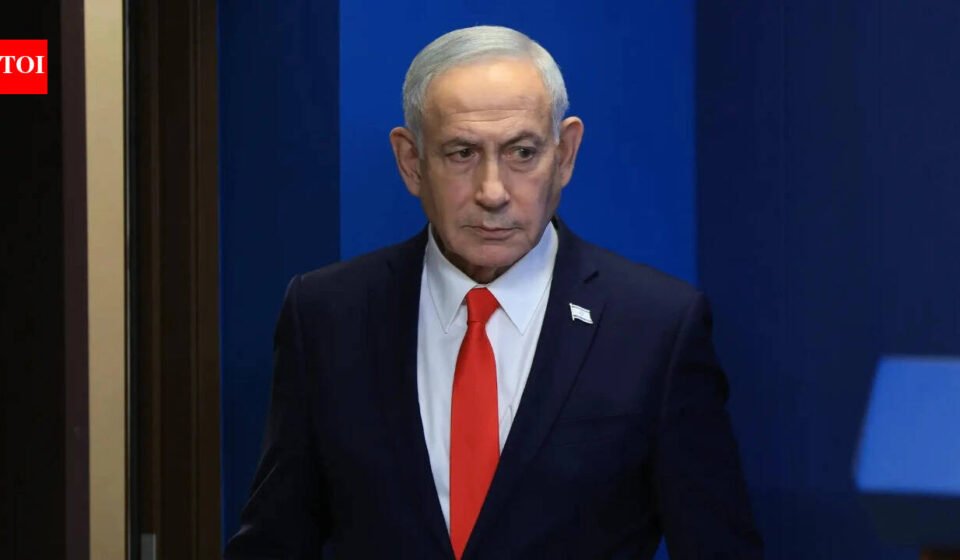

Israeli Prime Minister Benjamin Netanyahu visited Israeli military-occupied areas in southern Lebanon and declared that Israeli troops would not withdraw as long as Iran-backed Hezbollah continues to threaten Israel, even though a U.S.-brokered security deal last week envisaged a phased withdrawal of Israeli troops from parts of the region.In a speech to Israeli troops during his visit, Netanyahu reiterated that Israel’s military presence will continue until Israel considers Hezbollah’s security threat to be over.“We insist that we will not leave southern Lebanon until the threat is eliminated, and we will remain here as long as Hezbollah remains here, armed and threatening us,” Netanyahu told the troops, according to a statement from his office.Netanyahu was accompanied by Israeli Defense Minister Israel Katz and senior military officials. It was his first visit to the occupied Lebanese territories since Israel and Lebanon reached a U.S.-brokered security deal last Friday. Under the agreement, the Israeli army is expected to hand over two areas to the Lebanese army. His last public visit to the occupied territories was in April.Under the deal, Israeli forces will withdraw from two “test zones” and let the Lebanese Armed Forces take over control. However, few details have been released on how the arrangement will be implemented, and Netanyahu’s comments suggest that Israel’s broader military presence will remain linked to its assessment of the threat from Hezbollah.Israel says its military has established a buffer zone along the border extending about 10 kilometers into southern Lebanon to protect northern Israeli communities from Hezbollah attacks. The Israeli military said it had destroyed infrastructure used by the armed group, including underground tunnels.The operation also forced large numbers of Lebanese civilians from their homes, and Israeli forces raided villages and demolished buildings in the area.In an address to the troops, Netanyahu said Hezbollah still had about 12,000 rockets and missiles. He also claimed that Israeli forces had killed 9,000 Hezbollah militants in Lebanon, although he did not specify when and appeared to be referring to the period since the conflict escalated on March 2. Hezbollah does not release casualty figures. Reuters reported on May 4 that thousands of Hezbollah fighters were killed in the war.The latest conflict began with Hezbollah’s invasion of Lebanon following a March 2 attack on Israel, which Hezbollah said was in response to a February 28 U.S. and Israeli attack on Iran. The fighting has since expanded into a wider regional conflict.According to cited figures, more than 4,000 people have been killed in Lebanon and more than 1 million have been displaced since Israel’s military campaign began in March. Israel reports that at least 32 soldiers and four civilians have been killed in Hezbollah attacks, mostly in southern Lebanon.Under U.S. pressure, Israel agreed to a ceasefire with Hezbollah on June 19, but violence continues. Iran has repeatedly called for a ceasefire in Lebanon as part of talks with the United States aimed at ending the broader regional war that began in February. Israel is not directly involved in these negotiations but opposes linking the conflict in Lebanon to negotiations on Iran.Hezbollah has repeatedly opposed ongoing negotiations between Israel and Lebanon and has not participated in them.