‘We are not falling into nuclear bluff’: Rajnath Singh lashes out at Pakistan, explains why Operation Sindo was halted

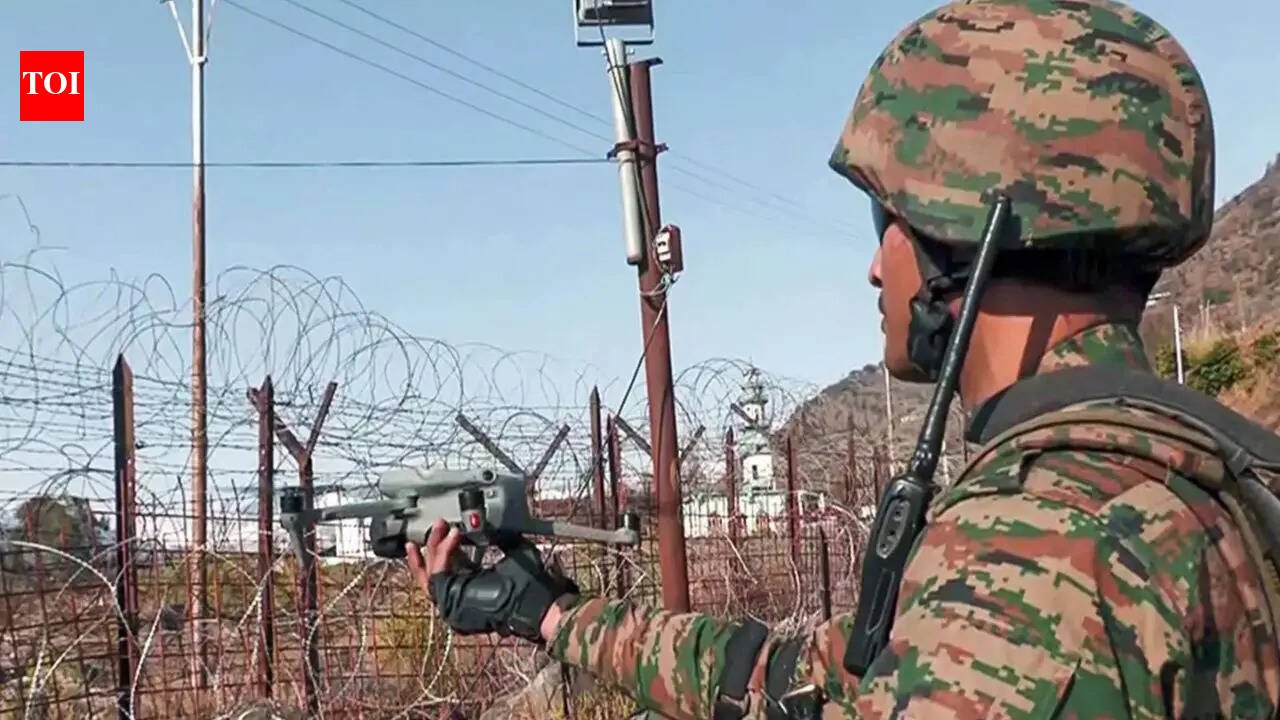
New Delhi: Defense Minister Rajnath Singh said on Thursday that India had stopped operation sindoor “Voluntarily” and on its “own terms”, claiming that the country is ready for a long war with its enemies Pakistan.He also lashed out at Pakistan, calling it the “epicenter of international terrorism” and further added that India was not deceived by the “bluff” of nuclear attack.
Speaking at the National Security Summit 2.0, he said, “In Operation Sindoor, we targeted precisely those who attacked us. I want to clarify here again that we did not stop this operation because our capabilities were reduced. We stopped it voluntarily on our own terms and we are fully prepared for a long war if necessary.”“We also have surge capabilities, the ability to expand our capabilities in times of sudden need. Not only did we have it, we still have it and are stronger than before. Therefore, I think there is no need to say anything more. “India continues to maintain strong reinforcement capabilities,” he added.Highlighting India’s changing stance on terrorism, Rajnath said: “India is telling the world that there will not be any distinction between terrorism and its sponsors.”He also praised Prime Minister Narendra ModiHe also praised the government’s “zero tolerance” attitude and further pointed out that India was not deceived by the “bluff” of nuclear attack.“Our military-industrial complex has also proven time and again that it can meet not only peacetime needs, but also rapid supplies in wartime. Although we were even threatened by a nuclear attack at the time, we were not deceived by this bluff.”“We ignored these threats, ignored them and did what was necessary, what was done in the national interest. This is the new world order, the new India in the new world.” India is telling the world that there will be no difference between terrorism and its sponsors,” he added.Looking back on the operation, Singh described it as a milestone in India’s strategic posture and said, “Almost a year has passed since Operation Sindoor, and our Operation Sindoor is also a symbol of this new world order.”“This is a turning point and sends a message to the world that India is no longer adhering to the old way of thinking that terror attacks take place on our soil and we just make diplomatic statements,” he added.
Pakistan is the epicenter of international terrorism
The defense minister lashed out at Pakistan and outlined three dimensions of terrorism: operational, ideological and political, stressing the need to address all these issues.“Terrorism is not just an anti-national act, it is multi-dimensional. Terrorism can only be dealt with from the three levels of action, ideology and politics. The real IP address of terrorism is its ideological and political roots, and the root of the breeding of terrorism,” he said.Taking a sharp dig at Pakistan today, Rajnath said that India is world-famous for its information technology, while Pakistan is considered a hub for other information technologies, namely international terrorism.“We have always seen countries like Pakistan consistently supporting terrorism that is why India and Pakistan got their independence at the same time but today India is known worldwide for its information technology while Pakistan is considered the hub of other information technologies i.e. international terrorism,” the defense minister said.“Our military-industrial complex has proven that it is not only suitable for peacetime, but is also ready for rapid supplies in wartime. We were even threatened by a nuclear attack, but we were not deceived by this bluff,” he noted.He added: “The ideological nourishment and political support of terrorism is the nectar in Ravana’s navel… I believe that this navel that gives life to terrorism must be allowed to dry up.”Operation Sindoor was launched on May 7, 2025, following the Pahalgam terror attack that killed 26 civilians. indian armed forces Precision strikes were carried out in Pakistan and Pakistan-occupied Jammu and Kashmir, destroying a total of 9 terrorist infrastructures.
polling
What do you think is the best way to deal with terrorism?
Pakistan responded with drone strikes and shelling, triggering a four-day military confrontation. India carried out strikes on radar installations near Lahore and Gujranwala.The conflict de-escalated after Pakistan’s Director-General of Military Operations called his Indian counterpart and a ceasefire agreement was reached on May 10.