
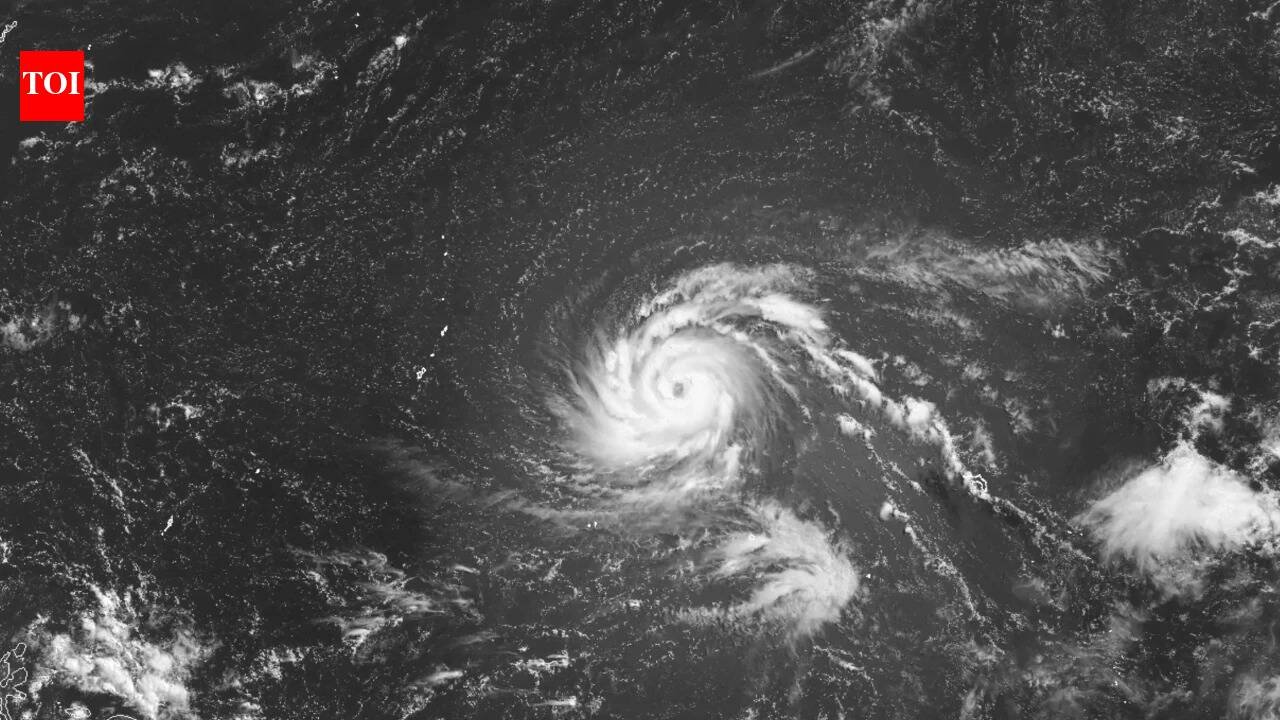
Emergency evacuations are underway in Guam and the Northern Mariana Islands as a powerful supertyphoon approaches the U.S. Pacific territory, bringing damaging winds and heavy rainfall, according to local weather agencies.Howling winds and torrential rains had begun battering the islands late Sunday, hours before the expected arrival of what authorities say is a “super typhoon” with the intensity of a Category 5 hurricane.The National Weather Service (NWS) warned that the system was “very dangerous” and warned of “catastrophic wind damage” near the eye, as well as storm surge and “hazardous” surf.According to the Joint Typhoon Warning Center, Super Typhoon Bavi will move westward in the area early on Monday, with maximum sustained wind speeds of up to 280 kilometers per hour and gusts of up to 333 kilometers per hour.Agence France-Presse reported that there are about 210,000 people in Guam and the Northern Mariana Islands. Roads are deserted and police have issued warnings urging residents to stay indoors as the situation worsens.One resident preparing for the storm told AFP she had stocked up on supplies in advance. “I can’t lose so many days. It’s painful,” she told AFP as she boarded up her restaurant.“We were staying in the hotel when the storm came and I was scared,” said a tourist stranded by a canceled flight.Officials warned that conditions could become catastrophic if the system tracks near Rota in the Northern Mariana Islands, with the National Weather Service saying many structures “will be uninhabitable for weeks, if not longer,” and widespread damage is expected.“By working together and taking the necessary precautions, we can help protect our families, neighbors and communities. We pray for the safety of our people,” Rota Mayor Aubrey Hokog urged, according to AFP.Weather agencies have linked the increase in the intensity of such storms to ocean warming, with the European Union’s Copernicus Marine Service noting record sea temperatures in June. The World Meteorological Organization also warned of El Niño in the Pacific, a phenomenon that typically intensifies storms and disrupts global weather patterns.Authorities continue to monitor the typhoon’s path as it approaches the islands, with emergency services on standby to deal with potential large-scale and long-term damage.