Usain Bolt Quote of the Day: Words of inspiration from the fastest man on earth ‘I think there are no limits’ | International Sports News

“I don’t think there’s a limit” is a short line, but it carries more weight when placed next to a career. Usain BoltThe fastest man on earth, his performances in the 100 and 200 meters not only set records but changed people’s perceptions of what was physically possible at these distances. Bolt holds the world records of 9.58 seconds in the 100 meters, 19.19 seconds in the 200 meters and 36.84 seconds in the 4×100 meters relay, all set between 2009 and 2012. He is an eight-time Olympic gold medalist and the only sprinter to win the 100m and 200m double at three consecutive Olympic Games in 2008. 2012 and 2016. His rise from a small town in Jamaica to a global sporting star is as famous for his personality as he is for his speed, but those results were built up over many years and included setbacks, injuries and adjustments that aren’t always visible on game replays.
What is the reason behind the performance?
Bolt was affected by scoliosis early in his career, a curvature of the spine that caused his right leg to be about half an inch shorter than his left, creating an imbalance that affected his stride and put constant pressure on his hamstrings and lower back. This imbalance means he has to adjust his technique, and biomechanical studies show he strikes the ground with about 14 percent more force on one side to compensate. Achieving this required constant exercise away from the track, including core strengthening and regular chiropractic care, while recurring hamstring and back injuries early in his life led to interruptions in training and racing. These details explain why his dominance didn’t come from a smooth road, even though it often looked that way at the finish line.
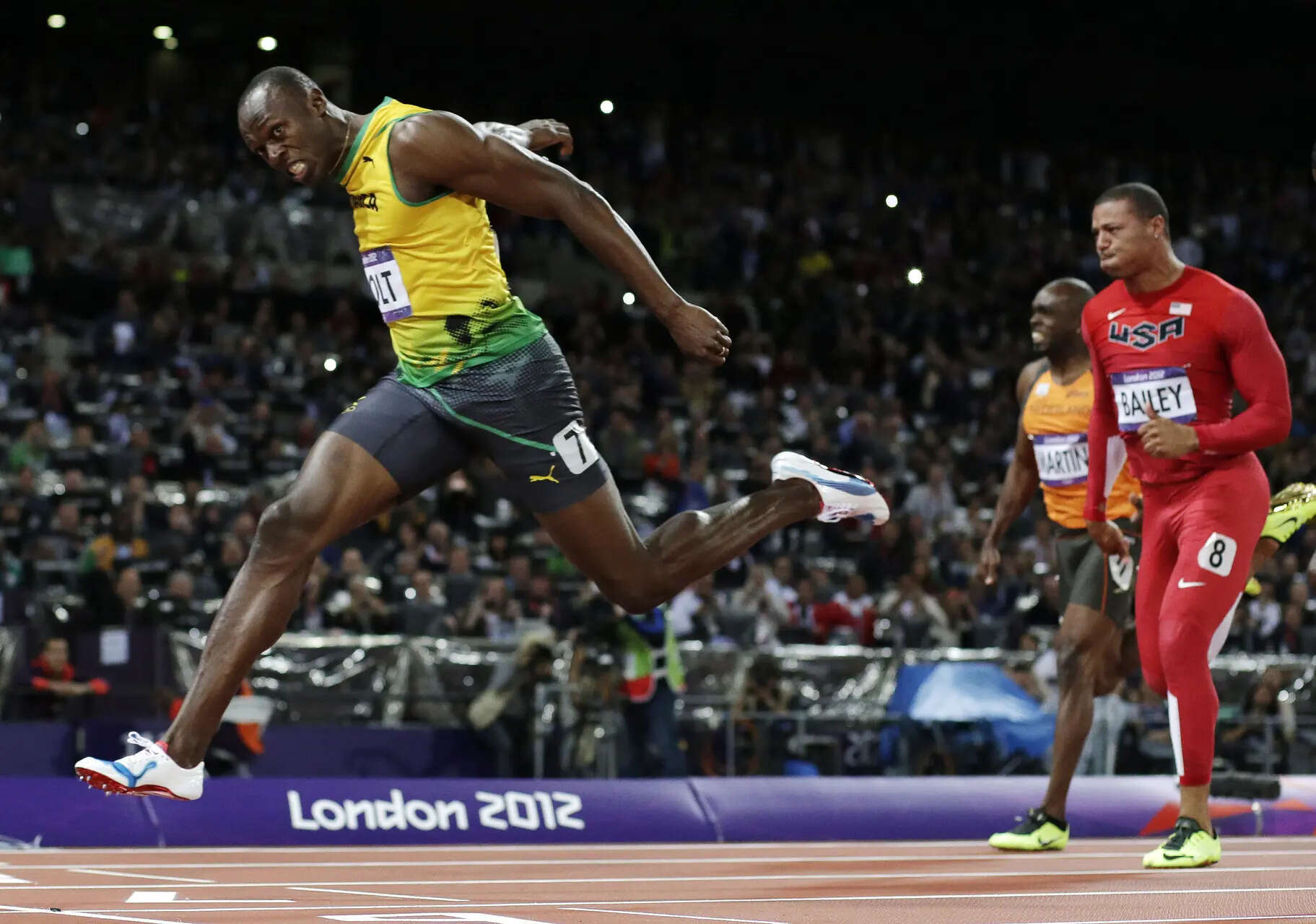
FILE – Jamaica’s Usain Bolt crosses the finish line to win the gold medal in the men’s 100 meters final during a track and field event at the 2012 Summer Olympics at the Olympic Stadium in London, Sunday, Aug. 5, 2012. (AP Photo/David J. Phillip, File)
Bolt first participated in the Olympics at the 2004 Athens Olympics. He was 17 years old at the time and participated in the 200-meter race with high expectations. However, he competed with a hamstring injury and was eliminated in the first round of the preliminaries. The results didn’t match the attention he received heading into the Olympics, setting the tone for a period in which potential and performance didn’t always align.Another disruption occurred at the 2011 World Championships, when he jumped the gun in the 100m final and was disqualified, losing the chance to defend his title in one of the most dramatic moments of his career. Years later in 2017, he last competed in a major championship, but tore his hamstring during the 4x100m relay, forcing him to stop and leave the track before the end of the race. These moments exist alongside the record, rather than apart, and they explain why his extreme approach is not theoretical.
How to describe this mentality
Bolt has often emphasized that success is not just about speed but also about long-term training, focus and confidence. His quote “I don’t think there are limits” reflects an approach to competition and preparation where belief in potential takes precedence over results and is backed by the work required to get to that level.
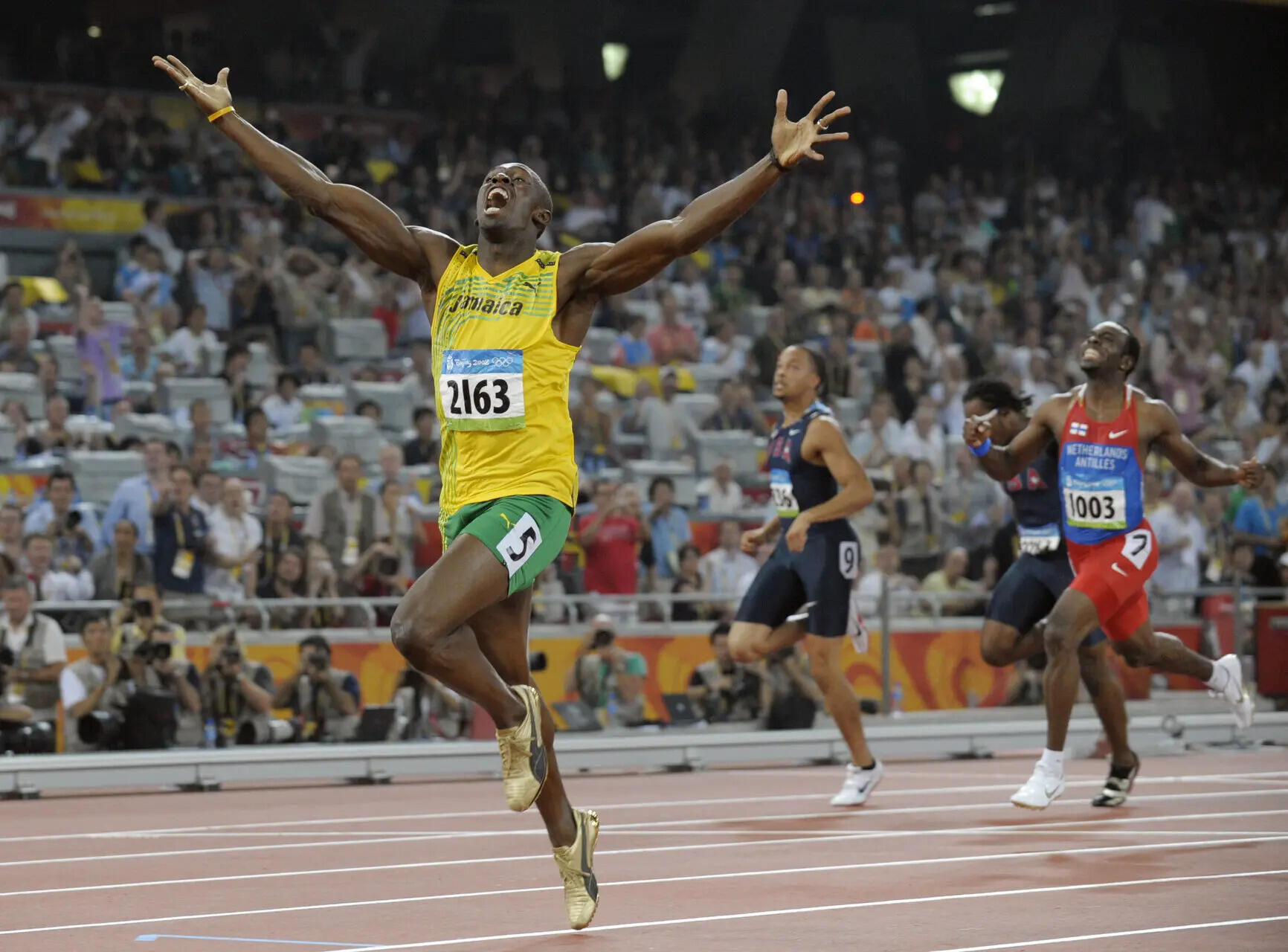
FILE – Jamaica’s Usain Bolt wins the men’s 200 meters final in a world record during track and field competition at the National Stadium at the 2008 Olympic Games in Beijing, Wednesday, Aug. 20, 2008. (AP Photo/Thomas Kienzle, File)
He talks about focusing on his goals, rather than outside pressure or competition, even in games where expectations are highest, an approach that has continued throughout his career, from his early days in Jamaica to his performances at the Olympics. This statement is often repeated because it is simple, but it is associated with a way of working that requires consistency and mental discipline as well as physical ability.
Where Bolt’s lines come into play outside of sport
The reason “I don’t think limits” persists outside of sprints is that most people hit their limits long before they achieve success, and these limits are usually introduced quietly through repetition rather than failure itself.Bolt’s career has literally been about pushing physical limits, but that line also applies to the smaller ceilings people absorb early in life from their parents, teachers, workplaces and even their own previous mistakes. These caps are often introduced quietly and repeatedly, with warnings to stay realistic, choose the safest option, avoid unnecessary risks, or stay within familiar limits, until people begin to view the limits as fact rather than advice. Over time, this thinking begins to influence what jobs they apply for, what risks they take, and what parts of themselves they stop developing. A student who struggles with math at age 14 may be labeled “bad with numbers” for years without ever having to examine whether this is true. People who freeze when giving presentations at work can quietly decide that they are “not a public speaker” and avoid situations that force improvement. Someone who grew up hearing that business ownership was only for the wealthy or well-connected might never try it, even if they had the ability to steadily build something over time. This is the “box” that Bolt’s quote is against. The box feels safe because it protects people from embarrassment and failure, but it also holds them in place. Another part of the quote becomes clearer in how it addresses the problem. Most people instinctively ask “Can I do this?” before they start doing something difficult, which often turns the situation into a judgment of ability before any work happens. Bolt’s mindset changes the issue a bit. The focus is no longer on asking if something is possible, but how it can be done. This difference is important in ordinary circumstances. Students preparing for exams no longer view a weak subject as evidence of their incompetence and start looking for a way to improve chapter by chapter. People trying to change careers stop dwelling on whether they are cut out for the industry and start identifying what skills or qualifications are missing. Small business owners facing losses stop viewing the situation as a judgment on the business itself and start looking for things that can actually be tweaked, whether it’s pricing, suppliers or marketing. Bolt’s own career has repeatedly reflected this thinking. He didn’t become the fastest man in history by looking at his early injuries, scoliosis or uneven stride to determine where the ceiling was. He and his team look for ways to solve these problems well enough so that work can continue. There’s a reason this quote is strongly associated with those dealing with stress or self-doubt. Bolt’s point suggests that restrictions are often accepted prematurely, especially during stressful times when the current situation begins to become permanent. His career has been marked by injuries, false starts and setbacks, but those moments didn’t serve as fixed definitions of what happened next. This idea keeps popping up in daily life. A rough year in college does not automatically define a person’s intelligence. Losing an opportunity doesn’t close the door to a career forever. Getting stuck in the early stages of a business doesn’t mean the business itself is impossible. Bolt’s quote doesn’t guarantee success, but it does challenge the instinct to view temporary situations as permanent ceilings.A key part of Bolt’s method is learning to be your own gatekeeper and paying attention to how you talk to yourself privately. If repeated often enough, thoughts like “I might not be good enough” or “People like me wouldn’t do this kind of thing” can quietly become routine. Bolt’s approach breaks this mold squarely, focusing not on blind confidence but on refusing to close the door on oneself before the work has begun.