
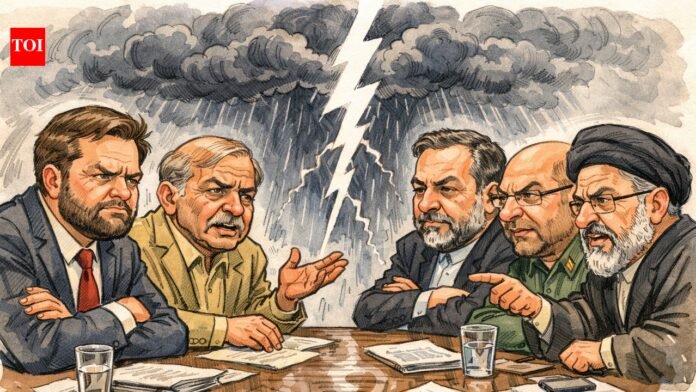
Negotiations between the United States and Iran have stalled without a deal after 21 hours of marathon talks in Islamabad, with the two sides failing to bridge deep differences despite the highest level of contacts in decades. While both countries have said discussions are likely to continue, sharp differences over nuclear commitments, sanctions relief and regional control have hindered any immediate breakthrough.
Here are the five main reasons why negotiations fail:
- 1. Deep divisions surrounding Iran’s nuclear program: The core sticking point remains Washington’s demand for firm assurances from Iran that it will not pursue a nuclear weapons capability. The United States has pushed for tight limits on uranium enrichment and related tools, while Tehran has resisted what it sees as excessive restrictions on its sovereign rights.
- 2. Disputes over lifting sanctions and freezing assets: As part of the deal, Iran demanded the release of frozen assets held abroad, including funds in Qatar and other countries. However, U.S. officials have denied agreeing to the terms, exposing a clear gap in expectations for economic concessions. ‘
- 3.
Strait of Hormuz control and maritime tensions: Control of the strategic Strait of Hormuz emerged as a major flashpoint. Iran seeks greater powers, including the ability to charge transit fees, while the United States insists on ensuring free global shipping on the route, which carries about 20% of the world’s energy supplies. - 4. Wider regional needs and war reparations: Tehran has widened the scope of negotiations to demand war reparations and a comprehensive ceasefire across the region, including in Lebanon. However, the United States remains focused on smaller goals, particularly nuclear restraint and maritime security, resulting in a mismatch in priorities.
- 5. Trust deficit and unstable negotiation environment: The talks were characterized by swings in tension and mutual distrust, with officials describing “swings of emotion” and tempers during the discussions. The Iranian delegation arrived carrying a symbolic reminder of civilian casualties, while both sides have further complicated progress by accusing each other of inflexibility.
Despite the failure to reach a deal, Iran said “negotiations will continue although some differences remain,” suggesting diplomacy remains open. However, with positions still far apart and the ceasefire fragile, the outcome of future negotiations will be critical in determining whether tensions ease or escalate further.