
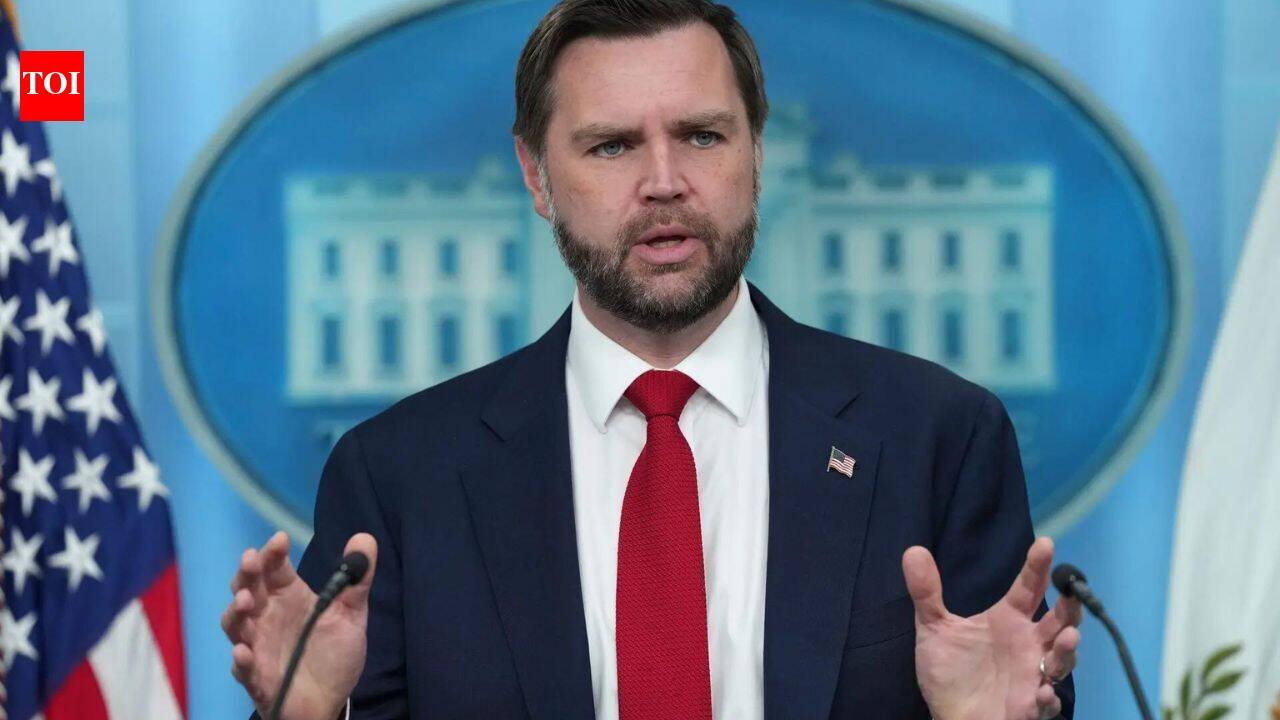
TOI reporter in Washington: U.S. Vice President Vance held two days of talks with Iranian leaders in the Swiss Alps over the weekend, calling it a “major milestone” to persuade Tehran to allow International Atomic Energy Agency (IAEA) inspectors to return to the country, reopening the path to international oversight of its nuclear program. Soon after, the Trump administration lifted oil sanctions on Iran and issued a 60-day waiver authorizing the sale and shipment of Iranian crude oil and petroleum products through August, a concession intended to keep negotiations going.In remarks at the end of the first round of negotiations, Vance also asserted that if Iranian assets were eventually unfrozen, the funds would be used to buy U.S. agricultural products, while rebutting criticism that the Trump administration was ceding stores to Tehran.“If Iranian assets were unfrozen, they would make American farmers richer and help feed the Iranian people,” Vance said, crediting Trump’s son-in-law Jared Kushner for the idea. He also said that after preliminary contacts with Iran, technical-level talks will be held during the 60-day ceasefire window to reach a final agreement. For the Trump administration, Vance appears to have secured a much-needed truce to calm growing political unease at home ahead of the November midterm elections, with the vice president’s own political future hanging in the balance. But to critics, it all sounds suspiciously like a rediscovery of an already existing arrangement, with experts pointing out that the IAEA inspections were part of the Obama-era Joint Comprehensive Plan of Action agreement that President Trump later tore up in 2018. One analyst scoffed: “Next week, Trump will announce that he invented the wheel – a round wheel the world has never seen. Next week, sliced bread.” The sarcasm reflects the wider skepticism surrounding the Swiss talks, which, judging from visuals emerging on social media, are anything but warm and fuzzy.Body language alone is enough to keep a diplomatic lip reader busy for days. Vance led the U.S. delegation into a conference room filled first with Pakistani and Qatari interlocutors. Iranian Foreign Minister Abbas Araghchi arrived later and left after brief discussions with Pakistani officials, who reportedly declined a photo opportunity with the Americans due to President Trump’s provocative rhetoric and Israel’s continued attacks on Lebanon. Ignored handshakes, threatened strikes and apparently frosty exchanges hardly signal the dawn of a great reconciliation.After about 80 minutes of discussions, Iranian negotiators reportedly paused the talks in protest of Trump’s latest social media threats, eventually returning to the negotiating table after Vance reportedly explained that Trump’s comments were in response to Iranian provocations. After more discussions, Vance claimed tangible progress amid widespread skepticism in Washington, where many critics are waiting for the mission to fail. While supporters of Trump and Vance saw an elegant solution in which unfrozen Iranian money would buy U.S. wheat, corn and soybeans instead of flowing into the military rearmament Washington feared, policy experts were less impressed, recalling Vance’s warning after the Oct. 7 attack that “money is fungible” and that financial aid to Tehran in one sector could indirectly strengthen Iran’s Islamic Revolutionary Guard Corps.This apparent shift has led some conservatives to engage in rhetorical activity. Adding to the controversy, the U.S. Treasury Department moved with surprising speed on Monday to demonstrate Washington’s seriousness, issuing a broad 60-day sanctions waiver authorizing the sale and shipment of Iranian crude and petroleum products through August, a major concession aimed at keeping negotiations alive. The exemption, which covers banking, insurance, transportation and related commercial activities, is one of the largest easing of sanctions on Iran in years. For Israel and many of its supporters in Washington, the announcement was as subtle as a bunker breach. Pro-Israel voters in the United States remain alarmed by Trump-Vance’s new formulation that every country in the region has legitimate security concerns and the right to self-defense, and that Iran also has the right to maintain conventional ballistic missile capabilities under a future settlement.The broader picture is that Vance appears to have salvaged something from negotiations that were repeatedly in danger of collapsing under the weight of the Make America Great Again boss’s social media grenades. Throughout the negotiations, Trump continued to fire at Iran and threatened to cause further chaos, making Iranian representatives furious. Vance said the Iranians came close to quitting altogether, but he eventually saved the day. Behind the scenes, two unlikely diplomatic mediators have helped keep the process alive: Pakistan and Qatar. Both countries have acted as mediators, although they have received much criticism in the United States.