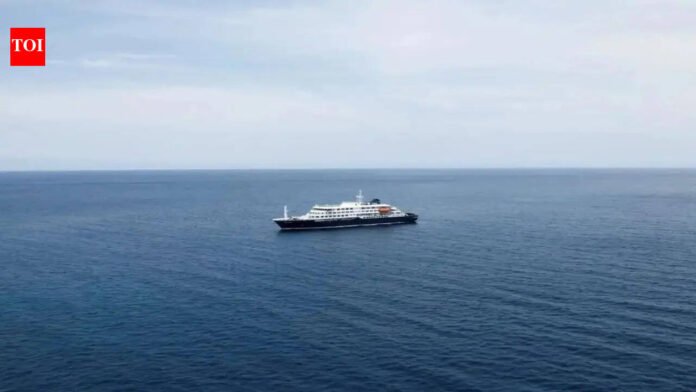
NEW DELHI: A rare outbreak of hantavirus reported on a cruise ship carrying two Indian crew members has sparked international concern, but Indian health experts and government agencies said there was no immediate cause for concern in the country as the country had earlier also reported sporadic hantavirus cases and evidence of exposure.According to information shared through IHR channels, the two Indian nationals on board are currently asymptomatic and under observation.The World Health Organization also stated that the overall public health risk remains low and there is no need to panic.The Dutch-flagged expedition ship MV Hondius reported eight suspected and confirmed infections linked to the Andean strain of hantavirus, including three deaths, during a voyage from South America to Africa.Experts say the outbreak is of concern primarily because the Andes strain is the only known hantavirus variant associated with limited human-to-human transmission. However, unlike Covid-19, this infection does not spread easily and often requires close contact for an extended period of time.“Hantavirus is a rodent-borne viral infection that can affect the lungs and kidneys. In cases of severe lung involvement, called cardiopulmonary hantavirus disease, mortality can reach 30-50%. However, unlike Covid-19, it is not highly contagious and is mainly spread through contact with infected rodent saliva, urine or feces,” said Dr GC Khilnani, Chairman of PSRI’s Institute of Pulmonary, Intensive Care and Sleep Medicine.He said that India has only seen sporadic cases so far and there is no direct public health threat. Dr Kilnani advises people to keep their homes rodent-free and use wet cleaning rather than dry sweeping of contaminated areas, as infected particles may become airborne during cleaning.Medical literature in India also documented rare hantavirus infections earlier. A case report published in the Indian Journal of Critical Care Medicine describes a Mumbai woman who developed hantavirus pulmonary syndrome shortly after giving birth. Doctors initially suspected dengue or leptospirosis because symptoms overlapped before hantavirus antibodies were later detected.Dr NK Ganguly, director of the Department of Biotechnology and Research at Sir Gangaram Hospital, said the Andes strain had earlier been linked to the outbreak in Argentina and may have initially resembled a COVID-19-like respiratory illness.“Patients may first present with fever, body aches, malaise and mild respiratory symptoms, and then some patients will rapidly deteriorate and require intensive care,” he said.Dr Ganguly added that in the wake of Covid-19, India’s healthcare system is now better prepared with advanced hospitals capable of detecting hantaviruses through respiratory virus testing panels. Although there is currently no proven antiviral treatment, suspected patients will be isolated and managed according to respiratory infection protocols.A senior official from the Ministry of Health said that WHO is coordinating the international response under the International Health Regulations mechanism, including diagnostic support, epidemiological assessment and arrangements for the safe disembarkation of passengers and crew.The Public Health Emergency Operations Center under the IDSP-NCDC also held a high-level review meeting to assess the situation and preparedness measures. The official added that the federal health ministry is in close coordination with WHO and other international partners.
Two Indians on Hantavirus-hit ship

WEB DESK TEAMhttps://articles.thelocalreport.in
Our team of more than 15 experienced writers brings diverse perspectives, deep research, and on-the-ground insights to deliver accurate, timely, and engaging stories. From breaking news to in-depth analysis, they are committed to credibility, clarity, and responsible journalism across every category we cover.
Related articles
Recent articles