
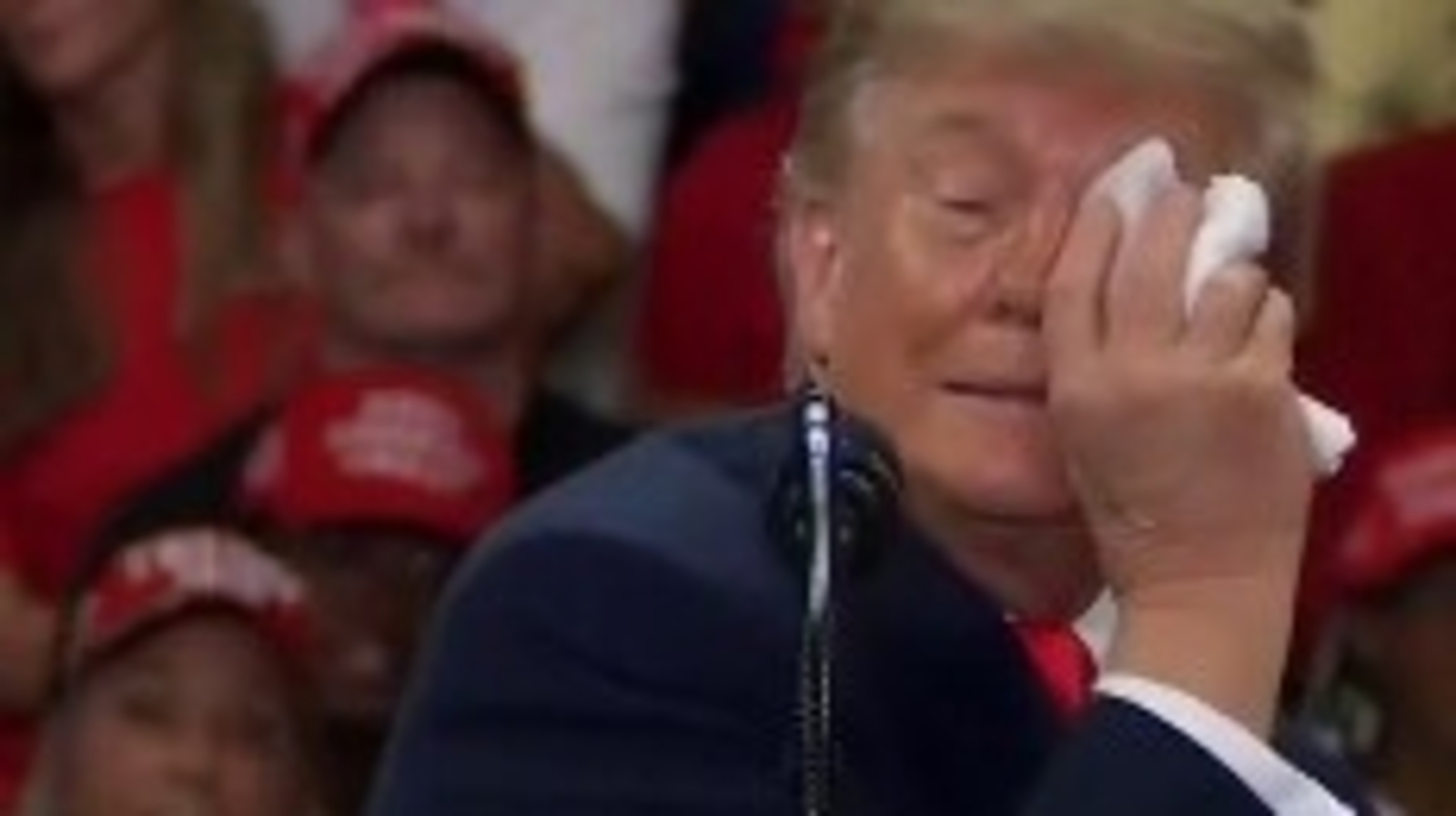
President Donald Trump briefly interrupted his campaign rally in Daytona Beach, Florida, on Friday after appearing to struggle to keep one eye open.
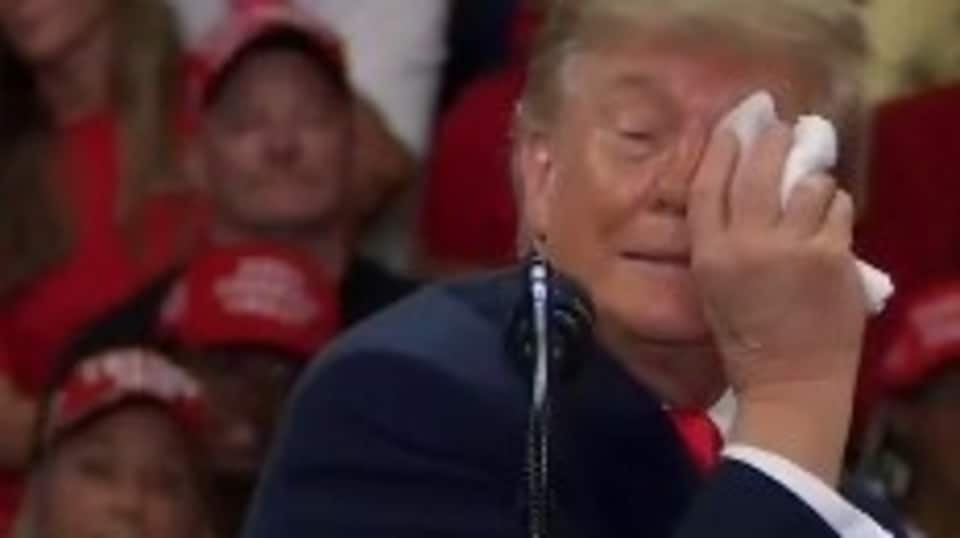
The President paused midway through his remarks to supporters, using a napkin dipped in a cup of water to wipe his eye before continuing his speech. The incident occurred just days before voters head to the polls for Tuesday’s midterm elections.
“Do you mind? I got a thing in my eye, watch this,” Trump told the crowd at rally. In the clip shared on social media, the President can be seen dipping towel in water and then wiping his eye.
“Ah, that’s so much better,” he remarked after wiping his eye. He, however, added, “I wish I had little eye drops.”
Trump addresses speculations around his health
Trump then addressed speculation surrounding his health, taking aim at critics who had questioned his condition following the initial cancellation of two campaign rallies scheduled for the weekend.
“If I did, they’d say I was seriously ill, that there’s something wrong with me,” Trump, 80, said.
Also Read: Pope Leo XIV makes history as first sitting pontiff to vote in US elections
Trump’s eye issue draws netizens’ reactions
The audience appeared to take the interruption in stride, laughing along with Trump as he resumed his remarks. However, the moment drew a different reaction on social media, where some commentators accused the president of downplaying concerns about his health.
After footage of the incident was shared on X, one user reacted by writing: “Good lord! They need to get grandpa off the stage. He is losing it.”
“He’s seriously ill. There’s something wrong with him,” another said.
“His comedy skits are ending in 2028,” a third user stated.
The POTUS had initially called off planned appearances in Kansas and Iowa, prompting questions about his health. However, he maintained that he felt “perfect.” Both rallies were subsequently reinstated on Friday, just days before the midterm elections.
US midterm elections
The midterm elections carry enormous political significance, as they will determine which party holds control of the US Congress. Voters will decide all 435 seats in the House of Representatives, whose members serve two-year terms, along with approximately one-third of the 100 seats in the Senate, where senators serve six-year terms.
The party that secures a majority in either chamber gains considerable influence over the legislative process, including setting policy priorities, appointing committee leaders and overseeing federal budget decisions.
A shift in congressional power could also have major implications for the president’s ability to advance his agenda. If the opposition gains control, it can intensify congressional investigations, challenge proposed legislation and use its Senate majority to delay or reject the confirmation of federal judges and senior administration officials.