president Donald Trump Expressing concern that a strike on Iran could lead to the emergence of new leadership is as unsettling to Washington as the regime the United States and Israel are working to overthrow.

Trump’s comments are likely to stoke concerns about the administration’s ultimate outcome of the conflict, while Iran’s retaliatory actions against Saudi Arabia could fuel concerns about further escalation in the region. Follow live updates on the US-Iran war here
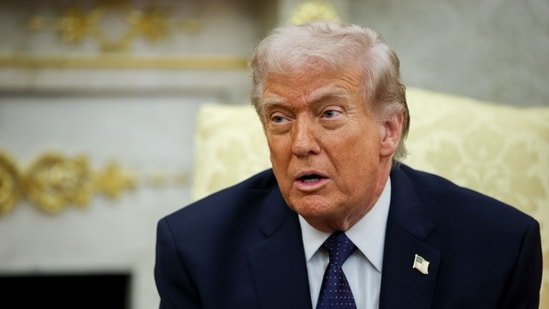
“I think the worst thing that could happen is that we do this and then someone takes over and he’s just as bad as the predecessor, right? That could happen,” Trump told reporters in the Oval Office on Tuesday. “You go through it and then five years later you realize you put someone in place who’s no better than him.”
The US president, who spoke alongside German Chancellor Friedrich Merz, reiterated his desire to see a more moderate leader emerge from Iran, but his top candidates were reportedly killed in the attack and a second group of officials “may have died as well”.
“So I guess the third wave is coming soon,” he added.
Earlier on Tuesday, Trump posted on social media that “wars can go on ‘forever'” and said the United States had an unlimited supply of nuclear weapons and long-range missiles that it wanted to prevent Iran from acquiring. Earlier, he claimed that Iran’s “air defense, air force, navy and leadership have disappeared.”
Trump insisted that oil and gas prices would return to stability, although he did not know how long the military action would last.
“If oil prices stay high for a while, once this is over, I believe those prices will come down, lower than they’ve ever been,” Trump told reporters.
Oil prices soared again on Tuesday, with Brent crude trading as high as $85 a barrel, the highest level since July 2024. As of 2 p.m. in New York, U.S. oil and the global Brent crude benchmark were both up more than 4% from Monday’s close.
this Strait of Hormuz – A vital route for oil tankers – remains virtually closed.
Israel According to Israel’s “Kan News”, Iran launched a new round of attacks on Tehran on Tuesday and attacked a building in the city of Qom where Iranian clerics were meeting to elect the successor to Supreme Leader Ayatollah Ali Khamenei. Iran’s semi-official Meir news agency said the building was attacked but was not in use at the time.
Trump pushed back on questions about whether the United States would launch an attack on Iran at the request of Israel, saying on Tuesday, “I might force them to take action.”
The Islamic Republic has launched missiles at countries with U.S. bases, including Qatar, Bahrain and Oman, and Doha says the targets are not limited to military interests. Qatar and Iraq halted production at major energy bases, exacerbating concerns about supply and prices.
China, which buys most of Iran’s oil, urged “all parties” to ensure the safe passage of ships through the Strait of Hormuz. The UAE and Qatar are privately lobbying allies to help them persuade Trump to find an exit ramp to shorten the conflict, according to people familiar with the matter.
Qatar Energy has halted production of some chemicals after an Iranian attack forced the shutdown of its main liquefied natural gas plant. Iraq has begun shutting down oil production at the giant Rumaila field operated by BP, according to a person familiar with the matter, who said storage space was running out while tankers struggled to leave the Persian Gulf.
Debris from an intercepted drone sparked a fire at the UAE oil trading hub of Fujairah.
Iran’s Red Crescent Society reported that 787 people have died since the conflict began, while the United States said six service members were killed. About a dozen people died in Israel.
Israel has sent soldiers into southern Lebanon, home to the Iran-allied Hezbollah militia, and launched a wave of attacks on targets in Beirut. The Lebanese Ministry of Health said more than 50 people had been killed in the attack.
The U.S. military said on the Iran admitted overnight that its Natanz nuclear facility had been attacked.
The U.S. State Department on Monday urged Americans to leave the Middle East, citing “There are serious safety risksIn danger of war. It advised U.S. citizens in more than a dozen countries, including Israel, Saudi Arabia, Qatar and the United Arab Emirates, to leave by “available commercial transportation.”
The news caused confusion because there was no similar announcement on the State Department’s website. As of Tuesday morning, it listed Iraq, Syria, Lebanon and Gaza as “no travel” areas. But other countries have given fewer warnings.
Assistant Secretary of State for Global Public Affairs Dylan Johnson said in a post on
Flights from the Gulf are likely to face challenges as nearly all civil air traffic in the Gulf has been shut down due to a weekend attack on Dubai’s main airport, the world’s busiest aviation hub. Emirates and Etihad Airways plan to resume limited operations to ease some congestion.
Speaking on state television on Monday, Iranian Foreign Minister Abbas Araghchi said Tehran had no dispute with its neighbor but was “confronting American soldiers stationed there.” Saudi Arabia and the United Arab Emirates have strongly criticized Iran for expanding the conflict into their territory.
Two drones struck near the U.S. Embassy in Riyadh at night, causing limited damage. The United States says three fighter jets crashed in Kuwait in an apparent incident of friendly fire and that the crew ejected safely.