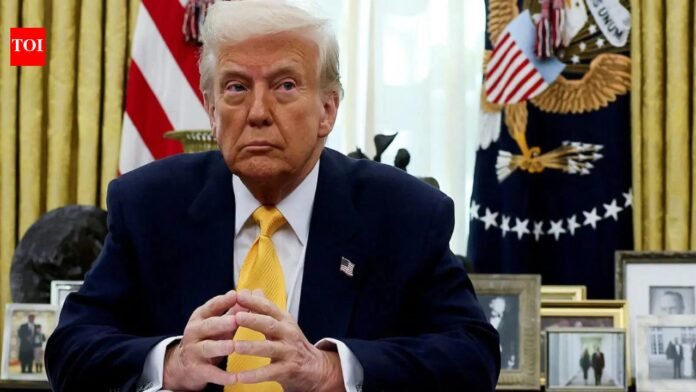
President of the United States Donald Trump Iran has reportedly been given a limited window of “three to five days” to come up with a unified proposal for negotiations, with U.S. officials saying the current ceasefire extension would not last indefinitely, Axios reported, citing three U.S. officials.According to reports, Trump’s move is equivalent to setting a short deadline for Tehran. A U.S. source familiar with the matter told Axios, “Trump is willing to give another three to five days of ceasefire time to allow the Iranians to regain their composure. This will not be indefinite.”
The report quoted officials as saying that the extension of the ceasefire is aimed at pushing Iran’s leadership to consolidate its negotiating position before the temporary truce expires, after which Washington can decide the next course of action based on Tehran’s reaction.Earlier, Trump said on Wednesday he decided to extend the ceasefire to give Iran’s leadership more time to come up with coherent proposals for negotiations. Trump said in a social media post that he would “extend the ceasefire” until Iran makes an offer to end the conflict, while instructing the U.S. military to continue a naval blockade of Iranian ports.Trump extended the ceasefire just hours before the ceasefire was believed to be expiring. He said the decision was taken at the request of Pakistan Army Chief Asim Munir and Prime Minister Shehbaz Sharif, while citing divisions within Iran’s leadership.“Based on the fact that the Iranian government is deeply divided, this is not unexpected, and at the request of Pakistan Army Field Marshal Asim Munir and Pakistan Prime Minister Shehbaz Sharif, we are asked to suspend attacks on the Iranian nation until their leaders and representatives can present a unified proposal,” Trump wrote in an article published in Truth Social.He added, “Therefore, I have directed our troops to continue the blockade and to remain ready and capable in all other aspects and therefore the ceasefire will be extended until they submit their proposals and conclude discussions, no matter what.”A ceasefire brokered earlier this month to create diplomatic space remains fragile, with both sides expressing reservations about its implementation.Meanwhile, the White House said Vice President Vance would not travel to Pakistan for an expected second round of peace talks. “There will be no travel to Pakistan today. Any further updates on in-person meetings will be announced by the White House,” a White House official said.