
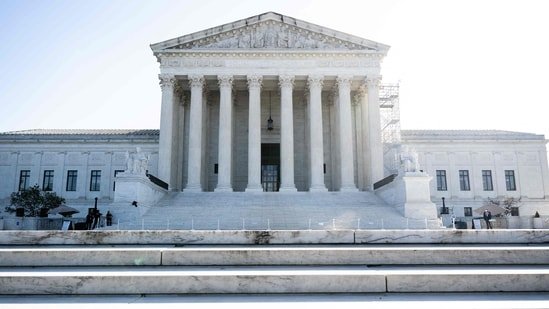
this trump card The administration asked United States Supreme Court Preventing government watchdogs from questioning senior officials and obtaining internal records about a Department of Government Efficiency program that was once run by Elon Musk.
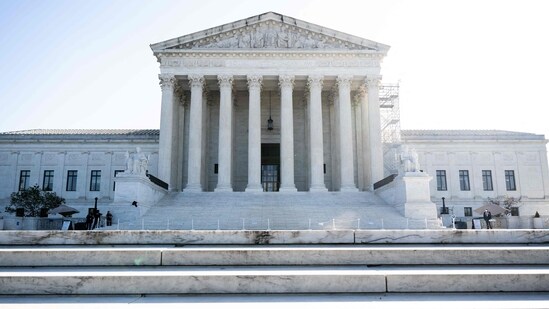
The Justice Department’s March 18 request is part of a long-running legal battle by Citizens for Responsibility and Ethics in Washington to expose information about DOGE’s dramatic cuts in federal spending and the layoff of thousands of government workers last year.
Last year, judges intervened in the government’s favor in the same case, blocking CREW’s fact-finding efforts. But the case was sent back to a federal appeals court, which allowed CREW to continue seeking documents and testimony after the liberal-leaning group narrowed some of its investigation.
CREW asked the government to record information about DOGE under the federal Freedom of Information Act. The Trump administration argued that DOGE was not an “agency” covered by the transparency law.
Before discussing the core issue, a Washington judge allowed CREW to gather evidence about how DOGE operates, including having its administrator, Amy Gleason, testify under oath in a deposition. The government has been fighting the move for months.
Attorneys for the U.S. Solicitor General’s Office wrote in the new petition that the lower court’s handling of the dispute “violates the autonomy and confidentiality of the President’s advisers and foreshadows time-consuming and burdensome discovery proceedings.”
A CREW spokesman did not immediately respond to a request for comment.
court order
In the 6-3 order last June, Supreme CourtThe conservative majority issued a brief, unsigned order overturning a lower court’s decision to allow CREW to obtain the information it wanted. Whether a federal agency is subject to the FOIA “does not open up the entity’s ability to persuade,” the court wrote, making it inappropriate to force the government to disclose information about DOGE’s “recommendations” within the executive branch and whether those recommendations were followed.
The justices also wrote that “the separation of powers concerns judicial deference and restraint by attorneys in the discovery process regarding communications within the executive branch.”
CREW withdrew its request for information about the DOGE office’s “advice,” but continued to request details about its structure, functions, and decisions that it “directed,” rather than “advised,” did. A three-judge panel of the U.S. Court of Appeals for the D.C. Circuit declined to interfere with CREW’s request to modify in July, and the panel declined to reexamine the decision in mid-December.
The Justice Department has asked the Supreme Court to consider the merits of the case, but so far has not asked the justices for immediate emergency intervention.
Controversy over access to government records and information about what DOGE-affiliated workers did last year and Musk’s role has lingered long after the world’s richest man resigned from his official role as presidential adviser last spring. Musk spearheads the effort and serves as its public face, but does not serve as the office’s official administrator.
personal information
The legal battle has forced the government to reveal new details about the extent of DOGE’s access to Americans’ personal information and communications with an unidentified “political advocacy group” that wanted help analyzing state voter rolls.
Earlier this month, a federal appeals court blocked Musk from being forced to testify in a separate case alleging that he exercised unconstitutional executive authority in directing the shutdown of the U.S. Agency for International Development, after a Maryland judge ruled that the deposition could proceed.
one New York A judge forces the government to release the names of DOGE-related employees and contractors as part of a lawsuit over funding cuts to the National Endowment for the Humanities.
She later ordered the group pursuing the case to temporarily remove a widely circulated online video of testimony from former DOGE employees discussing the use of artificial intelligence tools to find funding related to diversity, equity and inclusion (DEI). On Monday, a judge ruled that the videos could be released again, writing that the government’s report that witnesses faced harassment was “deeply troubling” but citing a “compelling public interest.”
In Washington, a federal judge ordered Ministry of Justice Try to find any phone numbers Musk used while he was in the White House. Organizations seeking public records in the case have expressed concerns that information they might later be entitled to would be lost if Musk used personal devices while working for the government. The Justice Department will update the judge on the progress by April 3.