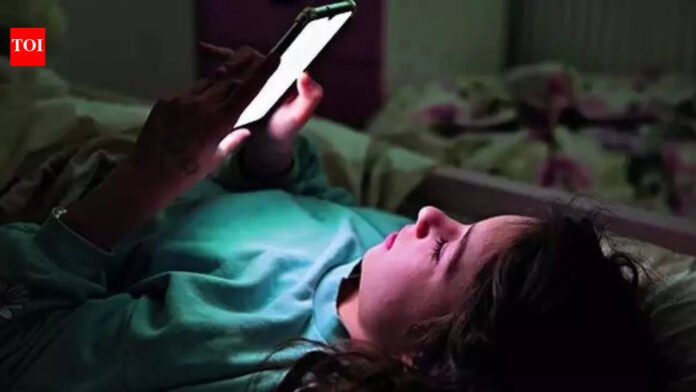
NEW DELHI: As parents worry about the negative impact of screen addiction among teenagers, legal experts including former CJI Ranjan Gogoi have applauded the intention behind the move by Karnataka and Andhra Pradesh to ban social media use by children below a certain age, but expressed doubts about the relevance and effectiveness of legislative or administrative intervention.TOI spoke to various other experts, including former Attorney General Mukul Rohatgi and senior advocates AM Singhvi, Rakesh Dwivedi and Devadatt Kamat, to discuss the effectiveness of a state enacting a law to prevent children below a certain age from accessing social media platforms when telecom and information technology fall entirely under the Centre’s legislative ambit, and possible ways and means to pull children out of the social media morass.Gogoi, whose grandchildren are at an impressionable age, spoke more like a wise elderly parent than a legal expert: “Social media is here to stay. Instead of banning children from using it, they should be educated about its constructive usage. The older generation must teach them the benefits of social media as it provides instant access to a vast knowledge base. Why deprive children of the opportunity to enjoy its immense benefits?”When pointing out that Australia bans Tiktok, Facebook, Instagram, YouTube, Snapchat and Threads for teenagers under the age of 16, Gogoi said, “Compared to Australia, our social values and structures are very different. We don’t have to blindly follow other countries. Our strong social bonds and parental relationships will help guide children to use social media beneficially.”Rohatgi is skeptical about the functioning and enforcement of different laws by countries enacting different age limits for children’s access to social media: “Telecommunications and information technology are core subjects. Countries should not enact laws individually. It creates confusion. It should be the government that introduces legislation in Parliament to resolve the pan-India issue. “Singhvi said that in principle the objectives behind the proposed regulatory framework were laudable and desirable. “Across the political spectrum, suffering parents, teachers and elders will recognize the harmful impact that unlimited access to social media has on impressionable young people.”What kind of mechanism should be in place to regulate it? “As always, God and the devil are in the details,” Singhvi said. The real test will depend on proper implementation, without harassment and irrelevant ulterior behavior. ” “The ban should not be absolute as children also have the fundamental right to communication and access to information. The ban should be against rotten content posted on social media where there are insufficient safeguards to prevent children from accessing such objectionable content,” Dwivedi said.Kamat, who has two impressionable children, said the mental health of the next generation should be protected from the harmful effects of unrestricted use of social media. He said that while communication falls entirely within the legislative purview of the Centre, states can introduce regulatory mechanisms under broad health topics.
Top legal experts divided over children’s social media ban

WEB DESK TEAMhttps://articles.thelocalreport.in
Our team of more than 15 experienced writers brings diverse perspectives, deep research, and on-the-ground insights to deliver accurate, timely, and engaging stories. From breaking news to in-depth analysis, they are committed to credibility, clarity, and responsible journalism across every category we cover.
Related articles
Recent articles