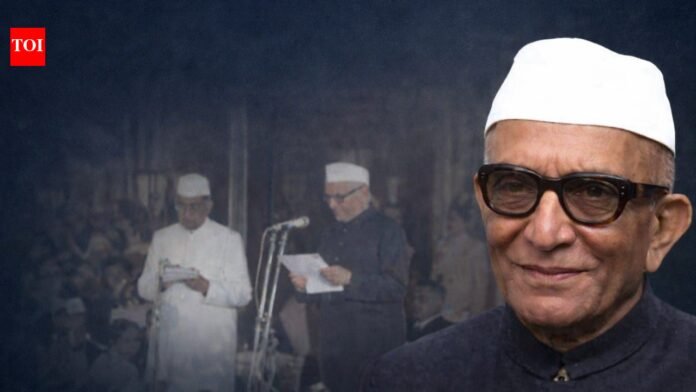
On a quiet morning in March 1977, in the solemn hall of the Rashtrapati Bhavan, a brief oath-taking ceremony lasted less than three minutes and changed the trajectory of Indian politics.When Morarji Desai, then 81, was sworn in as the country’s first non-Congress prime minister on March 24, 1977, it was not just a changing of the guard but the first real disruption to an order that had gone largely unchallenged since independence.The oath-taking ceremony was presided over by the then Acting President BD Jatti.
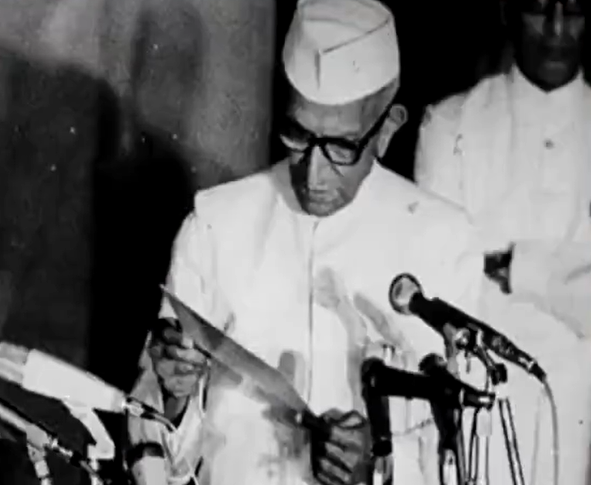
At first glance, the ceremony seemed ordinary, a formal transfer of power at the presidential residence. But behind its brevity lies a historic transformation: the end of Congress’s dominance in recent decades, the post-Emergency political reckoning and the beginning of alliance politics at the Center.
Election 1977: The vote that changed everything
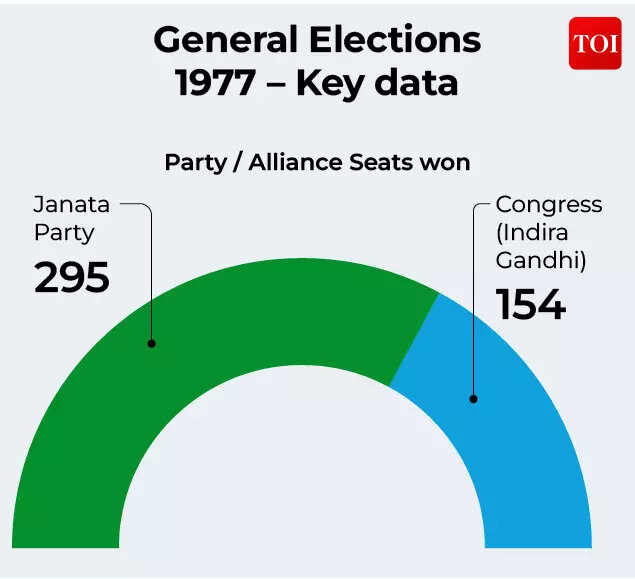
The 1977 general election was unlike any that India had experienced since independence.In the months leading up to the polls, the four main opposition blocs – Samajwadi Party, Janata Sangh, Bharatiya Janata Party (BLD) and Congress (O) – came together to form People’s Party.This unprecedented unity was driven by a common goal: to challenge the Congress party’s rule under then Prime Minister Indira Gandhi and end the Emergency.The movement gained momentum from widespread anger over the state of emergency – marked by forced sterilization campaigns, ghetto demolitions, arrests of political opponents and press censorship.Perhaps for the first time, voters in rural and urban India are not only engaging but resisting.The results were decisive. Of the 542 seats, the BJP won 295, while the Congress was reduced to 154, losing more than 200 seats from the last election.
.
Morarji Desai emerged as the consensus choice to lead the new government.Desai was a veteran of the freedom movement, having served as Chief Minister of Bombay (1952-1957) and Deputy Prime Minister (1967-1969).At 81, he became the oldest person to become prime minister, a symbol of continuity in a chaotic moment.
Morarji Desai: The elder statesman at the helm
Morarji Desai’s rise was shaped as much by personal convictions as by political currents.Born in 1896, he resigned from the government in 1930 to join the freedom movement under Mahatma Gandhi.
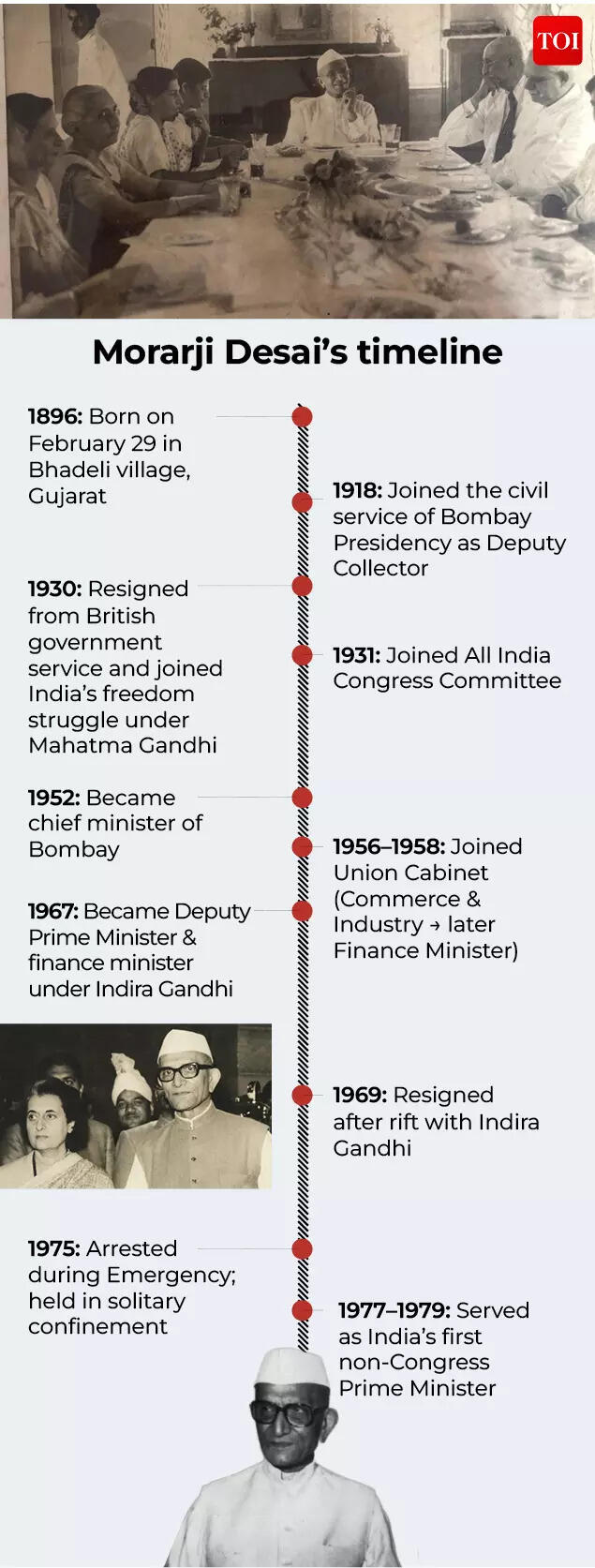
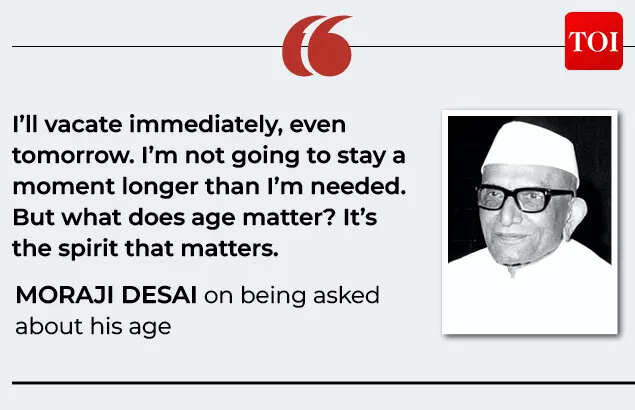
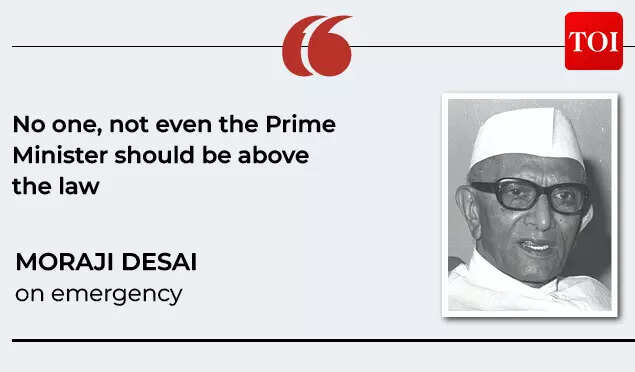
He was imprisoned several times and later held important positions in Congress.During the Emergency, Desai was arrested on June 26, 1975 and held in solitary confinement for several months.His return from political prisoner to prime minister in 1977 reflected the larger story of reset.He has always maintained that no one, including the Prime Minister, should be above the law.He once said: “In life a man should act according to truth and faith” – a statement that would come to define his politics and his era.
.
Desai was later awarded the Bharat Ratna in 1991 and the Nishan-e-Pakistan in 1990.
Understanding the 1977 transition: What scholars say
The dramatic changes in Indian politics in 1977 did not happen suddenly. Political scientists and historians have long studied how and why Indian democracy, which had seemed monolithic for decades, suddenly shifted.Rajni Kothari: Congress SystemRajni Kothari was one of the first scholars to describe India’s post-independence political order as the “Congress system”. In his seminal work india parliamentary systemKothari explained that Indian politics in the 1950s and early 1960s was not dominated by a single party in the simple sense, but by a system in which the Congress Party was the center of political life.Kothari believes that the Congress party system consists of a unique mechanism of internal political competition. Opposition parties exist, but they play a role similar to that of pressure groups; they have little chance of taking direct power. Myron Weiner: Elections, emergencies, and democratic correctionIn his influential 1977 analysis, political scientist Myron Weiner examined the congressional elections that led to the abrupt end of Congress. Weiner describes the 1977 elections as a moment for Indian democracy to correct itself after the authoritarian precedent set during the Emergency.Weiner stressed that the Emergency was expected to consolidate Indira Gandhi’s authority. Between 1975 and 1977, the central government under Gandhi suspended basic rights, imposed press censorship, and used state machinery to suppress dissent. Instead, the election results were strongly rejected by Congress:
- Several opposition parties merged into the People’s Party
- Opposition leaders, many of whom have recently been released from prison, campaign across the country
- Voters overwhelmingly support PPP alliance
Yogendra Yadav: The era of the four-party systemYogendra Yadav contributes to understanding the evolution of the Indian party system through different stages, building on the work of Kothari and other scholars who have followed Indian politics for decades. Yadav’s framework identifies four broad party system eras in post-independence India:
- First Party Systems (1952-1967): Congressional system dominates
- Second Party System (1967-1989): Congress retains centrality amid mounting challenges, culminating in brief Janata interlude
- Third-party systems (1989-2014): Characterized by alliance politics and fragmented national competition
- Fourth-party systems (since 2014): Characterized by the dominance of the Bharatiya Janata Party
Fissures, emergencies, and the restoration of Congress
The rift between Morarji Desai and Indira GandhiThe conflict between Morarji Desai and Indira Gandhi was one of the decisive power struggles in post-independence India.It began after the succession battle after the death of Lal Bahadur Shastri in 1966, when the Congress Syndicate, the party’s traditionalist leadership, supported Gandhi over Desai.Desai was a senior leader who embraced conservative economic and administrative principles and represented the old school, while Gandhi embodied a new populist approach that increasingly challenged the status quo.Tensions further escalated in 1969 when Gandhi removed Desai from the finance ministry. This moment prompted the Congress party to split into the Congress (R), headed by Gandhi, and the organizational wing, the Congress (O), headed by senior leaders such as Desai. Ideologically, the two leaders differed greatly: Gandhi pursued socialist measures, including the nationalization of fourteen major banks, while Desai favored limited government intervention. Emergency: Democracy’s dark chapterThe Emergency (1975-1977) was the climax of the political struggle between Gandhi and Desai. After the Allahabad High Court ruled that her election to the Lok Sabha was invalid, Gandhi imposed a 21-month state of emergency across the country, citing a threat to the country’s stability. Opposition leaders, including Desai, were arrested and held in solitary confinement. During this period, the government took sweeping measures to expand its control over political and social life. However, the Emergency also triggered an unprecedented anti-Congress wave, prompting the opposition parties to unite under the banner of the BJP.
.
Morarji Desai was released in early 1977 and became the face of the alliance, campaigning across the country and capitalizing on public dissatisfaction with the dictatorship. The 1977 general election ultimately delivered a decisive verdict in Desai’s favour. Congress Restoration: Indira Gandhi ReturnsHowever, the PPP’s tenure was not stable. Internal divisions, factionalism and a lack of cohesive governance undermined its ability to govern effectively. Meanwhile, Indira Gandhi gradually rebuilt her political base despite losing power. Her resurgence was marked by major victories in state assembly elections in Karnataka and Andhra Pradesh.Gandhi’s victory demonstrated her enduring appeal to the rural poor, minorities and women. The 1980 election cemented her comeback. Gandhi’s party secured an absolute majority with 353 out of 529 seats, while the BJP’s number fell to 41 seats.
Can 1977 happen again?
The 1977 elections remain the most striking example of a united opposition defeating a dominant governing party at the national level.Ahead of the 2024 Lok Sabha elections, the opposition parties have attempted similar consolidation under the Indian Alliance.Despite coordination by more than two dozen political parties, the BJP returned to power.Nearly 50 years after Desai was sworn in, the country is once again in the driver’s seat, this time by the Bharatiya Janata Party, raising a familiar question: Can the fragmented opposition replicate the unity of 1977?History offers both hope and warning. While 1977 proved that electoral waves could topple entrenched power, it also showed that cohesion, not just victory, determines longevity.1977 was a reminder that democratic institutions can be reset, but only if voters, opposition forces, and institutions all align at the same time.