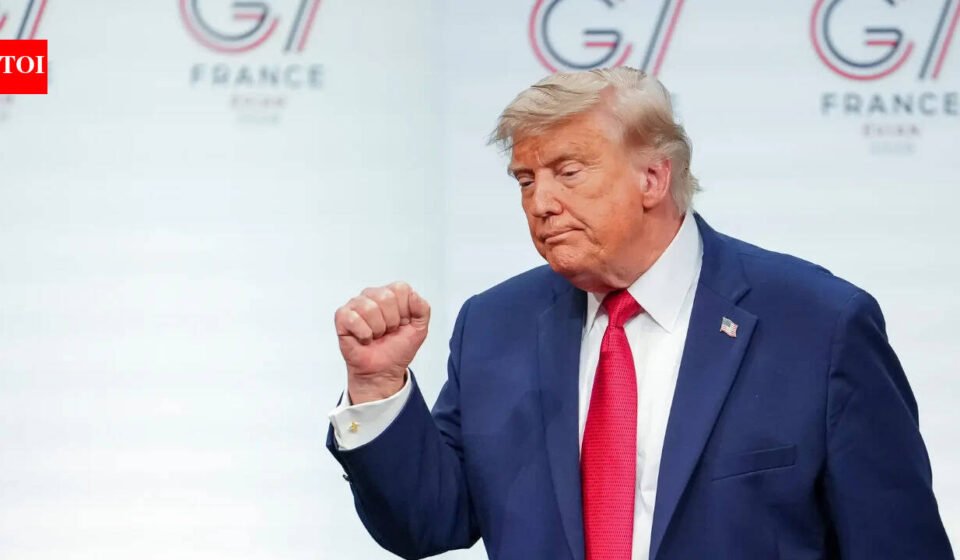

The United States and Iran have reached an interim agreement on Tehran’s nuclear program, opening a two-month negotiation window, but key issues such as verification mechanisms, enrichment limits and long-term compliance remain unresolved and are awaiting further negotiations.The peace deal signed on Wednesday by U.S. President Donald Trump and Iranian President Masoud Pezeshkian aims to open a two-month window for negotiations on Iran’s nuclear program. Senior U.S. officials said on Wednesday that under preliminary terms, Iran would take immediate steps to reopen the Strait of Hormuz to global oil shipments and would be allowed to sell oil without restrictions.Trump sees preventing Iran from acquiring a nuclear weapon as a key goal of the operation he launched with Israel in February. However, the Associated Press quoted analysts as saying that the temporary framework leaves a limited time for resolving the core disputes, unlike previous multilateral agreements that took months to negotiate.The framework states that Iran will not “procure or develop nuclear weapons” and that the two sides will seek to resolve the “disposal” of Iran’s highly enriched uranium during this period, including dilution under the supervision of the International Atomic Energy Agency (IAEA), the United Nations’ nuclear watchdog.Trump directly linked the initiative to preventing nuclear escalation. “If it’s not permanent, we’re going to bomb them,” he said of Iran’s nuclear ambitions and insisted surveillance measures were in place, saying, “We have cameras on every inch.”He also warned that any attempt to move enriched material would trigger military action, saying: “If Iran tries to move it, the United States will attack and ‘they will disappear.'” They know this. “That timeline, however, has raised suspicions inside and outside Washington. “My suspicion is Iran itself,” Sen. Lindsey Graham said, according to the Associated Press. “What does a good deal look like? No enrichment. We’ll see if we can get there. But whether we can get phase two, I don’t know.”Experts also question whether there is enough political and technical space to reach a comprehensive agreement within 60 days. David Schenck, director of the Arab Politics Program at the Washington Institute for Near East Policy, told the news agency, “This administration has proven it has difficulty focusing on these issues.”Schenck added: “This is the kind of thing that requires sustained attention, attention to detail and a lot of technical expertise. Trump lost focus and moved on, and so did the administration.” It seems they don’t understand Iran’s strategy. They didn’t get it the first time, and they didn’t get it the second time. “The 2015 nuclear deal, formally known as the Joint Comprehensive Plan of Action (JCPOA), took more than 18 months of negotiations and involved extensive technical coordination in several capitals, including Vienna.The agreement collapsed after Trump withdrew the United States in 2018, and subsequent negotiations failed to restore a similar framework. Earlier deals included limits on uranium enrichment, centrifuges and heavy water production in exchange for sanctions relief worth billions of dollars.Republican lawmakers said any final deal would require congressional approval. The Associated Press quoted Senator Ted Cruz as saying it was “certainly expected” that the Senate would have the final say.However, Senator Roger Marshall said the compressed timetable could serve a strategic purpose, saying: “Iran’s approach is to negotiate with the intention of stalling so they can rearm themselves. I think the president has to give them some kind of limited time or there will be consequences. So I think it can be done. “The interim draft excludes other long-standing issues, including Iran’s ballistic missile program, its regional proxy network and domestic political issues that have been at the center of concerns for the United States, Israel and Europe.Analysts say the framework is a limited step rather than a comprehensive solution. A senior researcher at the Middle East Institute told The Associated Press that “an agreement is better than more fighting, but the war waged by the United States and Israel against Iran has not achieved its stated goals. This agreement is mainly to clean up unnecessary chaos and give it the best possible face.”