
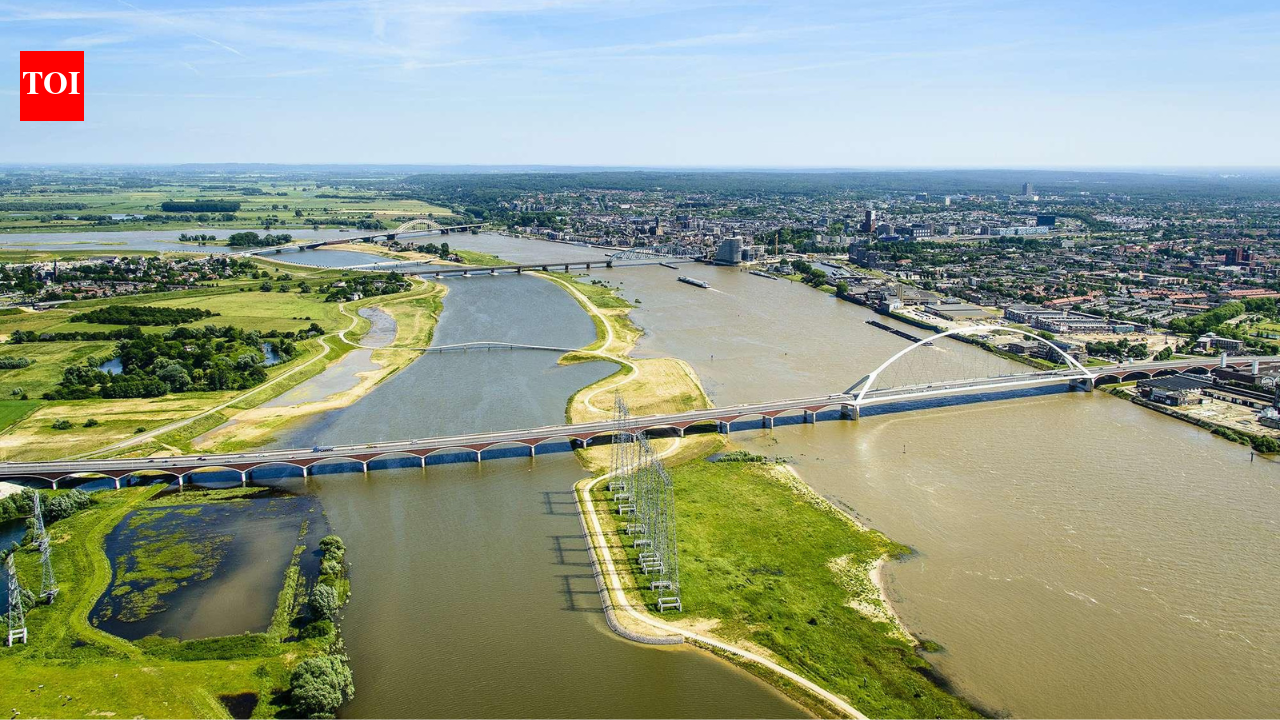
The Netherlands has spent much of its history trying to control rivers with taller dykes and stronger flood barriers. But repeated floods in the 1990s showed that simply building bigger walls was no longer enough. Rising river levels, increased rainfall and the growing impacts of climate change continue to threaten towns, farmland and millions of residents. Rather than forcing the river into a narrower channel, the Dutch took a different approach, giving the water more room to spread safely. The result is the €2.3 billion Room for the River programme, an ambitious engineering and environmental initiative that transforms flood defenses while restoring natural environments across the country.
Why the Netherlands struggles to control rivers
About a quarter of the Netherlands lies below sea level, while much of the rest is only slightly above sea level. Several major European rivers, including the Rhine, Meuse, Waal and IJssel, flow through the country before reaching the North Sea.For decades, the Dutch protected themselves by building dykes, dikes, and flood barriers to confine rivers to narrow channels. The strategy worked well for years, but changing weather patterns gradually exposed its limitations.In 1993 and 1995, unusually high river levels caused severe flooding and forced the evacuation of more than 250,000 people. Engineers realize that increasing flood protection does not eliminate the risk. If a levee fails, the consequences could be catastrophic.
Changing ideas about flood management in the Netherlands
Instead of asking how to stop rivers from flooding, Dutch engineers began asking a different question: What if rivers were allowed to flood safely?This simple shift in thinking became the basis for the Room for the River initiative launched in 2006. Instead of squeezing the river into a smaller space, the government decided to create more water space during periods of unusually high flows.The plan combines engineering with natural restoration. It recognizes that flooding cannot always be prevented, but its impact can be greatly reduced by allowing excess water to be distributed over carefully planned areas rather than densely populated neighbourhoods.More than 30 major projects have been implemented across the country, using a range of technologies aimed at increasing river capacity.Engineers moved levees farther from the river banks, lowered floodplains, dug new side channels and removed structures that impeded the natural flow of water. In some places, farmland has been converted into temporary flood storage areas, while old industrial areas have been redeveloped into wetlands and riverside parks.Unlike traditional flood barriers that simply push water downstream, these measures allow the river to expand naturally during periods of heavy rainfall, reducing pressure on the entire river system.The redesign also created new habitats for wildlife, improved water quality, and opened up green public spaces that residents can now use for cycling, walking, and recreation.
How to redesign an entire community
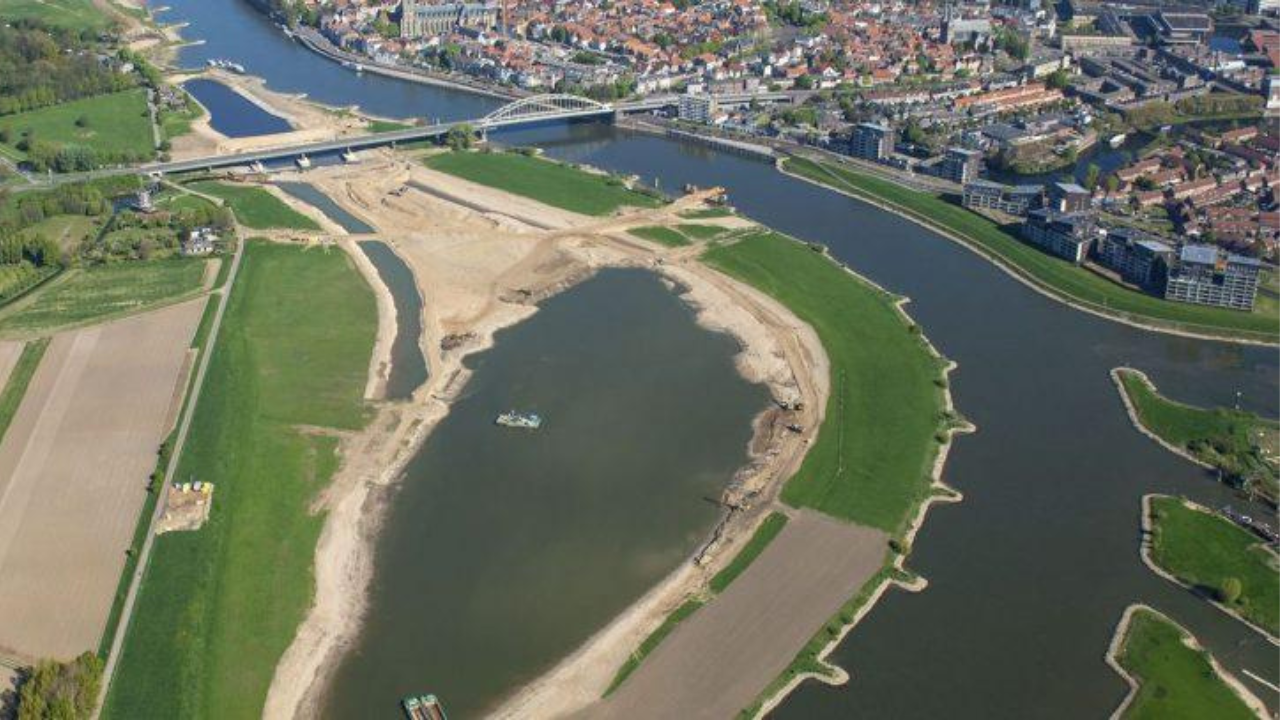
One of the program’s most famous projects takes place in the city of Nijmegen.Rather than improve flood protection, engineers dug a second channel along the Vaal River, effectively creating a new island called Veur-Lent. The additional channel provides an alternative route for floodwaters during periods of high flow, significantly lowering water levels near the city.At the same time, the area was transformed into parks, beaches, bike paths and recreational spaces, demonstrating that flood protection infrastructure can also improve people’s quality of life rather than just protect them from disasters.Across the country, similar projects balance flood safety with environmental restoration and urban development.
Why the experiment is now considered a global success
As many projects were completed in 2019, the Netherlands experienced several periods of high river flows without the large-scale evacuations that once accompanied similar situations.The scheme has increased river capacity, reduced flood risks for millions of people and restored thousands of hectares of floodplains and wetlands.It has also become one of the world’s leading examples of nature-based climate adaptation, showing that working with natural systems is sometimes more effective than controlling them solely through engineering.Countries such as Bangladesh, Germany, Vietnam, the UK and the US have studied aspects of the Dutch approach while developing their own flood protection strategies.
A new way of life to combat climate change
Climate scientists expect that as global temperatures continue to rise, many areas will experience heavier rainfall and more frequent flooding. The Dutch experience shows that adapting to these changes may require rethinking long-held assumptions rather than simply strengthening existing infrastructure.Rather than viewing rivers as enemies that must always be restricted, the Netherlands recognized that water needed space to flow safely. By redesigning the landscape rather than endlessly raising the fence, it found a solution that both protected the community and restored the ecosystem.The project has become a powerful example of how climate adaptation can simultaneously create safer, greener and more liveable places, proving that sometimes the best defense against nature is learning to work with it rather than against it.