
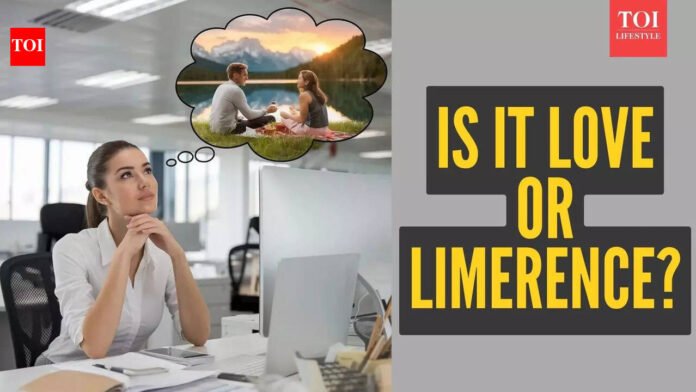

Have you ever found yourself constantly thinking about someone, replaying conversations, imagining a future together, feeling delighted when they responded but frustrated when they didn’t? Psychologists say this overwhelming emotional state may not actually be love. Instead, it may be infatuation, a powerful form of romantic obsession that can dominate thoughts, emotions, and behavior for months or even years.This concept has exploded on social media and relationship discussions lately, with many people realizing that what they once believed to be deep love may actually be a psychological phenomenon rooted in obsession, uncertainty, and idealization. Experts say understanding crushes can help people recognize unhealthy relationship patterns and ultimately create healthier emotional connections.
What is an obsession? Definitely not love
The term limerence was originally coined by Dorothy Tennov, an American psychologist who studied romantic infatuation in the 1970s. Her research found that many people experience an intense state of longing that goes far beyond ordinary infatuation. Tanoff describes infatuation as a psychological state characterized by an obsession with another person, heightened emotions when feelings appear to be reciprocated, intense anxiety when feelings are not reciprocated, and an idealization of that person as the perfect partner.

This psychological phenomenon makes you think you are in love
In an infatuation, the object of affection (often called the “obsession object”) can become the center of someone’s mental world. Researchers say this experience is very common. Some studies show that more than half of people have experienced at least one crush in their lives. However, despite its common occurrence, remembrance is still widely misunderstood and often mistaken for true love.
Expert Insights: Why Infatuation Feels Like Love
Giulia Poerio, a British psychologist and academic researcher who is an associate professor of psychology at the University of Sussex in the United Kingdom, said that infatuation is almost the same as the early stages of falling in love. Boerio discusses infatuation in academic interviews and in psychology podcasts that study intrusive romantic thoughts. In an interview with The Craving Lab Psychology Podcast, she discussed her research on romantic obsession and mind-wandering, saying: “Infatuation involves persistent, intrusive thoughts about another person, as well as a strong desire for emotional reward.“

Why do some people become emotionally obsessed with someone if infatuation isn’t love
However, a crucial difference occurs when feelings are uncertain or unreciprocated. Pollio revealed that the experience can be overwhelming as intrusive thoughts about the person dominate the brain. “It’s a real cognitive intrusion into your mind,” she explains, adding that the emotional reward makes the experience addictive.This mix of anticipation, hope, and uncertainty can create powerful emotional loops similar to reward patterns in addictive behaviors.
The neuroscience of romantic obsession
Researchers who study infatuation explore the neural mechanisms behind romantic obsession and believe that infatuation is closely related to the early biological stages of attraction, when brain chemicals produce powerful emotional highs, but they explain that long-term relationships cannot be sustained by infatuation alone.

Not love? Psychologists say this intense feeling may be ‘Limerence’
Helen Fisher, Ph.D., a biological anthropologist and senior fellow at Indiana University’s Kinsey Institute, has conducted extensive research on the neuroscience of romantic obsession. In Fisher’s research interviews and lectures on romantic attraction and brain chemistry, she noted that “romantic love is one of the most powerful brain systems humans have evolved.” She noted that the early stages of attraction may be similar to addiction in the brain.Ultimately, experts emphasize that the relationship must evolve into affection, communication, and respect, all of which are tied to healthy, mature love. When this shift does not occur, emotional fixation may intensify rather than disappear. Experts warn that severe infatuation can lead people to rearrange their lives around the person they want. In the worst cases, people may lie about their motives or seek indirect ways to maintain an emotional connection.
Why uncertainty makes infatuation stronger
Psychologists say uncertainty is one of the most powerful factors in triggering infatuation. Unlike stable relationships, infatuations tend to flourish when the other person sends mixed signals or when the relationship is complicated or impossible. Because the desired person sometimes shows interest and other times distance, the emotional reward system in the brain becomes highly activated.

Can’t stop checking their Instagram? Experts say you could be falling for an obsession
A small gesture like a text, a compliment, or a brief moment of attention can trigger a strong feeling of excitement, but the emotional breakdown can be just as strong when the attention disappears. This unpredictable cycle is why infatuation can often feel both exciting and exhausting.
modern Dating May intensify infatuation
Modern technology may be exacerbating such relationships, says relationship psychologist Alexandra H Solomon, Ph.D. (clinical psychologist, faculty, Northwestern University; licensed marriage and family therapist). Social media platforms and dating apps allow people to constantly watch the people they want. Solomon has written extensively about obsession and romantic idealization in modern relationships. Solomon’s Relational Psychology Review and Lectures on Modern Intimacy asserts: “When we don’t really know someone, we often fill in the gaps with fantasies.”

Obsession and dangerous side of romantic obsession, psychologist warns
Explaining why infatuation often involves idealizing a partner, he explains, “Apps and social media provide input and data about the object of your desire.” In previous decades, people could lose touch with their romantic partners after being rejected. Today, however, social media has created countless opportunities to reexamine people’s online lives. This can reinforce the obsessive thought patterns that characterize obsessions. With continued digital contact, emotional attachments may become stronger rather than disappear naturally.
How long can an infatuation last?
Tennov’s original research showed that trance periods typically last from 18 months to three years, but can last longer in some cases. During this period, people experiencing infatuation often exhibit difficulty concentrating, mood swings, intense daydreaming about the person, and interpreting neutral behaviors as romantic signals.Because this experience is so draining, it can interfere with work, friendships, and other relationships. However, many people remain unaware of what they are going through.
Why people confuse infatuation with “true love”
One of the biggest reasons why remembrance is misunderstood is that it shares many characteristics with romantic love. Both involve strong emotional attachment, excitement, and desire. However, psychologists say there are important differences between the two.
- Love often develops through shared experiences, mutual support, and emotional stability.
- Infatuation, on the other hand, often thrives on fantasy and idealization.
An active person may fall in love with an imaginary person rather than truly getting to know them. This imagined connection can feel very real, even if the relationship barely exists in reality.
Can infatuation be overcome?
Mental health experts insist that recognizing an obsession is the first step to getting over it. Treatment may include:
- Cognitive behavioral therapy (CBT)
- cognitive reappraisal strategies
- Reduce contact with that person
- Challenging idealized fantasies
Bellamy also recommends limiting contact with the subject, including avoiding their social media profiles. These steps can help interrupt the emotional feedback loops that fuel obsessive thoughts. Infatuation is an intense emotional experience that feels indistinguishable from love, but psychologists say the two are fundamentally different.Love grows through mutual understanding and stability, while infatuation thrives on uncertainty, fantasy, and emotional obsession. As discussions about crushes spread across social media and relationship psychology, experts hope more awareness will help people recognize the difference, because they say understanding crushes may be the key to breaking free from the cycle of romantic obsession and finding healthier, more fulfilling love.