Switzerland is building the world’s largest underground battery to power 210,000 homes a day | World News

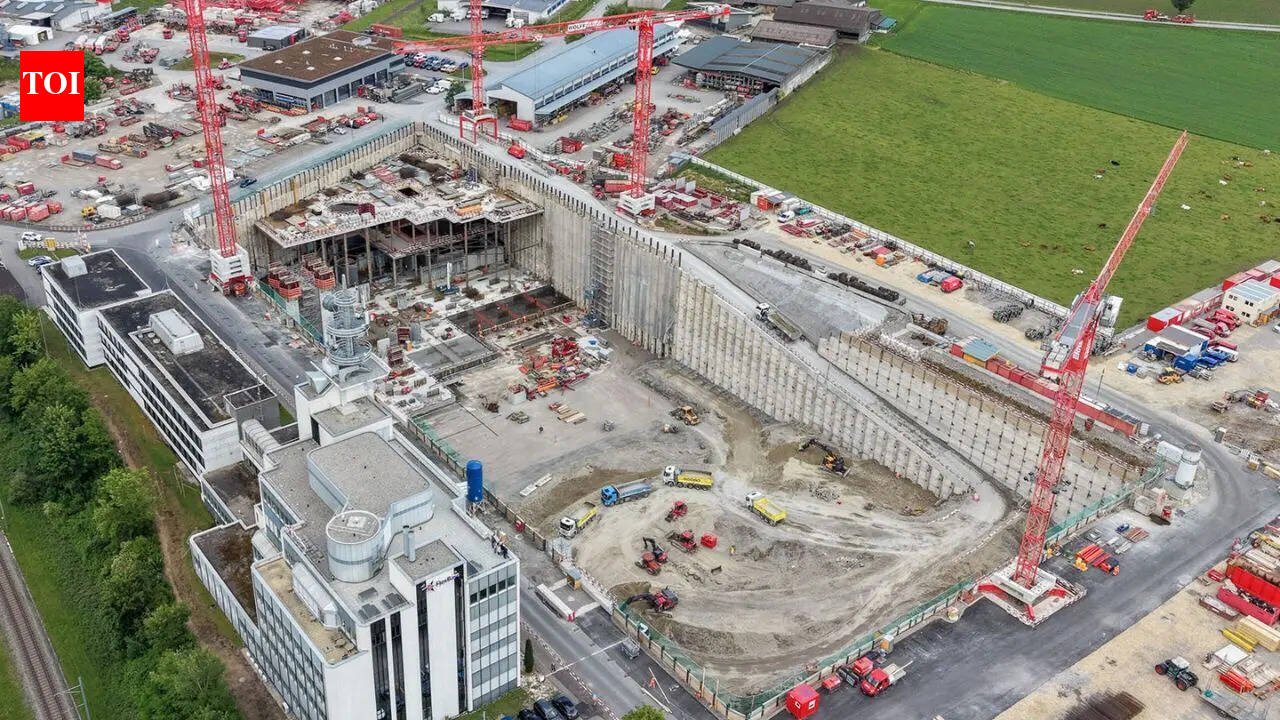
Something unusual is happening deep beneath Switzerland, but it hasn’t attracted much attention outside the energy community. Engineers are building what could become one of the world’s largest underground energy storage systems, designed to store renewable electricity at scale and release it when the grid is under stress.Early reports indicate that the system can accommodate approximately 2.1 GWh of energy and provide up to 1.2 GW of electricity, enough to power approximately 210,000 homes for an entire day. It is developed by Flexbase with support from Invinity Energy Systems and is expected to be completed in 2029.
Inside the world’s largest underground fort in Switzerland: what’s so unique about it
At first glance, calling it a “battery” is a bit misleading. This is not a system you find in phones, cars, or even typical grid storage equipment.Instead, it uses vanadium redox flow technology to store energy in liquid electrolytes in large storage tanks. When electricity is needed, the liquid circulates through the system to generate electricity. This design choice changed everything.Unlike lithium-ion systems, which degrade slowly over time, flow batteries perform more stably over long periods of time. Engineers say they can operate for decades with far less performance loss. Another detail is more important than people realize. The system is non-flammable, making it safer for large underground deployments where thermal risks are a serious issue.
How it effortlessly powers 210,000 homes
The title number sounds almost abstract until you break it down. At full load, the system can store 2.1 GWh of electricity and release energy at a rate of 1.2 GW. In practice, this is enough to provide around 210,000 homes with 24-hour power.But that’s what makes it more interesting. It’s not just total energy. It’s about timing. Electricity demand is in disarray. It spikes in the morning, spikes again in the evening, and falls overnight. The grid must remain balanced at all times or risk instability.The system is designed to respond almost instantly, releasing stored energy when demand suddenly rises. Think of it less as a backup generator and more like a shock absorber for the entire grid.It is also strategically located near the Laufenberg Star substation, one of Europe’s main electricity hubs connecting Switzerland, Germany and France. The location is not random. It sits at a place where cross-border energy flows are constantly changing.
Why engineers are looking beyond lithium-ion batteries
Lithium-ion batteries dominate everything from mobile phones to electric cars, but they are not suitable for long-term grid storage. Flow batteries are gaining attention because they solve a completely different problem.Rather than concentrating energy and power into a compact unit, they separate the two. This means energy capacity can be expanded without redesigning the system itself.Engineers point to three reasons why this is important:
- They last longer and degrade more slowly
- They are safer at scale
- They can be extended in a modular way
An unexpected connection to an artificial intelligence data center
One detail that makes this project stand out is its connection to the 500 MW AI data center complex being developed at the same time. AI systems are energy intensive, and demand is growing faster than most grids can easily handle. Training models and running large-scale computing infrastructure requires constant, stable power.By pairing large storage systems with data centers, the idea is to ease energy demands and reduce reliance on fossil fuel backup power during peak usage.
Why this project is more important than it seems
The real issue with renewables is no longer generation, but timing. Solar power generation peaks at noon. Wind strength depends on weather conditions. But electricity demand follows human behavior, not nature.This underground system was designed to solve this problem. It stores excess renewable energy when supply is abundant and releases it when demand rises.If successfully scaled, such a system could:
- Reduce pressure on the national grid
- Reduce reliance on fossil fuel backup plants
- Improving cross-border energy sharing in Europe
- Making renewable energy more reliable in practice
A quiet but important shift is taking place here. Energy no longer just means producing more energy. It’s about controlling when and how you use it.