
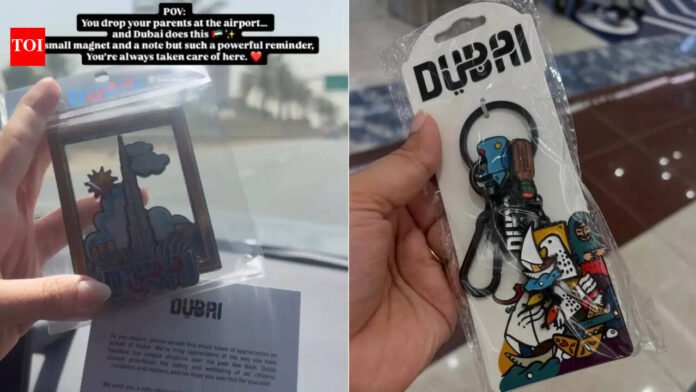
In a week marked by travel disruptions, regional uncertainty from Iran’s war with the United States and Israel, and emotional departures, something unexpected happened at Dubai International, one of the world’s busiest airports, and it had nothing to do with flights. At DXB (the common name for Dubai International Airport), travelers leaving the city not only receive boarding notifications and security checks, but also some sincere little gifts.The gesture has disappeared viralturning a routine departure into a deeply emotional moment.
When Dubai International Airport is no longer just a transit point
Airports are often associated with efficiency, urgency and mobility, but in recent days, DXB has quietly transformed into something else. It is currently a space of reassurance and emotional connection. Airport staff began handing out souvenir bags to departing passengers due to unstable travel conditions caused by regional tensions and the war between Iran and the United States and Israel.The initiative was announced with little fanfare. There were no grand battles. Instead, it organically appears at the gate as the passenger is preparing to depart, and the timing makes all the difference.
What’s in the now popular “DXB gift package”?
At first glance, the content is simple:
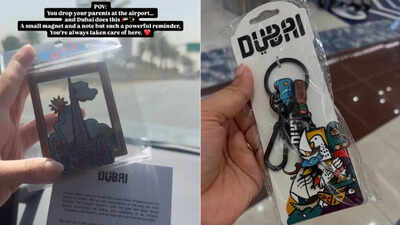
- Dubai themed refrigerator magnet
- Keychain featuring city skyline
- Printed thank you note
What resonates most, however, is the message behind the items. The note thanked passengers for their patience during the disruption and assured them that their safety and well-being remain the top priority.Some versions include iconic images such as the Burj Khalifa, turning the packaging into a symbolic souvenir of the city. In fact, seemingly small symbols have become much more meaningful.
Why passengers are excited about viral ‘DXB gift pack’
The response has been overwhelming and very personal. Passengers of different nationalities shared stories of bursting into tears at the boarding gate, feeling unexpectedly “seen” and valued, and experiencing comfort during an already emotional farewell process. One resident described the moment as “shattering” her emotions and said the gesture came exactly when she needed comfort. Another woman shared how her parents initially thought the package was an official document, only to later realize it was a grateful gift that turned a routine farewell into an unforgettable moment. In a place defined by movement, DXB succeeds in creating stillness, if only for a moment.To understand why this move resonates so much, you have to look at the broader context. The UAE and the wider region have recently experienced airspace disruptions, flight delays and cancellations, and heightened geopolitical tensions amid Iran’s war with the United States and Israel. These factors make travel more stressful than usual, with uncertainty a constant companion for many passengers.Against this backdrop, the DXB initiative has a very specific purpose, which is to humanize the travel experience during uncertain times. When people are already anxious, procrastinating, and saying goodbye emotionally, even small acts of empathy can have a disproportionate impact.
‘Uniquely Dubai’: a brand beyond infrastructure
Dubai has long earned a global reputation for size, speed and spectacle, but this moment highlights another dimension: hospitality. Passengers and residents alike have described the initiative as “uniquely Dubai”, embodying the city’s warmth and proving that it prioritizes people, not just systems.Frequent travelers note that despite passing through airports around the world, they have never experienced anything like it. This is where Dubai’s soft power comes into play, not through skyscrapers or luxury goods, but through emotional intelligence in public spaces.What started as a simple initiative quickly gained traction online. Social media platforms have been flooded with photos of souvenir packages, videos of passengers receiving souvenirs and emotional testimonials from residents. A recurring theme in these posts is: “This is why Dubai feels like home.” The virality of these posts reflects a global appetite for positive, people-centered narratives, especially during a period dominated by crisis headlines. This small gesture caused such a big reaction because it triggered three powerful emotional triggers. These gifts are handed out during the most exciting moment of the trip – the farewell. Passengers weren’t expecting anything, which made the move feel all the more real. The message acknowledged Travelers’ patience and presence that is rarely felt in large systems.Essentially, DXB transforms a transactional experience into a relational experience. Globally, airports are constantly evolving, but mainly in terms of technology, efficiency and luxury. DXB does something different. It introduces emotional design into tourism infrastructure. instead of asking,“How can we move people faster?” airports are asking at this point. “How can we make people feel better?” This shift, however brief, is significant.For many UAE residents, especially expats, the airport is an emotionally charged space. They are places where families are reunited and separated, where lives transition between countries, and where identities cross borders. By infusing empathy into this space, Dubai effectively redefines what it feels like to leave. As one traveler put it, the gesture turns a routine into a “core memory” that lingers long after the flight.Beyond its virality, the story is emblematic of a broader trend in which cities are increasingly judged not only by their infrastructure but also by the way they treat people in vulnerable moments. In this case, the cost of the gift is minimal, but the emotional payoff is huge. This reminds us that in high-performance systems, the human touch remains the ultimate differentiator.In a time when travel has become more unpredictable and emotional, Dubai International Airport has managed to do a rare thing. It makes people stop, makes them feel, and in some cases, it makes them cry, not out of stress but out of gratitude, because sometimes the most powerful journeys are not defined by where you go, but by how a place makes you feel when you leave.


