
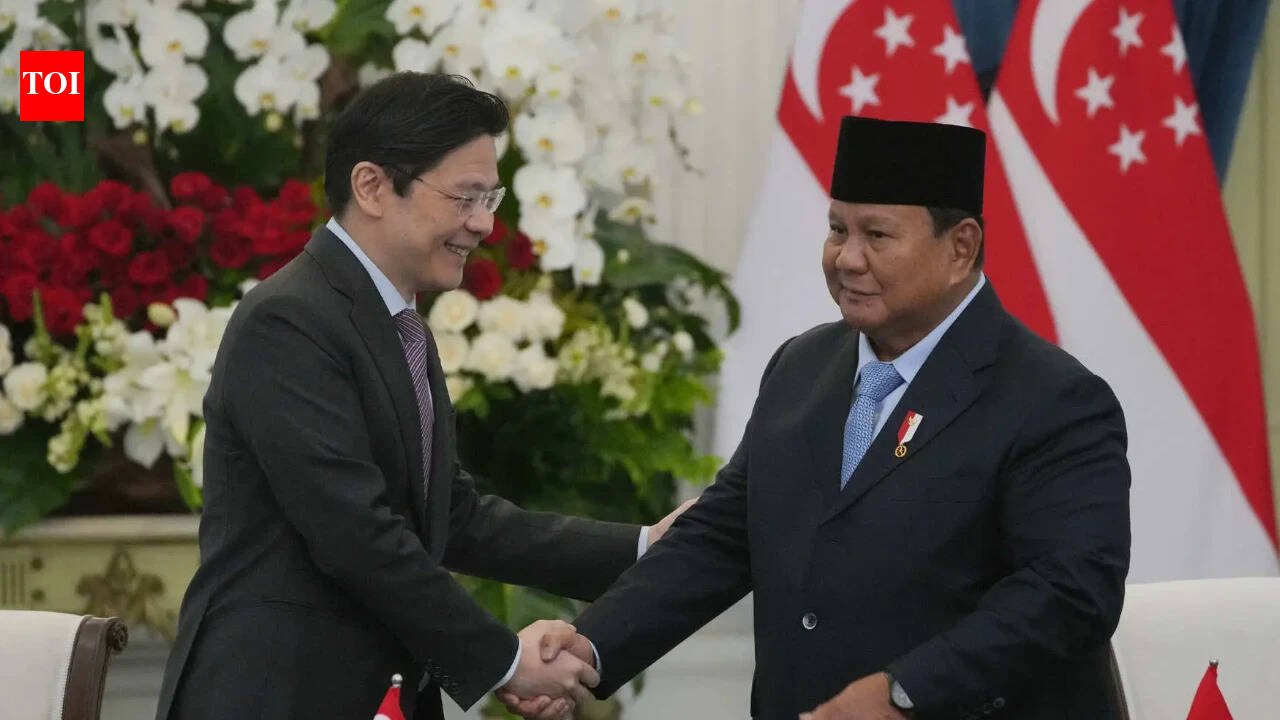
Singapore and Indonesia have committed to keeping the Strait of Malacca open, safe and accessible to all, elevating maritime security to the forefront of their bilateral relationship, which both countries view as critical to regional stability.The commitment follows talks between Prime Minister Lawrence Wong and President Prabowo Subianto at the annual leaders’ retreat in Jakarta on July 6, where they stressed the importance of protecting one of the world’s busiest shipping routes amid growing geopolitical uncertainty.The Strait of Malacca connects the Indian Ocean and the South China Sea and carries a significant share of global trade and energy transportation, making it one of the most strategic maritime corridors in the world. In 2025, the number of ships transiting the strait will exceed 102,500, accounting for approximately 22% of global maritime trade and transporting approximately 23.2 million barrels of oil per day.
Maritime security “strategic unity”
President Prabowo said Indonesia and Singapore reaffirmed their common position on the waterway. “Indonesia and Singapore are countries that share direct borders at the Strait of Malacca. It is in our common interests to maintain the Strait of Malacca as a channel for free passage for all parties,” he told a joint press conference.He added that Indonesia would continue to coordinate with Malaysia and Thailand to ensure that the strait would “always be open to all, safe and accessible to anyone who needs access” in accordance with the United Nations Convention on the Law of the Sea.Prime Minister Huang expressed similar views, linking maritime security to global development. He said recent events in the Middle East highlighted the importance of keeping major trade routes functioning and secure. The war in Iran has hampered traffic through the Strait of Hormuz, disrupting global trade and oil supplies.“As countries littoral on the Straits of Malacca, Singapore and Indonesia are strategically aligned,” Wong said. “It is in our mutual interests to safeguard the rights and freedoms of navigation and keep maritime lines of communication open to all.”The two leaders agreed to work with other littoral states to ensure the strait remains safe, open and passable.
Global focus on the Strait of Malacca
The pledge comes amid heightened global attention on the Malacca Strait following chaos in the Strait of Hormuz. Analysts point out that the Strait of Hormuz serves primarily as an energy export route, while the Strait of Malacca serves as a broader global trade artery.Compared with the Strait of Hormuz, the Strait has a very different governance framework. It is an international strait governed by the United Nations Convention on the Law of the Sea, with transit passage guaranteed to ensure that no country can block, restrict or impose tolls on shipping traffic. This legal framework provides continuity and predictability to global supply chains.Earlier this year, an Indonesian official briefly raised concerns about the possibility of charging ships for transit, but the government quickly walked back the remarks and reiterated its support for freedom of navigation.A total of 26 cross-sectoral agreements and memorandums of understanding were signed at the retreat, compared with 24 agreements and memorandums of understanding signed at last year’s conference in Singapore. The two countries are preparing to celebrate the 60th anniversary of the establishment of diplomatic relations in 2027.