
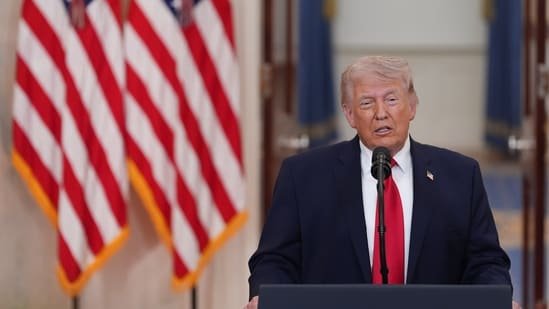
this Strait of Hormuz The issue came to the fore again after Donald Trump addressed the nation to assert America’s reliance on the crucial oil route amid rising tensions with Iran.

In his speech, Trump sought to downplay the importance of the strait to the United States, saying: “We don’t need it. We don’t need it and we don’t need it.”
He added that the United States “imports almost no oil through the channel” and said it would not rely on it in the future.
Trump shifts responsibility
A major part of Trump’s speech focused on urging other countries, especially those that rely heavily on Gulf oil, to ensure the security of their own straits.
“The countries in the world that do receive oil through the Strait of Hormuz have to take care of this passage. They have to cherish it,” he added. “They have to seize it and cherish it.”
Trump called for action, saying: “Go to the Channel, occupy it, protect it. Make it your own.”
He insisted that while the United States would help, other countries should take the lead: “We will help, but they should take the lead in protecting the oil on which they are critically dependent.”
Also read: After the Strait of Hormuz, another strait is at risk: a one-month review of the US-Iraq war
boosting us oil
Trump also used the opportunity to promote domestic energy, saying: “I have a suggestion, number one, buy oil from the United States. We have a lot of it… we have a lot of it.”
At the same time, he defended U.S. actions against Iran, claiming that the country was “completely destroyed militarily, economically and in every other way.” He criticized countries that did not support U.S. actions, urging them to “summon some belated courage… as they should have done.”
What U.S. data actually shows
Despite Trump’s claims that the U.S. imports “almost no oil“Across the Channel, U.S. Energy Information Administration data suggests otherwise.
According to the agency:
- In 2024, the United States will import approximately 500,000 barrels of crude oil per day through the Strait
- Data for early 2025 shows production declining slightly to about 400,000 barrels per day
This still means:
- Accounts for about 7% of total U.S. crude oil imports
- Accounting for about 2% of total liquid petroleum imports
Also read: After a month of war, Iran’s grip on Strait of Hormuz tighter than ever
While dependence is down from 2022 levels, experts say volumes are still large enough to affect supply and pricing.
Why the Strait of Hormuz still matters
The Strait of Hormuz is one of the world’s most important energy corridors, carrying much of the oil exported from the Persian Gulf to global markets.
Any disruption to this narrow channel could impact the supply chain and trigger volatility oil priceespecially for major importers in Asia and Europe.
Brent crude rose 5% to $106.22 a barrel after Trump’s remarks, while U.S. benchmark crude rose 4.2% to $104.36 a barrel.
Notably, Trump has not reconsidered the 48-hour deadline he set earlier for Iran to reopen the strait, so the timeline is unclear.