
The U.S. military has taken its first major step in trying to control the region Strait of HormuzCentral Command announced Tuesday. U.S. Central Command reported on X that forces had successfully used “multiple 5,000-pound deep-penetration munitions against Iranian missile sites on Iran’s coastline near the Strait of Hormuz.”

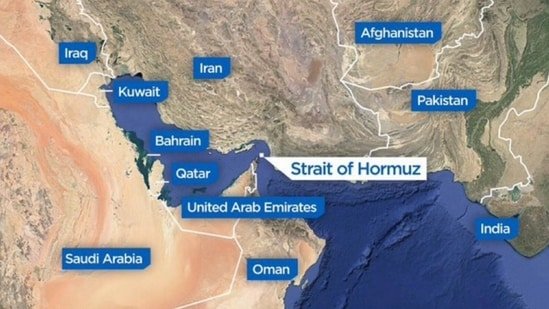
It went on to explain: “Iranian anti-ship cruise missiles at these locations pose a risk to international shipping in the strait.” They also shared a map of the Strait of Hormuz.
The Strait of Hormuz has been blocked by Iranian forces since the war began and has been destroyed by U.S. and Israeli attacks IranSupreme Leader Ayatollah Ali Khamenei. Because of the blockade, ships fearing attack have not passed through the strait, severely disrupting maritime traffic and sending global energy prices soaring.
The action comes after President Donald Trump called on other countries to help the United States control the Strait of Hormuz. However, several countries, including European NATO partners such as Britain and Spain, have rejected the Republican proposals, refusing to be drawn into a wider conflict with Iran.
What is 5,000 pounds of deep penetration ammunition?
These are also known as “bunker busters” and in 2021, it is report The U.S. Air Force successfully tested the GBU-72/B bunker bomb. It is estimated to be a 30,000-pound weapon with a warhead weighing 5,000 pounds. according to Foundation for Defense of Democracies, a Washington-based think tank.
These are used against hardened or deeply buried targets. Using bunker busters against Iran could help destroy their defenses along the Strait of Hormuz.
Prior to Operation Epic Fury, the U.S. military also used bunker busters during Operation Midnight Hammer against Iran in June 2025, targeting the Fordow uranium enrichment plant, the Natanz nuclear facility, and the Isfahan Nuclear Technology Center.
The U.S. action in Hormuz comes after Trump was furious with his NATO allies. “You would have thought they would have said, we’d be happy to send out a few minesweepers. It’s no big deal.” It doesn’t need to cost a lot of money. But they didn’t,” Trump said.
The president later added: “Realistically, we don’t need any help.” Meanwhile, Joe KentThe director of the National Counterterrorism Center announced his resignation, citing concerns about the legitimacy of a military strike against Iran. Kent said he “cannot in good conscience” support the Trump administration’s war.
(With AP input)