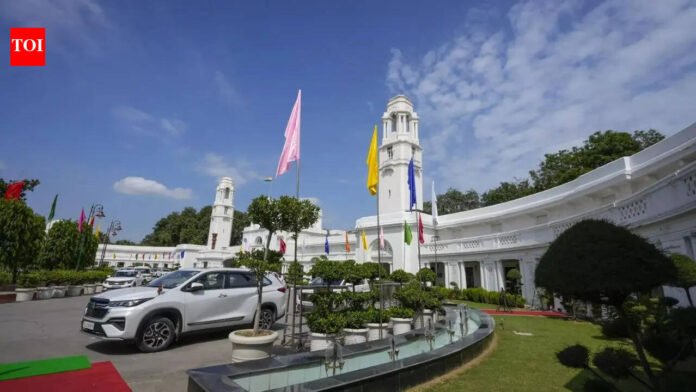
NEW DELHI: The concept and nomenclature of civil lines, residential areas established by the British, long associated with proximity to administrative power, may be lost to history.The ‘Civil Lines’ framework has been identified as one such heritage for review as the Center intensifies its efforts to replace remnants of colonial-era laws and practices with alternatives that originate from India and reflect the country’s culture.TOI understands that an extensive effort is underway to identify the traces of British rule, with the aim of decolonizing thinking and embracing indigenous identity. Indian Prime Minister Narendra Modi in January asked ministers and senior bureaucrats to identify colonial-era practices and come up with alternatives originating in India.Originally developed in the 19th century, Civil Lines were planned as exclusive enclaves with better infrastructure, symbolizing power and distance from colonial masters. The buildings were built to house “senior colonial civil officials.” Civil lines are available in Delhi and cities in several states including Uttar Pradesh, Rajasthan, Haryana, Punjab, Madhya Pradesh, Bihar and Maharashtra. For a long time these areas remained distinct from the rest of the “old” city or souq.
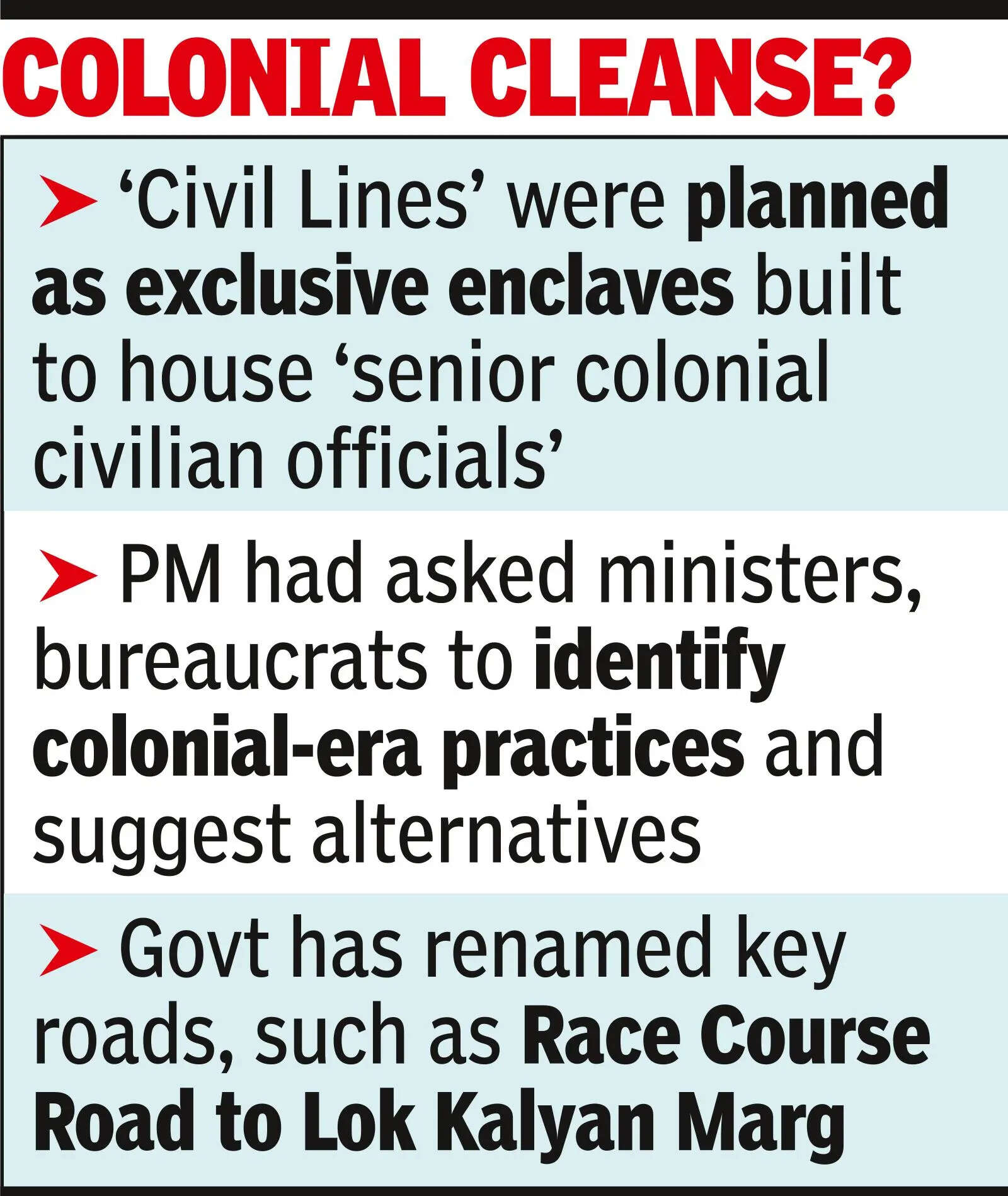
“The development of civil lines was part of planned development. There were camp slabs on one side of the city and civil lines on the other side. That’s how the city developed,” says a city planner and architect who has conducted extensive research on British period planning and architecture.Former DDA Commissioner (Planning) AK Jain said that over the years, civil lines across the country have completely changed. “Now instead of bungalows, there are multi-storey buildings; the population has multiplied and these have become part of the major cities. So changing the name hardly makes any sense.”“During the colonial era, India established about 75 camps. Civilian defense lines were equivalent to military enclaves,” he added.Over the past decade, the government has renamed certain major roads and offices whose original names were iconic in the British era. These include changing the name of Delhi Racecourse Road to Lok Kalyan Marg, among others.