Scientists use 5,300-year-old yeast from frozen mummies to bake sourdough, and it actually ferments |

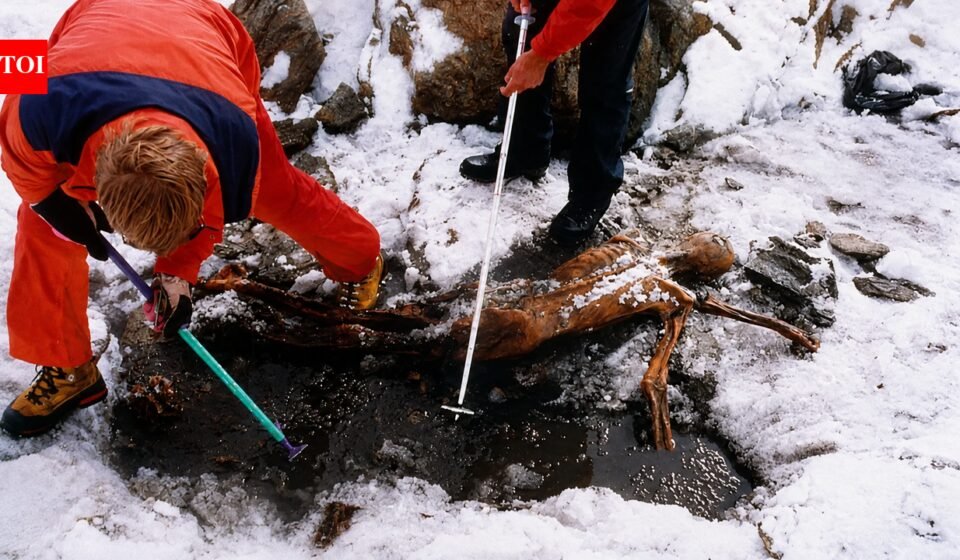
That tiny yeast could survive with a 5,300-year-old corpse feels unlikely, almost speculative. However, the frozen remains of Ötzi, the Bronze Age “iceman” preserved in the Alps in a controlled museum room in northern Italy, have provided scientists with an unexpected testing ground. After decades of research, attention gradually shifted from bones, tools and clothing to the mummies themselves and the unseen traces of organisms surrounding them. In particular, the researchers began examining microbial DNA recovered from tissue, surrounding meltwater, and protected environments, asking whether these organisms could still reflect ancient ecological states rather than modern contamination.
Inside the glacier: How Ötzi’s frozen environment became a living laboratory
Since his discovery in the Alps in the early 1990s, Ötzi has been deliberately kept in a cold room, an environment designed to mimic the glacier that originally froze him. This environment is both a display and a laboratory. Over time, scientists began sampling not just the mummies themselves, but everything around them: melted water that dripped during handling, air that passed through the preservation chamber, even material from the site where the mummies were first discovered.As reported in a Springer Nature link study titled “The Iceman’s Microbiome: Revealing Thousands of Years of Microbial Diversity and Continuity‘, an ancient corpse preserved in ice is unlikely to be biologically sterile. Less obvious is how to separate ancient microbial remnants from the modern contamination that inevitably comes with decades of human contact. DNA sequencing helped separate the picture into segments that looked truly ancient and others that clearly belonged to the modern world. The distinction is confusing rather than clear as these things usually are.
Frozen clues or modern invaders: Yeast evidence around Ötzi
Among the microbial traces, a group of cold-loving yeasts stood out. These organisms are not the kind that thrive in kitchens or warm soil. They are commonly associated with frozen lakes, polar ice caps, and high-altitude environments where biological activity is slow. Four genera were identified, each adapted to the deep-freeze environment that Ötzi had lived in for thousands of years.Their presence itself isn’t entirely shocking, given the circumstances, but what draws attention is the location where they are found. Some traces come from the skin, others from internal substances, and some from the remains of stomach contents. This mix makes interpretation awkward. It’s unclear whether these organisms were part of a postmortem colonization event shortly after death, or if they represented something more persistent that persisted in a frozen state.
Signs of life in the frozen past: Scientists reveal ancient yeast Discover
Microorganisms are not bones. They don’t fossilize in the same way, and under the right conditions, they can remain metabolically inactive for long periods of time before waking up again. This possibility is central to the discussion here. One group of yeast showed signs that it was changing over time, or at least it looked like that. Samples taken from mummy tissue showed changes in abundance, with one genus appearing more prominent in later tests. The genetic material in these later samples also appeared to be less broken down. Whether this means slow replication in stable cold environments, or just differences in sampling and preservation, this is where explanations start to split.
Scientists resurrect ancient yeast and use it to bake sourdough bread
One of the yeast isolates was cultured under laboratory conditions. The process is not immediate. Early attempts failed to produce anything usable, and it took repeated tweaks before the organisms began to behave predictably. Once complete, the team uses it for dough preparation. The results were not viewed as a culinary breakthrough in any modern sense, but rather as a test of whether the organism retained basic fermentation capabilities. Indeed. The dough is left to ferment, eventually producing a loaf of sourdough using yeast traced to ancient ruins.