

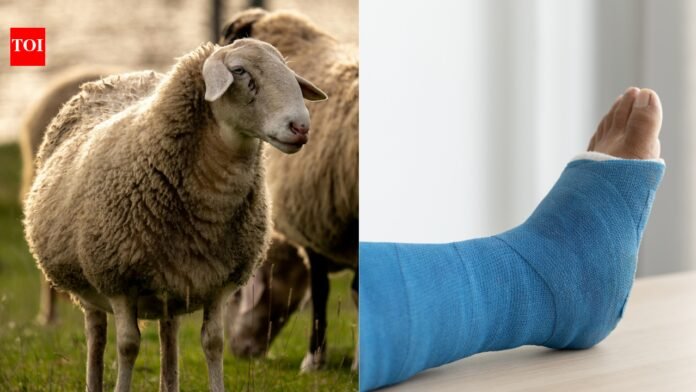
Scientists at King’s College London have developed an experimental bone-healing material made from wool that could one day provide a sustainable alternative to collagen in regenerative medicine. The study focused on keratin, a structural protein found naturally in wool, hair and nails. In laboratory and animal tests, the wool-derived material successfully supported bone regeneration and produced tissue that was closer to healthy, natural bone than traditional collagen scaffolds. The researchers say the findings mark an important early step towards creating stronger, more stable biomaterials for bone repair and tooth reconstruction, while also uncovering the medical value of wool that is often discarded as agricultural waste.
The Science Behind Wool Bone Healing Materials
Collagen has been used extensively in regenerative medicine and dentistry for decades as a scaffold material to support healing around damaged bones. It acts as a protective barrier, preventing soft tissue from interfering with the repair process while giving bone time to regenerate.Although collagen is versatile, it does have some limitations. It degrades too quickly and may lack the mechanical strength needed in areas exposed to pressure or load-bearing stress, the researchers said. Producing and extracting collagen can also be expensive and technically demanding.To find alternatives, the King’s College London team turned to keratin, a tough structural protein extracted from wool.Researchers chemically treated keratin in wool to create a thin film that could serve as a scaffold for growing new bone tissue. These membranes are designed to remain stable during the healing process while supporting the attachment and growth of bone-forming cells.The team first tested the material in laboratory experiments using human bone cells. The cells successfully attached to the keratin membrane and showed strong signs of healthy bone development, the researchers said.
What happens in animal testing
After the laboratory phase, the scientists implanted the keratin membrane into mice whose skull defects were large enough to prevent natural healing.Over several weeks, the researchers monitored how well the material supported bone regeneration in damaged areas. While the collagen scaffold produced more bone mass overall, the keratin membrane produced bone tissue that was more organized and structurally stable.The researchers say the fibers produced by the keratin scaffold are better aligned and more closely resemble the structure of healthy, natural bone.The study’s authors said the quality and stability of the regenerated bone may be one of the most important aspects of the study. The keratin membrane also blends well with surrounding tissue and remains stable throughout the healing process.Dr Sherif Elsharkawy, from the School of Dentistry, Oral and Craniofacial Sciences at King’s College London, described the work as the first successful demonstration of a wool-based material repairing a living animal bone.He said the findings position keratin as a potential new regenerative biomaterial that could ultimately challenge the long-standing reliance on collagen.
A sustainable source of future medicine
The researchers also highlighted the material’s environmental benefits. Wool is naturally renewable and large quantities of wool are often discarded as waste by agriculture.Scientists believe that using wool keratin could provide a scalable and sustainable source of biomaterials for future medical applications, especially if further research confirms its safety and effectiveness in humans.Although the results are encouraging, the technology is still in the early stages of development. The experiments were only conducted in laboratory settings and animal models, meaning additional testing is needed before the materials can be used in patients.Even so, this study provides a glimpse into how natural materials such as wool may play a role in bone repair, regenerative medicine and dental procedures in the future.


