
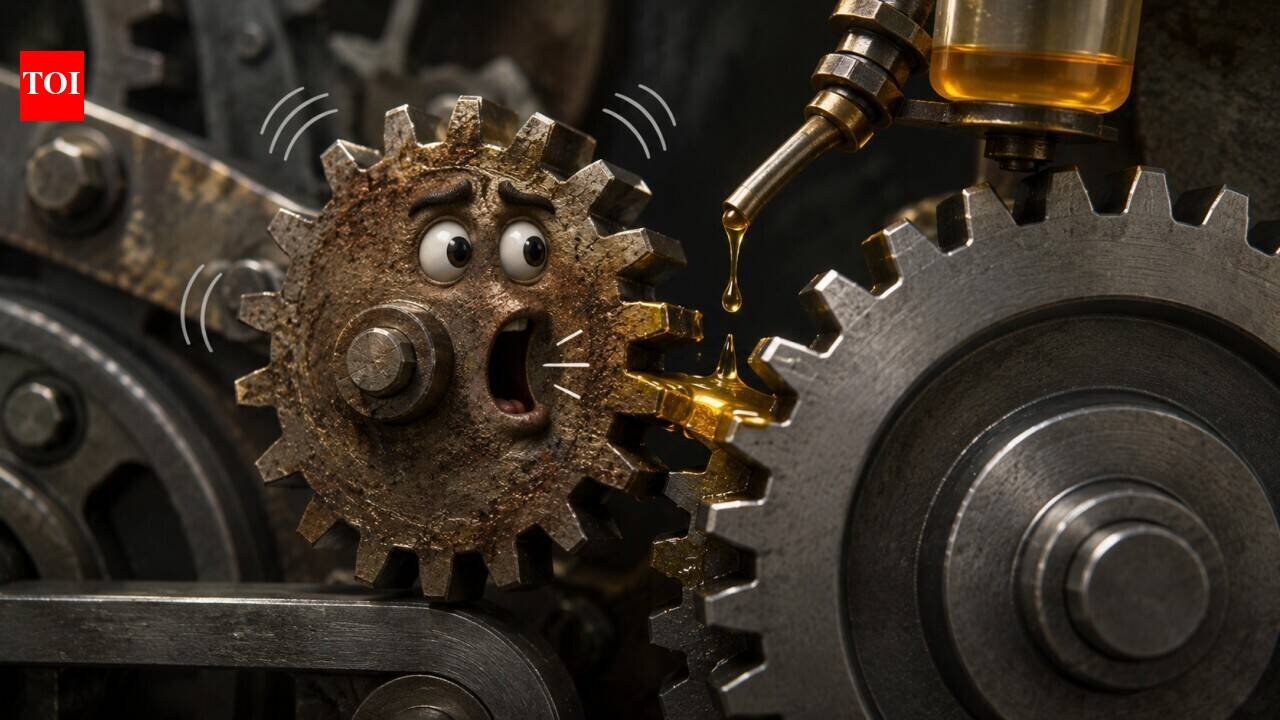

“The squeaky wheel is greased.”What does this proverb mean?Most people hear this proverb to speak out when something goes wrong. This image comes from an old, noisy world of trolleys, wagons, factory machinery, and railroad equipment, where squeaky wheels were often the first sign that something needed attention. Noisy wheels are hard to ignore, so grease the wheels.American proverbs born in the industrial ageThe phrase was particularly popular in the United States during the late 19th and early 20th centuries, when factories, railroads, and mass production were transforming daily life. Historians often link its popularity to broader American culture, which values initiative and self-advocacy. Around the same time, unions, investigative journalists and reform movements were making a lot of “noise” to draw attention to corruption, unsafe working conditions and political abuses. In that context, the proverb sounds less like a complaint and more like a strategy.Why we notice the loudest questions firstOne of the reasons this quote endures today is that it captures a true characteristic of human attention: People tend to notice problems that are announced loudly. Today, psychologists describe something similar through concepts like the availability heuristic, in which vivid, repetitive, or emotionally charged information feels more important simply because it is easier to notice and remember.This helps explain why complaints can influence decisions. Companies often redesign products after receiving waves of customer feedback, and thousands of silently dissatisfied customers may stop buying without saying anything. The city sometimes repairs potholes after multiple reports from residents, although other damaged roads may be in worse condition. Attention often comes with popularity.gist of proverbThere is also a complex side to this proverb, which is what makes it more interesting than a simple “Say it louder” slogan. The loudest questions are not always the most serious ones. Hospitals learned this early on. Emergency departments use triage systems precisely because the patients who make the most noise are not necessarily those who are at greatest risk. If doctors only treat the squeakiest wheels, many urgent cases will be missed.Different cultures think about this idea in different ways. There is an American proverb that praises those who dare to speak out, while a Japanese proverb is often translated as “The nails that are driven out will be knocked down by the hammer.” One image rewards drawing attention to an issue; the other warns against standing out too much. Neither is entirely right or entirely wrong. They reflect different social priorities – one emphasizes individual assertion, the other emphasizes harmony and group cohesion.Why this quote is still importantThis contrast is why this proverb still sparks debate. Is making noise a sign of confidence and civic engagement, or does it unfairly reward those who are already the most visible and vocal? Social movements, consumer movements and public protests often rely on becoming impossible to ignore, but society must also find ways to hear quieter voices that may not creak at all.The old image of the squeaky wheel survives because it points to a question that still faces every organization, government, and community: How do we decide which issues deserve attention first? This proverb gives an answer: The problems that make the most noise get noticed. Whether this is always the best answer is still a subject of debate, much like the wheel itself.