
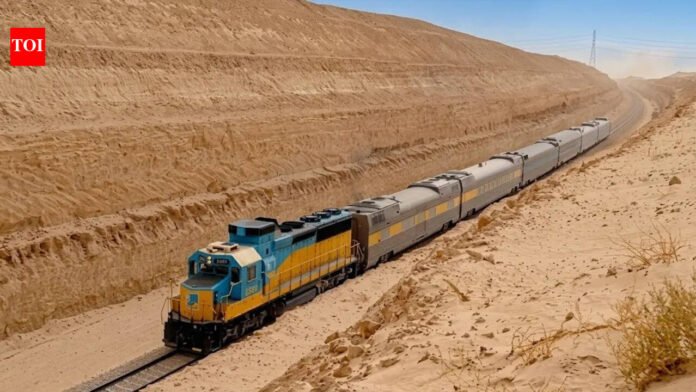
Saudi Arabia A major step has been taken in reshaping regional trade with the launch of five new rail logistics routes that promise to speed up the movement of goods and reduce transport costs. The move aims to strengthen connections between Gulf ports and the Kingdom’s main economic centers, making supply chains more efficient and reliable. The initiative positions Saudi Arabia as a vital link between sea lanes and inland markets as global trade competition intensifies.Saudi Railways announced the new corridor as part of a wider drive to modernize logistics under Vision 2030. By shifting goods transport from road to rail, authorities aim to reduce congestion, shorten delivery times and lower costs for businesses and consumers.
Saudi Arabia’s new railway logistics route
The five routes are designed to directly connect the main ports in the Gulf with inland dry ports, industrial areas and commercial centers such as Riyadh. This integrated network allows goods to be moved seamlessly from ships to trains and then into domestic markets without lengthy delays.According to Saudi Railways, the lines enhance connectivity between ports and economic centers, ensuring smoother movement of goods across the kingdom. The focus is on building a unified logistics ecosystem that allows ocean and rail operations to work together, reducing reliance on long-distance trucking and making freight more predictable.
Benefits to trade and consumers
One of the biggest advantages of new rail corridors is the potential to significantly reduce transit times. Rail transport offers a more consistent and efficient alternative to road freight, especially for large quantities. As turnaround speeds increase from port to city, businesses can expect improved supply chain performance and lower operating costs.Saudi Railways said in an official post on The shift is also expected to ease highway congestion and reduce emissions, in line with sustainable development goals.For consumers, the impact can be indirect but meaningful: faster logistics and lower transportation costs often translate into more stable prices and faster availability of goods on the market.
5 railway lines may be launched
While Saudi Railways has not yet publicly detailed the specific breakdown of all five routes, the launch is expected to be consistent with Saudi Arabia’s existing and expanding freight rail network. Industry models suggest these corridors could connect the Gulf’s major ports with inland logistics hubs such as Riyadh and Dammam, as well as key industrial areas in the Eastern Province.Given the kingdom’s current rail infrastructure, the route is likely to integrate port connections in the Arabian Gulf into the Saudi Land Bridge project, which aims to connect the east and west coasts. This will enable goods arriving at Gulf ports to be transported efficiently across the country and potentially to Red Sea ports, creating a seamless transnational trade corridor.The rollout is also expected to prioritize high-capacity freight corridors, where moving freight from road to rail can deliver the greatest gains in speed and cost efficiency. Over time, these routes are likely to be further expanded to support cross-border connectivity across the GCC, thereby strengthening Saudi Arabia’s role as a central logistics hub under Vision 2030.
Saudi Arabia’s Vision 2030 Strategy
The launch of these routes reflects Saudi Arabia’s long-term ambition to become a global logistics hub under Vision 2030. The country has been investing heavily in transport infrastructure, including railways, ports and logistics zones, as it seeks to diversify its economy beyond oil.Saudi Railways continues to play a central role in this transformation by expanding freight capacity and improving intermodal transport. By connecting Gulf ports with inland economic centers, the new route strengthens Saudi Arabia’s position as a bridge between Asia, Europe and the wider Middle East.As these corridors become fully operational, they are expected to improve trade efficiency and deepen regional integration across the Gulf, creating a faster and more connected logistics network for the future.