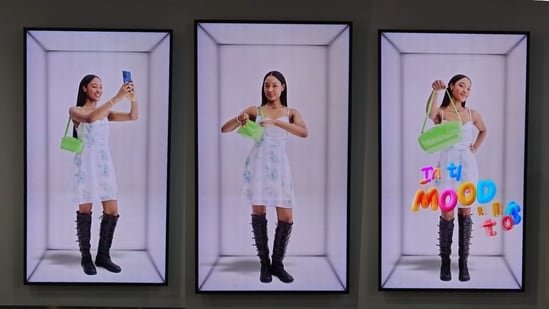

You walk into a store and the screen in front of you doesn’t just play video – it reacts, moves, and almost steps out of the frame. This is the retail model Samsung is currently committed to building. Samsung India has launched a new approach to in-store and business environments at its Business Experience Studio (BES) in Gurgaon. The company demonstrated a combination of artificial intelligence (AI) tools and new display systems aimed at changing the way brands connect with customers in physical spaces.


Samsung Glasses-free 3D Space Signage
The centerpiece of the show is Samsung’s Spatial Signage, a display that produces 3D effects without the need for glasses. The system uses what the company calls 3D Plate technology to create depth behind the screen. As a result, the image looks stretched outward while still running on a standard LCD panel.
The display is 2.15 meters long and uses 4K UHD resolution with a vertical format of 9:16. It supports rotating visual effects, which may allow brands to showcase products from different angles. The setup is powered by Samsung’s Quantum processor, which handles 4K upscaling, color mapping, and HDR adjustments. The screen also includes an anti-glare layer to maintain visibility in high-traffic spaces. Its slim build and lighter structure make it suitable for installation in retail stores, bank branches and other commercial locations without the need for major structural changes.
During the event, Samsung also outlined how artificial intelligence can be integrated into the business environment. Through AI Studio within the VXT platform, businesses can use prompts to convert basic images into 3D-ready content. This reduces the time required to prepare content for display.
Another part of the system focuses on content control. Companies can use a central platform to manage screens across multiple locations in real time. This will allow updates, offers or announcements to change instantly on all connected displays.
In a retail environment, this setup can push real-time promotions and adjust content based on time or demand. In banking, it can help manage queues, display service updates and guide customers through processes.
Finally, Samsung added that security remains a key part of these systems and is supported by its Knox platform, which is designed to protect data and ensure compliance. In addition to this, the Galaxy multi-device experience allows employees to move between devices without interrupting tasks.