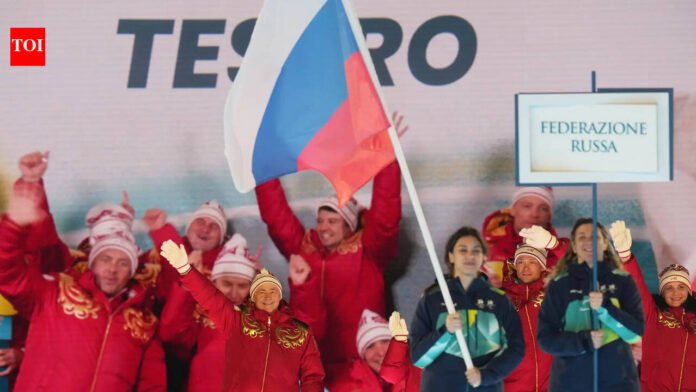
NEW DELHI: The Milan-Cortina Winter Paralympics officially opened in Italy on Friday, but Russian athletes were allowed to march under their country’s flag for the first time since 2014, an incident that brought controversy to the medal ceremony. The International Paralympic Committee’s (IPC) decision drew criticism amid Russia’s ongoing war with Ukraine.Only a small Russian delegation attended, and they were booed by parts of the crowd as they entered the historic Verona Arena. Several countries, including Ukraine, Poland, Finland, Estonia, Latvia, Lithuania and the Czech Republic, boycotted the ceremony in protest. Instead, volunteers raised the flag without athletes or officials present. In contrast, the Ukrainian flag received a prolonged round of applause from the audience.IPC president Andrew Parsons defended the decision, saying it came after the organization’s conference voted last September to allow Russia and Belarus to return to the competition under their respective flags. Speaking at the ceremony, Parsons also reflected on global conflicts. “Four years ago, I said I was shocked by what was going on in the world,” he said. “Unfortunately, the situation has not changed. In a world where some countries are known by the names of their leaders, I prefer to know countries through the names of their athletes.”The ceremony, attended by Italian Prime Minister Giorgio Meloni and President Sergio Mattarella, began with a drumming performance by police band member Stuart Copeland, followed by a brief playing of the Italian national anthem and a parade of athletes.As of March 15, more than 600 athletes will compete in six sports at venues in northern Italy. The events will take place mainly in Cortina, with Milan hosting para ice hockey and Val di Fiemme hosting cross-country and biathlon events.Organizing committee president Giovanni Marago said the Games sent an important message during turbulent times. He added: “The messages of peace, inclusion and solidarity at the heart of the Olympic and Paralympic movements are more relevant and important than ever.”