
 and formally dedicated it to the nation.Designed to ha.)
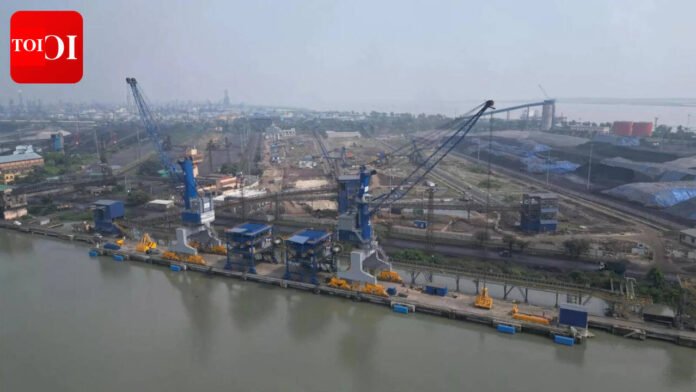
AHMEDABAD: Prime Minister Narendra Modi on Saturday inaugurated the Haldia Bulk Terminal (HBT) and formally dedicated it to the nation.Designed to handle dry bulk cargoes with an annual capacity of 4 MMTPA, the terminal is a fully automated bulk facility on the Hooghly River with direct rail connectivity, a structural upgrade for bulk cargo transportation in India’s Eastern Sea Corridor. “Haldia Bulk Terminal is a next-generation facility that brings full mechanization and direct rail evacuation to Hooghly, setting a new benchmark for efficiency on India’s east coast. By eliminating terminal dumping and reducing cargo losses through advanced automation systems, we ensure cleaner, safer and more sustainable operations. The terminal will play a key role in strengthening industrial supply chains in West Bengal, Odisha and Jharkhand while supporting the Prime Minister’s vision of reducing logistics costs through modern intermodal infrastructure,” APSEZ said AshwGupta, Whole Time Director and CEO. The terminal, located within the Haldia Terminal Complex (HDC) at Syama Prasad Mookerjee Port in Kolkata, was developed by HDC Bulk Terminals Limited through a design, build, finance, operate and transfer (DBFOT) model under a 30-year concession and was delivered within the construction window, starting from July 14, 2023, to commissioning today. This demonstrates APSEZ’s ability to execute projects on time every time.The terminal is strategically located on the west bank of the Hooghly River and can handle imported coal and a range of dry bulk commodities.The east coast accounts for approximately 60% of India’s dry bulk imports, including coal, bauxite and limestone, making Haldia the most efficient and direct sea port of entry for the steel, aluminum and power industries in West Bengal, Odisha and Jharkhand. This increase in capacity will significantly reduce logistics costs and turnaround times in these industries. Since the start of construction, APSEZ has completed infrastructure projects such as the installation of a 2,000-ton Railway Wagon Loading System (RWLS) and the commissioning of a 1.54-kilometer dedicated railway line to enable direct ship-to-vehicle cargo evacuation; renovating existing terminals; installing advanced conveyor systems to automate processes; deploying two stackers and reclaimers to automate stockyard management; and adding two mobile port cranes to speed up ship unloading.The RWLS and dedicated rail lines are the most important features of the terminal. Together they allow bulk cargo unloaded from ships to be loaded directly onto rail wagons and connected to the mainline, thereby reducing port dwell times and lowering raw material transportation costs for industrial consumers in the three states.Haldia Marina is a direct reflection of India Sagarmala Project and Prime Minister Gati Shakti’s National Master Plan, both of which prioritize intermodal port infrastructure to reduce India’s logistics costs. The inauguration of the facility by Prime Minister Narendra Modi reflects the national strategic importance of modernizing the eastern seaboard.
PM Modi inaugurates APSEZ’s Haldia Terminal; India’s first fully automated dry bulk facility

WEB DESK TEAMhttps://articles.thelocalreport.in
Our team of more than 15 experienced writers brings diverse perspectives, deep research, and on-the-ground insights to deliver accurate, timely, and engaging stories. From breaking news to in-depth analysis, they are committed to credibility, clarity, and responsible journalism across every category we cover.
Related articles
Recent articles
