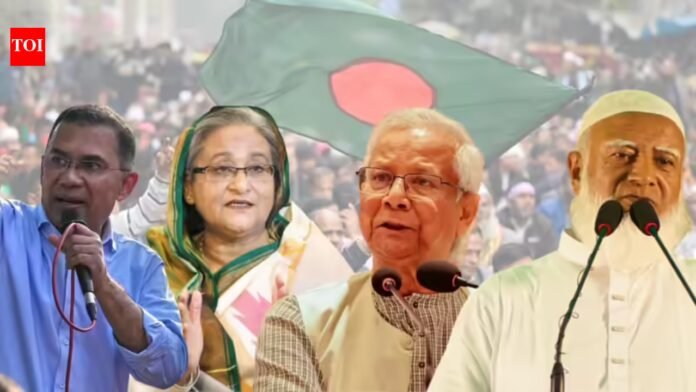
Bangladesh will hold parliamentary elections on Thursday, which could have a more profound impact on India than any recent such event in its neighbor. Ironically, with Sheikh HasinaWith the Awami League not in the fray, the best hope for a realistic reset in India’s relations with Dhaka rests on a majority in the front-runner Bangladesh Nationalist Party (BNP), Hasina’s most hated party and a party with historically tense relations with New Delhi. India was caught off guard by the July 2024 uprising that toppled long-time ally Hasina and stepped up its engagement with the BNP, realizing that the party then led by Khaleda Zia offered the best option for the country’s future legitimacy and stability. Despite Hasina’s constraints in India, re-engagement with BNP leaders, Prime Minister Narendra Modi’s offer of assistance for Zia’s treatment before his death and a letter to Zia’s son and current leader Tariq Rehman through External Affairs Minister S Jaishankar strengthened the initiative. In the absence of the banned Awami League, the election is expected to be a fierce bipolar contest between the BNP alliance – which includes an odd mix of Islamists and Generation Z revolutionaries – and the other main bloc of 11 parties, led by India’s traditional enemy the Jamaat-e-Islami. The National Civic Party (NCP) has also joined Jamaat, a new political group of student leaders who led the massive protests that ousted Hasina. In addition to the election results, India will also pay close attention to the constitutional “July Charter” referendum held at the same time as the general election. The referendum, which emphasized a two-term limit for the prime minister, the introduction of an upper house to scrutinize legislation, and an identity as Bangladeshi rather than Bengali, seemed aimed not only at preventing a return of “authoritarianism” but also at minimizing India’s deep-rooted cultural and linguistic ties with the country. While India does not want to delay any engagement with a possible new government, any such exercise would be mindful of several key issues, given the importance India attaches to its relationship with Dhaka to its own security, and Bangladesh’s reputation as a “swing country” coveted by major powers like the United States and China. The first is of course safety. Not allowing Indian insurgent groups in the northeast to use Bangladeshi territory against India will be high on the agenda of the new Indian government, as the BNP-Jamaat government two decades ago was accused of providing safe haven to these groups. Strong security cooperation, including intelligence sharing, can allay concerns. Equally important is preventing Pakistan’s military from using Bangladesh to target Indian interests. The interim government has achieved a dramatic shift in relations with Pakistan, and efforts by ISI officials to visit Dhaka frequently to strengthen defense and security ties will exacerbate India’s security concerns. The BNP-Jamaat government has also been accused of turning towards Pakistan in the past. India will also closely monitor China’s entry into Bangladesh’s defense sector, including a recent agreement to manufacture drones near Indian territory. The security of the 13 million-strong Hindu community will also be high on the agenda of India’s new government, as is evident from the way Modi himself has raised the issue on several occasions. India looks forward to continuing cooperation within the existing framework to transport goods to the Northeast through Bangladeshi ports. However, for any outreach to be meaningful, India may have to address the Hasina factor first. The BNP will continue to demand the extradition of Hasina, who is sentenced to death for alleged crimes against humanity. Sources in Dhaka said this is a matter of people’s sentiments and India will be seen as a reliable ally only if it is seen as harboring Hasina. While a possible BNP government is expected to aggressively address issues related to border killings, water sharing and even reviving SAARC, India may also face challenges from a resurgent Rashtriya Swayamsevak Sangh, which is expected to win between 50 and 100 seats, more than at any time in history. If this happens, the party could cause some serious anxiety in India as it is not only a powerful opposition but also a potential ally of the BNP.