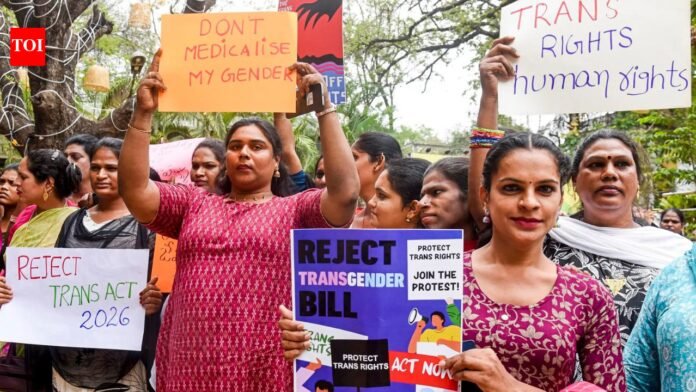
New Delhi: In less than a week since the controversial amendments dealing with the definition of transgender, omitting “self-perceived identity” as a basis for approval of a transgender certificate from a magistrate and introducing a medical board were notified into law, the Supreme Court has received a writ petition challenging the constitutional validity of the Transgender Persons (Protection of Rights) Amendment Bill, 2026.The bill to amend the 2019 law was passed by the House of Commons and the House of Federation on March 24 and 25 respectively by voice vote, with the opposition strongly opposing it and demanding that the bill be referred to a standing committee for wider consultations. The bill became law on March 30 after Indian President Droupadi Murmu gave his assent.The petition challenging the law was filed by prominent transgender rights activists Laxmi Narayan Tripathi and Zainab Patel. At its core, the petition raises the key question of whether the state can redefine identity in a way that takes away the right of individuals to define themselves.Incidentally, Tripathi and Patel were the lead petitioners in the landmark NALSA v. Union of India (2014) case, which recognized the constitutional rights of transgender people.Activists argue in the current petition that the 2026 amendment changes the basis on which the law understands transgender identity. “It abandons self-identity and replaces it with a narrow, state-driven definition based on fixed categories and medical conditions. In doing so, it departs from what the Supreme Court has affirmed in NALSA. Gender identity is a matter of personal dignity and choice,” campaigners stressed.One of the core issues raised was the replacement of earlier definitions of transgender people with closed frameworks. The petition states that many transgender people who do not fit into these categories may go without legal recognition.The petition challenges the removal of clear rights to self-perceived gender identity and points to provisions that blur the line between transgender status and situations of coercion or trafficking. It has raised concerns that existing rights, including identity documents issued under the earlier framework, could be at risk.This challenge is based on a violation of the fundamental rights enshrined in Articles 14, 15, 19 and 21 of the Constitution and the established principles of international human rights law.“This law sets us back. In NALSA, the Supreme Court affirmed that our identity comes from within, not from a state-created list. Today, that core principle is being rolled back. As petitioners in the case, we are back in court because this amendment not only changes definitions, it changes lives. This risks excluding many transgender people from the protections of the law itself,” Tripathi and Patel said in a joint statement.“This is not a technical amendment. This is a constitutional question about dignity, autonomy and whether the state can determine who we are,” they said.Tripathi and Patel had also previously served as members of the National Transgender Commission, a statutory body under the law. Tripathi is the founder of the Astitva Trust and the National Transgender Network, and Patel is a “diversity, equity and inclusion” strategist and founder of the Pride Business Network Foundation.
Petition filed in South Carolina challenging revised ‘transgender’ law

WEB DESK TEAMhttps://articles.thelocalreport.in
Our team of more than 15 experienced writers brings diverse perspectives, deep research, and on-the-ground insights to deliver accurate, timely, and engaging stories. From breaking news to in-depth analysis, they are committed to credibility, clarity, and responsible journalism across every category we cover.
Related articles
Recent articles