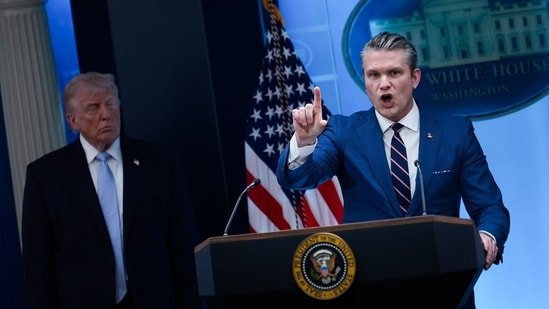
Pete Hegseth will speak at an “Operation Epic Fury” press conference today as Washington outlines next steps after two weeks of ceasefire between the United States and Iran.

Last-minute agreement to suspend hostilities ahead of deadline set by President Donald Trumphas shifted the focus of U.S. officials from the intensity of the conflict to strategy.
Where and when to watch
Hegseth will speak alongside Chairman Kaine at 8:00 a.m. ET (6:30 p.m. IST).
This conference will be broadcast live on the official Weibo U.S. Department of the Army.
It is also expected to air on major television news networks.
What is Operation Epic Fury?
Operation Epic Fury refers to the U.S. military campaign that has carried out sustained attacks on Iranian infrastructure in recent weeks. The operation is at the center of rising tensions between Washington and Tehran.
A recently announced ceasefire has temporarily halted those operations, but officials say it remains conditional.
What to expect from the briefing
Hegers is expected to provide information on how U.S. military Operations will be carried out during the ceasefire, including its posture and readiness.
The briefing may also outline strategic objectives and discuss whether a pause in hostilities will lead to further diplomatic engagement.
Observers are likely to seek clear information on ceasefire enforcement, potential violations and contingency plans for tensions to escalate again.
Also read: Pete Hegseth compares U.S. rescue of F-15E pilots in Iran to Easter weekend worship services
Tehran is now calling the outcome a major victory after the United States accepted in principle its ten-point plan since President Trump agreed to a two-week ceasefire with Iran, according to a statement from Iran’s Supreme National Security Council.
The plan includes key points such as allowing “policed transit through the Strait of Hormuz in coordination with Iran’s armed forces,” which the committee said would give the country a “unique economic and geopolitical position.”
The ceasefire has eased immediate concerns about the wider conflict, but uncertainty remains over what happens next.